Brown patches showing up in August aren't always drought stress. Here's how to tell the difference, and what you can still do about it.
You’ve been watering. The brown patches keep spreading. Nothing’s working, and at this point you’re not even sure what you’re dealing with.
If that sounds familiar, you’re not alone, and the problem probably isn’t drought. Grub damage and drought stress look nearly identical from a distance, and August is exactly when grub damage becomes visible on Long Island lawns. The timing isn’t a coincidence. It’s biology.
The good news: if it is grubs, you haven’t missed everything. There’s still a treatment window open right now, but it won’t stay open long. Here’s what you need to know.
This is the question that matters most in August, because the fix for drought stress and the fix for grub damage are completely different. Watering more won’t save a lawn with grubs. In fact, moist soil is exactly what beetles prefer when laying eggs, so it can make the underlying problem worse over time.
The most reliable field test is simple: grab a handful of turf in the brown area and pull. If the grass peels back like loose carpet, with roots gone and soil exposed, that’s grub damage. Drought-stressed grass holds its roots. Grub-damaged grass doesn’t because the grubs have been feeding on those roots from underneath since they hatched in July.
The peel-back test is the clearest indicator, but it’s not the only one. A few other signs point strongly toward grubs rather than drought or heat stress.
The first is wildlife activity. Skunks, raccoons, and crows are excellent grub detectors. If you’re waking up to dug-up patches, holes in the lawn, or sections that look like something was rooting around overnight, that’s a reliable signal. These animals can smell grubs through the soil and will tear up turf to get to them. The wildlife damage compounds the root damage already done, which is part of why grub-infested lawns deteriorate so quickly once the digging starts.
The second is timing. Drought stress tends to develop gradually and often tracks with the hottest, driest stretches of summer. Grub damage tends to appear more suddenly, with patches that were fine one week looking dead the next. That’s because grubs grow fast after hatching in July, and once they reach a certain size, their feeding becomes intense enough to sever roots faster than the grass can compensate.
The third is the spongy feel underfoot. Before the turf dies, a heavily grub-infested area often feels soft and slightly spongy when you walk on it, almost like the ground is giving way slightly. That’s the root system being compromised before the surface shows it.
If you’re seeing two or three of these signs together, including brown patches that don’t respond to water, wildlife digging, and a spongy feel, you’re dealing with grubs. The next step is confirming how many. Ten or more grubs per square foot is the standard threshold at which turf damage becomes likely. Fewer than that, and a healthy lawn can often tolerate the feeding without visible harm.
To check, cut a one-square-foot section of sod about three inches deep in an affected area and count what you find. Small, C-shaped white larvae are what you’re looking for.
One more thing worth knowing: Long Island’s grub population isn’t just Japanese beetles, even though that’s what most national content focuses on. According to regional research, the oriental beetle is often the dominant species on Long Island, alongside European chafers and Asiatic garden beetles. This matters because different species have slightly different development timing, and some store-bought products that target Japanese beetle larvae are less effective against the others. It’s one of the reasons a professional who knows the local species complex will get better results than a generic approach.
Suffolk County’s late summer weather pattern doesn’t help. A dry August followed by a wetter September is common here, and it creates a situation where homeowners see brown patches in August, assume drought, and wait for rain to fix things. When September brings more moisture, the lawn looks like it’s recovering, but what’s happening is that the grubs are still feeding, the root zone is still being destroyed, and the apparent recovery is just the surface staying green a little longer before it collapses.
By the time the full extent of the damage becomes obvious, with turf lifting off the soil in sheets and large dead zones that won’t green up, the season is nearly over and the window for effective curative treatment is closing. That delay is what turns a manageable grub problem into a full lawn renovation project.
The other reason August damage gets misread is that it often doesn’t look catastrophic at first. It starts as a few patches that might be five or six square feet. It’s easy to rationalize as a dry spot near a tree, or a section that doesn’t get enough irrigation coverage. But grubs don’t stay in one spot. They feed across the root zone as they move, and those small patches can double or triple in size within a few weeks if nothing is done.
This is especially true in areas of Suffolk County with sandier soils. South Shore communities like Bay Shore, Islip, East Islip, and Babylon see higher grub pressure because the soil drains quickly and beetles prefer it for egg-laying. Grubs move through sandy soil easily. Properties in central Brookhaven see similar pressure. On the North Shore, properties that border wooded preserves in Smithtown, Huntington, and Fort Salonga tend to have higher adult beetle activity in summer, which translates directly into higher grub pressure in the fall.
The takeaway: if you’re seeing brown patches in August and you’re not sure what’s causing them, don’t wait. The diagnostic step, including the peel-back test and the grub count, takes minutes. Getting it wrong and losing another few weeks costs you significantly more.
Want live answers?
Connect with a Lawn Master of Suffolk expert for fast, friendly support.
Here’s the honest answer to the question most homeowners are asking: yes, you can still treat for grubs in August. The preventive window, which is the ideal time to apply before eggs hatch, runs from roughly mid-June through mid-July. If you missed that, you’re now in curative territory. That’s a different approach, with different products and different expectations, but it works when it’s timed correctly.
Curative treatments are most effective when grubs are still small and feeding near the surface, which is exactly where they are in August. The window stays open through mid-September. After that, grubs grow larger, move deeper into the soil, and become harder to reach with curative products.
Curative grub control products work differently than preventive ones. Preventive products, applied before eggs hatch, are taken up by the grass plant and ingested by young larvae as they begin feeding. They’re highly effective when applied at the right time, but they require that timing to work. Apply too early and they degrade before grubs hatch. Apply too late and the grubs are too large for the product to be effective.
Curative products are designed to work on contact with larvae already in the soil. They need to move through the thatch layer and reach the root zone where grubs are actively feeding, which is why watering in the treatment immediately after application is critical, not optional. A product sitting on dry thatch isn’t reaching the grubs. This is one of the most common reasons DIY curative treatments fail: the application goes down, but without adequate irrigation afterward, it never gets to where it needs to be.
There’s also the product selection issue. The most effective professional-grade curative products are restricted-use pesticides that require a NYS DEC commercial pesticide applicator license to purchase and apply legally. Backed by 38 years of experience, our team of trained licensed applicators uses specialized hydraulic equipment and custom fertilizer blends that align with New York’s April 1 through October 31 fertilizer law to ensure safe, compliant treatments. The products available at retail stores are a different category, and while some work under ideal conditions, they’re generally less effective than what licensed professionals can access, particularly against the full species complex present on Long Island.
And there’s a regulatory change coming that every Suffolk County homeowner should know about: effective December 31, 2026, New York State is banning the use of certain active ingredients for outdoor turf applications. After that date, those products will no longer be legal for turf use in New York. Licensed professionals are already working with the alternative chemistries that will remain available. If you’ve been relying on DIY products, the clock is running.
This is the part most grub control conversations skip, and it’s the part that matters most if your lawn has significant damage.
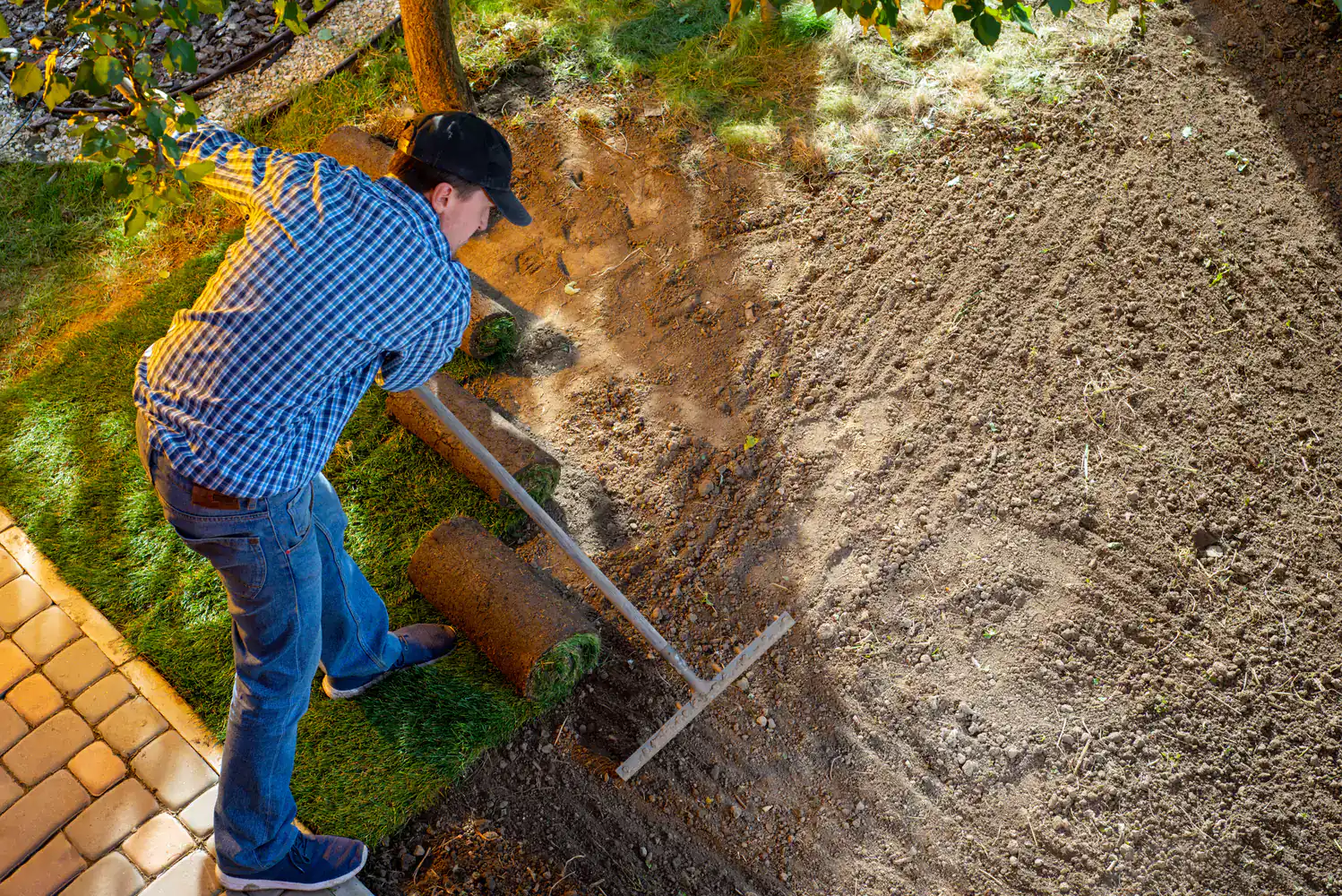
Eliminating the grubs stops the feeding. It does not bring back the grass. When grubs destroy a lawn’s root system, the turf is dead, not dormant. Dead grass doesn’t recover with water and fertilizer the way drought-stressed grass does. The root zone is gone, and without roots, the grass plant cannot survive. What you’re left with is bare or near-bare soil that weeds will colonize quickly if it isn’t addressed.
Restoring a grub-damaged lawn properly requires more than throwing down some seed. The soil needs to be aerated, ideally with hydraulic equipment that pulls deep plugs rather than light tow-behind aerators that barely scratch the surface. The seed needs to be the right variety for Long Island’s conditions: cool-season grasses like tall fescue, Kentucky bluegrass, or perennial ryegrass, selected for the specific light and soil conditions of your property.
And the follow-up fertilization needs to account for Suffolk County’s sandy, nutrient-leaching soils. Haven Loam drains fast, and a generic fertilizer blend designed for somewhere else won’t give a recovering lawn what it needs here. This is where having one company handle the full process, including treatment, aeration, seeding, and follow-up nutrition, makes a real difference. Managing separate vendors for a lawn restoration is slower, more expensive, and creates gaps where no one is accountable for the outcome.
We’ve been doing that in Suffolk County since 1987. We know what a grub-damaged lawn looks like in September, what it takes to get it back before the ground freezes, and what the follow-up program needs to look like the following spring to make sure the recovery holds.
If you’re reading this in August looking at a lawn that isn’t responding to water, the most important thing you can do right now is confirm what you’re dealing with. The peel-back test takes minutes. If grubs are the answer, the curative window is still open, but it won’t be for much longer.
Don’t let another few weeks go by assuming it’ll sort itself out. The lawns that come back strong in the spring are the ones where the problem was diagnosed accurately, treated while the timing still worked, and followed up with a real restoration plan rather than just a bag of seed thrown at dead soil.
If you want a straight answer about what’s happening in your lawn and what it would take to fix it, reach out to Lawn Master. We’ve been treating grub damage in Suffolk County for nearly 40 years, and we’re not going to tell you something needs to be done if it doesn’t. Request an estimate today.
Summary:
Article details:
Share: