That patchy, off-color grass taking over your lawn isn't a disease. It's likely bentgrass, and it spreads faster than most homeowners realize.

You notice a section of your lawn that looks a little off: lighter in color, finer in texture, matted down where everything else stands upright. Or maybe it turned brown over the summer and you assumed grubs, treated for those, and the problem came back anyway. That’s a pattern we’ve seen across Suffolk County for nearly four decades, and more often than not, the culprit is creeping bentgrass. It’s one of the most stubborn weed grasses on Long Island, and it’s commonly misread. Here’s what’s going on, along with the local soil, weather, and seasonal timing considerations required to get rid of it.
Creeping bentgrass is technically a turfgrass, the same species used intentionally on golf course putting greens. That’s part of what makes it so difficult to deal with. It’s not a broadleaf weed you can knock out with a standard weed control program. It’s a grass, and it competes aggressively with the desirable grasses in your lawn.
In a home lawn setting, it behaves like an invasive weed. It spreads through above-ground runners called stolons that root into the soil as they travel, allowing a single plant to colonize a surprising amount of ground in one growing season. The patches it creates are visually distinct: lighter green, almost lime-colored, with a finer, lower-growing texture that looks matted compared to surrounding turf.
Many Suffolk County lawns have had bentgrass present for decades. The post-WWII residential development that built out much of the county in the 1950s, 1960s, and 1970s relied on seed mixes that commonly included bentgrass. Some of those infestations have been quietly spreading ever since.
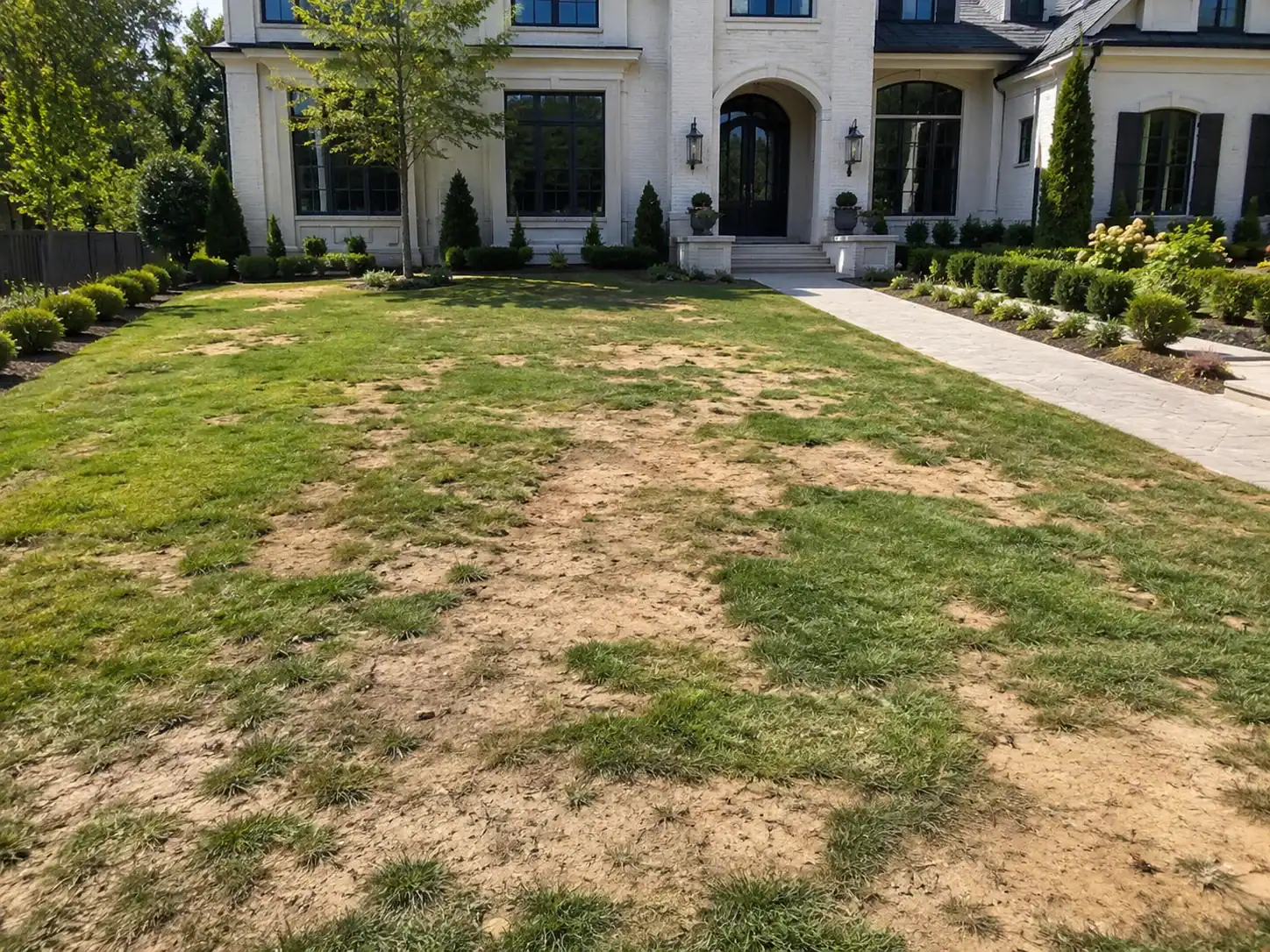
This is where a lot of homeowners lose time and money. Bentgrass is a cool-season grass, which means it thrives in the mild temperatures of spring and fall but struggles in summer heat. When temperatures climb on Long Island in July and August, bentgrass goes dormant and browns out, creating irregular dead-looking patches across the lawn.
The problem is that those patches look almost identical to symptoms of grub damage or drought stress. Homeowners and even some generalist lawn care companies treat for the wrong thing entirely. Grub control goes down. The lawn greens back up in September when bentgrass comes out of dormancy, and the homeowner thinks the problem is solved. Then the following summer, the brown patches are back and slightly larger.
We’ve diagnosed this pattern in Smithtown, Stony Brook, Huntington, Patchogue, and communities across Suffolk County more times than we can count. The misdiagnosis is common, and it’s not always the homeowner’s fault. Bentgrass doesn’t announce itself. It just quietly spreads while you’re treating something else.
The visual cues to look for: in spring and early summer, bentgrass patches appear as noticeably lighter, almost lime-green areas with a finer texture and a low, matted growth habit. They look different from the surrounding turf, but the difference can be subtle if you’re not looking for it. By midsummer, those same areas brown out and the distinction becomes harder to see, which is exactly when the misdiagnosis tends to happen.
Getting the identification right before any treatment starts is the only way to avoid wasting time on the wrong solution.
This is the single most important thing to understand about creeping bentgrass, and it’s the reason so many DIY attempts and one-off treatments fail. The visible patch, the area that looks off-color or matted, represents the most established growth. But the stolons have already traveled beyond that boundary. They’re rooting into the surrounding turf, hiding in the thatch layer above the soil line, waiting.
When a homeowner treats only the visible patch, the surrounding stolons survive and continue spreading. The patch appears to shrink, or even disappear for a season, and then it’s back, often larger than before. This cycle repeats until the infestation has spread far enough to be unmistakable, at which point the lawn may need full renovation rather than targeted treatment.
The thatch layer is key to understanding why bentgrass is so persistent. Stolons live and travel in that zone just above the soil, which means even a well-applied herbicide can miss them if the thatch is dense enough to block penetration. This is also why aerating an infested lawn without treating it first can make things worse, as aeration can move stolon fragments to new areas of the lawn, spreading the problem rather than reducing it.
Long Island’s sandy glacial soils add another layer of complexity. The fast-draining nature of Suffolk County’s soil affects how herbicide products absorb and move through the root zone. A treatment protocol that works predictably in heavier soils elsewhere may behave differently here, which is one of the reasons our local experience matters more than a national playbook when dealing with bentgrass on Long Island.
There’s also the matter of golf course proximity. Long Island has an exceptionally high density of golf courses, many of which use bentgrass on greens and tee boxes. Seed dispersal from nearby courses is a real and documented pathway for bentgrass to establish in adjacent residential properties, and it’s specific to this region in a way that national lawn care programs simply don’t account for.
Want live answers?
Connect with a Lawn Master of Suffolk expert for fast, friendly support.
Effective bentgrass removal is a multi-step process, and the number of steps is not negotiable. It’s the nature of the weed. Our professional standard involves a selective herbicide called mesotrione applied in two to three treatments spaced approximately two weeks apart, paired with custom fertilizer blends aligned with New York’s April 1 through October 31 fertilizer law. Tenacity targets bentgrass without killing the desirable cool-season grasses in your lawn, which is why it’s the preferred tool for this type of infestation.
During treatment, the bentgrass will turn white, then brown, and die back. That’s the expected result, not a sign that something went wrong. What happens after the bentgrass is dead is just as important as the treatment itself.
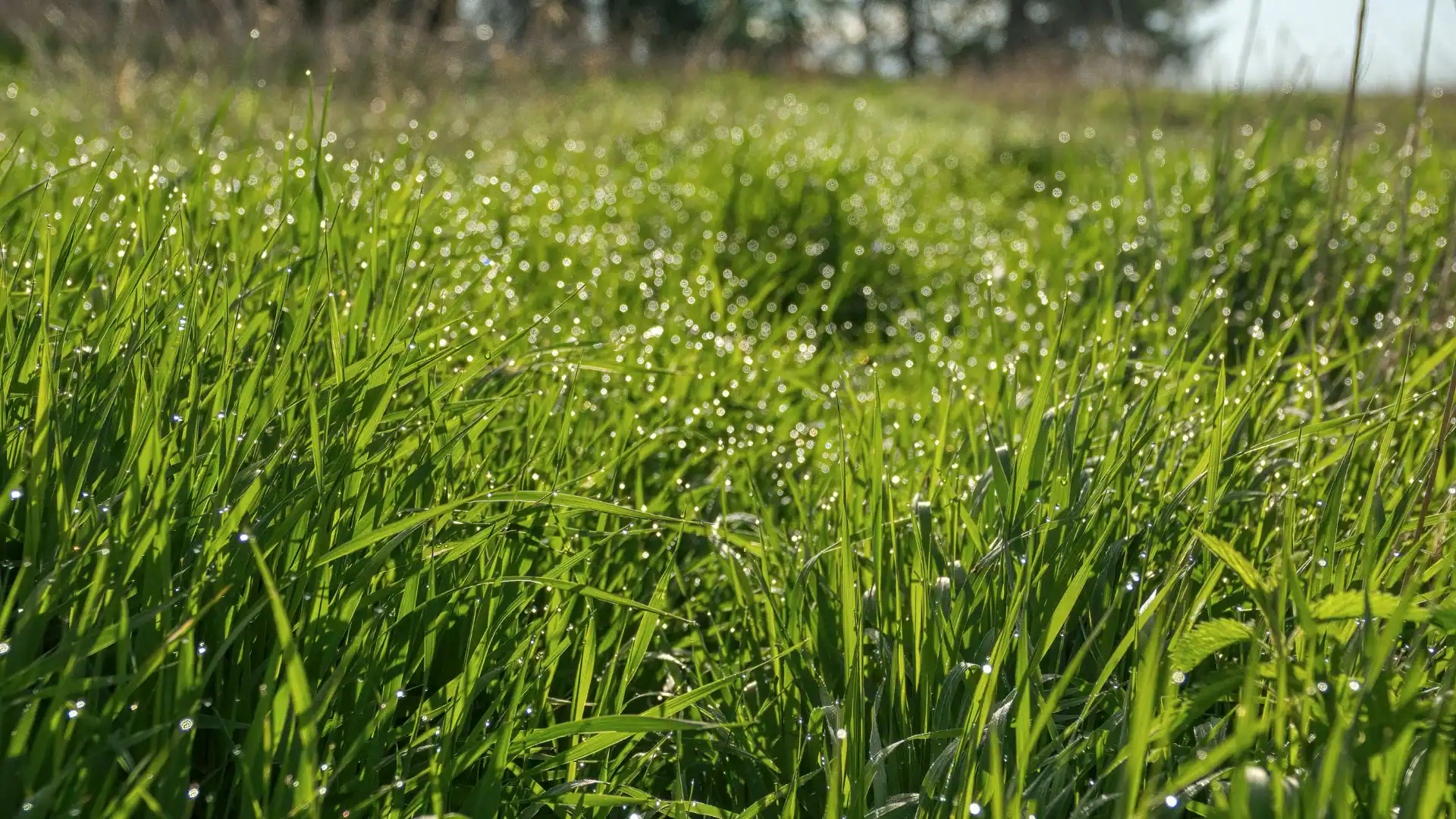
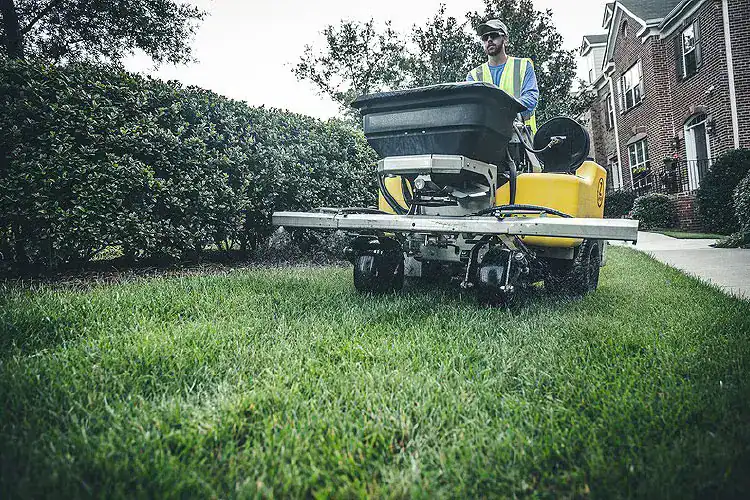
Once the bentgrass dies back, you’re left with bare or thinned areas where it used to be. Those areas need to be addressed quickly because bare soil is an open invitation for new weed pressure. The renovation phase, which may utilize specialized hydraulic equipment for power seeding, is what restores the lawn. Skipping it means the dead bentgrass areas stay bare or get colonized by something else.
The timing of this phase matters significantly in Suffolk County. September and October are the optimal window for overseeding with cool-season grasses on Long Island. Soil temperatures are still warm enough to support germination, air temperatures have dropped, and the conditions favor establishment before the first frost. A treatment program that gets bentgrass killed in late summer lines up well with that renovation window, which is part of why late summer is the preferred treatment timing for us here.
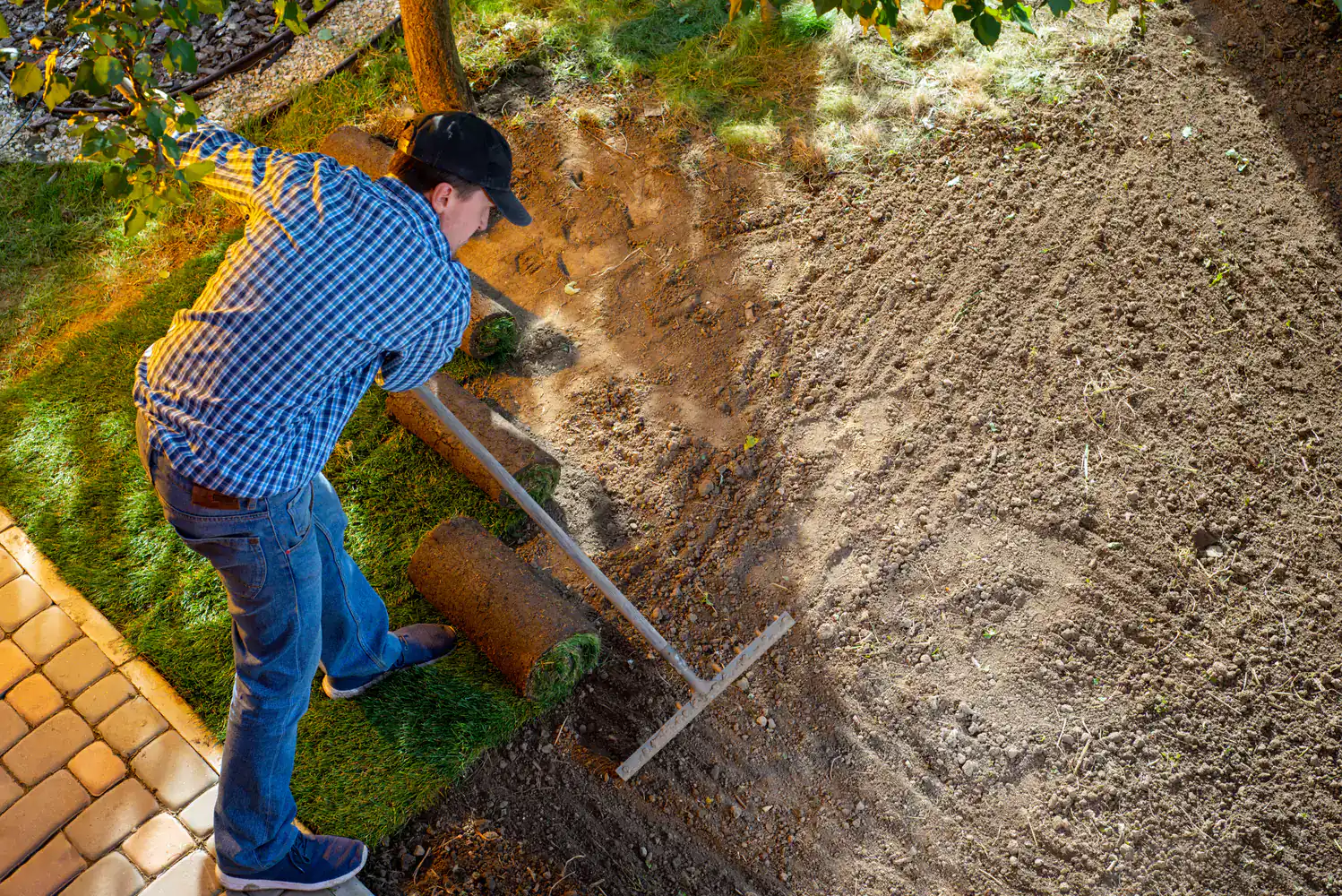
For lawns where bentgrass has spread beyond the point where targeted treatment makes sense, where it’s taken over the majority of the lawn rather than distinct patches, full lawn renovation may be the more practical path. That means killing all existing vegetation, removing the debris, and restarting the lawn from seed. It’s a more disruptive process, but it’s sometimes the only realistic option. We handle both the targeted removal and the full renovation side, depending on what your lawn needs.
Follow-up matters too. Even after a successful multi-application treatment and renovation, spot spraying the following spring is considered a critical step by professional applicators, not optional. Bentgrass has a persistent seed bank in the soil, and any stolon fragments that survived treatment can regenerate. A follow-up pass in spring catches those before they have a chance to re-establish.
Any commercial application of pesticides, including herbicides used for bentgrass control, requires a commercial pesticide applicator or technician certification through the NYS Department of Environmental Conservation. This isn’t a voluntary credential or a marketing designation. It’s a legal requirement, and operating without it is illegal.
Backed by 38 years of experience, every technician on our team holds a valid NYS DEC pesticide technician certification. Every job is handled by licensed applicators, ensuring trained professionals manage treatments rather than unlicensed labor supervised remotely. That distinction matters when herbicides are being applied to your lawn, near your family, and adjacent to your neighbors’ properties.
Suffolk County adds another layer on top of the state requirement: a local ordinance that mandates neighbor notification prior to pesticide applications. We build that into every job as a matter of course. We tell you what was applied, when, and why, and we handle the notification requirements as part of the process, not as an afterthought. For homeowners in Setauket, Port Jefferson, Kings Park, Commack, Hauppauge, and other communities across the county, that transparency is something you should expect from any company you hire.
It’s also worth noting that selective herbicide products are available to consumers, and some homeowners do attempt to apply them themselves. The product itself isn’t the issue. It’s the application rate, the surfactant mixing, the timing between treatments, and the follow-up renovation that require experience to execute correctly. Errors in any of those steps lead to incomplete kill, potential damage to desirable grass, and the frustrating experience of watching bentgrass come back for another season. The protocol works well when it’s done right.
Bentgrass is a solvable problem, but it requires the right diagnosis, the right treatment protocol, and a realistic plan for what comes after. Single-application spot treatments rarely hold. Treating for grubs when the real issue is bentgrass wastes an entire season. And leaving it alone means it spreads quietly, steadily, year after year.
If you’re seeing patchy, off-color areas in your lawn, whether it’s the lime-green contrast in spring or the brown dormancy patches in summer, it’s worth getting a clear answer on what you’re dealing with before any treatment starts. The identification step is where most failed attempts begin to go wrong.
We’ve been treating bentgrass and restoring Suffolk County lawns since 1987. If you’re ready to stop guessing and start with a real plan, reach out to us. We’ll take a look at what’s going on and tell you what it will take to fix it.
Summary:
Article details:
Share: