Not all brown spots have the same cause — and not all lawn services are equipped to tell the difference. Here's what professional lawn treatment actually looks like.
You’ve noticed the brown patches. Maybe you’ve watered more, tried something from the hardware store, or hired someone who came out once and never quite solved it. The spots came back. Or spread. Or you still don’t know what caused them in the first place.
That’s actually the most common story we hear from Suffolk County homeowners. Brown spots in a lawn can come from half a dozen different sources — fungal disease, grub damage, drought stress, compacted soil, fertilizer burn — and each one needs a different fix. Getting the diagnosis wrong means you’re treating the wrong problem. We’ll walk you through what professional treatment actually involves, what it costs, and how to know whether you’re getting real value for your money.
Most homeowners shopping for lawn care focus on the price per visit. That’s understandable, but it’s also how people end up paying twice — once for a service that didn’t work, and again to fix what it missed or made worse.
Professional lawn care for a standard residential property in Suffolk County typically runs between $100 and $500 per month depending on your lawn’s size, condition, and what the program includes. Annual programs for a quarter-acre lot generally land between $900 and $4,000. Those numbers sound like a wide range, but the difference usually comes down to what’s actually included — and who’s doing the work.
“Affordable” is a word that gets stretched pretty far in this industry. Some companies use it to mean low upfront cost. We’d argue the most affordable lawn care company is the one that actually fixes the problem the first time — because repeated treatments, failed DIY attempts, and eventual lawn restoration add up fast.
A legitimate professional program should include a diagnosis before any treatment begins. Not a guess, not a generic spray — a real assessment of what’s causing the brown spots and a plan built around that specific lawn. For Suffolk County properties, that means accounting for the local soil profile, the time of year, what grass varieties are present, and what pest or disease pressures are active right now.
It should also include licensed pesticide application. In New York State, any business applying pesticides for hire is required to register with the NYSDEC and employ certified commercial applicators. That’s not a technicality — it’s a legal requirement that exists because pesticide application done wrong causes real harm. Suffolk County has some of the strictest pesticide regulations in the state, including buffer zones around public drinking water wells and a neighbor notification law requiring 48-hour advance notice before certain spray applications. We know these rules inside and out. An unlicensed crew typically doesn’t — and the liability for violations can fall on the property owner.
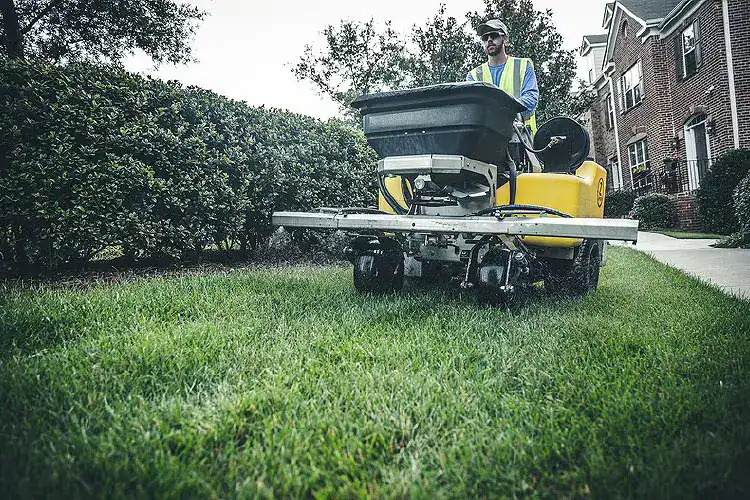
What you’re paying for in our premium program is the expertise to diagnose accurately, the credentials to treat legally, the products that aren’t available at retail, and a program that adjusts to your lawn’s actual needs rather than running the same schedule on every property. That’s a different product than a budget service, even if both show up with a truck.
When you break it down by month, the average homeowner spending $150 to $200 per month on professional lawn care consistently reports better results and less time spent managing the problem themselves. That math changes quickly when you factor in the cost of a failed treatment, a spreading disease, or a grub infestation that wasn’t caught in time.
Long Island’s soils are predominantly sandy glacial outwash — they drain quickly, leach nutrients fast, and respond differently to fertilizer and treatment than the clay-heavy soils you’d find in other parts of New York State. A fertilizer blend formulated for general use often doesn’t deliver the same results here. The nutrients move through too fast, the timing windows are different, and the disease pressures are specific to this region’s climate.
Suffolk County’s summer profile — daytime temperatures consistently above 80°F with nighttime lows staying above 65°F and high humidity near the water — creates ideal conditions for brown patch disease from July through August. Red thread, dollar spot, and leaf spot are also common here and each one looks a little different on the ground. Treating brown patch with a product meant for dollar spot, or applying fungicide when the real problem is grub damage, doesn’t just fail — it can make conditions worse.
That’s why a one-size-fits-all approach is a real problem in this market specifically. A program built for a lawn in a drier, cooler climate doesn’t translate to a property in Centereach or Mount Sinai or Stony Brook. The timing, the products, the soil considerations — they’re all different. Aeration timing is a good example: the ideal window for core aeration and overseeding in Suffolk County is September through October, when soil temperatures are in the 50 to 65°F range and cool-season grasses can establish before winter. Miss that window with a generic national program and you’ve lost the season.
We’ve been working in this county since 1987. That means we’ve seen brown patch outbreaks, grub cycles, drought years, and wet springs in this specific market for nearly four decades. That kind of local pattern recognition isn’t something you can replicate with a national protocol.
Want live answers?
Connect with a Lawn Master of Suffolk expert for fast, friendly support.
The honest comparison between premium and budget lawn care isn’t about price per visit. It’s about what happens to your lawn over a full season — and what it costs if things go wrong.
Budget services often send rotating crews with no institutional knowledge of your property, apply generic programs that don’t account for your specific soil or grass type, and in some cases use unlicensed applicators who aren’t legally permitted to apply pesticides in New York State. The short-term savings disappear quickly when a misdiagnosed fungal problem spreads across half your lawn or a grub infestation goes untreated through the summer.
This is a question most homeowners don’t think to ask until something goes wrong. In Suffolk County, the consequences of hiring an unlicensed pesticide applicator can extend well beyond a lawn that doesn’t improve.
New York State Environmental Conservation Law imposes civil penalties of up to $5,000 per violation for illegal pesticide application. Suffolk County’s Local Law 41-2007 establishes pesticide-free buffer zones around public drinking water wells — and this county draws its drinking water from underground aquifers, which is why those rules exist and why they’re enforced seriously. If an unlicensed operator sprays within a protected buffer zone, the enforcement action and remediation costs can land on the property owner, not just the applicator.
Beyond the regulatory exposure, there’s the practical problem: unlicensed crews typically don’t carry the diagnostic training to identify what’s actually causing your brown spots. They may apply a broad-spectrum product and hope for the best. If it works, fine. If it doesn’t — or if it damages surrounding plants, drifts to a neighbor’s property, or contaminates a well buffer — you’re dealing with a much larger problem than the original brown spots.
Licensed NYSDEC-certified applicators are trained in identification, application rates, product selection, and local compliance requirements. We know when a fungicide is appropriate versus when you’re looking at insect damage that needs a different product entirely. We follow the neighbor notification law. We place the required yellow flags after treatment. These aren’t inconveniences — they’re the professional standard of care, and they exist for good reasons.
One-time services from unlicensed operators also tend to cost 50 to 100 percent more per visit than recurring programs with licensed providers, because there’s no program structure and no accountability built in. You pay more, get less expertise, and have no recourse if the results don’t materialize.
This is where a lot of Suffolk County homeowners get stuck. They’ve been with the same company for a season or two, the lawn looks okay but not great, and they’re not sure if that’s just how lawns are or if they’re not getting what they’re paying for.
A few things worth looking at. First, does your service provider diagnose before they treat? If a technician shows up, applies something, and leaves without explaining what they found or what they applied, that’s a gap. A good program should come with clear communication about what’s being done and why — especially when you’re dealing with brown spots, where the cause matters as much as the treatment.
Second, are they adjusting the program based on what’s actually happening with your lawn, or running the same schedule regardless of conditions? Suffolk County’s weather doesn’t cooperate with rigid calendars. A wet June followed by a hot July creates very different disease pressure than a dry spring. A program that doesn’t adapt isn’t really custom — it’s just recurring.
Third, ask to see their pesticide applicator license. A legitimate provider won’t hesitate. If that question creates friction, it tells you something important.
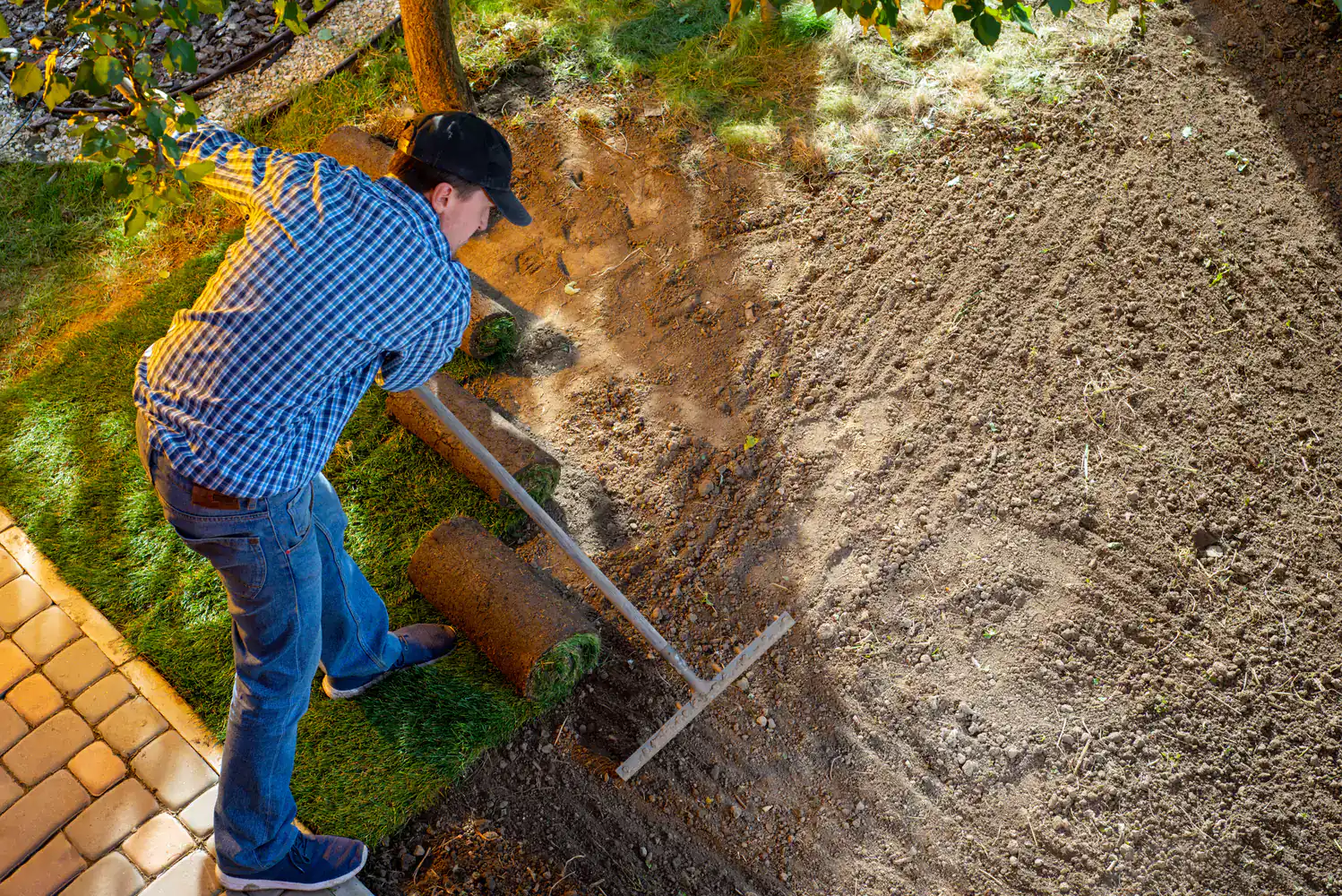
The cost of lawn care per month should reflect a real program — not just labor. Custom-blended fertilizer formulated for Long Island’s sandy soils, hydraulic aeration equipment that produces cleaner results than consumer-grade rentals, and the ability to restore a lawn from seed if the damage is significant enough — these are the components that justify a professional rate. These are the details that separate budget services from providers who actually understand what it takes to maintain a healthy lawn in this region.
What you’re ultimately comparing is the cost of getting it right the first time versus the cost of getting it wrong and starting over. In a market where lawn restoration can run into the thousands and regulatory violations carry real financial penalties, the math on premium service tends to work out.
Brown spots in a lawn are rarely a simple problem, and they’re almost never solved by the same product twice in a row without understanding what’s driving them. In Suffolk County, where the soils, climate, disease pressures, and regulatory environment are all specific to this region, the quality of the diagnosis matters as much as the treatment itself.
What premium service actually delivers is accuracy — the right call on what’s causing the problem, the right products applied by licensed professionals, and a program built around your lawn rather than a generic schedule. That’s what separates a service that fixes the problem from one that manages it indefinitely.
If your lawn has been dealing with brown spots that keep coming back, or you’ve had work done that didn’t hold, we’ve been working in this county since 1987 and are equipped to give you a straight answer on what’s actually going on — and what it will take to fix it for good.
Summary:
Article details:
Share: