If your lawn isn't responding to fertilizer, compacted soil is likely the reason. Here's what core aeration actually does — and why equipment quality changes everything.
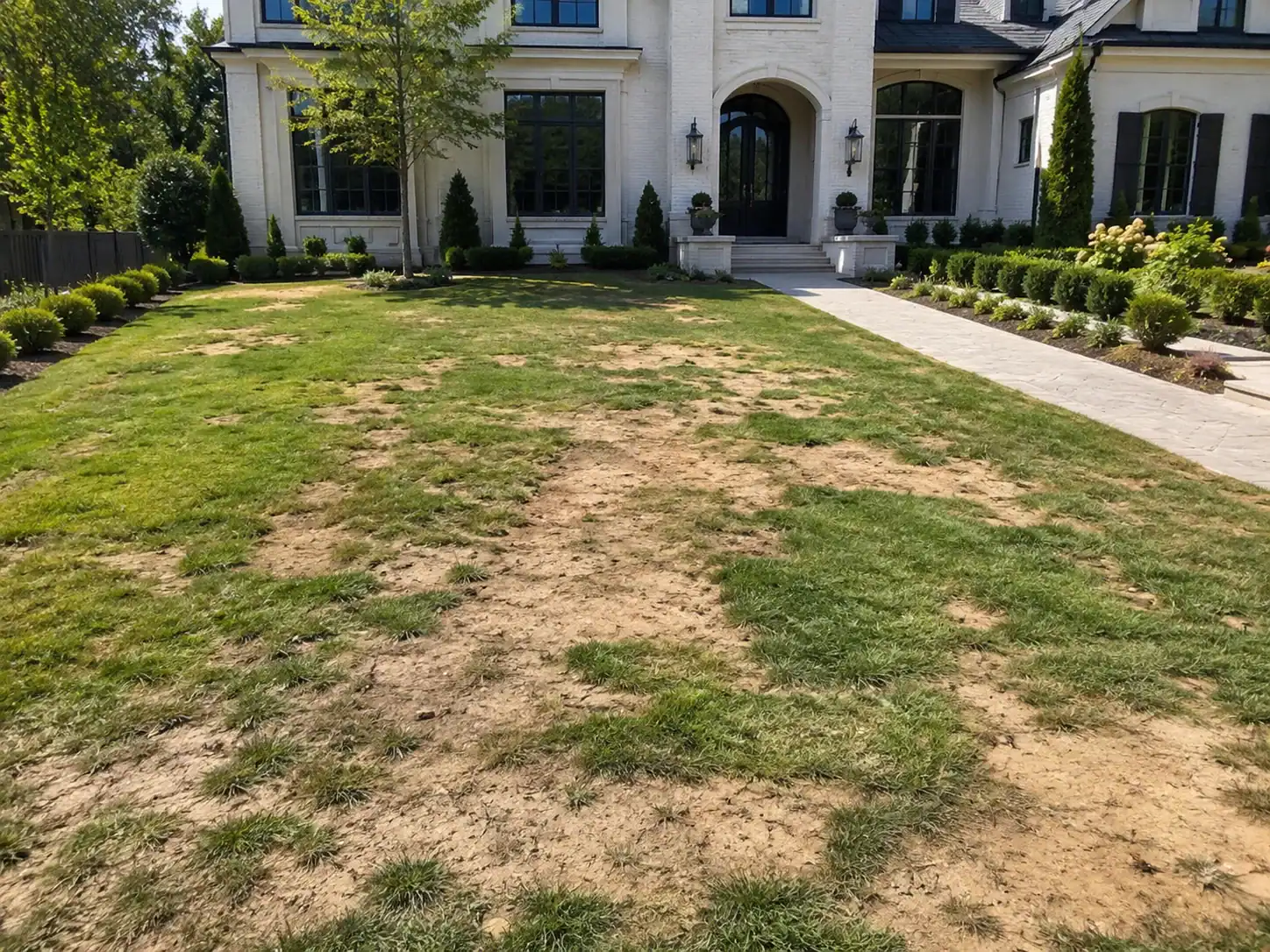
You’ve fertilized. You’ve watered. Maybe you’ve overseeded. And yet every summer, your lawn still thins out, browns up, or just refuses to look the way it should. It’s frustrating — especially when you’re putting real money into it year after year.
Here’s what most people don’t find out until later: the problem usually isn’t what you’re applying. It’s whether any of it can actually get through. Compacted soil acts like a barrier between your lawn’s surface and its root zone — and no amount of fertilizer fixes that on its own. Core aeration does. This guide covers how the process works, what it costs, and what actually separates a professional result from a mediocre one.
Core aeration is a mechanical process that removes small plugs of soil — typically two to three inches deep — from across your lawn. Those holes open up pathways for air, water, and nutrients to reach the root zone directly instead of sitting on a compacted surface and running off. The plugs left behind break down on their own within a week or two, returning organic matter back into the soil.
It sounds simple, and in principle it is. But the results depend heavily on how it’s done. Depth consistency, equipment type, and the pattern of passes across your lawn all affect how much compaction is actually relieved. A shallow pass with a worn-out machine gives you holes, but not the kind that change how your lawn grows.
Most general landscapers who offer aeration as an add-on service are using the same walk-behind machines you can rent from Home Depot for around $97 to $108 a day. Those machines do the job on a flat, moderately compacted lawn in decent condition. But they struggle to maintain consistent tine depth on slopes, hard ground, or dry soil — which is exactly where compaction tends to be worst.
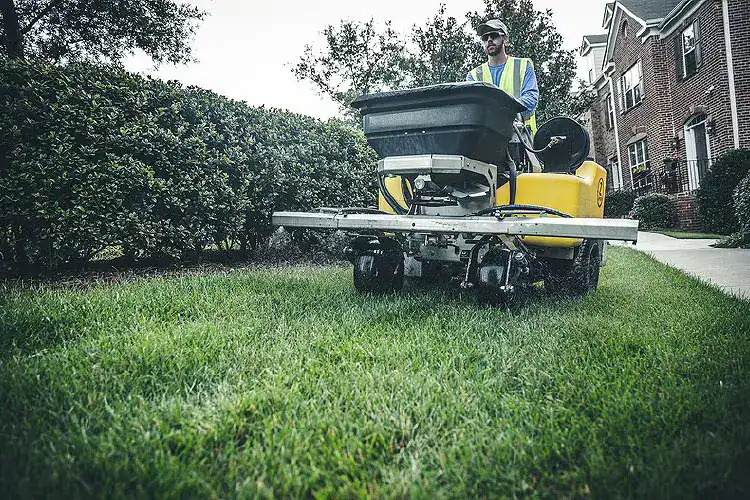
Hydraulic aerators operate differently. They use hydraulic pressure to drive the tines into the ground with consistent force regardless of terrain. That means you get uniform penetration across your entire property — not just the easy sections. The holes are deeper, more consistent, and spaced more reliably, which translates directly into better soil decompaction and more open channels for your lawn to recover through.
We use hydraulic aerating and seeding equipment on every job. It’s not a minor distinction. When you’re trying to break up genuinely compacted Suffolk County soil — the kind that’s been packed down by years of foot traffic, mowing, and Long Island’s freeze-thaw winters — the difference in penetration depth and consistency is real and visible in the results.
It’s also worth understanding what core aeration is not. Spike aeration, which pokes holes without removing any soil, can actually make compaction worse by pushing soil sideways rather than relieving pressure. Liquid aeration products have limited evidence behind them for established compaction. True core aeration — the kind that physically extracts material from the ground — is the only method with a consistent track record, and it requires the right equipment to do it properly.
This is the part that surprises most homeowners. If your soil is compacted, fertilizer applied to the surface has nowhere to go. It sits on top, gets washed off by rain, or leaches away before it ever reaches the roots. You’re essentially spending money on a treatment that can’t penetrate the barrier it needs to cross to work.
Aeration changes that equation. Once the soil is opened up, nutrients can move through those channels directly into the root zone — which is where grass actually uses them. The timing matters too. Aerating in early fall, then following up with fertilizer while the soil is still warm and the channels are fresh, gives your lawn the best possible window to absorb what you’re putting into it.
We use a custom-blended fertilizer formulated specifically for our programs — not an off-the-shelf product. The nutrient ratios are built around what Long Island’s sandy loam soil actually needs, not what sells well at a garden center. When you combine that with hydraulic aeration that opens the soil properly, the two work together in a way that a generic fertilizer on an unaeated lawn simply cannot replicate.
For homeowners in Smithtown, Huntington, Commack, and across Suffolk County who’ve been putting money into fertilizer programs without seeing the results they expected, this is usually the missing piece. The lawn isn’t failing to respond because the fertilizer is wrong. It’s failing to respond because the soil won’t let it through.
Want live answers?
Connect with a Lawn Master of Suffolk expert for fast, friendly support.
Nationally, professional core aeration runs between $107 and $202 for a typical quarter-acre lawn, with most homeowners paying around $141 on average. In the New York metro area — which includes Suffolk County — expect to pay toward the higher end of that range, reflecting local labor costs and the scale of operation required to service properties across a county this size.
Yard aeration cost scales with property size, soil conditions, and whether you’re combining aeration with overseeding. A half-acre property typically runs $300 to $400, while a full acre averages $600 to $800. These are professional service rates — not DIY rental costs, which carry their own hidden expenses in time, equipment deposits, and the risk of uneven results.
Aeration and overseeding are most effective when done together, and there’s a straightforward reason for it. The moment aeration is complete, you have hundreds of open channels in your soil — each one a direct pathway for seed to reach the ground and make contact with loose, receptive soil. That seed-to-soil contact is what drives germination. Broadcast seeding onto unbroken ground gives seed nowhere to anchor; aeration and seeding done in sequence puts it exactly where it needs to be.
The combined cost for aeration and seeding on a 10,000-square-foot lawn typically runs between $160 and $425, depending on grass type and soil conditions. That range reflects meaningful differences in seed quality, equipment, and how the service is structured — a bundled program done right is not the same as two separate services bolted together.
We use hydraulic seeders that work in tandem with our aerators, placing seed with precision into the channels that were just opened. That’s a different outcome than what you get when a company aerates with a rental machine and then broadcasts seed from a handheld spreader. The germination rates reflect it.
For Suffolk County lawns dominated by cool-season grasses — tall fescue, Kentucky bluegrass, perennial ryegrass — the fall window is when aeration and overseeding delivers the most dramatic results. Soil temperatures are still warm enough to support germination, the heat of summer has passed, and the grass has weeks of active growing time before it slows down for winter. Missing that window means waiting a full year for the same opportunity.
For Long Island lawns, the optimal aeration window runs from late August through mid-October. That’s the period when soil temperatures are warm enough for grass to actively recover and new seed to germinate, but the brutal heat of summer has passed and cool-season grasses are moving into their strongest growth phase of the year.
That window is finite — and in Suffolk County, it’s made even more specific by local regulation. The county prohibits fertilizer applications between November 1st and April 1st, with violations carrying fines up to $1,000. That blackout period exists to protect Long Island’s sole-source aquifer, which supplies the drinking water for the entire island. It also means that if you want to aerate, overseed, and follow up with a fertilizer application before the ground closes for winter, you need to act in September or early October — not late October when it feels more convenient.
This is one of the places where working with a company that’s been operating in Suffolk County since 1987 actually matters. We know these regulations, we build our programs around them, and we schedule accordingly. Homeowners in Patchogue, Babylon, Hauppauge, Setauket, and across the county who’ve tried to coordinate aeration and fertilization on their own often run into this deadline without realizing it was there.
Spring aeration — April through May — is a secondary option for lawns that genuinely can’t wait, but it’s less ideal for overseeding because new seedlings established in spring have to survive a Long Island summer before they’re fully established. Fall gives new grass a gentler path to maturity. Most lawns benefit from annual aeration; heavily compacted properties or those with significant foot traffic may need it twice a year to stay ahead of the problem.
If your lawn has been underperforming despite regular fertilization, compaction is worth ruling out before you spend another season guessing. Core aeration is a straightforward fix — but the equipment, the timing, and the follow-up program all determine whether you actually see results or just end up with plugs on the surface and the same lawn underneath.
The difference between a hydraulic aerator and a rental walk-behind, between a licensed professional and a general landscaper adding aeration as an afterthought, between a custom fertilizer program and an off-the-shelf product — none of it is marketing. It’s what separates a lawn that recovers and thickens from one that stays stuck.
We’ve been doing this work in Suffolk County since 1987. If you’re ready to find out what your lawn actually needs — and whether aeration is the right next step — reach out and we’ll take a look.
Summary:
Article details:
Share: