Most Suffolk County homeowners think spring is the time to fix their lawn. They're wrong, and the real window is closing faster than you think.
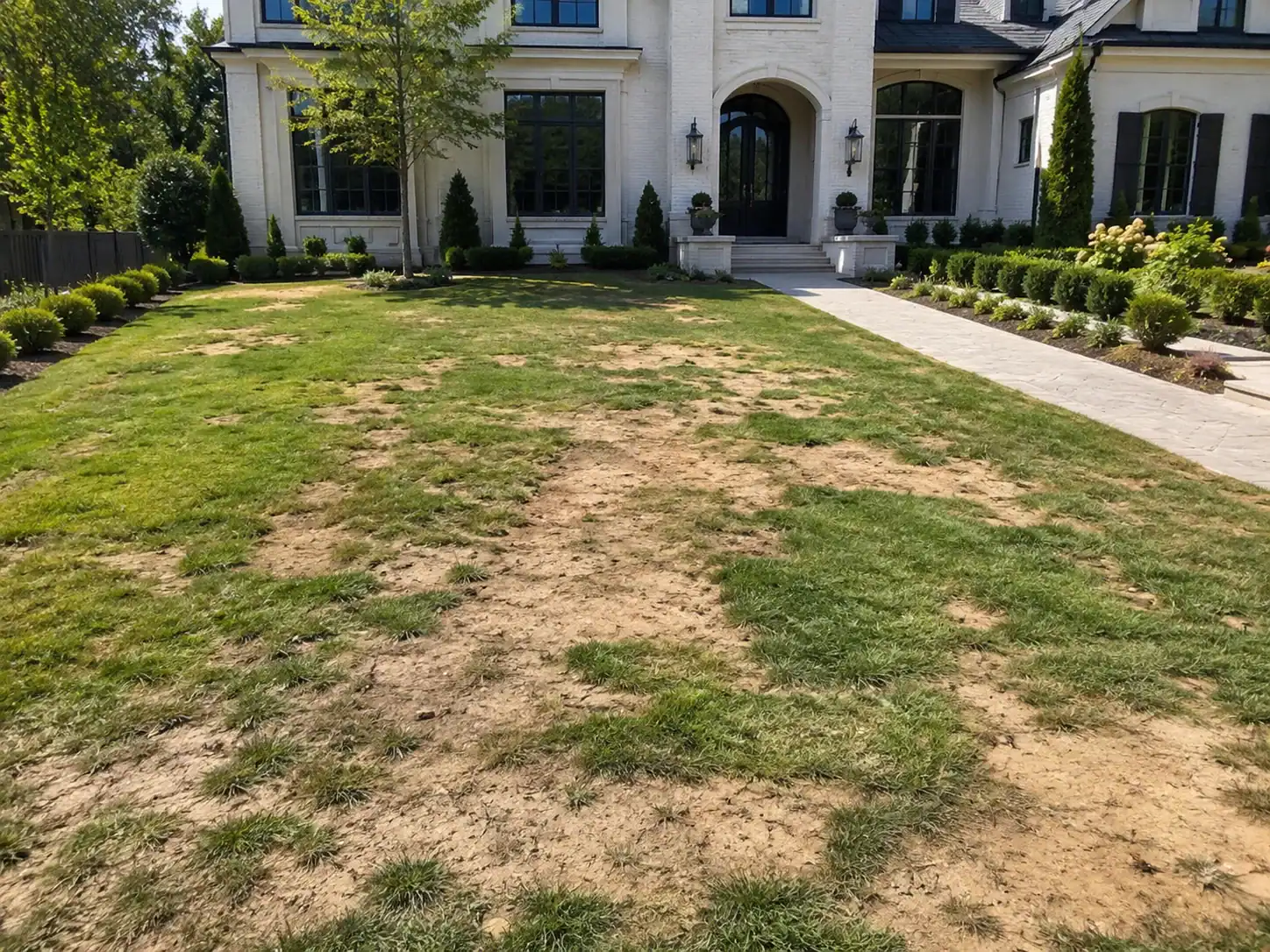
By Labor Day, a lot of Suffolk County lawns look like they’ve given up. Brown patches, thin spots, weeds filling in where grass used to be. It’s easy to assume the damage is done and that you’ll deal with it next spring. But that assumption is exactly what keeps lawns stuck in the same cycle year after year. Late summer isn’t the wrong time to fix your lawn. It’s the right time for premium care. And if you wait until spring, you’ll have missed the best window by six full months. Here’s what’s going on, why the timing matters so much, and what a premium lawn renovation looks like in Suffolk County, NY.
Cool-season grasses, the kind that grow across Suffolk County including tall fescue, perennial ryegrass, and Kentucky bluegrass, thrive in two windows: spring and fall. But fall is the stronger of the two by a significant margin.
Soil is still warm from summer, which accelerates germination. Air temperatures are cooling, which is exactly what young seedlings need to grow without stress. Weed competition drops off sharply. And autumn rainfall does a lot of the watering work for you.
Spring seeding sounds logical, but it forces new seedlings to survive their first summer almost immediately. That’s a brutal test for grass that’s only a few weeks old. Fall premium lawn renovation gives new turf two full cool seasons to root and establish before it ever faces summer heat.

The effective renovation window on Long Island runs from roughly September 1 through October 15. After that, soil temperatures start dropping toward 50°F, the threshold below which grass seed germination slows dramatically and new seedlings struggle to establish before the ground freezes.
But here’s what most lawn care content doesn’t tell you: Suffolk County has a second deadline that’s just as important as the biological one. Under Local Law 41-2007, the county’s Healthy Lawns, Clean Water ordinance, no nitrogen or phosphorus premium fertilizer can be applied to turf from November 1 through April 1. Violations carry fines of up to $1,000 per application. The law exists to protect Long Island’s sole-source aquifer, which supplies drinking water to roughly 1.5 million people and has no backup supply from the mainland.
Why does this matter for renovation timing? Because newly seeded grass needs a fall fertilizer application to establish properly. If your renovation starts too late and the seed hasn’t had time to take root before November 1, you’ve missed both the germination window and the feeding window simultaneously. That’s not just a setback. It’s a wasted season.
This is why we push hard to get renovations booked and completed by early October. The window looks wider than it is. Between scheduling, site preparation, seeding, and giving the lawn enough time to receive that pre-blackout feeding, six weeks goes quickly. If you’re thinking about renovating this year, the time to act is now, not when it starts to feel like fall, because by then, the best conditions have already passed.
Up to 60 to 80 percent of unirrigated cool-season lawns on Long Island go dormant in a typical summer. Dormancy is a survival mechanism, not a death sentence. The grass pulls back to protect its crown, the growing point just below the soil surface, and waits for conditions to improve.
It looks brown. It feels crunchy underfoot. But it’s alive, and it will respond. The mistake most homeowners make is interpreting that August dormancy as a sign that the lawn is beyond saving, and then either giving up or assuming spring is the time to address it.
That late-summer moment, when the lawn looks its worst and the homeowner’s frustration peaks, is the signal that renovation season is arriving. Here’s the distinction worth understanding: dormancy is normal and recoverable. But if your lawn has thin areas, bare patches, persistent weeds, or damage from grubs or heavy foot traffic, dormancy is masking a deeper problem that won’t fix itself when temperatures cool.
Suffolk County’s sandy glacial soils make this worse than it might be in other parts of the country. Most of the county sits on glacial outwash plains, including Haven loam, Riverhead, and Plymouth soil associations, that drain fast and leach nutrients quickly. Lawns growing in these soils are more drought-sensitive than average, more prone to thinning under summer stress, and more likely to show real damage by August. That’s not a reflection of poor care. It’s the nature of local soil, weather, and seasonal timing. But it does mean that premium renovation, when it’s needed, has to be done correctly for local conditions rather than according to a generic national playbook.
Want live answers?
Connect with a Lawn Master of Suffolk expert for fast, friendly support.
Renovation isn’t a single service. It’s a process, and the right process depends on what your lawn needs. Some lawns need core aeration and power seeding as part of a premium package. Others need full seedbed preparation before any seed goes down. Some have underlying problems, such as nutsedge infestations, bentgrass encroachment, grub damage, or compacted soil, that have to be addressed before renovation will hold.
We assess the lawn first. We’re not going to recommend a full lawn renovation if restoration will do the job, and we’re not going to sell you overseeding when what your lawn needs is power seeding. The diagnosis comes before the prescription.
This is one of the most common points of confusion we hear from homeowners, and it’s worth being direct about. Overseeding, broadcasting seed over an existing lawn often combined with aeration, is a maintenance practice. It’s appropriate when the lawn is reasonably healthy but thinning, and when the underlying soil structure is sound. Done at the right time of year, it can thicken a lawn that has decent bones.
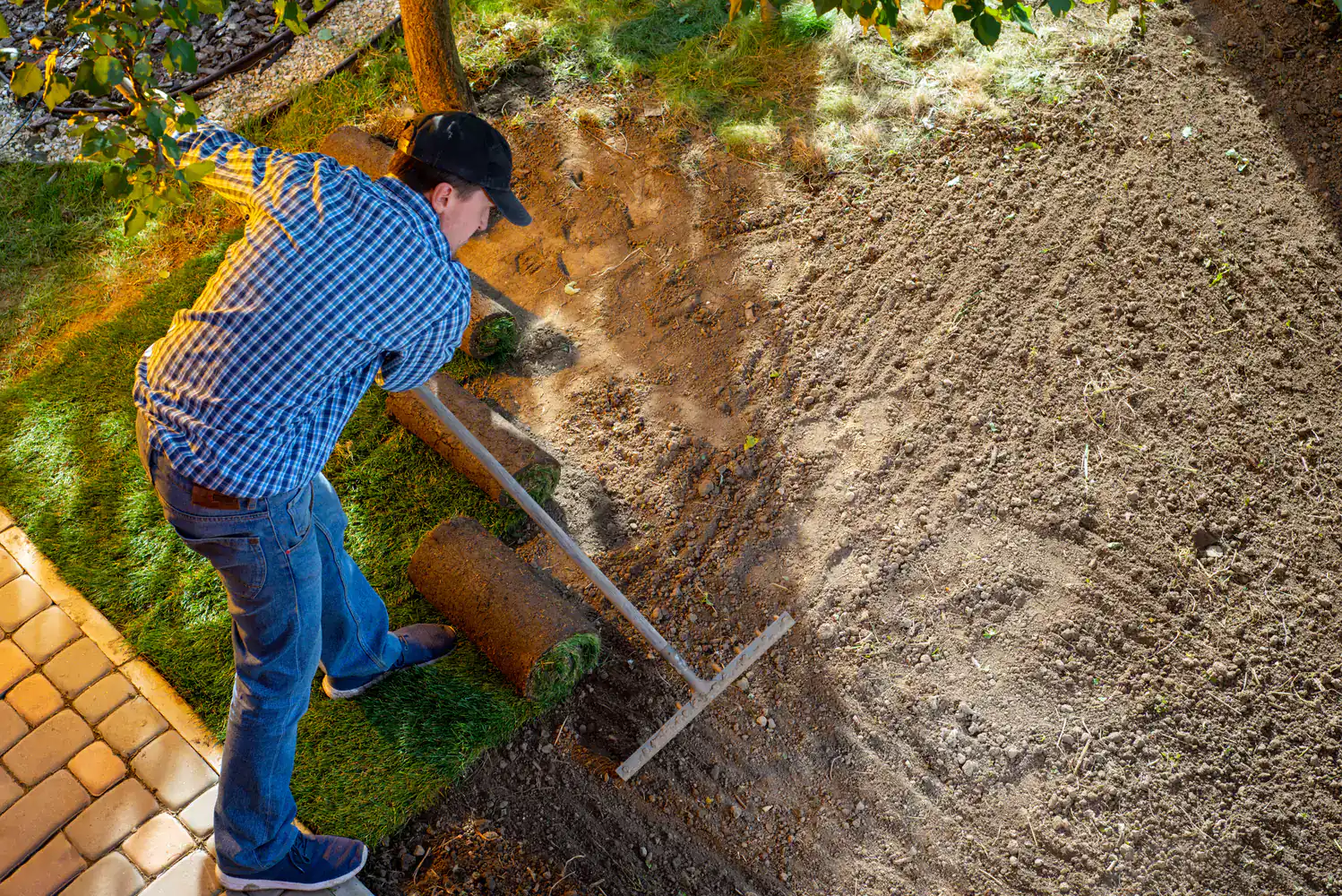
Renovation is something different. It’s for lawns where more than roughly half the turf is weeds, bare, or damaged to the point where overseeding won’t produce meaningful results. Renovation may involve power seeding, also called slice seeding or slit seeding, which cuts rows directly into the soil and plants seed at the correct depth using specialized hydraulic equipment. It produces far superior germination rates compared to broadcasting seed on top of existing turf, but it’s more labor-intensive and requires professional expertise.
For some lawns, renovation means going further: addressing soil pH, correcting compaction, evaluating for grub damage, and preparing a proper seedbed before any seed goes down. Skipping those steps is one of the main reasons homeowners end up spending money on seeding and seeing little to no improvement.
In Suffolk County specifically, there are a few issues that have to be evaluated before a premium renovation can succeed. Nutsedge, commonly called nutgrass, is endemic to Long Island and will outcompete new grass if it isn’t addressed first. Bentgrass is another persistent problem that spreads into lawns and creates a different-looking, weaker turf that premium renovation alone won’t fix. And in South Shore communities from Babylon through Islip and into Brookhaven, coastal salt stress and the sandiest soils in the county mean seed variety selection matters more than it might elsewhere. These aren’t generic concerns. They’re local ones, and they require someone who’s worked in this county long enough to provide premium care to recognize them.
One of the most common things we hear is some version of: “I’ve tried seeding before and it didn’t work.” Sometimes that’s a timing problem, as seed put down in spring or mid-summer on Long Island faces an uphill battle from the start. Sometimes it’s a seed quality issue.
And sometimes the underlying problem was never addressed, so the new seed was competing against the same conditions that thinned the lawn in the first place. A lawn renovation that lasts starts with an honest assessment of why the lawn is struggling. It uses custom fertilizer blends tailored to local soil, weather, and seasonal timing in Suffolk County, applying nutrients in strict compliance with New York’s April 1 through October 31 fertilizer law. It’s timed to the fall window rather than whenever a call comes in.
Post-seeding care matters just as much. That means a proper watering protocol, a clear first-mow timeline, and a fertilization schedule that works within the county’s November 1 blackout. We also get asked whether a renovated lawn will survive the following summer. The honest answer is that it depends on the grass variety, the soil preparation, and whether the lawn gets any supplemental irrigation during the hottest weeks.
Tall fescue, which is one of the better performers in Suffolk County’s sandy soils, has deeper roots and better drought tolerance than Kentucky bluegrass. Choosing the right variety for your specific conditions is part of what makes the difference between a renovation that holds and one that thins out again by August.
Every technician on our team holds a valid NYS DEC commercial pesticide license, serving as trained licensed applicators to ensure safe and correct treatments across every property. Backed by 38 years of experience, our team brings decades of localized knowledge to every project. We don’t use subcontractors. The crew that shows up to your property is our crew, and they’ve been working Suffolk County lawns long enough to know what they’re looking at. We’ve been doing this for decades, and all of it has been right here, built around the specific soils, climate, and regulations of this county.
The renovation window on Long Island is real, and it’s shorter than most homeowners realize. From late August through early October, the conditions are right, featuring warm soil, cooling air, reduced weeds, and enough time to get a fall feeding in before Suffolk County’s November 1 fertilizer blackout. After that window closes, you’re looking at spring seeding, which is a distant second choice, and another full year of watching the same problems get worse despite your best premium efforts.
If your lawn is thin, patchy, weed-heavy, or just not recovering the way it should after summer, this is the moment to address it rather than waiting until next April. The first step is understanding what the lawn needs, which starts with an honest assessment rather than a one-size-fits-all recommendation.
Reach out to get that conversation started. We’ll tell you what we’re seeing, what we’d recommend, and whether this season’s window still works for your situation.
Summary:
Article details:
Share: