
Hear from Our Customers
Port Jefferson is genuinely one of the higher-risk tick areas on Long Island. The wooded hills above the harbor, the leaf litter along your property borders, the deer moving through Belle Terre and Poquott at dusk all of it adds up to real, sustained tick pressure that does not go away on its own.
What changes after a proper seasonal program is simple: you stop finding ticks on your kids after they play in the backyard. Your dog comes in from the yard without a post-walk inspection ritual. You use your outdoor space the way you actually wanted to when you bought this property without that low-level anxiety that comes with living on the North Shore and knowing what is out there.
Port Jefferson’s coastal humidity keeps the environment moist longer into fall than most inland Suffolk County towns, which means the tick season here runs longer too. A program built for Holtsville or Holbrook is not the same as one built for a property that sits a half-mile from Long Island Sound. The conditions here are specific, and the approach needs to match that.
We have been working in Suffolk County since 1987. That means the technicians treating your Port Jefferson property have spent decades learning exactly how North Shore landscapes behave. The deer pressure along the wooded corridors between Port Jefferson and Mount Sinai. The way properties in Belle Terre hold moisture in their mature tree canopy and stone walls. The specific seasonal windows when nymphal ticks peak on Long Island and when the fall adult surge kicks in. That kind of local knowledge takes time to build.
Every technician we send to your property is a NYSDEC-licensed pesticide professional. Not a labor crew. Not a franchise tech following a laminated card. A licensed applicator who knows what they are doing and why. The owner has been part of this operation since the beginning, and that accountability does not disappear once the truck pulls away from your driveway.
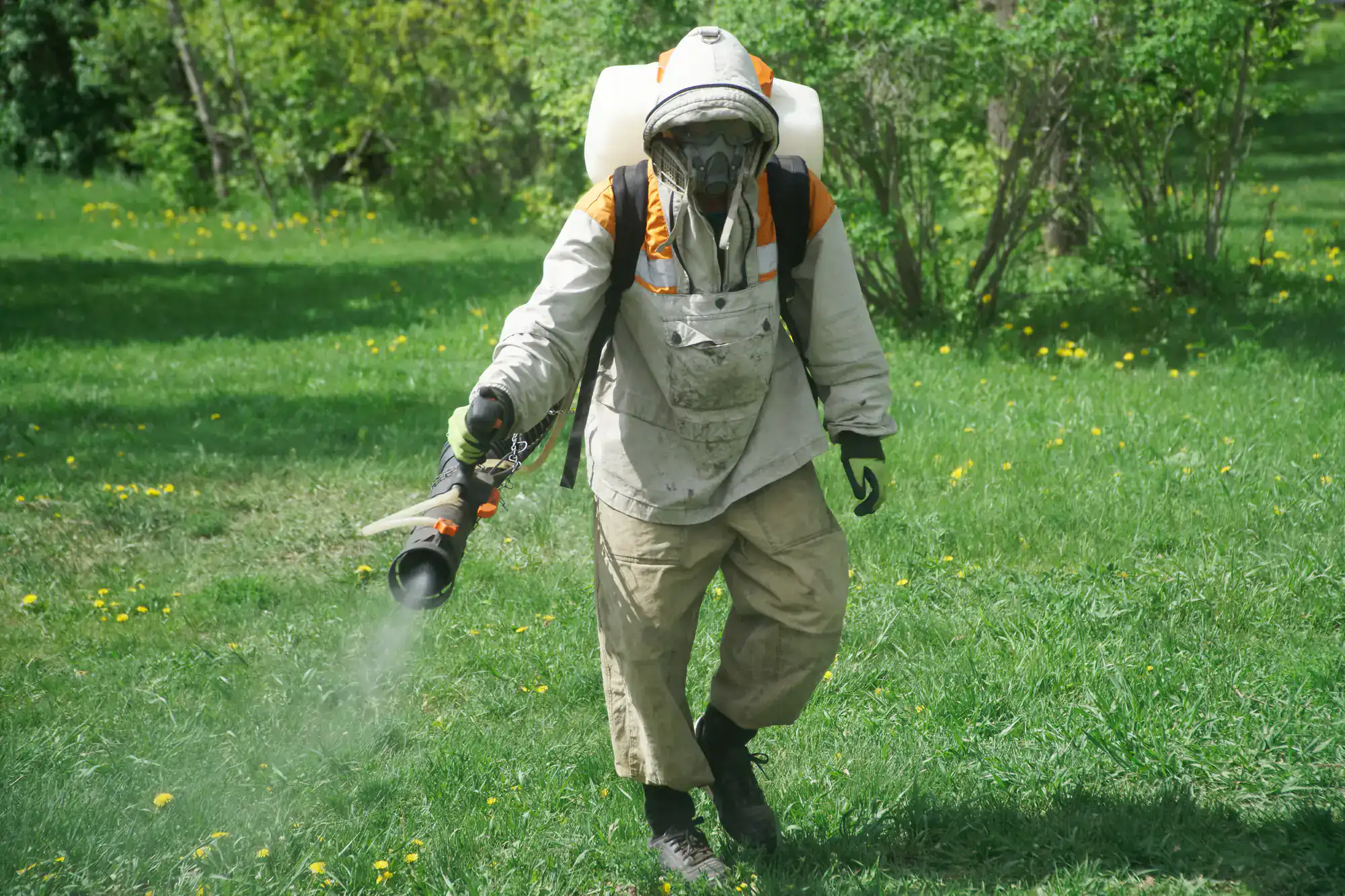
It starts with your specific property not a generic checklist. Port Jefferson lots vary considerably, from compact village homes near the harbor to heavily wooded estates with mature borders and established gardens. Before anything gets applied, we build the approach around what your property actually looks like: where the wooded transitions are, where leaf litter accumulates, where deer are moving through, where your pets spend time, and where your family actually uses the yard.
The program runs on Long Island’s real tick calendar. Treatment begins in early April, ahead of the nymphal tick surge that peaks in May and June the stage that is hardest to spot and responsible for most Lyme disease transmission on Long Island. Applications continue every three to four weeks through the summer, and then again in the fall when adult blacklegged ticks become most active before winter. October and November are not a quiet period on the North Shore they are a second peak, and skipping fall treatment is one of the most common mistakes homeowners make.
Flea treatment follows the same property-specific logic. If you have pets that walk through wooded areas, along Harborfront Park, or through the brush near the water, the introduction risk is real from early spring through late fall. The program accounts for that treating the harborage zones where fleas actually live, not just the open lawn where they do not.
Ready to get started?
There are three tick species active on Long Island, and they do not all behave the same way. Deer ticks the ones that carry Lyme disease, babesiosis, anaplasmosis, and Powassan virus are the primary concern on the North Shore, but American dog ticks and lone star ticks are also present and carry their own disease risks. Suffolk County has the highest documented rates of Babesia microti in New York State, and a Columbia University study found that 56% of ticks collected on Long Island carry Lyme disease. Powassan virus, which has no treatment and can be transmitted in as little as 15 minutes of tick attachment, has been specifically documented as a risk for Port Jefferson and surrounding communities.
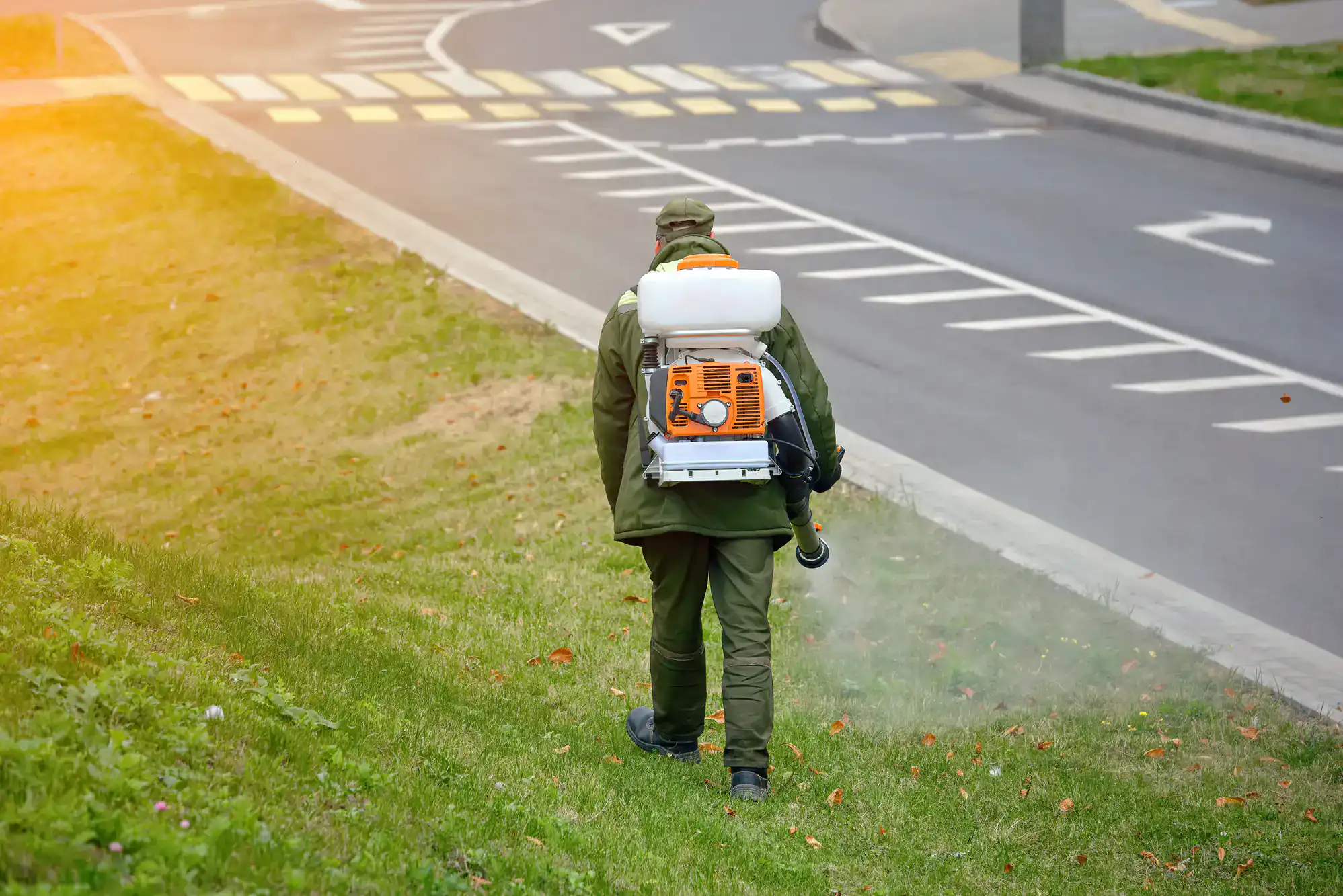
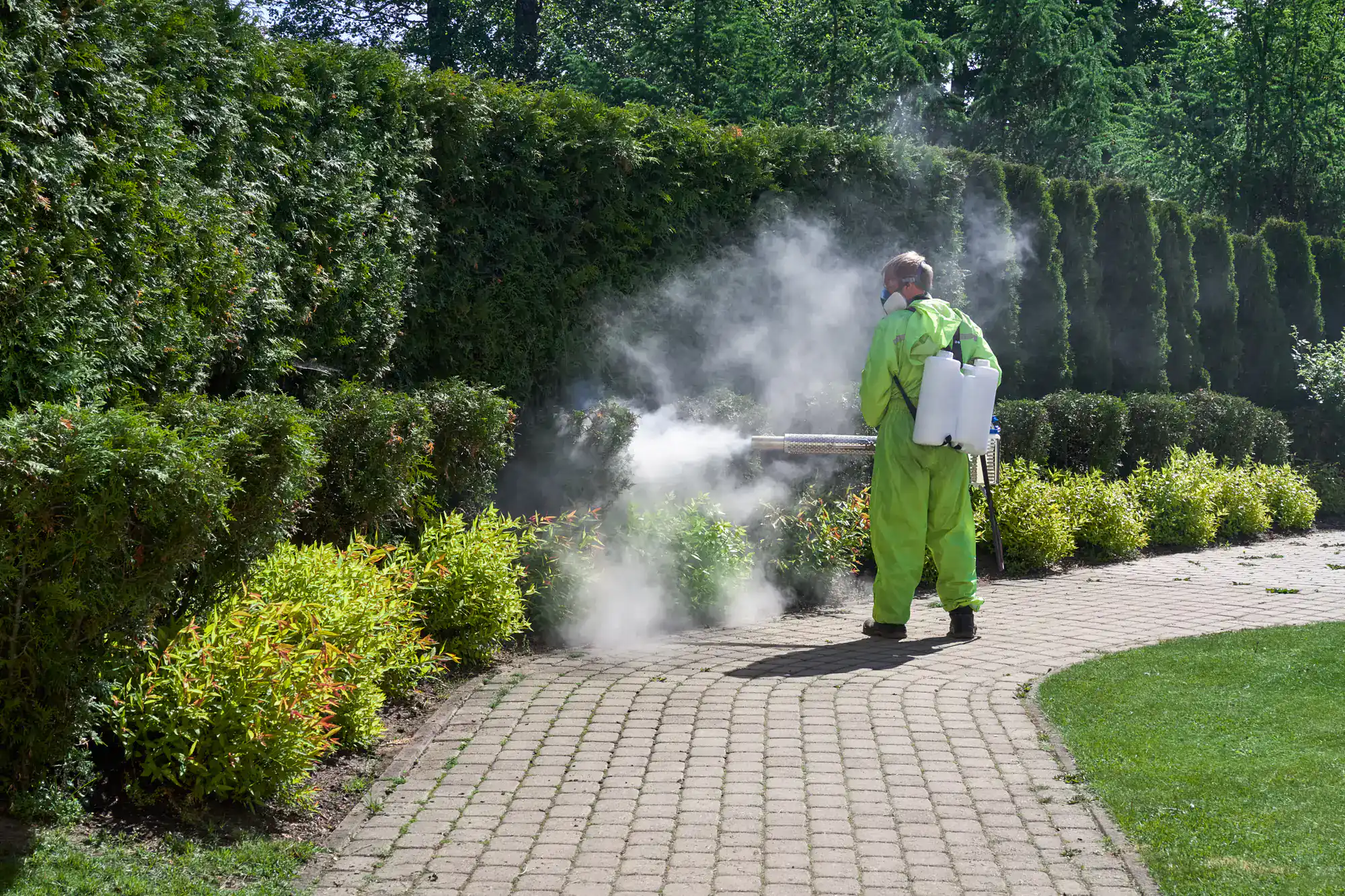
Treatment targets the zones where ticks actually live: the wooded transition areas at the edge of your lawn, the leaf litter beds, the ornamental plantings, the stone walls and firewood stacks where rodents nest and ticks overwinter, and the shaded areas under decks and along fence lines. This is not a perimeter spray. It is a full-property approach that accounts for the complexity of North Shore residential landscapes the same kind of historic, mature, layered properties that make Port Jefferson and its surrounding villages like Belle Terre and Poquott so distinctive, and so different from a flat open lot further south.
Our programs also use professional-grade formulations with Insect Growth Regulators for flea control products that break the reproductive cycle in a way that store-bought sprays simply cannot replicate. There is a real gap between what a licensed professional applies and what you can buy off the shelf, and it shows in the results.
Yes, and it is documented specifically for Port Jefferson and the surrounding North Shore communities. Port Jefferson’s combination of coastal humidity, heavily wooded terrain, and high deer activity creates near-ideal conditions for tick populations to thrive. A Columbia University study found that 56% of ticks on Long Island carry Lyme disease, and Suffolk County has the highest rates of Babesia microti in New York State. Local providers working in Port Jefferson have explicitly identified this area as one of the highest-risk communities in the country for tick-borne diseases including Powassan virus.
The properties most at risk are those with wooded rear borders, mature landscaping, stone walls, and leaf litter accumulation which describes a large portion of Port Jefferson Village, Belle Terre, and Poquott. If your yard backs up to any kind of wooded area or if deer move through your property regularly, the exposure is real and ongoing. A seasonal professional program is the most reliable way to reduce that risk throughout the year.
The short answer is early April, before the nymphal tick surge begins. Nymphal deer ticks the poppy-seed-sized stage that is responsible for most Lyme disease transmission peak in May and June on Long Island. By the time you start seeing them, the season is already well underway. Starting treatment in early spring, before that peak, gives you a meaningful head start.
Port Jefferson’s coastal location on Long Island Sound means the area warms and stays humid earlier in spring and later into fall than inland communities like Holtsville or Medford. That extended humidity window supports tick activity at both ends of the season. Fall treatment in September and October is just as important as spring adult blacklegged ticks become most aggressive during that window as they try to feed before winter. Skipping fall treatment is one of the most common gaps in tick management on the North Shore, and it leaves your yard exposed during a period when people are still spending time outside.
The gap is bigger than most people expect. Store-bought products are available in consumer-grade concentrations that are intentionally limited for safety reasons. Professional-grade formulations applied by a licensed pesticide applicator are more effective, cover harborage zones more thoroughly, and for flea control specifically include Insect Growth Regulators that disrupt the reproductive cycle. A flea can complete its life cycle in as little as two to three weeks under the right conditions. Without an IGR, you can kill the adults and still have a reinfestation within weeks from eggs and larvae already in the environment.
Beyond the product itself, the application matters just as much. Ticks do not live in the middle of your open lawn they live in the leaf litter, the wooded edges, the brush piles, the stone walls, and the shaded transition zones where most homeowners never think to spray. A licensed professional knows where to look and how to treat those specific zones effectively. On a North Shore property with mature landscaping and wooded borders, that expertise is the difference between a treatment that works and one that does not.
A properly structured program applies treatments every three to four weeks during the active season. That cadence accounts for the natural breakdown of treatment products over time and the continuous reinfestation pressure that properties on the North Shore face from deer moving through the area. One application does not last the season that is a common misconception, and it is why homeowners who try a single spray in May often find ticks again by July.
For Port Jefferson specifically, the season runs longer than most people plan for. Treatment should start in early April and continue through at least late October or early November. The fall adult tick surge on Long Island is well-documented, and properties near wooded corridors which includes most of Port Jefferson Village, Belle Terre, and the surrounding areas see sustained pressure through the end of fall. A program that stops at Labor Day leaves a real gap in protection during a period when you are still raking leaves, walking dogs, and using the yard.
Yes. Once the treatment has fully dried typically within 30 to 60 minutes under normal conditions the treated areas are safe for children and pets to re-enter. Your technician will give you a specific re-entry window based on the products used and the weather conditions on the day of treatment. If it rains shortly after an application, your technician can advise on whether a re-treatment is needed.
The products we use are selected with safety and efficacy in mind not the cheapest option available. This matters particularly in Port Jefferson, where families use their outdoor spaces actively: Harborfront Park, the beaches along the Sound, the wooded residential streets. The goal is to make those spaces safer, not to trade one concern for another. If you have specific sensitivities or questions about the products being used on your property, ask directly a licensed professional should be able to answer those questions clearly and completely.
Fleas are a genuine yard problem on Long Island, and they are often underestimated because ticks get most of the attention. Fleas become active when temperatures consistently reach around 50 degrees Fahrenheit which in Port Jefferson typically means late March into April and they remain active through October. Any pet that spends time outdoors, walks through wooded areas, visits Harborfront Park, or even just sits in the backyard is a potential carrier. Fleas can also enter a yard through wildlife, including the same deer, rabbits, and rodents that carry ticks.
The bigger issue is what happens once fleas establish themselves. A single flea can lay up to 50 eggs per day, and those eggs fall off your pet into the yard, into carpet, into furniture. The reproductive cycle is fast and relentless, which is why treatment needs to address the environment not just the animal. Our flea treatment targets the yard zones where fleas actually live and breed, using professional-grade products with IGRs that break the cycle before it gets out of hand. If you have pets and a yard in Port Jefferson, flea control is worth including in your seasonal program not treating it as an afterthought.
Useful Links
Other Services we provide in Port Jefferson