
Hear from Our Customers
If you’ve been on a fertilization program for a couple of seasons and your lawn still looks thin, patchy, or just flat the product isn’t the problem. Port Jefferson’s soil is. The glacial till and clay composition throughout this part of the North Shore compacts hard under mowing equipment, foot traffic, and Long Island’s wet-dry seasonal cycles. When that happens, nutrients sit on the surface, wash off with the next rain, and never reach the roots. Core aeration opens direct channels into the soil, and once those channels exist, fertilizer uptake efficiency can increase by 30 to 40 percent. The lawn you’ve been trying to build finally has a path to get there.
The drainage issue is just as real. Properties on the elevated streets of Upper Port Jefferson the bluff-side lots above the harbor deal with something flat-terrain lawns in Selden or Coram don’t: gravity working against them. On compacted soil, water doesn’t percolate down. It runs across the surface and off the property entirely. Aeration creates vertical pathways that let water move into the soil instead of away from it. If your lawn dries out faster than it should, or you’re watching runoff channels form during heavy rain, that’s compaction and it’s fixable. Where bare patches dominate, our lawn restoration service in Port Jefferson brings the whole yard back.
We’re a Suffolk County lawn care company serving Port Jefferson, Belle Terre, Stony Brook, Smithtown, and the surrounding North Shore corridor. We’re not a national franchise routing a subcontractor to your property. We’re a local operation that knows what glacial till does to a lawn after a wet spring, what the salt air off the Sound does to cool-season turf, and why the fall aeration window in Port Jefferson runs slightly later than it does in the inland communities to the south.
We hold a New York State DEC pesticide applicator license a legal requirement for commercial lawn care in this state that a surprising number of operators in this market either don’t carry or can’t prove. That matters especially in Port Jefferson, where the harbor watershed and proximity to Long Island Sound make responsible application a real issue, not a checkbox. When you hire Lawn Master, you’re hiring a company that’s accountable to this community not just passing through it. For lawns needing deeper relief, our full lawn aeration service in Port Jefferson opens up the root zone.
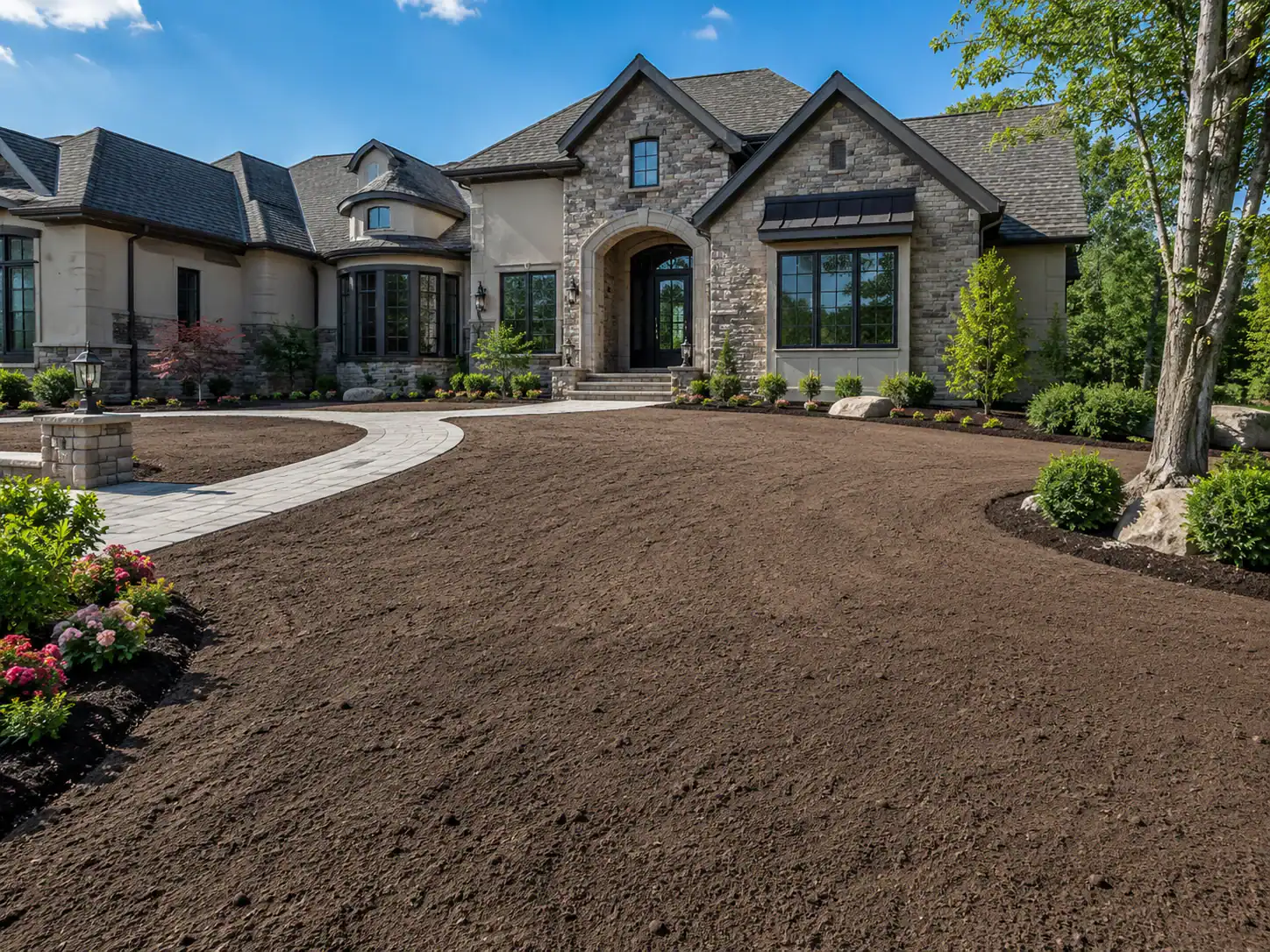
It starts with a free estimate. We look at your lawn, assess the soil conditions, and give you a straight answer on what we’re working with including whether your property’s topography, tree canopy, or thatch buildup changes the approach. For bluff-side properties in Upper Port Jefferson or the larger lots in Belle Terre, that assessment matters before anything gets scheduled.
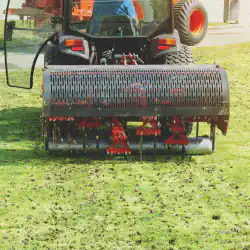
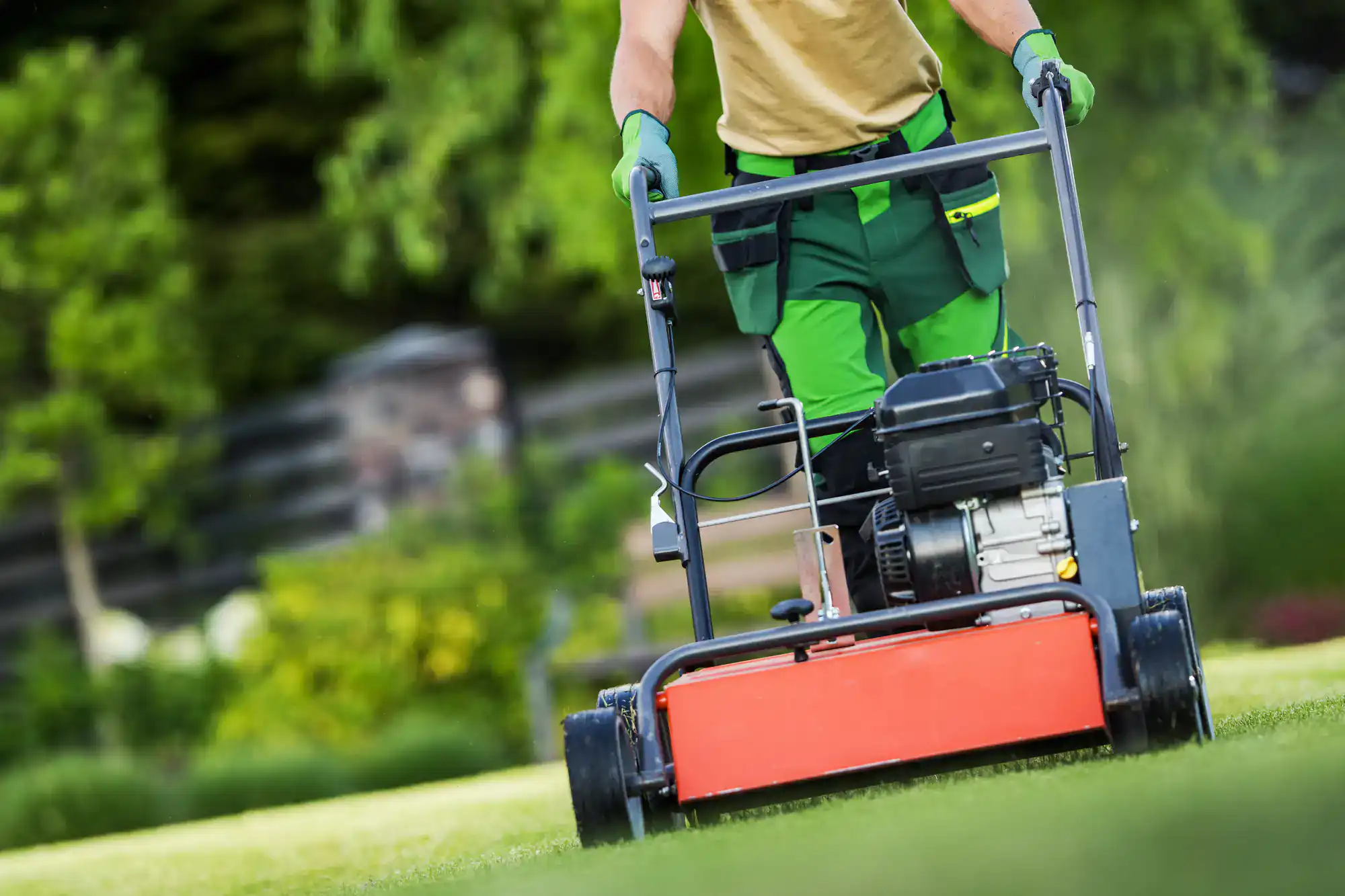
On service day, our hydraulic aerator runs the lawn and pulls cores three to four inches deep deep enough to break through the compaction layer that’s been sitting below the surface of your glacial till soil. That depth is the difference between a treatment that actually works and one that just looks like it did. Standard drum aerators top out around one and a half to two inches on a cooperative lawn, and often less on the clay-influenced soils common throughout this part of Suffolk County. The cores pulled from your lawn will sit on the surface for two to four weeks before breaking down naturally. That’s not a problem that’s the process working. The microbial activity in those plugs actively reduces thatch as they decompose.
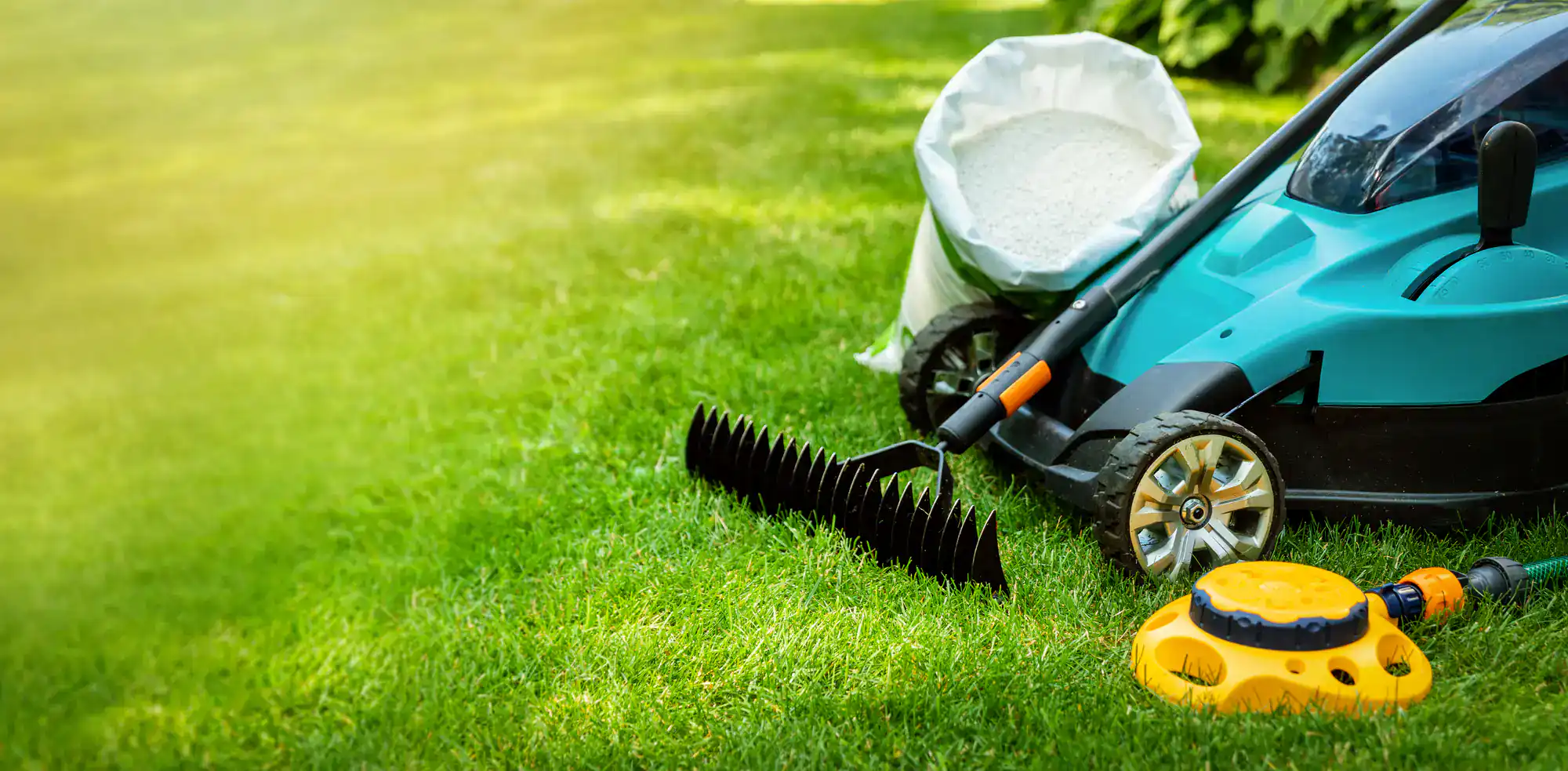
If overseeding is part of the plan, seed goes down immediately after aeration while the channels are open. That’s when germination rates are at their highest 30 to 50 percent better than seeding on un-aerated ground. Port Jefferson’s North Shore location, moderated by the thermal buffer of Long Island Sound, keeps soil temperatures favorable for germination through mid-to-late October in most years, giving you a slightly wider window than homeowners in more inland communities typically get. For a clean start, our Port Jefferson new lawn installation lays down healthy turf from scratch.
Ready to get started?
The tool doing the work matters more than most people realize. We use a commercial hydraulic aerator not the drum machines available at equipment rental shops and used by a number of local operators in this market. The hydraulic system adjusts pressure dynamically, driving tines three to four inches into the soil regardless of surface resistance. On the layered glacial till profile common throughout Port Jefferson and Port Jefferson Station sandy loam on top, dense compacted material below that depth is what separates a real result from a surface treatment.
Core aeration pairs directly with our fertilization and overseeding programs. Once the compaction layer is broken and the channels are open, the timing of what follows matters. Fertilizer applied after aeration reaches the root zone instead of washing off. Seed dropped into open aeration channels makes direct soil contact the prerequisite for germination that thatch-covered, compacted ground simply doesn’t allow. For Port Jefferson homeowners who have been spending money on fertilization programs without seeing the results they expected, aeration is usually the missing piece.
All applications are performed by NYS-licensed applicators in compliance with New York’s fertilizer laws, including phosphorus restrictions relevant to properties near Port Jefferson’s harbor and the broader Long Island Sound watershed. If you’re near the water and in this village, many of you are that compliance isn’t a formality. It’s the reason what goes on your lawn stays off the harbor. Routine upkeep is covered by our lawn treatment service in Port Jefferson. Pair aeration with lawn fertilization service in Port Jefferson for the best root development.
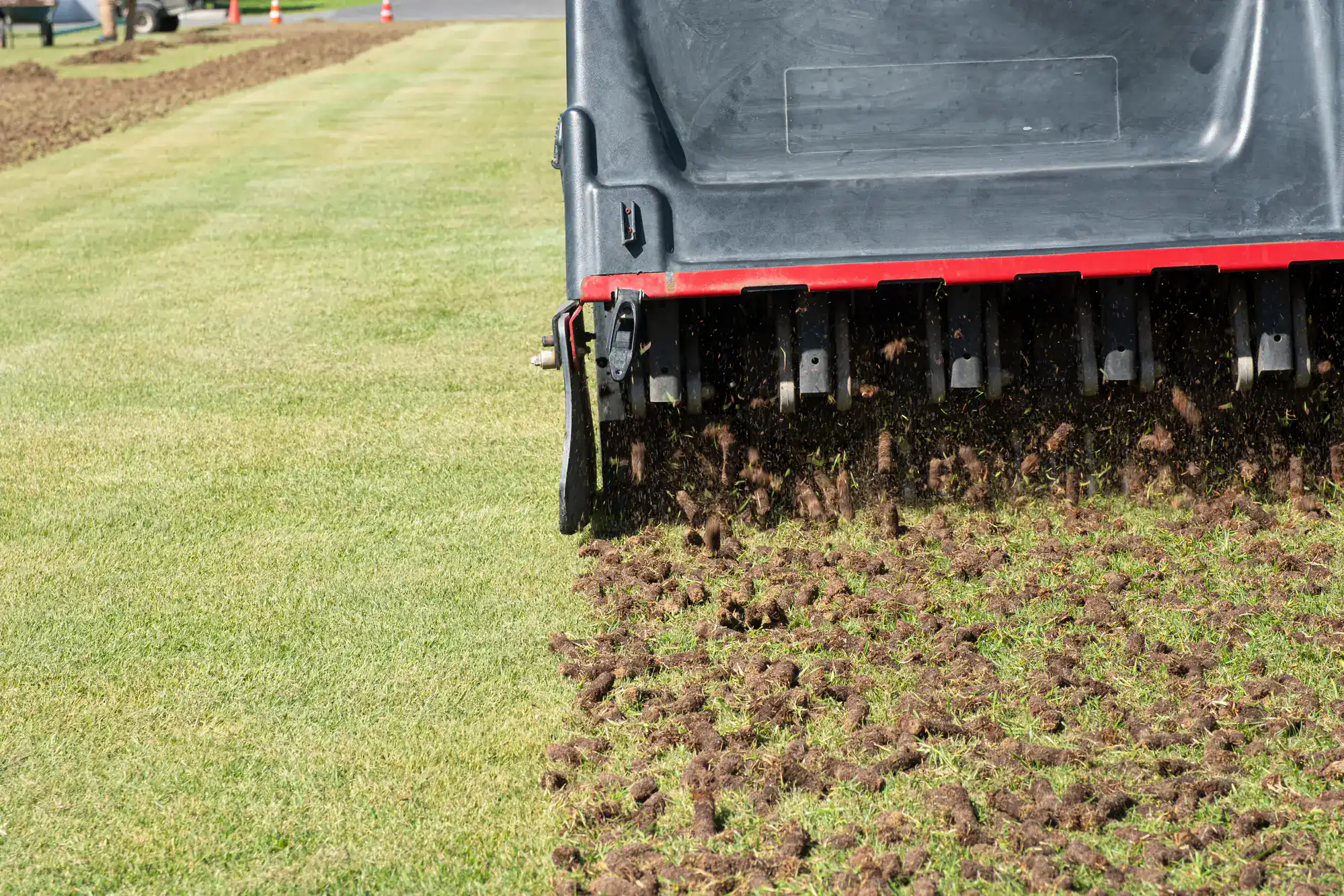
For Port Jefferson lawns, late August through October is the window that matters. Cool-season grasses tall fescue, Kentucky bluegrass, and perennial ryegrass, which make up the vast majority of lawns on the North Shore recover from summer dormancy during this period. The soil is still warm enough for germination, air temperatures have dropped enough to reduce stress on new growth, and the turf is actively pushing roots before winter sets in.
Port Jefferson’s position on the North Shore gives it a slight advantage here. The Long Island Sound acts as a thermal buffer, keeping soil temperatures favorable slightly longer than inland communities like Selden or Coram typically see. In most years, that extends the effective overseeding window through mid-to-late October. That said, the window still closes homeowners who wait until November have missed it and are looking at a full year before conditions align again. September bookings fill up fast for a reason.
Spike aeration pushes solid tines into the soil to create holes without removing any material. The problem is that the soil displaced by each spike has to go somewhere and it goes sideways, compressing the soil immediately around the hole. On Port Jefferson’s clay-influenced glacial till, that means you’re creating the visual appearance of treatment while potentially making compaction worse in the areas between holes. It’s not a cheaper version of core aeration. It’s a fundamentally different process that doesn’t solve the underlying problem.
Core aeration physically removes a plug of soil typically three to four inches deep with the hydraulic equipment we use creating genuine open channels in the ground. Those channels allow water to penetrate, roots to expand, and fertilizer to reach the root zone instead of sitting on the surface. On North Shore soils with significant clay content, the depth and the removal of material are both non-negotiable. Anything less is cosmetic.
This is one of the most common frustrations we hear from homeowners across Port Jefferson and the surrounding North Shore. You’ve been consistent with fertilization, maybe for years, and the results don’t match the investment. The lawn still looks thin. Bare patches keep coming back. The color never quite gets where you want it.
In most cases, the fertilizer is doing exactly what it’s supposed to do it’s just never reaching the place it needs to go. Compacted glacial till soil, which is widespread throughout Port Jefferson and documented specifically in the North Shore corridor, forms a near-impermeable layer that blocks nutrients from penetrating to the root zone. The product sits on the surface, breaks down in sunlight, or washes off with the next rain. Core aeration breaks that layer open. Once the channels exist, the fertilizer you’ve already been applying starts working the way it was designed to. The issue was never the product it was what was standing between the product and the roots.
The honest answer is that it depends on where the compaction layer actually sits and on Long Island’s North Shore, that layer is often deeper than standard equipment reaches. The glacial till and clay soils throughout Port Jefferson typically compact at depth, below the sandy loam surface layer that can feel workable when you’re walking on it. A rental drum aerator penetrating one and a half to two inches will miss that layer entirely on most properties in this area.
Our hydraulic aerator drives tines three to four inches into the ground, adjusting pressure dynamically based on soil resistance. That’s not a marketing number it’s the mechanical difference between reaching the actual compaction zone and scratching the surface above it. For properties in Upper Port Jefferson or Belle Terre with established lawns that have been compacting for decades under mature tree canopy and regular mowing, that depth is what makes the treatment worth doing in the first place.
A few simple things make a real difference. Water your lawn one to two days before the appointment if conditions have been dry the soil should be moist but not saturated. Tines penetrate significantly better in moist soil than in dry, hardened ground, and on Port Jefferson’s clay-influenced soils, dry conditions can make the surface almost concrete-hard in late summer. If the soil is too dry going in, penetration depth suffers.
Mark any irrigation heads, invisible fence lines, or shallow utility runs before the crew arrives. We’ll work around them, but knowing where they are prevents damage and keeps the job moving efficiently. If you have a sloped lot common on the bluff-side streets of Upper Port make sure we know so the approach accounts for the grade. Beyond that, no special preparation is needed. The lawn doesn’t need to be mowed short beforehand, though a standard mow height is fine.
It’s a fair question for a waterfront community, and the short answer is that core aeration itself creates no chemical runoff it’s a mechanical process. The environmental consideration comes into play when fertilization or overseeding follows aeration, which is typically where the real benefit is realized.
New York State’s fertilizer laws restrict phosphorus applications near waterways, and those restrictions are directly relevant to properties in Port Jefferson given the harbor’s connection to Long Island Sound. Our applicators are fully licensed under the NYS DEC pesticide applicator program, which requires compliance with these restrictions as a condition of licensure. That means what goes on your lawn after aeration is applied with awareness of the watershed, not just the turf. For homeowners near the harbor or on streets that drain toward it, that distinction matters and it’s one of the clearer differences between a licensed operator and someone who showed up on a job board.
Useful Links
Other Services we provide in Port Jefferson