
Hear from Our Customers
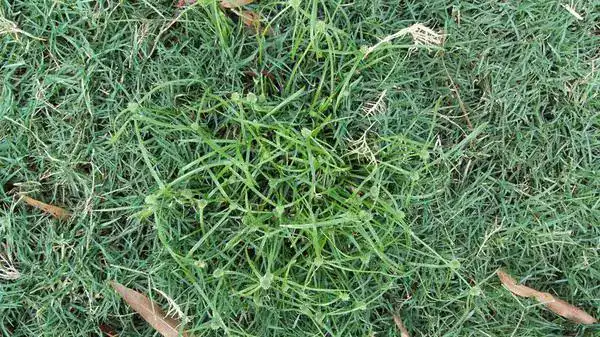
Kyllinga doesn’t spread because you’re doing something wrong. It spreads because the conditions in your yard are exactly what it needs and in Oakdale, those conditions are everywhere. Low-lying lots near the Grand Canal, properties that stay saturated after a nor’easter, lawns that sit in the shadow of the Connetquot River corridor this is prime kyllinga territory, and a bag of weed killer from the hardware store was never going to solve it.
What changes after a proper treatment program is simple: the weed stops spreading, the bare patches left behind get restored with real turf, and you’re not staring at the same problem again by August. That’s not a promise built on one spray visit it’s the result of a structured approach that accounts for how this plant actually grows and why it keeps coming back in lawns like yours.
Oakdale’s older housing stock most of it built in the 1950s and 60s wasn’t graded for the kind of drainage that keeps soil dry. Decades of settlement and compaction have made that worse. When you add the proximity to the Great South Bay and the Connetquot wetlands, you’ve got a yard that holds moisture longer than most, and kyllinga exploits that window every single season. Fixing the problem means treating it with chemistry designed for sedge, on a timeline built around how sedge grows not a generic weed program that wasn’t built for this plant.
We’re a locally owned, lawn-specific company based in Port Jefferson Station, serving homeowners across Suffolk County including Oakdale and the surrounding South Shore communities along the Great South Bay. This isn’t a general landscaping operation that handles weeds as an afterthought. Lawn care is our entire focus, which means the people showing up to your Oakdale property know the difference between kyllinga and nutsedge, know why that difference matters, and know exactly what to apply.
Every applicator we send is licensed through the New York State DEC Category 3a, Ornamental and Turf which is the credential required to legally purchase and use the professional-grade herbicides that actually work on sedge. That’s not a small detail. It’s the reason the treatment works when retail products haven’t.
Oakdale’s location near the Connetquot River State Park Preserve and the bay creates conditions that aren’t typical of inland Suffolk County towns. We understand those conditions and build our programs around them not around a national template that doesn’t account for where your lawn actually sits.
It starts with identification not an assumption. Kyllinga and nutsedge are both sedges, they look similar, and they get confused constantly. If a previous provider treated your lawn for nutsedge and the problem didn’t go away, there’s a real chance the wrong plant was diagnosed. Before anything gets applied, we confirm the specific sedge species in your Oakdale lawn. That step alone separates a program that works from one that wastes your time and money.
Once the plant is identified, we schedule treatment around its active growth window late May through late August in Suffolk County. In Oakdale’s coastal microclimate, where the bay moderates temperatures and soils warm a bit earlier than inland areas, that window can open slightly ahead of schedule. Timing matters because the herbicide needs to be taken up by an actively growing plant to reach the rhizome network underground. Hit it at the wrong stage and you’re only affecting surface tissue the root system survives and the plant regenerates.
A complete program runs two to three applications spaced four to six weeks apart. Each one builds on the last, targeting regrowth and working through the rhizome system that a single visit can’t fully address. After the final application, we provide overseeding recommendations so desirable turf fills back in closing the door on reinfestation instead of leaving open soil for the next round of kyllinga seeds to settle into.
Ready to get started?
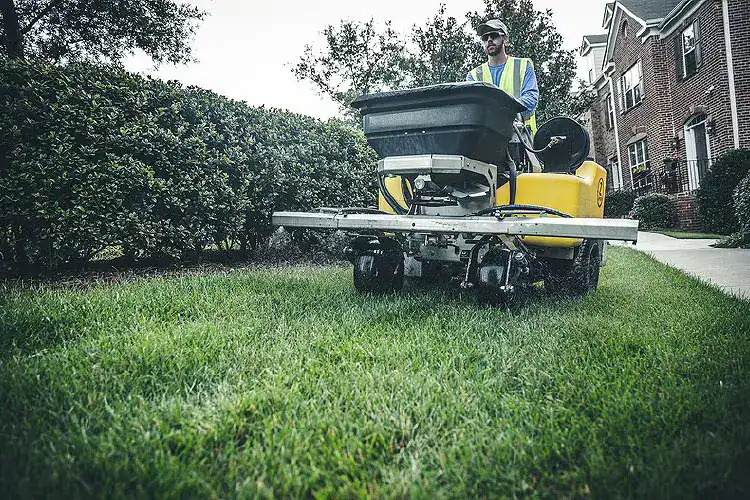
The herbicides that eliminate kyllinga halosulfuron-methyl and sulfentrazone, sold under trade names like Sedgehammer and Dismiss aren’t available to homeowners in professional-grade formulations. They require a New York State DEC Commercial Pesticide Applicator License to purchase and apply. That’s why every retail attempt at kyllinga control fails not because the homeowner didn’t try hard enough, but because the products accessible without a license simply don’t have meaningful activity against sedge. Our licensed applicators carry these products and apply them under the credentials the law requires.
In Oakdale specifically, compliance goes beyond the state license. Suffolk County Local Law 41-2007 requires all commercial pesticide applicators to check SCDHS buffer zone maps before any application near public drinking water supply wells. Given Oakdale’s position above the Long Island aquifer and its proximity to the Connetquot River, that’s a step that matters here more than in many other communities. New York State’s neighbor notification law also requires 48-hour written notice before certain residential applications something we handle as standard procedure, not an afterthought.
Every program also includes post-treatment guidance. Kyllinga seeds can stay viable in the soil for multiple seasons, so eliminating the visible plant isn’t the finish line. Overseeding thin areas, adjusting irrigation in low-lying parts of the yard, and improving drainage where possible are the cultural steps that keep the problem from cycling back. For lawns near the Grand Canal or in flood-prone areas off Bluepoint Road, that follow-up conversation is part of every program we run.
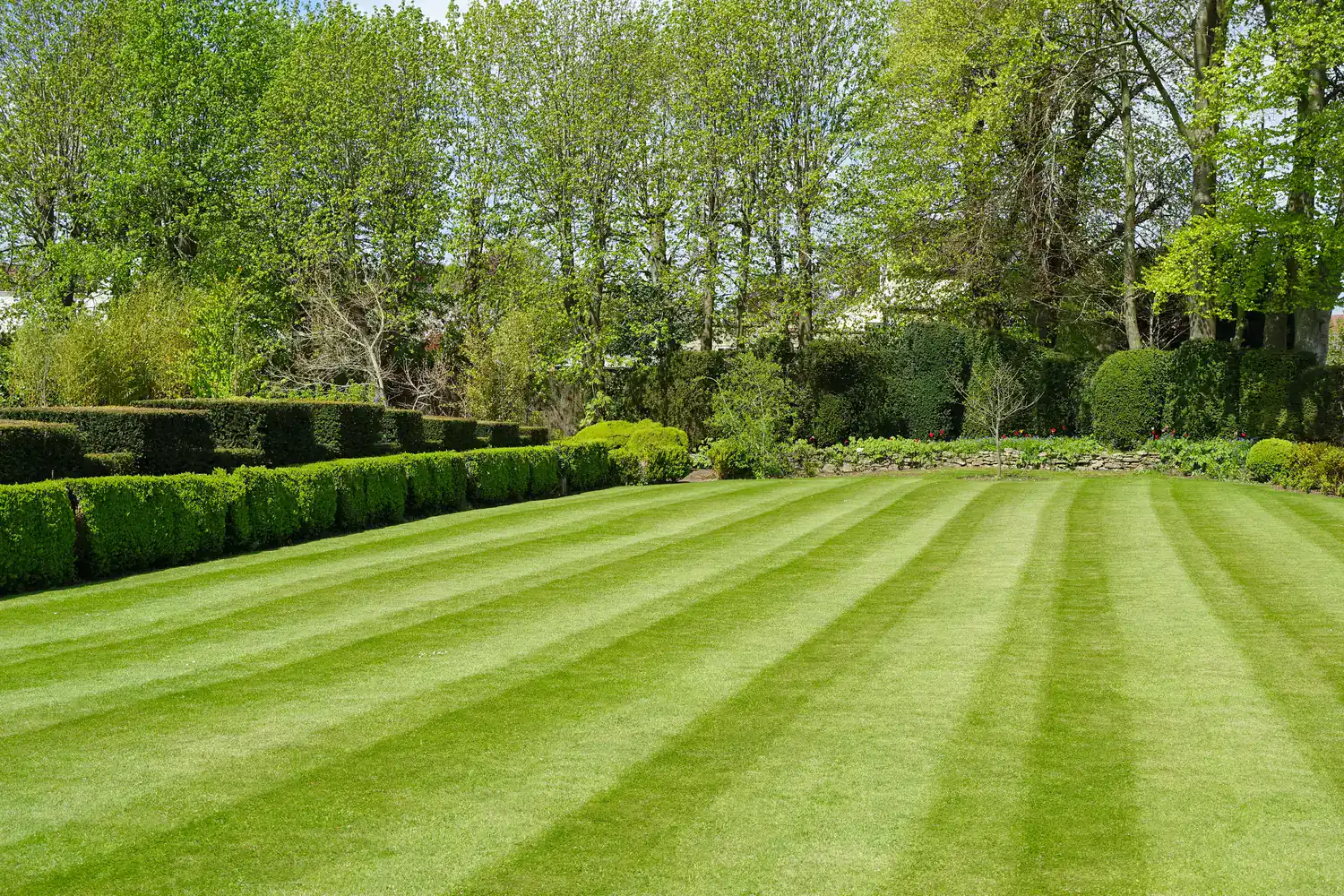
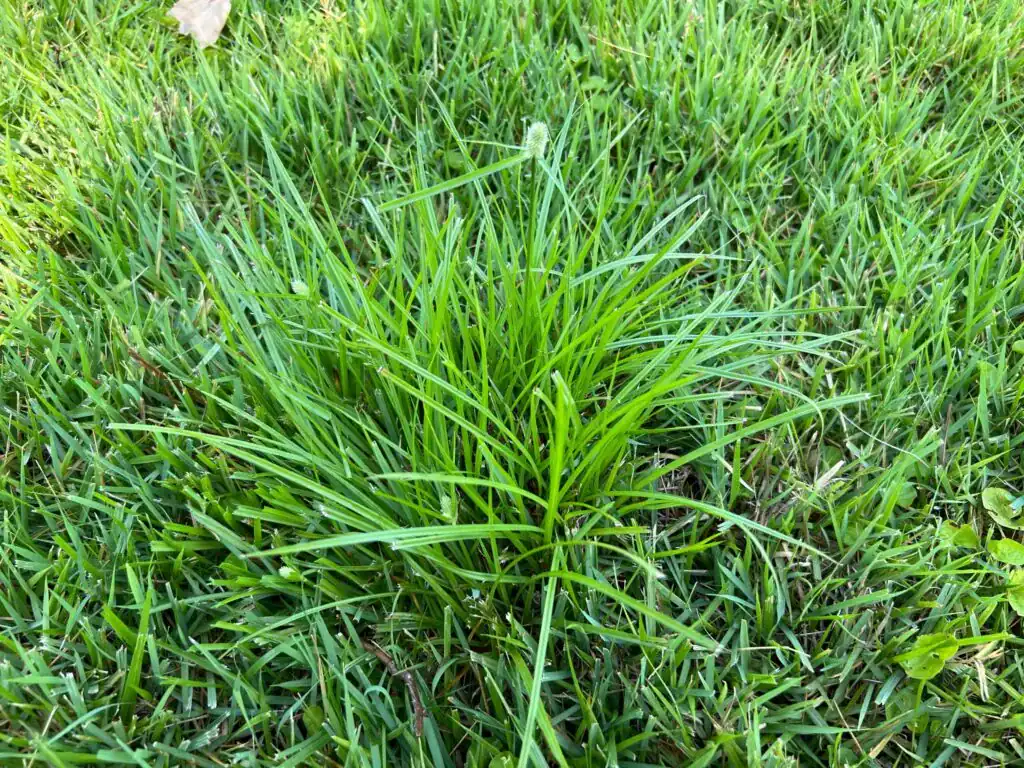
Kyllinga is a perennial sedge with an underground rhizome network a system of root stems that spreads outward and generates new growth even after the visible plant above the surface has been damaged or knocked back. When a treatment only affects the top of the plant without reaching the rhizome, the root system survives and the weed regenerates. That’s the most common reason it keeps returning: the treatment wasn’t built to address the biology of the plant.
In Oakdale, there’s a compounding factor. The moist, poorly drained soil conditions in low-lying areas near the Grand Canal, the Great South Bay, and the Connetquot River corridor create exactly the environment kyllinga thrives in. Even after a successful treatment, if the underlying soil moisture conditions aren’t addressed through drainage improvements, irrigation adjustments, or overseeding to thicken the turf the conditions that invited kyllinga in the first place remain. A complete program treats the plant and accounts for why it established in your Oakdale yard to begin with.
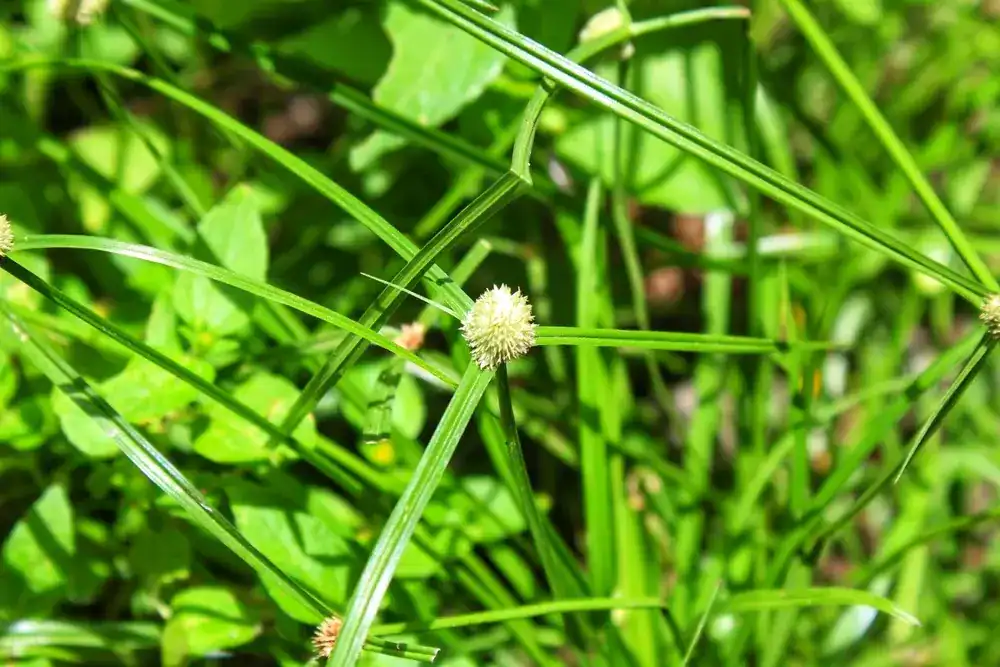
Both kyllinga and nutsedge are sedges they’re in the same plant family and they look similar enough that they’re routinely confused, even by lawn care providers. The key differences come down to seed head structure, growth habit, and how aggressively they spread. Nutsedge produces a more prominent, elongated seed head and spreads primarily through underground tubers called nutlets. Kyllinga produces a smaller, rounded seed head and spreads through both rhizomes and seeds, with a single plant capable of producing thousands of seeds per season.
The distinction matters because while both respond to sedge-active herbicides, the specific product, rate, and timing of application can differ. A program designed around nutsedge may not be optimized for kyllinga which is why correct identification before treatment is the first step, not an optional one. If you’ve had a lawn service treat your lawn for nutsedge and the problem has persisted, it’s worth having someone confirm which sedge you’re actually dealing with before committing to another round of applications.
A properly structured kyllinga control program typically requires two to three applications spaced four to six weeks apart during the plant’s active growing season. One application will damage visible growth, but the rhizome network underground is capable of regenerating from that alone. The follow-up applications target regrowth and work progressively through the root system in a way a single visit simply cannot.
After the treatment program is complete, the bare or thinned areas left behind need to be overseeded with appropriate turf varieties. If those spots are left open, kyllinga seeds already present in the soil which can remain viable for multiple seasons have an easy entry point for reinfestation the following year. In Oakdale’s high-moisture environment, skipping that restoration step is one of the most common reasons the problem comes back. The treatment program and the lawn restoration afterward are two parts of the same solution.
Yes and it’s not a coincidence. Kyllinga is a moisture-loving sedge that establishes most aggressively in soils that stay wet, drain slowly, or sit above a high water table. Oakdale’s geography puts a significant portion of its residential properties directly in that category. The water table in low-lying areas near the bay can sit just a few feet below the surface, and properties near the Grand Canal or along flood-prone streets experience chronic soil saturation after heavy rain events that other communities don’t deal with to the same degree.
The Connetquot River State Park Preserve nearly 3,500 acres of wetlands, pine barrens, and tidal habitat bordering Oakdale’s northern edge adds another layer. Sedge species are native to the Connetquot watershed’s wetland margins, and wind-dispersed seeds from those natural areas can reach adjacent residential lawns in Oakdale. Combined with the moist soil conditions that already exist in much of Oakdale, that creates a seed pressure situation that’s more persistent here than in drier, more inland Suffolk County communities.
The honest answer is that the products available to homeowners at retail including most broadleaf weed killers, crabgrass preventers, and general lawn weed controls have no meaningful activity against kyllinga. Kyllinga is a sedge, not a broadleaf weed and not a grassy weed, which means it doesn’t respond to the chemistry those products are built around. You can apply them repeatedly and the kyllinga will keep growing, because you’re treating the wrong plant category with the wrong product.
The herbicides that actually work on kyllinga halosulfuron-methyl and sulfentrazone require a New York State DEC Commercial Pesticide Applicator License to purchase in professional-grade formulations. They’re not on the shelf at any hardware store or garden center. This isn’t a technicality it’s the core reason DIY attempts at kyllinga control consistently fail. If you’ve been through multiple rounds of retail products without results, that’s not user error. It’s a product access issue that only a licensed applicator can solve.
Yes we serve Oakdale and the surrounding South Shore communities in Suffolk County. Operating out of Port Jefferson Station, our service area covers the Town of Islip and the broader South Shore, so Oakdale is well within our regular coverage zone. There’s no out-of-area premium or extended scheduling delay because of location.
Timing for kyllinga treatment in Oakdale depends on where you are in the season. The active treatment window runs from late May through late August, when the plant is growing and metabolically active enough for the herbicide to move through the plant and reach the rhizome network. Oakdale’s coastal microclimate moderated by the Great South Bay can mean conditions are favorable slightly earlier in the season than in more inland parts of Suffolk County. If you’re reaching out outside that window, we can scope and schedule a program in advance so treatment begins at the right time, not whenever a generic calendar says so.
Useful Links