
Hear from Our Customers
Most lawns in Oakdale don’t fail because of one bad season. They fail because of a combination of things that built up quietly over time compacted soil that hasn’t been aerated in years, a pH level that’s been off for so long the grass can’t absorb nutrients no matter how much fertilizer gets applied, or grub damage that went undiagnosed until the dead patches were too big to ignore. When those underlying issues get corrected, the lawn doesn’t just look better it actually recovers and holds.
Living close to Great South Bay and the Connetquot River waterfront adds another layer that most Oakdale homeowners don’t think about until it’s too late. Salt spray from coastal storms draws moisture out of grass at the blade level and disrupts nutrient absorption underground. Properties in the Idle Hour section and along the waterfront near Oakdale see this pattern regularly, and it takes more than overseeding to fix it. The soil itself needs to be addressed first.
Once the chemistry is right, the compaction is relieved, and the damaged areas are properly seeded using professional slice seeding equipment, you get a lawn that fills in evenly, holds its color through the season, and doesn’t thin back out the following year. That’s the difference between treating symptoms and actually solving the problem.
We’ve been a NYS-licensed lawn care operator serving Suffolk County since before most of our current customers bought their homes. That’s not a marketing line it’s the kind of track record that only comes from doing this work correctly, consistently, over decades. We’ve restored lawns throughout the Town of Islip, including communities along the South Shore where the sandy Haven Loam soils, coastal salt exposure, and grub pressure make lawn care genuinely more complex than it looks.
We know the Connetquot River watershed. We know what the soil behaves like in post-war neighborhoods where the same lawn has been mowed and fertilized for fifty years without ever receiving a soil test or a core aeration. We know what grub damage looks like versus drought stress versus salt injury and that distinction matters, because treating the wrong problem wastes your time and your money. When we come to your Oakdale property, you get a real diagnosis, not a generic program.
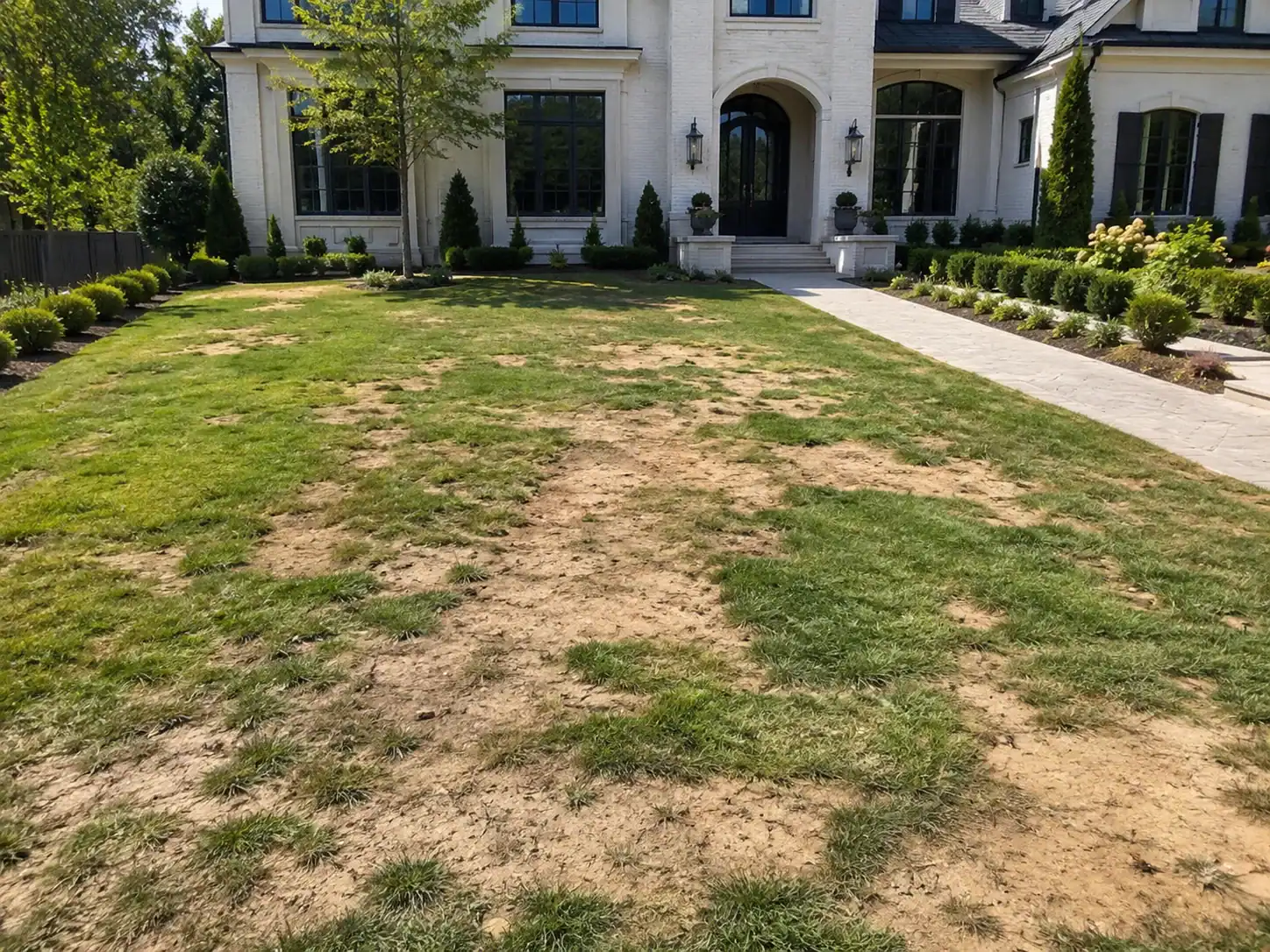
The first step is a professional site assessment. Before anything gets applied or seeded, we walk your property and evaluate what’s actually causing the decline. We’re looking at soil compaction, thatch depth, signs of grub activity, pH indicators, and evidence of salt stress if your property has any waterfront exposure. This assessment is what separates a restoration program that works from one that temporarily patches the surface and fails again in a season.
From there, soil correction comes before seeding always. If your pH is off, we apply lime to bring it into the 6.0–7.0 range where cool-season turf can actually absorb nutrients. If compaction is the issue, core aeration opens the soil so air, water, and seed can penetrate. For bare patch repair and thinning areas, we use professional slice seeding equipment that cuts directly into the soil and deposits seed at the root zone dramatically better germination than broadcast overseeding on an established Oakdale lawn.
Timing matters here too. The primary restoration seeding window on Long Island runs from late August through October. Soil temperatures are still warm enough to support germination, the summer heat stress is fading, and fall rainfall tends to be more consistent. If you’re reaching out in spring or early summer, we’ll build a preparation plan soil testing, pH correction, grub prevention so that when the fall window opens, your lawn is ready to respond. Oakdale’s sandy soils warm up fast in spring, which also means crabgrass pressure arrives early, and that timing has to be factored into the plan.
Ready to get started?
Lawn restoration and lawn renovation are not the same thing, and the distinction matters for your property and your budget. Restoration means your existing lawn structure is still salvageable the grass plant framework is there, the soil is in place, and the goal is to rehabilitate what’s already present through targeted interventions. Renovation means the existing lawn is beyond recovery and needs to be stripped, potentially regraded, and rebuilt from scratch. Most Oakdale homeowners dealing with grub damage, salt stress, pH imbalance, or compaction are restoration candidates. When a full renovation is genuinely the right answer, we’ll tell you plainly and we have a dedicated renovation program for that. But we don’t push rebuilds on lawns that can be saved.
What a restoration program from us actually includes depends on what your lawn needs not a preset package. It typically involves some combination of soil pH testing and lime application, core aeration to relieve compaction, professional slice seeding for bare patch repair and thin areas, targeted overseeding, and a nutrient replenishment program calibrated to Suffolk County’s sandy, fast-draining soils. For waterfront and near-waterfront properties in Oakdale’s Idle Hour section or along the Great South Bay shoreline, salt damage assessment and soil flushing protocols are part of the conversation.
We operate in full compliance with Suffolk County’s Reclaim Our Water regulations, which restrict phosphorus use in lawn fertilizers and establish best management practices for nitrogen application near waterways. If your property is within the Connetquot River watershed and much of Oakdale is that compliance isn’t optional, and it’s not something every provider in this market takes seriously. We do.
Restoration means bringing your existing lawn back to health without tearing it up. The grass structure is still present, the soil is still in place, and the approach is to correct what’s gone wrong pH imbalance, compaction, grub damage, nutrient deficiency, salt stress and reseed the areas that have thinned or died. The lawn you have is the starting point, and the goal is to rehabilitate it.
Renovation is a full rebuild. It means the existing lawn is beyond saving either because the grass is completely gone, the soil has serious structural problems, or the damage is too extensive for targeted repair. Renovation involves killing or stripping the existing turf, potentially regrading the surface, and starting fresh with new seed or sod. It’s a more intensive process, a longer timeline, and a higher investment. Most Oakdale homeowners with damaged or declining lawns are restoration candidates. When we assess your property and a renovation is genuinely the right answer, we’ll explain exactly why and walk you through that process separately.
In most cases, yes the lawn can be saved. The threshold for restoration versus renovation comes down to what’s still alive underground. If the soil structure is intact and there are still viable grass plants present even if the surface looks mostly dead a professional restoration program can bring it back. What looks like a completely dead lawn to a homeowner is often a lawn that’s dormant, severely stressed, or thinned to the point where the remaining turf isn’t visible from a distance.
The situations where restoration becomes difficult are when grub damage has destroyed the root system across a large percentage of the lawn, when years of neglect have created a thatch layer so thick that the soil beneath is essentially sealed off, or when the damage is so widespread that there simply isn’t enough viable turf left to build on. A professional site assessment is the only real way to know which category your lawn falls into. That’s exactly what our estimate process is designed to determine and we’ll give you a straight answer, not a sales pitch.
If restoration seeding is done in the optimal late August through October window which is the right timing for Long Island you’ll typically see germination within 10 to 21 days depending on soil temperature, moisture, and seed variety. Meaningful coverage in previously bare or thin areas usually develops over 4 to 6 weeks. A fully filled-in, uniform lawn typically takes one full growing season to establish, meaning the lawn you seed in fall will look significantly better by the following spring and reach its potential by the following fall.
The timeline is also affected by what corrections were needed before seeding. If your soil pH was significantly off, lime application takes time to work through the soil usually 2 to 3 months before the full effect on nutrient availability is realized. That’s one reason why starting the correction process early, even if seeding waits for the fall window, makes a real difference in how quickly the restored lawn responds. Oakdale’s sandy soils actually drain and respond to amendments faster than heavier clay soils, which works in your favor once the correction process is underway.
The most common culprits we see on South Shore lawns, including throughout Oakdale, are Japanese beetle grub damage, soil pH drift, compaction in older established lawns, and salt exposure for properties near the water. Grubs are particularly destructive because the damage often isn’t visible until late summer or early fall, by which point the root system under large sections of the lawn has already been eaten through. The classic sign is turf that peels back from the soil like a rolled carpet if you’ve seen that, grubs are almost certainly involved.
Salt exposure is an underdiagnosed problem for Oakdale homeowners closer to Great South Bay and the Connetquot River. Coastal storms and strong southerly winds deposit salt spray well inland, and the cumulative effect on grass both at the blade level and in the soil can cause progressive thinning that looks like drought stress or disease. pH drift is equally common in Suffolk County’s sandy soils, which tend toward acidity. When pH falls below the 6.0–7.0 range that cool-season turf requires, nutrients become chemically unavailable even when fertilizer is being applied regularly. The lawn starves slowly, and the homeowner keeps fertilizing without understanding why it isn’t working.
The cost of a lawn restoration program in Suffolk County depends on the size of your property, the extent of the damage, and what specific interventions are needed. A smaller Oakdale lot with moderate thinning and a straightforward pH correction and slice seeding program will cost significantly less than a larger waterfront property that needs grub remediation, salt damage treatment, multiple rounds of soil amendment, and extensive bare patch repair across a large area.
The most honest answer is that we can’t give you a meaningful number without seeing your lawn first. What we can tell you is that the estimate process is a real site assessment not a quick drive-by quote. We look at what’s actually happening with your soil and your turf before we put a number on it, because a restoration program priced without a proper diagnosis is just guessing. What we also know from 38 years in this market is that homeowners who invest in a properly executed restoration program one that corrects the underlying problems rather than patching the surface spend less over time than those who repeat the same ineffective treatments season after season.
For cool-season turf which is what grows on virtually every residential lawn in Oakdale and throughout Suffolk County fall is unquestionably the best seeding window. Soil temperatures in late August and September are still warm enough to support fast germination, typically staying above 50°F well into October on Long Island. At the same time, air temperatures are dropping, which means new seedlings aren’t being stressed by summer heat during their most vulnerable early growth stage. Fall rainfall on the South Shore also tends to be more reliable than summer, which reduces the irrigation burden on new seed.
Spring seeding is possible but comes with real complications. Crabgrass pre-emergent herbicides which are necessary on Oakdale’s sandy, fast-warming soils where crabgrass pressure is significant cannot be applied at the same time as new grass seed without killing the seedlings. That timing conflict forces a choice between crabgrass control and seeding, and it’s a difficult one. Summer seeding is generally not recommended for cool-season turf because heat stress and inconsistent rainfall work against establishment. If you’re contacting us outside the fall window, we’ll build a preparation plan that gets your soil corrected and ready so that when late August arrives, your lawn is set up to respond as quickly as possible.
Useful Links