
Hear from Our Customers
Most East Patchogue homeowners who’ve tried fertilization programs and still have thin, patchy lawns aren’t dealing with a fertilizer problem. They’re dealing with a compaction problem. The sandy-loam soils along the South Shore compact at the surface and develop a thatch layer that repels water even when the sand beneath is loose. Nutrients sit on top, wash off with the next rain, and never reach the roots. Research shows that properly aerated soil can improve fertilizer uptake efficiency by 30 to 40 percent meaning the money you’ve already been spending on lawn treatments can finally start working.
Once the compaction layer is broken up, water moves down to the root zone instead of pooling on the surface or running toward the street. If your lawn dries out fast after rain or develops bare patches despite regular watering, that’s a compaction and thatch issue not a sandy soil issue. Core aeration also improves air circulation through the root zone, which matters more than most people realize on the South Shore. High summer humidity near Great South Bay creates conditions that favor fungal disease on stressed turf. Better airflow at the root zone reduces that risk significantly.
The results aren’t immediate, but they’re real. Within a few weeks of aeration, you’ll notice the grass filling in more evenly, holding moisture better, and responding to treatment the way it should have been all along. For homeowners in East Patchogue near Montauk Highway or anywhere between Patchogue Village and Bellport, that kind of consistent improvement is what makes the difference between a lawn you’re constantly fighting and one that actually holds up through the season.
Lawn Master is a Suffolk County lawn care company not a franchise, not a call center routing jobs to whoever’s available. When you request an estimate, you’re talking to people who actually work in East Patchogue and understand what South Shore soils do differently than the clay-heavy ground you find further north in the county.
That local knowledge matters here. East Patchogue sits right in the Carmans River watershed, close enough to Great South Bay that fertilizer management near waterways isn’t just a best practice it’s a legal requirement. Our applicators are fully licensed through the New York State DEC, which means your lawn program stays compliant with New York’s fertilizer restrictions near sensitive water bodies. A lot of smaller operators in the Patchogue area can’t say the same.
The bottom line is that we bring commercial-grade equipment and genuine local accountability to every job. That’s a different experience than what most East Patchogue homeowners have had with national services that treat Long Island like a single, uniform market.

The process starts with a walkthrough of your lawn before any equipment rolls. On East Patchogue properties, that means taking a real look at the soil surface, the thatch layer, and any areas where water pools or grass has thinned out. South Shore lawns near the bay tend to show compaction and thatch buildup differently than inland Suffolk County properties, and knowing what you’re dealing with before we start changes how the job gets done.
From there, our hydraulic aerator goes to work. This isn’t the drum-style machine available at the equipment rental shop near Route 112. The hydraulic system drives hollow tines 3 to 4 inches into the soil, pulling out actual plugs of compacted earth and leaving them on the surface. Standard rental aerators typically reach 1.5 to 2 inches and on a thatch-covered, compacted South Shore lawn, that often means the tines barely get past the problem layer. The depth and pressure of hydraulic equipment make a measurable difference on the kind of soil East Patchogue lawns sit on.
After aeration, the soil plugs stay on the lawn. That’s intentional. They break down within 2 to 4 weeks, returning organic matter and soil microbes back to the surface while helping decompose the thatch from above. If you’re pairing aeration with overseeding which we strongly recommend for bare or thin areas fall is the right window. Late August through October gives cool-season grasses like tall fescue and Kentucky bluegrass the warm soil and cooler air they need to germinate and establish before winter.
Ready to get started?
Core aeration from Lawn Master isn’t a standalone punch-some-holes-and-leave service. On East Patchogue lawns, it’s the foundation that makes everything else overseeding, fertilization, and ongoing turf programs actually perform. The aeration opens the soil, the seed goes directly into the holes where it has real contact with the earth, and germination rates for overseeded lawns following core aeration run 30 to 50 percent higher than seeding on un-aerated ground. If you’ve been overseeding bare patches on your South Shore lawn without aerating first, that’s likely why the results have been disappointing.
Because East Patchogue borders the Carmans River watershed and sits close to Great South Bay, any fertilization paired with aeration is managed under New York State’s fertilizer laws, including phosphorus restrictions near waterways. Our NYS-licensed applicators handle this as a matter of standard practice not as an add-on or an upsell. It’s simply how licensed, accountable lawn care works in this part of Suffolk County, and it’s a meaningful difference from operators who skip the licensing requirements.
Pricing for residential core aeration in the East Patchogue area typically runs $75 to $150 for smaller lots and $150 to $350 or more for larger properties, depending on square footage and condition. The best way to get an accurate number for your specific lawn is to request a free estimate. There’s no obligation, no pressure, and no generic quote generated by a zip code just a real look at what your lawn needs.
This is probably the most common question from South Shore homeowners, and the answer surprises a lot of people. Sandy soil does compact just not in the same deep, heavy way that clay-dominant soils do further inland. On East Patchogue lawns, the compaction happens at the surface layer, and the thatch that builds up on top of sandy ground creates a hydrophobic barrier that actually repels water. So even though the sand beneath might be loose and permeable, moisture can’t get through the capped surface to reach it.
The result is a lawn that looks like it should drain well but is actually shedding water at the surface and starving the root zone below. Core aeration breaks through that compacted surface and thatch cap, restoring the water and nutrient pathway that your lawn’s root system depends on. If your East Patchogue lawn dries out quickly, develops bare patches, or doesn’t respond to fertilizer the way it should, compaction and thatch not the sandy soil itself are almost certainly the reason.
For the cool-season grasses that make up most East Patchogue lawns tall fescue, Kentucky bluegrass, perennial ryegrass the fall window from late August through October is the optimal time for core aeration and overseeding. Soil temperatures are still warm enough to support seed germination, but air temperatures have dropped enough to reduce heat stress on new growth. That combination gives newly seeded grass a full establishment period before summer arrives and brings the heat and humidity that South Shore lawns deal with near Great South Bay.
September is the peak booking month across Suffolk County, and schedules fill faster than most homeowners expect. The fall window isn’t infinitely flexible seed that goes down in late October on Long Island is racing against dropping soil temperatures and has a much lower germination success rate than seed placed in September. Spring aeration in April or May is an option for lawns with severe compaction, but fall remains the stronger choice for East Patchogue properties where aeration and overseeding are being done together.
If you’ve been running a fertilization program whether through a national service, a local provider, or products from the hardware store and your lawn still looks thin or pale, the fertilizer itself probably isn’t the problem. Compacted, thatch-covered soil acts as a physical barrier between the nutrients you’re applying and the root zone where they actually need to go. The fertilizer sits on the surface, and the next rain washes a significant portion of it off before it ever gets absorbed.
This is especially common on South Shore properties in East Patchogue, where sandy-loam soils and thatch buildup create that capped surface layer. Studies indicate that properly aerated soil can improve fertilizer uptake efficiency by 30 to 40 percent. That means core aeration isn’t really an additional lawn care expense it’s what makes the money you’re already spending on fertilization actually reach the roots and produce the results you’ve been expecting. Aerate first, then fertilize, and the difference is usually visible within a single growing season.
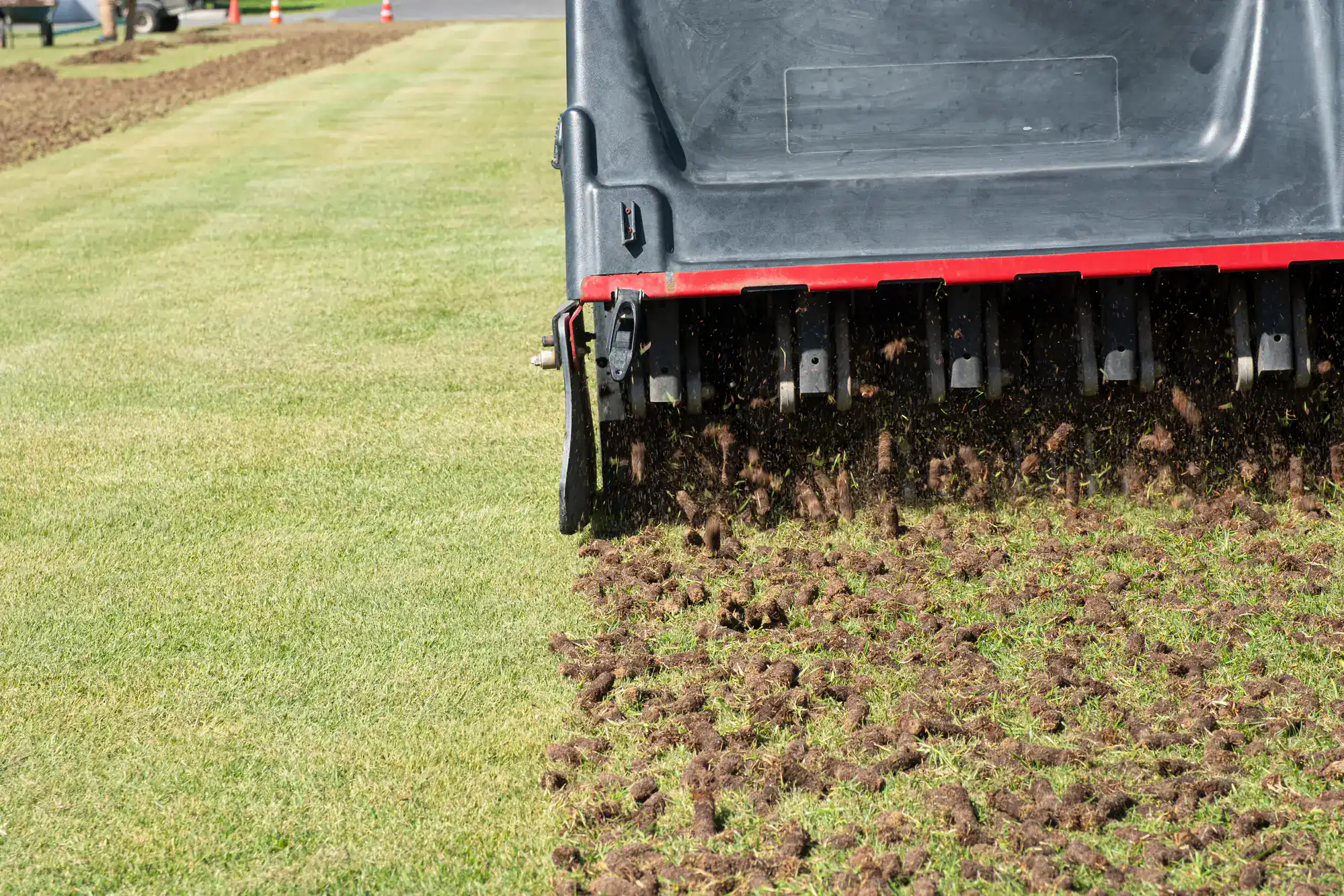
The cylindrical cores of soil scattered across your lawn after aeration are the direct result of the service and they’re supposed to be there. Each plug is about half an inch wide and 3 to 4 inches long, pulled from the ground by the hollow tines on our hydraulic aerator. They look disruptive, especially if you take pride in your lawn’s appearance, but removing them would actually eliminate one of the key benefits of the service.
Those plugs contain soil microbes and organic matter that break down over the next 2 to 4 weeks under normal conditions, returning nutrients to the surface and helping decompose the thatch layer from above. You can speed up the process by watering regularly or mowing over them once they’ve dried out slightly. Within a month, they’re gone, the holes have closed, and your lawn is measurably healthier than it was before. The temporary appearance of disruption is a short-term tradeoff for a significant long-term improvement in how your lawn holds water, absorbs nutrients, and supports new grass growth.
Core aeration removes a physical plug of soil from the ground, creating genuine decompression and real channels for water, air, and nutrients to reach the root zone. Spike aeration uses solid tines to punch holes without removing any material which means the soil gets pushed to the side and compressed further around each hole rather than relieved. On East Patchogue’s sandy-loam South Shore soils, where surface compaction and thatch are the primary problems, spike aeration doesn’t address the issue and can actually make compaction worse in the areas immediately surrounding each hole.
When you’re comparing lawn care providers in the Patchogue area, it’s worth asking specifically whether they perform core aeration and what equipment they use. Some operators offer “aeration” without clarifying the type, and the distinction matters significantly for results. We use commercial hydraulic core aeration equipment not a drum-style spike aerator or a rental machine and the tine depth of 3 to 4 inches ensures the service reaches below the compaction and thatch layer where real improvement happens.
Yes and this is worth understanding before you hire any lawn care company in East Patchogue. New York State requires commercial applicators to hold a DEC Pesticide Applicator License to legally apply fertilizers and pesticides. That license requires passing state exams and ongoing continuing education. Our applicators are fully licensed and operate in compliance with New York’s fertilizer laws, including the phosphorus restrictions that apply near sensitive waterways like Great South Bay and the Carmans River.
East Patchogue sits within the Carmans River watershed, and the health of Great South Bay which has faced documented nitrogen and phosphorus loading from residential and commercial sources is a real concern for this community. Hiring an unlicensed operator to apply lawn treatments near these water systems isn’t just a quality risk; it’s a regulatory one. Licensed applicators understand where and how fertilizer can be applied responsibly in this part of Suffolk County. If you ask a lawn care provider in the East Patchogue area for their NYS applicator license number and they can’t produce it, that’s a meaningful red flag worth taking seriously.
Useful Links
Other Services we provide in East Patchogue