
Hear from Our Customers
The lawns along Pine Neck and throughout East Patchogue’s established neighborhoods share something in common: decades of foot traffic, mowing equipment, and Long Island’s freeze-thaw winters have packed the soil down to the point where grass roots can’t do their job. Water sits on top instead of soaking in. Fertilizer washes out before roots can absorb it. The grass looks okay from a distance, but it’s struggling underneath.
Core aeration pulls plugs of compacted soil out of the ground and opens up channels for air, water, and nutrients to actually reach the root zone. The difference shows up within a few weeks thicker turf, better color, grass that holds up through summer heat instead of thinning out by August.
East Patchogue’s sandy-loam soils drain fast, which is a double-edged sword. Good drainage is a benefit, but it also means nutrients move through quickly if the soil structure isn’t right. Aeration slows that cycle down in the right way improving how your lawn holds and uses what you put into it, so every fertilizer application actually counts. For properties near the Great South Bay or the Swan River watershed, that also means less runoff into waterways your neighbors care about.
We’ve been working in Suffolk County since 1987. That’s not a tagline it’s the reason we understand what South Shore lawns actually need, as opposed to what a national program template says they need. We’ve treated lawns from the waterfront neighborhoods near Patchogue Bay to the inland streets closer to Sunrise Highway, and we know how differently those soils behave.
Every job is handled by a licensed pesticide professional someone who passed the New York State exams, holds active NYSDEC certification, and is accountable for the results on your property. Not a seasonal crew supervised remotely. Not a labor-only team running a rented machine. A real professional who knows what they’re looking at.
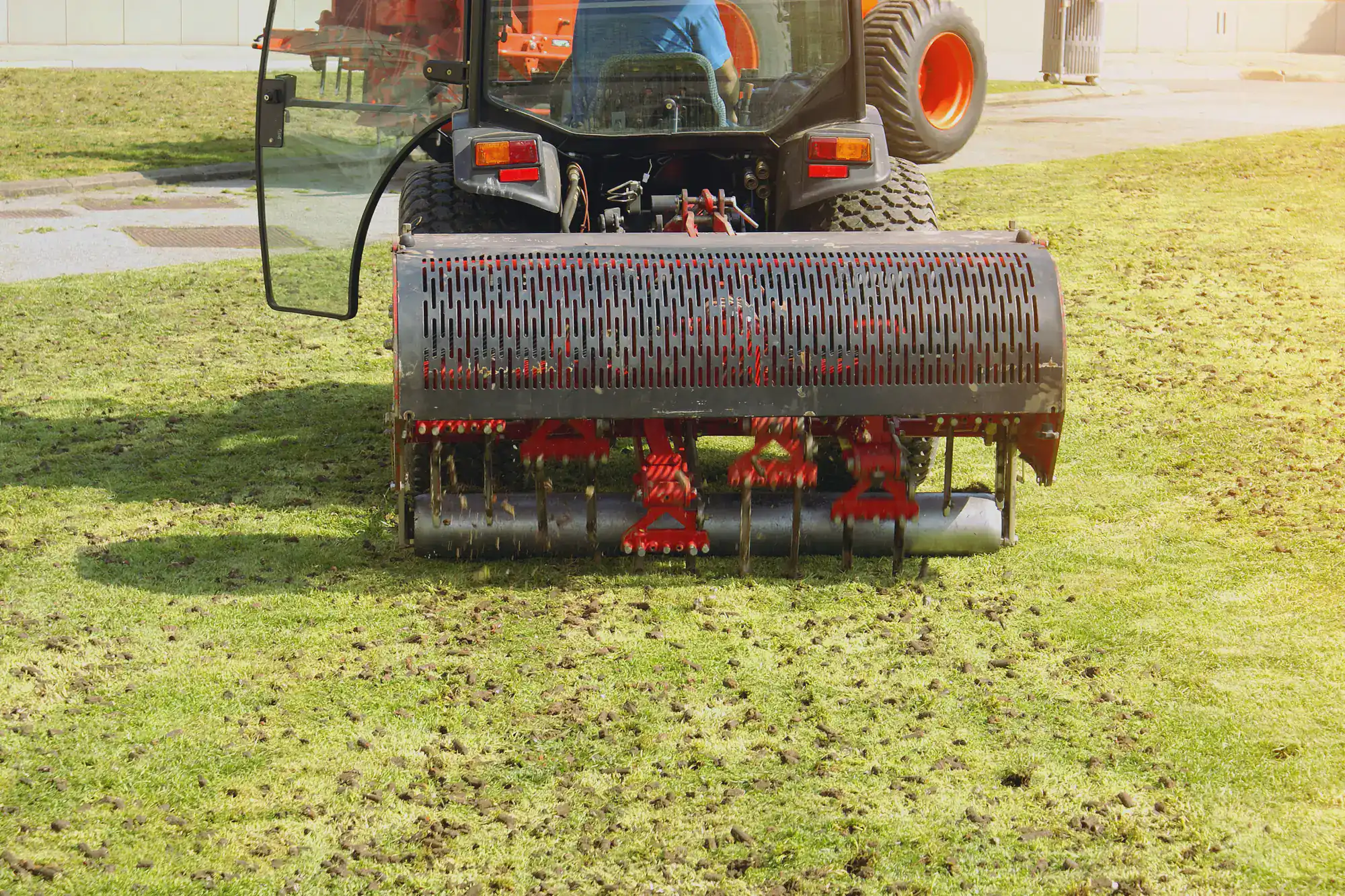
We run five fully wrapped trucks across Suffolk County, use hydraulic aerators that outperform anything you can rent, and apply a custom-blended fertilizer made specifically for our programs not sourced off a shelf. If you’ve hired a lawn company before and walked away unimpressed, the gap between what you got and what you needed is exactly the gap we fill.
It starts with a real assessment of your lawn’s condition not a glance from the truck, but an actual look at what’s going on with your soil, your turf density, your thatch layer, and any compaction patterns specific to your property. East Patchogue’s housing stock skews older, with most homes built between the 1950s and 1980s. That means many of these lawns have 40 to 50 years of compaction history that a single fertilizer application was never going to fix.
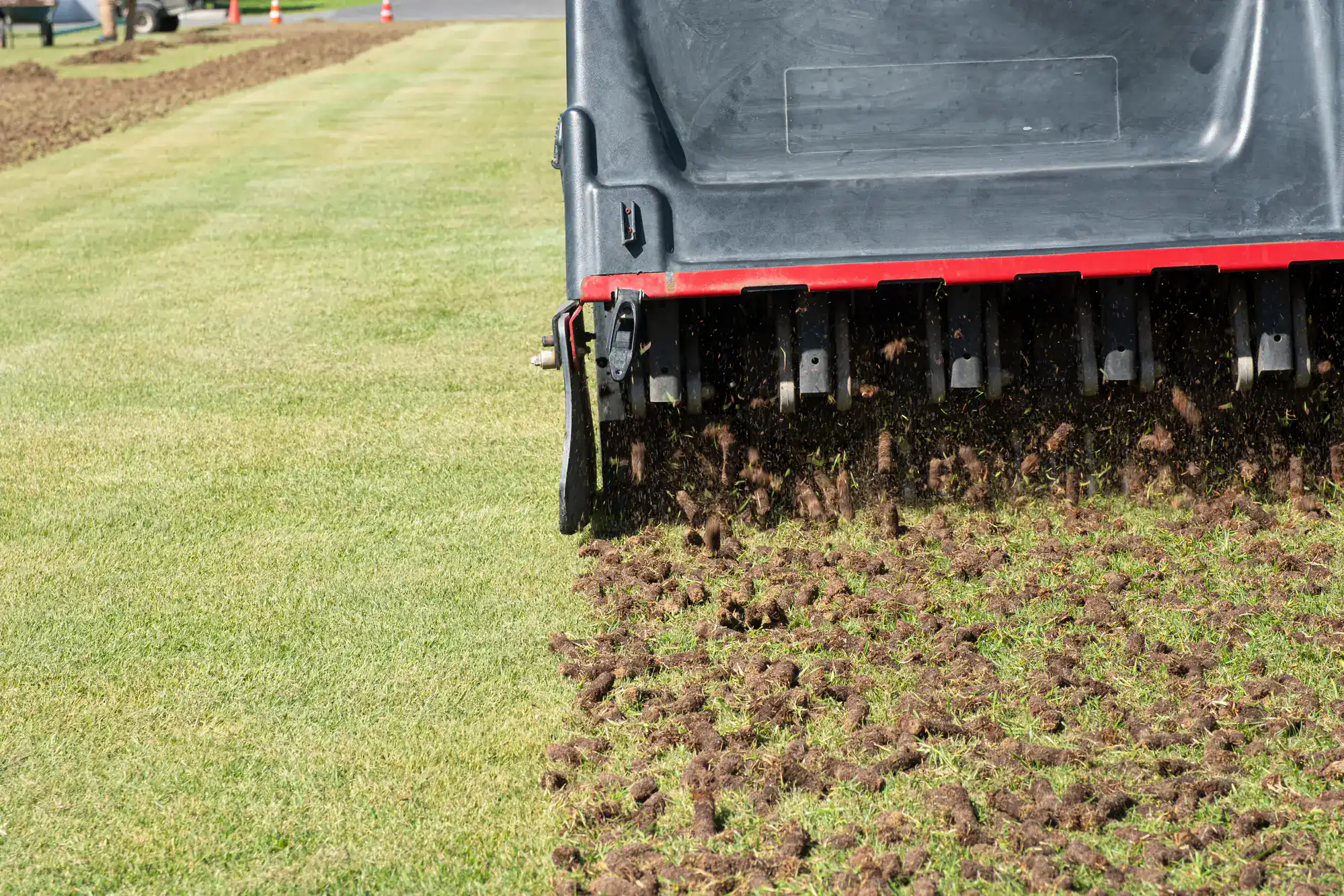
Once we understand what your lawn needs, we run the hydraulic core aerator across the full surface. The machine pulls cylindrical plugs of soil typically two to three inches deep and deposits them on the surface, where they break down naturally over a few weeks. Those channels stay open, giving roots room to grow deeper and giving water and nutrients a direct path into the root zone instead of running off.
If overseeding is part of your program, it goes down immediately after aeration while the soil channels are open and seed-to-soil contact is at its best. Timing matters here: Suffolk County’s fertilizer ban kicks in on November 1, so the fall window roughly August through mid-October is when this work needs to happen for cool-season grasses to establish before winter. We plan around that deadline. It’s not optional, and it fills up fast.
Ready to get started?
Every program we build starts from what your specific property needs not a package designed for an average lawn in an average location. In East Patchogue, that means accounting for sandy-loam coastal soils that drain differently than the heavier soils inland toward Medford or Yaphank. It means recognizing that waterfront properties near Pine Neck face salt air exposure that adds stress to turf the rest of the year. And it means working within Suffolk County Law 41-2007, which prohibits fertilizer applications between November 1 and April 1 a regulation designed specifically to protect waterways like the Great South Bay and the Swan River that run through and around this community.
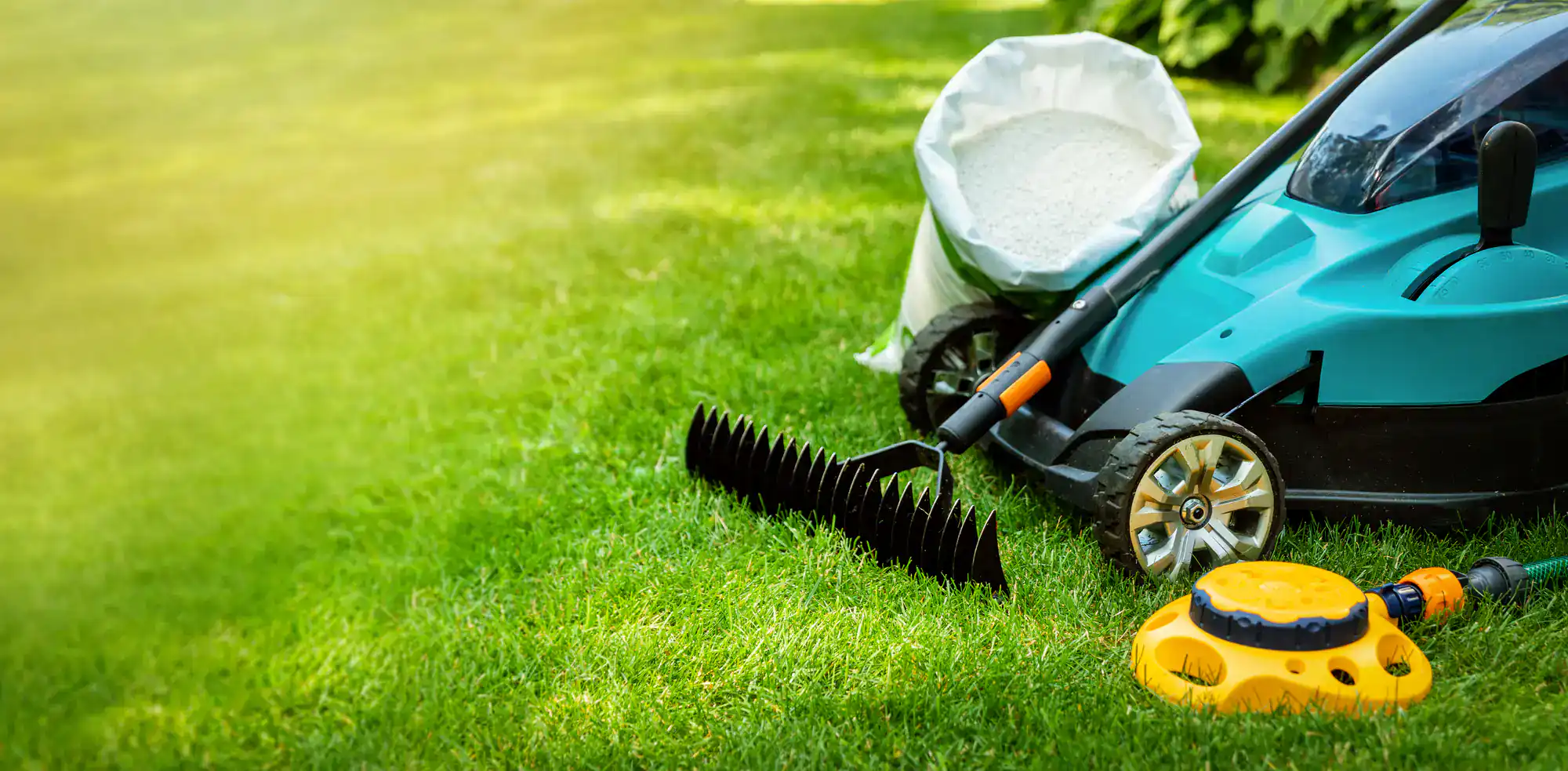
Beyond aeration, we offer overseeding with hydraulic seeders, custom-blended fertilization, nutgrass and bentgrass control, and full new lawn installs from seed. The fertilizer we apply isn’t sourced from a distributor’s catalog it’s a custom blend made specifically for our programs, formulated to work with Long Island’s soil chemistry rather than against it.
If you’ve been watching your lawn thin out year after year and wondering why nothing you’ve tried has made a real difference, the answer is usually in the soil. Lawn aeration cost in East Patchogue varies by property size, but the conversation starts with what your lawn actually needs and that’s what we figure out first.
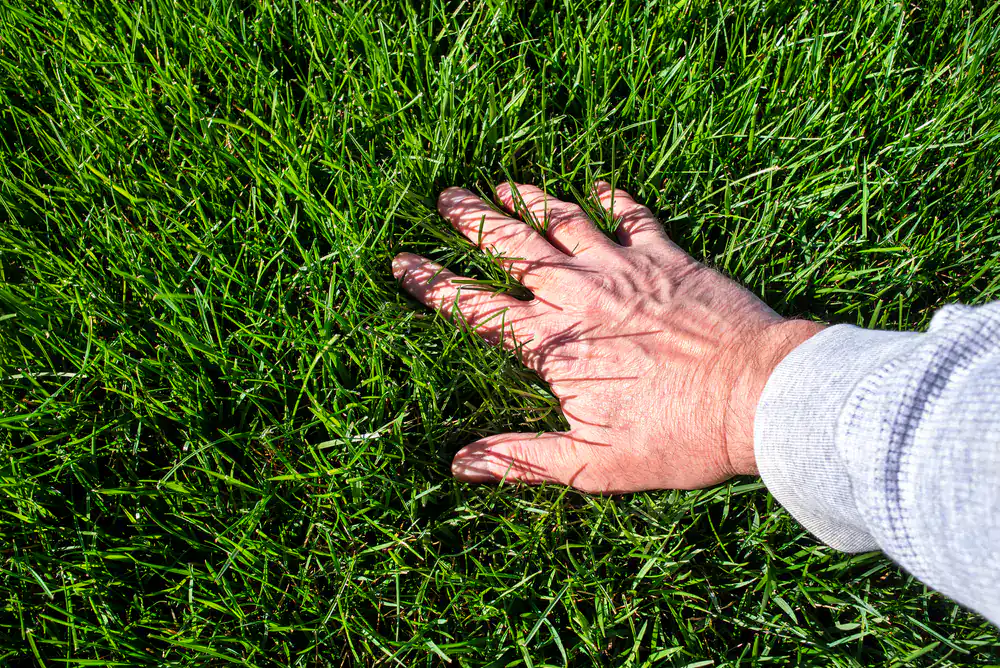
Yes and this is one of the most common misconceptions we run into on the South Shore. Sandy soil does compact. It just compacts differently than clay. In East Patchogue’s glacial outwash soils, the compaction layer tends to be shallower and more localized concentrated near driveways, along mowing paths, and in high-traffic areas but it’s just as effective at blocking roots and restricting drainage as anything you’d find in heavier inland soils.
The bigger issue with sandy-loam soils is nutrient loss. Water moves through quickly, which means fertilizer can wash out of the root zone before grass has a chance to absorb it. Aeration improves the soil’s ability to hold and use what you put into it. For properties near the Great South Bay or the Swan River watershed, that also reduces the amount of nitrogen leaving your lawn and entering local waterways something Suffolk County’s fertilizer regulations were specifically designed to address.
For the cool-season grasses that dominate Long Island lawns fescues, bluegrasses, and ryegrasses the optimal window is late summer through mid-fall, roughly August through mid-October. Soil temperatures are still warm enough for clean core removal, and the grass is entering its most active growth phase, which means it recovers quickly and fills in the aeration channels fast.
There’s also a hard regulatory deadline to plan around. Suffolk County Law 41-2007 prohibits fertilizer applications between November 1 and April 1. Since aeration and overseeding are most effective when followed immediately by a fertilizer application, everything needs to be completed before that cutoff. That window is real and finite, and it fills up. If you’re thinking about fall aeration in East Patchogue, earlier is better not because of sales pressure, but because the calendar genuinely doesn’t leave much room.
The easiest field test is the screwdriver test. Push a standard screwdriver into your lawn with moderate hand pressure. If it goes in easily to three or four inches, your soil is in reasonable shape. If it stops at an inch or two and requires real force, you’ve got compaction and no amount of fertilizer is going to fix that on its own.
Other signs are visible: water pooling on the surface after rain instead of soaking in, grass that thins out in summer despite regular feeding, bare patches near driveways or paths where equipment traffic is heaviest, and a spongy or matted feel underfoot that signals thatch buildup. In East Patchogue’s older neighborhoods most of the housing stock dates to the 1950s through 1980s these symptoms are common simply because the soil has been walked on and mowed over for 40 to 50 years without any professional intervention. Fertilization addresses nutrition. Aeration addresses the structural problem underneath.
Professional core aeration for a typical residential property runs roughly $75 to $300, depending on lawn size and condition. The lower end covers smaller properties; larger or more compacted lawns with significant thatch buildup will sit toward the higher end. If overseeding is added which is usually recommended for lawns with thin or bare areas that adds to the total, but the combination produces significantly better results than aeration alone.
The more useful comparison isn’t aeration versus doing nothing it’s aeration now versus full lawn renovation later. A lawn that goes untreated for years in compacted South Shore soil accumulates a deficit that eventually requires stripping and starting over, which is a far more expensive proposition. Annual or biennial professional aeration keeps the soil in the kind of condition where your fertilizer investments actually work, your grass stays dense enough to crowd out weeds, and you’re not looking at a full renovation in five years. For a home in East Patchogue where property values have been climbing, that’s not a minor consideration.
Core aeration removes actual plugs of soil from the ground, creating open channels that allow air, water, and nutrients to reach the root zone. Those channels stay open for weeks, giving roots real room to grow deeper and giving water and nutrients a direct path into the root zone instead of running off. Spike aeration, by contrast, uses solid tines to poke holes in the soil but because no material is removed, the surrounding soil compresses inward to fill the space almost immediately. In many cases, spike aeration makes compaction slightly worse by pressing the soil tighter around the puncture points.
For East Patchogue lawns with genuine compaction history which describes most properties in this hamlet given the age of the housing stock spike aeration is not a real solution. It’s the difference between treating the symptom and treating the cause. We use hydraulic core aerators specifically because they pull clean, consistent cores across the full lawn surface, including the most compacted zones near driveways and high-traffic paths where a lighter machine would struggle to penetrate.
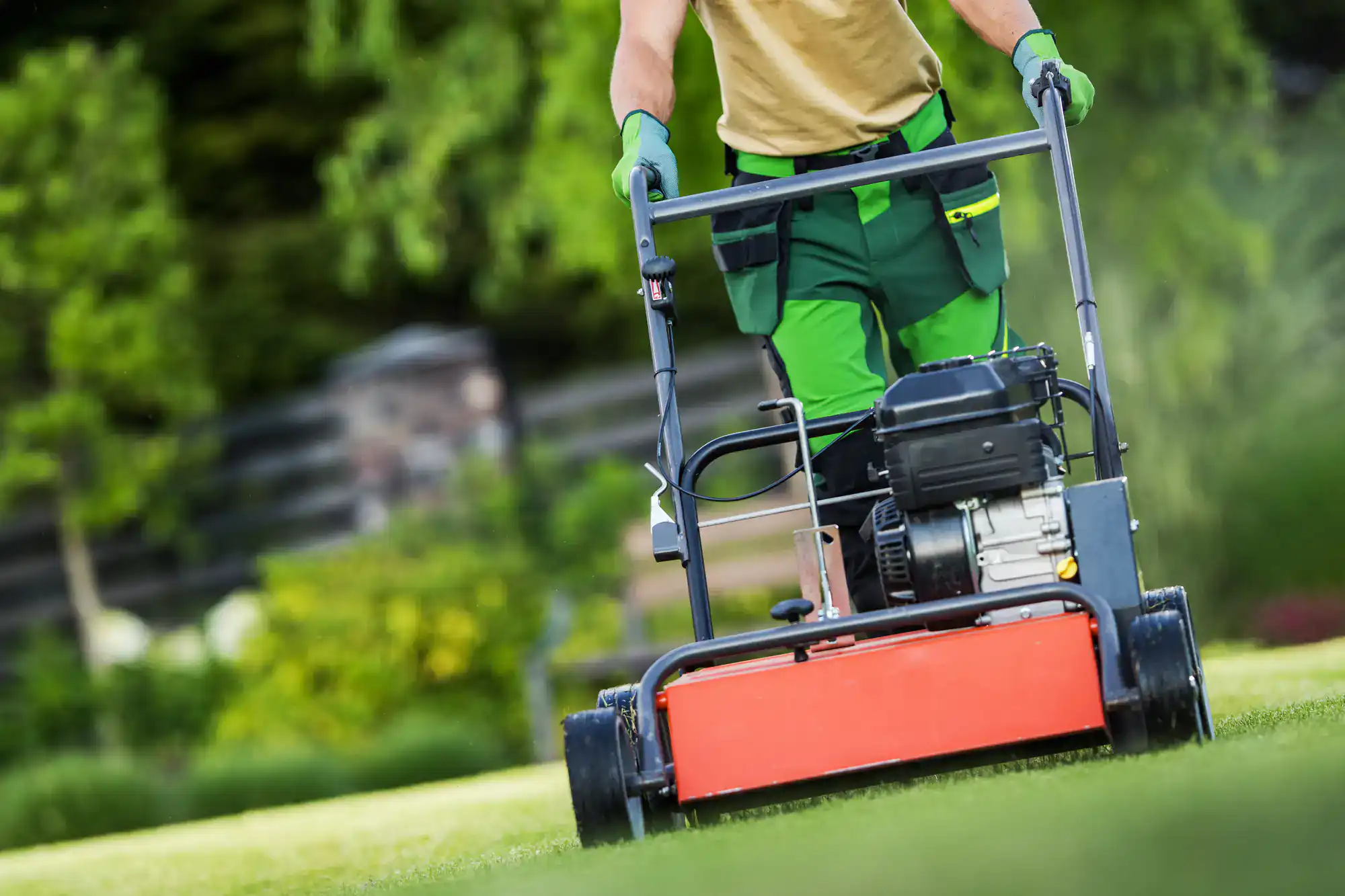
You can rent one most equipment rental shops on Long Island carry drum or tow-behind aerators but there’s a meaningful gap between what a rental machine does and what professional hydraulic equipment does. Consumer-grade rental aerators don’t penetrate as deeply, don’t pull cores as cleanly, and often struggle with the compacted soil profiles that develop in East Patchogue’s established lawns after decades of use. You’ll cover the surface, but you may not reach the compaction layer where it actually matters.
There’s also the timing and program side of it. Knowing when to aerate relative to Suffolk County’s November 1 fertilizer ban, what to seed with based on your existing turf type, how to read your soil’s specific drainage and nutrient profile, and what to apply afterward that’s where the professional difference shows up most. A licensed applicator isn’t just running a machine. We’re making decisions about your lawn’s specific conditions that affect whether the work actually produces results or just checks a box. For a lawn in a community where property values are real and visible, that distinction tends to be worth the difference in cost.
Useful Links
Other Services we provide in East Patchogue