
Hear from Our Customers
Most Holbrook homeowners who’ve been on a fertilization program for a year or two and still have thin, patchy grass aren’t dealing with a fertilizer problem. They’re dealing with a delivery problem. Compacted soil the kind that builds up over decades in the postwar split-levels and Colonials throughout Holbrook acts like a wall between the surface and the root zone. Nutrients sit on top, wash off with the next rain, and never reach where they need to go. Research shows fertilizer uptake can increase 30–40% after proper core aeration. That’s the difference between a program that works and money that disappears.
Beyond fertilizer efficiency, you’ll notice water stopping where it used to pool. Many Holbrook yards especially those in older subdivisions near Patchogue-Holbrook Road or the streets surrounding the Sachem school zones show standing water after rain or irrigation. That’s not a drainage design issue. It’s compaction reducing your soil’s ability to absorb water, sometimes by as much as 50%. Once that compaction layer is broken up, water moves down to the roots instead of sitting on top or running off toward the curb.
If you’ve been overseeding bare patches every fall and watching them come back the following spring, aeration is almost certainly the missing step. Seed dropped onto compacted, thatch-covered soil can’t make contact with the ground. It dries out and dies before it ever gets started. Core aeration creates direct pathways into the soil and overseeded lawns following aeration show germination rates 30–50% higher than those seeded on un-aerated ground.
Lawn Master is a Suffolk County–based lawn care company not a franchise, not a national chain routing your job to whoever’s available. The people who show up at your Holbrook property are the same people who know the soil conditions in your neighborhood, understand the seasonal timing for Long Island’s cool-season grasses, and have worked in Holbrook’s backyards long enough to know what actually works here.
Holbrook sits on glacial outwash plain south of the Ronkonkoma Moraine, which means surface soils tend toward sandy deposits but decades of construction activity and foot traffic in Holbrook’s postwar subdivisions have created compaction layers that standard equipment simply doesn’t reach. Our applicators are New York State DEC-licensed, which means we’re trained, tested, and compliant with New York’s fertilizer laws, including phosphorus restrictions near the waterways that drain toward Great South Bay.
You’re not getting a template. You’re getting a team that understands the difference between a lawn in Timber Ridge and one near the Colony at Holbrook and adjusts accordingly. A full new lawn installation for Holbrook properties is sometimes the best value.
The process starts before we touch your lawn. Timing matters more than most people realize. For Holbrook’s cool-season turf tall fescue, Kentucky bluegrass, perennial ryegrass the optimal window runs from late August through mid-October. Soil temperatures at depth need to stay above 50°F for seed germination, and air temperatures need to have cooled enough to reduce heat stress on new growth. Miss that window, and you’re waiting another full year for the best results. September books fast across Suffolk County, so earlier is better.
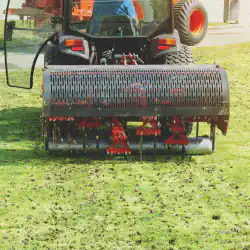
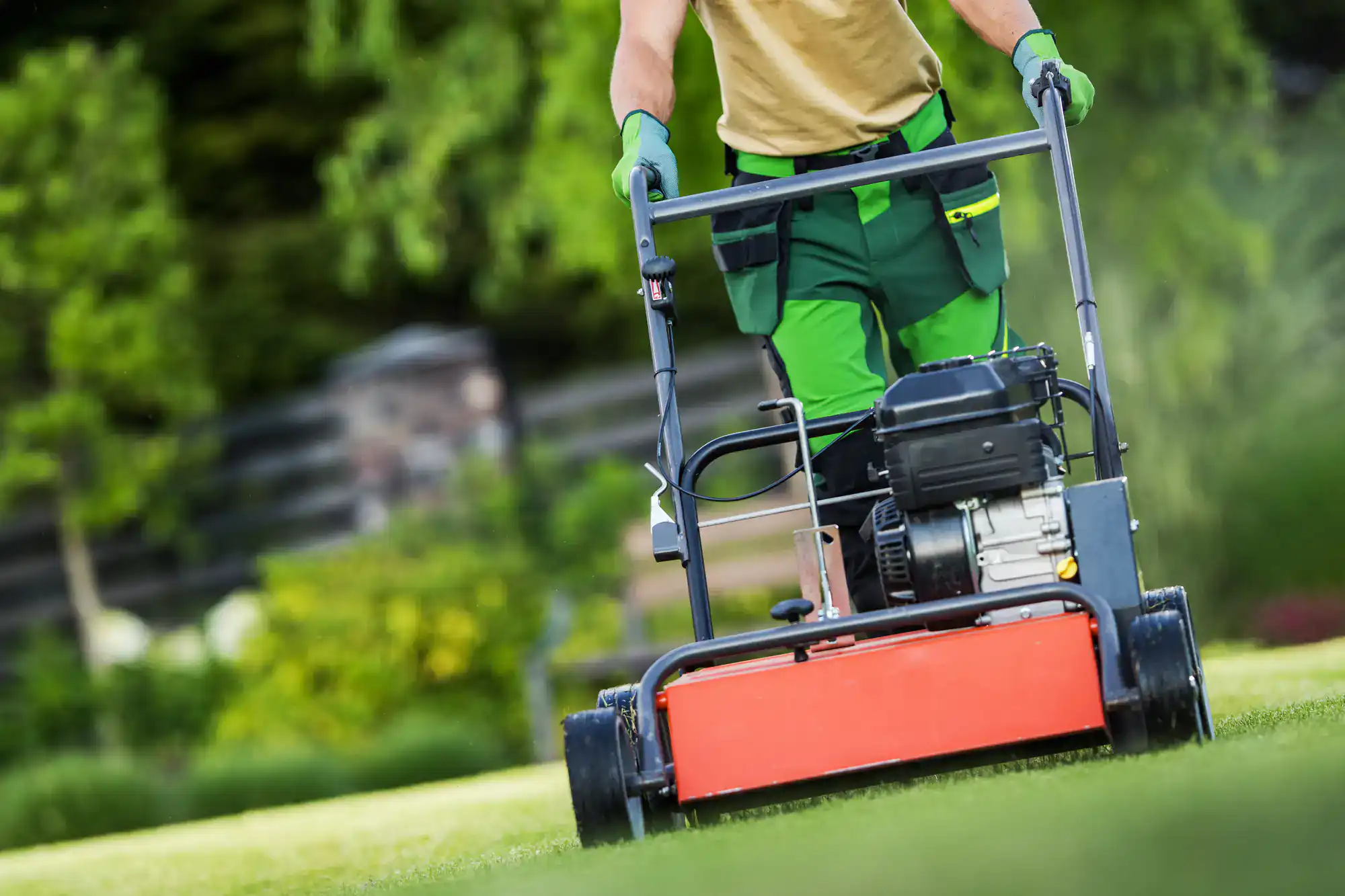
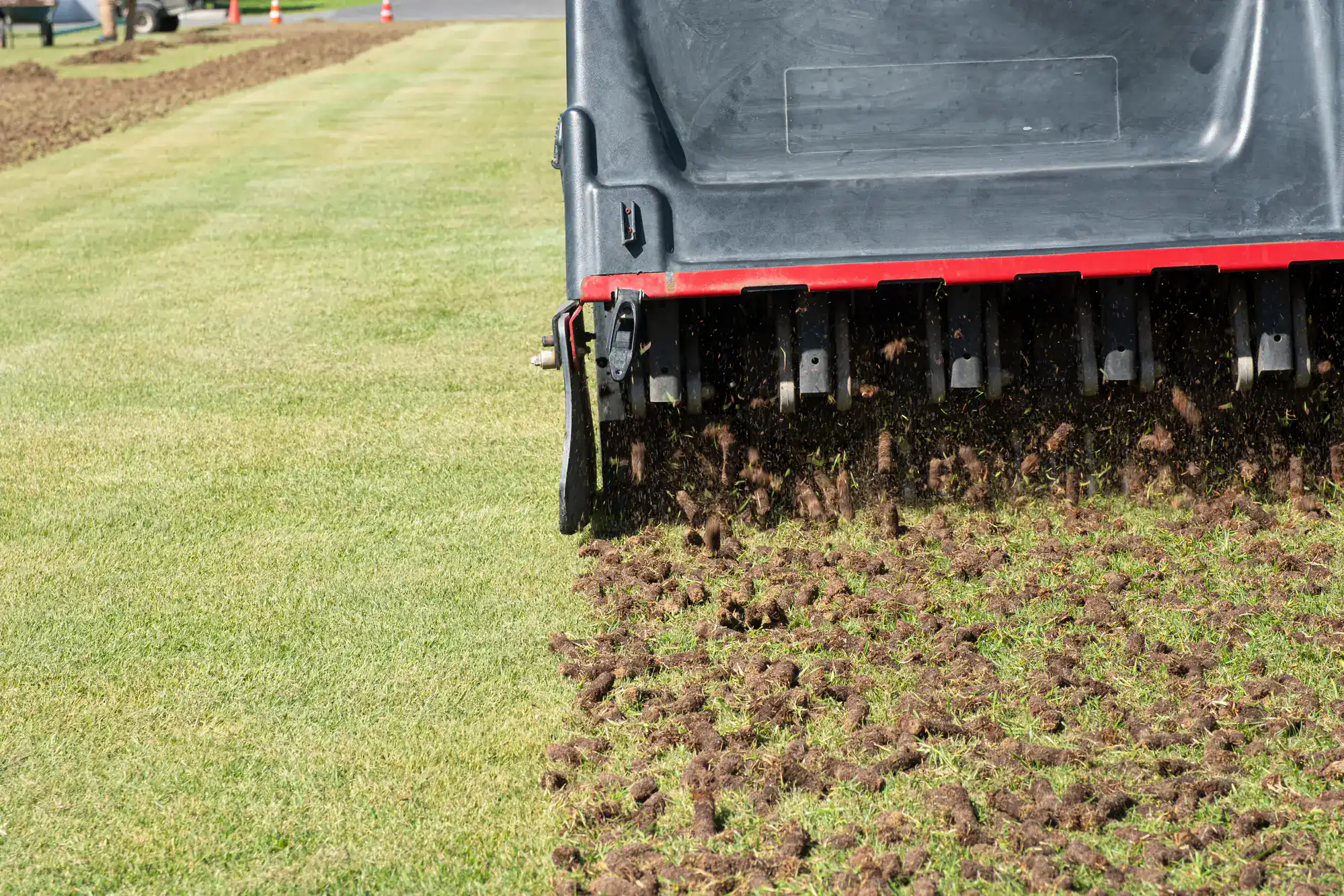
When we arrive, we’re running a commercial hydraulic aerator not the drum-style machine you’d rent from a hardware store, and not the tow-behind equipment most local operators use. The hydraulic aerator drives tines 3–4 inches into the soil, dynamically adjusting pressure to reach the actual compaction layer. Standard drum aerators typically penetrate 1.5–2 inches. On Holbrook’s construction-era subsoil, that difference is everything.
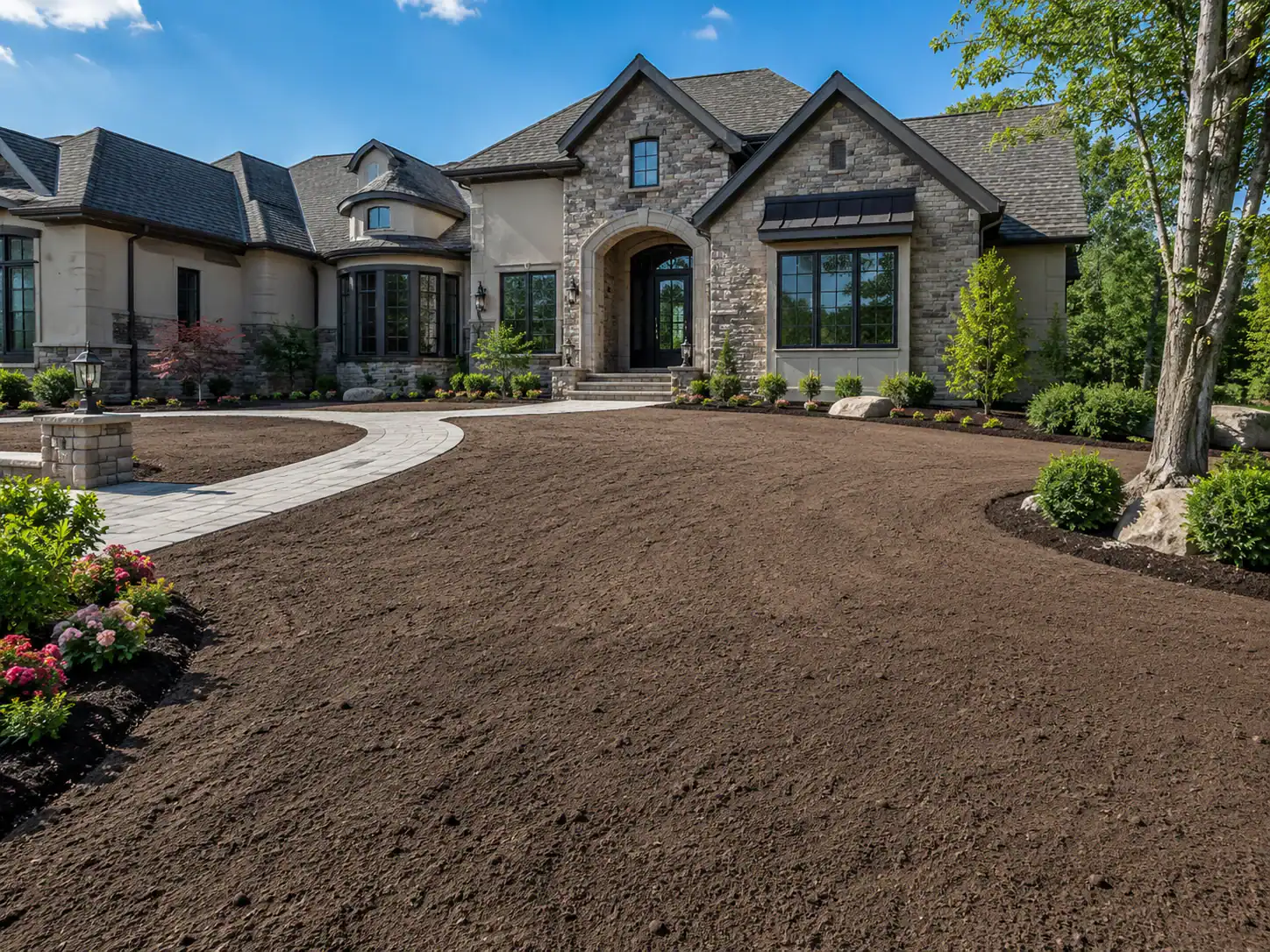
After the service, you’ll see soil cores cylindrical plugs about 2–4 inches long scattered across your lawn. Leave them there. They contain soil microbes and organic matter that break down within 2–4 weeks, returning nutrients to the surface and helping to decompose thatch. The lawn looks disrupted for a few weeks. Then the holes close, the plugs dissolve, and the improvement becomes visible denser growth, better color, and grass that actually responds to what you’re putting into it.
Ready to get started?
Core aeration and lawn aeration are the same service and when we talk about aeration, we mean core aeration specifically. Not spike aeration, which pushes soil aside and actually increases compaction around each hole. Core aeration removes a physical plug of soil, creating genuine decompression and space for roots, water, and nutrients to move. If a company in Holbrook offers “aeration” without specifying that cores are being extracted, it’s worth asking exactly what equipment they’re using.
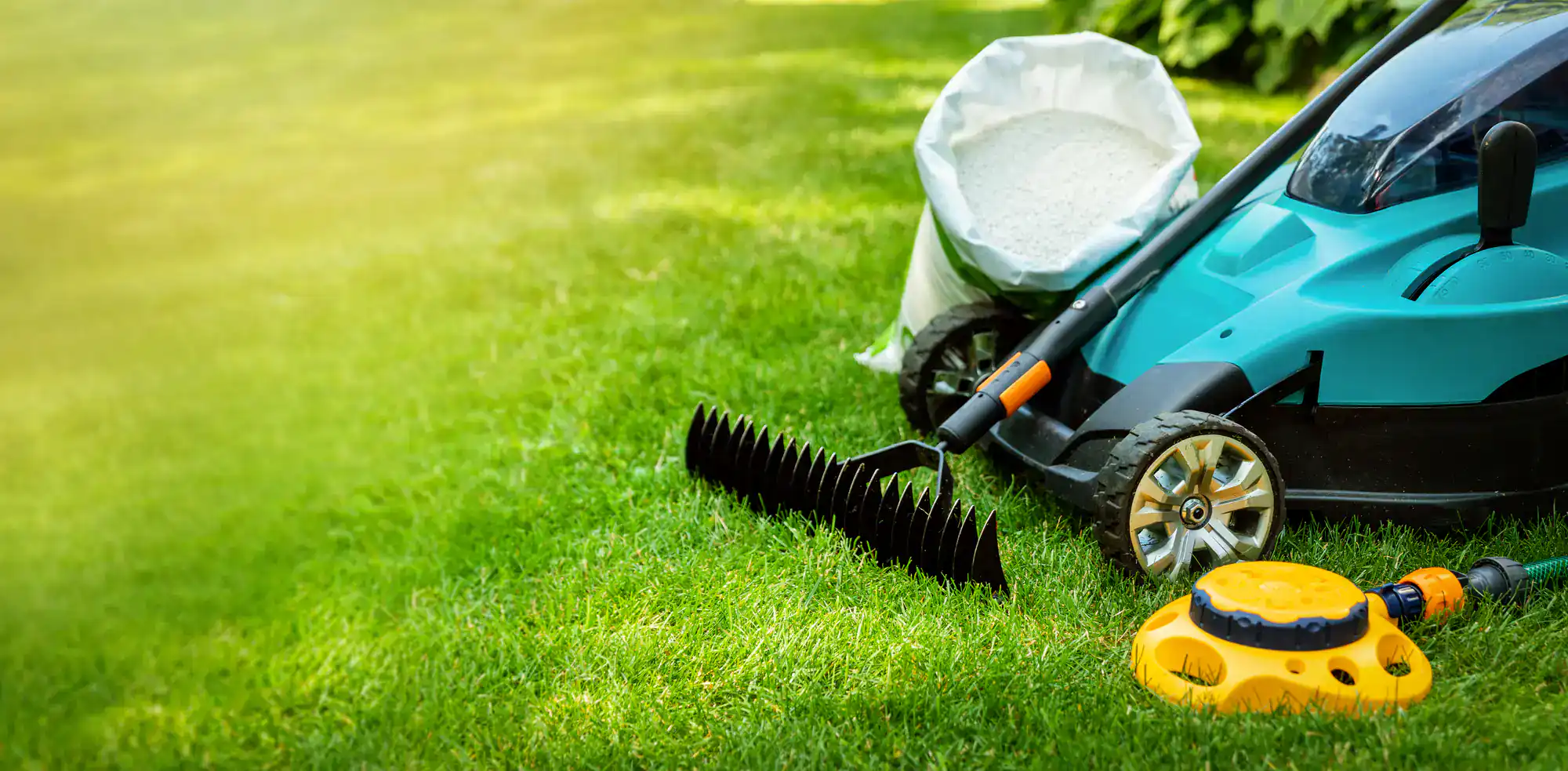
Aeration pairs naturally with overseeding and fertilization, and in most cases, doing them together is the right call. Holbrook’s lawns particularly those in communities like Timber Ridge or the older residential streets near Holbrook Commons deal with thatch accumulation that prevents seed-to-soil contact. Aeration solves that. Seed dropped into freshly aerated ground has a direct path to the soil and the moisture it needs to germinate. Fertilizer applied immediately after aeration reaches the root zone instead of washing off the surface.
Our applicators hold New York State DEC pesticide applicator licenses a legal requirement for commercial fertilizer and pesticide application in New York that many local operators either don’t hold or can’t readily produce. In a community like Holbrook, where the drainage basin flows toward Great South Bay and Long Island’s coastal waterways, that compliance matters. You’re not just protecting your lawn you’re protecting the environment around it.
For most Holbrook homeowners, fall is the right window specifically late August through mid-October. That’s when soil temperatures at depth are still above 50°F, which is the minimum needed for cool-season grass germination, and air temperatures have cooled enough to reduce heat stress on new growth. Tall fescue, Kentucky bluegrass, and perennial ryegrass the grasses that make up the majority of lawns in Holbrook all establish best during this period.
The reason timing matters so much here is that Long Island’s shoulder season is short. Once you get into late October, soil temps start dropping and germination becomes unreliable. September is when our schedule fills up fastest across Suffolk County, so if you’re planning on fall aeration and overseeding in Holbrook, reaching out in August gives you the best shot at hitting the optimal window. Spring aeration is a viable secondary option for severely compacted lawns, but without the overseeding benefit that fall timing provides.
Standing water after rain is one of the clearest signs of soil compaction, and it’s a common complaint in Holbrook’s older residential neighborhoods particularly in the postwar subdivisions where construction-era practices stripped topsoil, compacted the subsoil with heavy machinery, and covered it with a thin layer of lawn. Decades of mowing, foot traffic, and wet-dry irrigation cycles have made that compaction worse over time in Holbrook properties.
Compacted soil can reduce water infiltration by up to 50%, meaning half the water hitting your lawn whether from rain or your irrigation system has nowhere to go. It sits on the surface or runs off before it ever reaches the root zone. Core aeration breaks up that compaction layer, restoring the soil’s ability to absorb water at a normal rate. In most cases, Holbrook homeowners notice a significant reduction in surface pooling within the first season after a proper aeration treatment.
It matters quite a bit, especially for the soil conditions common in central Suffolk County. Core aeration uses hollow tines to physically remove plugs of soil from the ground, creating genuine space for roots, water, and nutrients to move. Spike aeration uses solid tines to poke holes by pushing soil aside which sounds similar but actually compresses the soil surrounding each hole, making compaction worse rather than better.
On the construction-era subsoil present in many Holbrook properties, spike aeration is counterproductive. You’re essentially pressing the problem tighter together rather than relieving it. If you’ve had “aeration” done before and didn’t notice much improvement, there’s a reasonable chance spike equipment was used. Always ask whether cores are being extracted. If they’re not, it’s not the same service and it won’t produce the same results.
Aeration costs in Holbrook typically range from around $190 on the lower end for smaller properties up to $3,000 or more for larger estates, depending on square footage, the condition of the soil, and whether overseeding and fertilization are being added at the same time. Most standard single-family lots in Holbrook’s residential neighborhoods fall somewhere in the middle of that range.
The more useful way to think about cost is against what you’re already spending. If you’re running a fertilization program and not seeing results, compaction is likely why and that means a portion of what you’re spending on fertilizer is being wasted before it reaches the root zone. Aeration doesn’t add to your lawn care cost so much as it makes everything else you’re already paying for actually work. We offer free estimates, so you’ll know exactly what you’re looking at before committing to anything.
A few simple things make a real difference. Water your lawn one to two days before the scheduled service not the day of, and not bone dry. Moist soil allows the tines to penetrate more effectively and pull cleaner cores. If your soil is too dry and hard, even a hydraulic aerator has to work against unnecessary resistance. If it’s waterlogged, the cores won’t extract cleanly.
Mark any irrigation heads, invisible fence lines, or shallow utility lines before the crew arrives. This is especially relevant in Holbrook’s neighborhoods where in-ground irrigation systems are common and in-ground pet fencing is widely used. Our team will do a walkthrough before starting, but knowing where your systems are helps avoid any surprises. Beyond that, you don’t need to do much mow at your normal height in the days leading up to the service, and plan to leave the soil plugs on the lawn afterward rather than raking them up.
Surface appearance doesn’t tell the whole story. A lawn can look reasonably green and still have a compaction layer at 2–4 inches depth that’s limiting root development, reducing fertilizer uptake, and making the grass more vulnerable to heat stress and drought. In Holbrook’s climate with hot, humid summers and the kind of dry stretches that hit Long Island in July and August shallow root systems are what cause lawns to go brown and thin out fast when conditions get tough.
Annual core aeration is recommended by Penn State Extension for cool-season grasses, and Long Island’s turf varieties fall squarely in that category. Think of it less as a rescue treatment and more as maintenance that keeps the soil from reaching the point where visible problems show up. Homeowners in communities like the Colony at Holbrook or Timber Ridge who maintain consistent aeration schedules tend to have lawns that hold up better through summer stress and recover faster in fall because the root system underneath has the depth and access to nutrients it needs to do its job.
Useful Links
Other Services we provide in Holbrook