
Hear from Our Customers
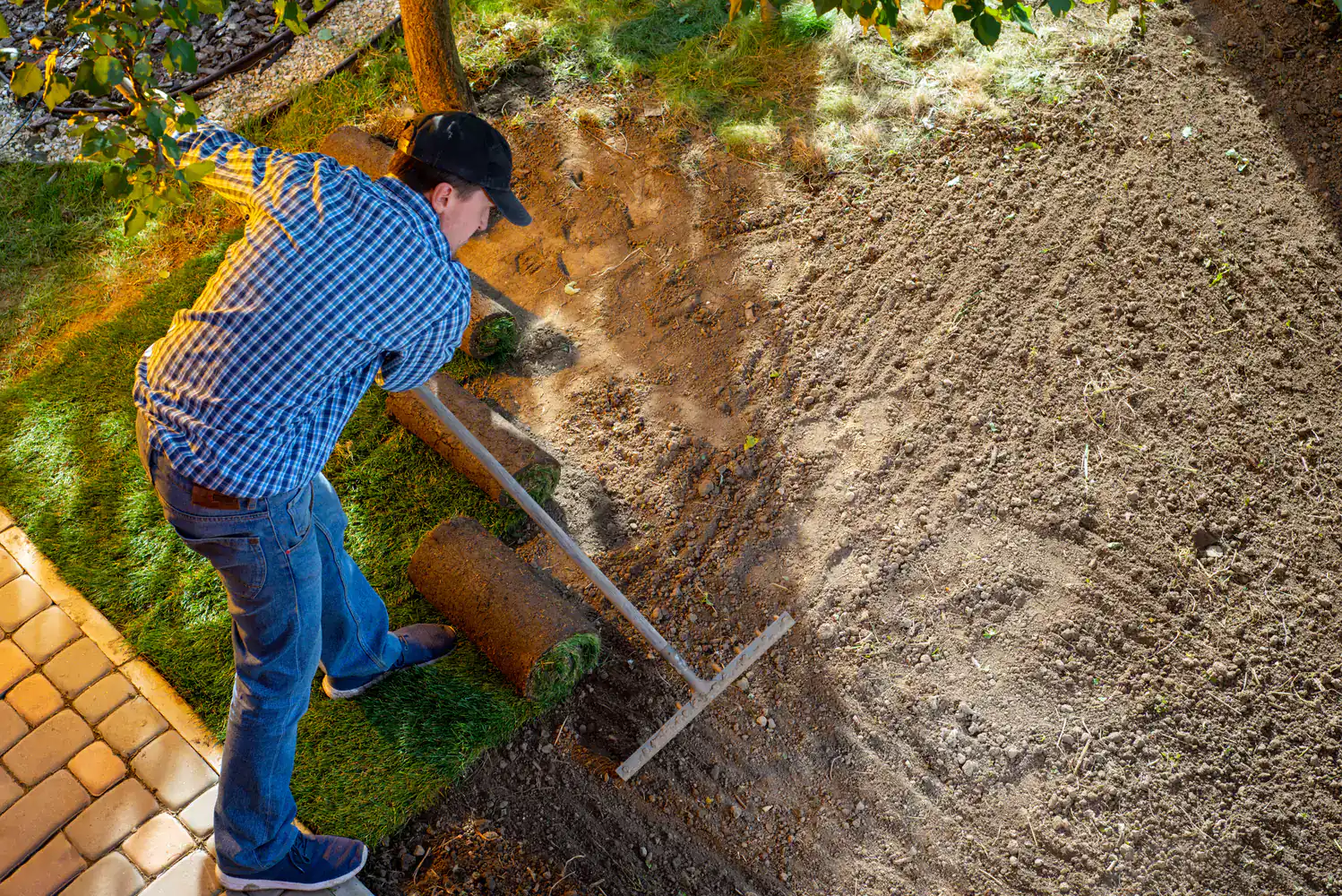
A lot of Holbrook properties are sitting on ground that was never set up for success. Homes built in the early 1970s which is most of the housing stock here were planted with older grass varieties that have thinned out, filled in with weeds, or simply stopped performing. When you reach the point where patching and overseeding aren’t cutting it anymore, starting from scratch is the right call. And when it’s done correctly, the difference is visible within weeks.
What you get with a proper new lawn installation isn’t just green grass. It’s a dense, even stand of turf that holds its color through Long Island summers, fills in without bare patches, and doesn’t require constant intervention to stay presentable. That matters in Holbrook, where neighborhoods have real curb appeal standards and homeowners take visible pride in their properties.
Holbrook’s sandy loam soil drains fast faster than most people realize. Nutrients leach through quickly, the ground dries out in summer heat, and a lawn that wasn’t built with those conditions in mind will show it. The right installation accounts for that from the start: proper soil prep, the right seed selection for this specific ground, and a first-year establishment plan that gives the lawn what it needs to root deeply before it faces its first July.
We’re not a landscaping company. Our work is specifically lawn installation and renovation building finished lawns from bare or failed ground. That focus matters because new lawn installation is a different skill set than mowing or fertilizing, and the homeowners who’ve tried both kinds of contractors know the difference.
For 38 years, we’ve been installing lawns across Suffolk County including right here in the neighborhoods that make up Holbrook. That’s not a number pulled from a brochure. It means our team has worked in Holbrook’s sandy loam, understands the drainage patterns near the MacArthur Airport corridor, and knows what it takes to establish a lawn that holds up through a Long Island summer.
When you call Lawn Master, you’re talking to a specialist who has done this hundreds of times in this county, on this soil, in this climate. That kind of experience doesn’t come from a franchise model or a company that started last season.

Every installation starts with the ground itself. Before anything gets seeded, we assess the site grade, drainage, soil condition, and what the builder or previous lawn left behind. On new construction lots in Holbrook, that often means dealing with compacted subsoil from heavy equipment, stripped topsoil, and sometimes buried construction debris that a less experienced crew would seed right over. Those issues get addressed first, because no amount of quality seed fixes a poorly prepared base.
From there, the process moves into soil preparation amending the sandy loam where needed, establishing proper grade, and bringing in quality topsoil if the site requires it. A minimum of four to six inches of workable topsoil is what a lawn needs to root properly, and that standard doesn’t get skipped. New York State’s nutrient runoff law also comes into play at this stage: high-phosphorus starter fertilizer is only legally permitted on new installations, and we apply it correctly and at the right rate for Holbrook’s specific soil conditions.
Seeding follows, with grass varieties selected for Long Island’s climate cool-season blends that establish in fall, handle summer heat stress, and build the root depth that Holbrook’s fast-draining soil demands. The optimal installation window here is late August through October, when soil temperatures support germination and weed competition is at its lowest. Before we leave, you’ll know exactly what to do for watering, first mow timing, and what to expect at 30, 60, and 90 days out.
Ready to get started?
New lawn installation in Holbrook covers the full scope of what it takes to go from bare or failed ground to an established, healthy lawn. That includes site assessment, grading evaluation, topsoil work where needed, soil amendment for the sandy loam conditions common throughout this area, seed selection matched to Long Island’s cool-season growing environment, starter fertilizer application, and a complete establishment protocol before the job is considered done.
For larger properties new construction colonials on half-acre lots are common in Holbrook we offer seeding as a cost-effective alternative to sod. It delivers strong, even coverage across bigger footprints and builds root systems that perform better in Holbrook’s fast-draining soil than transplanted sod typically does. For smaller or more detail-oriented installations, seed-based installation gives you the same long-term results with precise control over coverage and variety selection.
Holbrook properties fall under either the Town of Islip or the Town of Brookhaven depending on which side of the LIRR tracks the property sits on. We operate throughout central Suffolk County and understand the drainage and grading considerations that apply on both sides of that line. Whether you’re dealing with a new build off the LIE service road, a post-renovation yard near Patchogue-Holbrook Road, or a complete tearout on a property that’s been neglected for years, we tailor the process to what your specific site actually needs.

For Holbrook and the broader central Suffolk County area, late August through October is the strongest window for new lawn installation. Cool-season grasses the standard for all of Long Island germinate best when soil temperatures are still warm from summer but air temperatures are dropping. Fall rains support establishment naturally, and weed competition is significantly lower than it is in spring. A lawn seeded in this window has the entire fall to root before going dormant, then comes back aggressively in March and April.
Spring installation is possible if your timeline doesn’t allow waiting, but it comes with real trade-offs. A lawn seeded in April or May has to survive its first Long Island summer before root systems are fully established. In Holbrook’s sandy loam, which dries out faster than heavier soils, that creates stress that a fall-installed lawn simply doesn’t face. If you’re working from a new construction site or a post-renovation lot and need the lawn in before winter, the fall window is the target and it fills up fast.
New lawn installation in Suffolk County typically runs between $1 and $4 per square foot depending on the method, the condition of the site, and what the ground needs before seeding can begin. For a typical Holbrook property, that puts most projects somewhere between $5,000 and $20,000 depending on scope. Seeding comes in at the lower end of that range and works well on larger lots. Sites that need significant grading, topsoil importation, or compaction correction will fall toward the higher end.
The honest framing here is that the cost of a professional installation is almost always less than the cost of doing it twice. The most expensive lawn is the one that doesn’t establish and has to be redone. Holbrook’s sandy loam, combined with Long Island’s summer heat, is unforgiving to lawns that weren’t built correctly from the start. When you’re investing in a property worth $600,000 or more which is the range for new construction in Holbrook right now a properly installed lawn is a proportionate part of that investment, not an afterthought.
Yes, and it’s one of the most important things to get right. Holbrook’s soil is predominantly sandy loam, which means water moves through it quickly and nutrients don’t stay available the way they do in heavier clay soils. A lawn installation that doesn’t account for this will establish thin, fade in color during summer, and invite weed pressure earlier than it should. It’s a common reason why lawns in this area fail after the first season even when they looked decent at first.
The fix isn’t complicated, but it has to be built into the process from the beginning not added on after the fact. Proper soil amendment before seeding, starter fertilizer applied at the right rate for these conditions, and grass varieties selected specifically for Long Island’s climate and soil type are what separate a lawn that establishes correctly from one that struggles. Seeding can also help on Holbrook properties because the hydromulch component helps retain moisture at the seed-soil interface during germination, which matters a lot when the ground drains as fast as it does here.
Seeding sometimes called seeding involves spraying a slurry of seed, mulch, fertilizer, and water directly onto prepared ground. It covers large areas quickly and evenly, and the mulch component helps hold moisture at the surface during germination. For bigger Holbrook properties, particularly new construction lots on half-acre parcels, it’s often the most cost-effective way to get consistent coverage across the full footprint.
Traditional seed-based installation involves spreading seed mechanically or by hand on prepared, often aerated or verticut ground. It gives more precise control over coverage and seed depth, and it’s typically the right choice for smaller or more detail-oriented installations. Both methods build strong root systems over time and in Holbrook’s sandy loam, that root depth is what determines whether the lawn holds up through summer. Sod is also an option, but it costs significantly more, and transplanted sod in fast-draining soil requires more intensive establishment care than seed-based methods do. For most Holbrook properties, hydraulic or traditional seeding delivers better long-term results at a more reasonable investment.
Yes but it requires more than just spreading seed on what the builder left behind. New construction sites in Holbrook typically have compacted subsoil from equipment traffic, stripped topsoil that was disturbed or removed during the build, uneven grade, and sometimes buried construction debris just below the surface. Seeding over those conditions without addressing them first is one of the most common reasons new construction lawns fail to establish.
The right approach starts with a site assessment to identify every compaction zone, drainage issue, and topsoil deficiency before any seed goes down. From there, grading gets corrected, topsoil is brought in where needed to reach the minimum four-to-six-inch depth required for healthy root development, and the soil gets amended for Holbrook’s sandy loam conditions. Only after that groundwork is done does seeding make sense. It adds time and cost to the process, but it’s the difference between a lawn that establishes correctly and one that has to be redone the following season which costs more in the end.
For a fall installation in Holbrook which is the recommended window you’ll typically see germination within 10 to 21 days depending on soil temperature and moisture. By 30 days, you should have visible coverage across most of the lawn. By 60 days, the stand is filling in and the lawn starts to look like a lawn. By 90 days, if the establishment protocol has been followed correctly, you have a solid base going into dormancy.
What happens after we leave matters just as much as the installation itself. Watering consistently during the first three to four weeks is critical Holbrook’s sandy loam dries out fast, and germinating seed that dries out between waterings won’t recover. First mow timing, mowing height, and the first-year fertilization schedule all affect how the lawn develops through its first full growing season. We walk every Holbrook client through that protocol before the job is finished, because the homeowners who follow it consistently get the best results and the ones who don’t are the ones calling about thin spots six months later.
Useful Links
Other Services we provide in Holbrook