
Hear from Our Customers
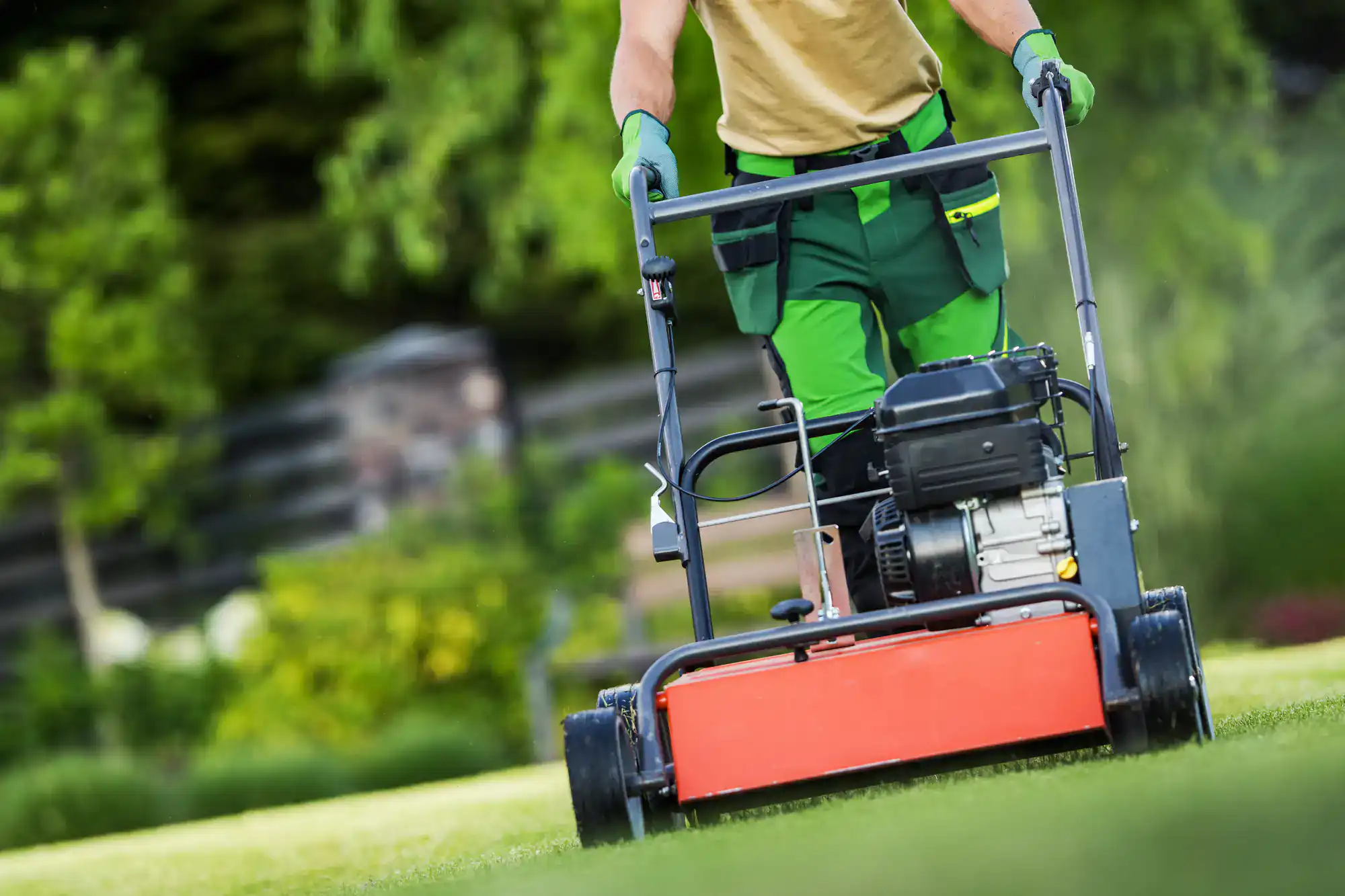
Most Medford lawns sit on sandy, Pine Barrens-influenced soil that looks like it should drain and absorb well but doesn’t behave that way once it compacts. A thin layer of thatch builds up on the surface, water runs off instead of soaking in, and fertilizer leaches through before roots ever get to use it. You water, you fertilize, and the lawn still looks like it’s struggling. That’s not a fertilizer problem. That’s a soil access problem.
Core aeration fixes the access. By pulling out small plugs of soil across the entire lawn, it breaks through that compacted surface layer and opens direct channels for water, air, and nutrients to reach the root zone. Studies show fertilizer uptake can improve by 30 to 40 percent after a proper aeration treatment. For homes in Medford many of which were built in the 1960s and have never had a professional aeration that improvement can be dramatic.
The results you notice first are usually the obvious ones: water soaks in instead of pooling near the curb strip, bare patches start filling in, and the lawn holds its color longer into a dry summer. But the deeper benefit is that every dollar you’re already spending on lawn care starts doing what it was supposed to do from the beginning.
We’re a Suffolk County-based lawn care company not a franchise, not a national brand routing calls to whoever’s available. When you reach out, you’re talking to people who actually work in the Town of Brookhaven and know what the soil looks like off Horse Block Road and near the Eagle Estates neighborhood in Medford. That local context matters more than it sounds.
We hold a New York State DEC Pesticide Applicator License, which is the legal requirement for any company commercially applying fertilizers or treatments in this state. Many informal operators working in the Medford area can’t say the same. We also understand what it means to work near the Long Island Central Pine Barrens the environmental sensitivity of this area, the groundwater concerns, and how to apply treatments responsibly above a protected aquifer system.
What we do is straightforward: we show up with the right equipment, we understand your specific soil, and we do the work correctly. That’s what keeps Medford homeowners calling us back season after season. Homeowners who book aeration with us often add flea and tick control in Medford to keep the yard usable through the warm months.
The process starts before we touch the lawn. We look at what you’re working with the turf variety, the thatch depth, how compacted the surface feels, and whether the timing is right. For Medford lawns, the best window is late August through October. Cool-season grasses like tall fescue and Kentucky bluegrass the most common varieties in this area respond best when soil temperatures are still warm but the heat of summer has backed off. That timing matters, and we book up quickly once September arrives.
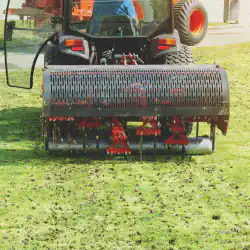
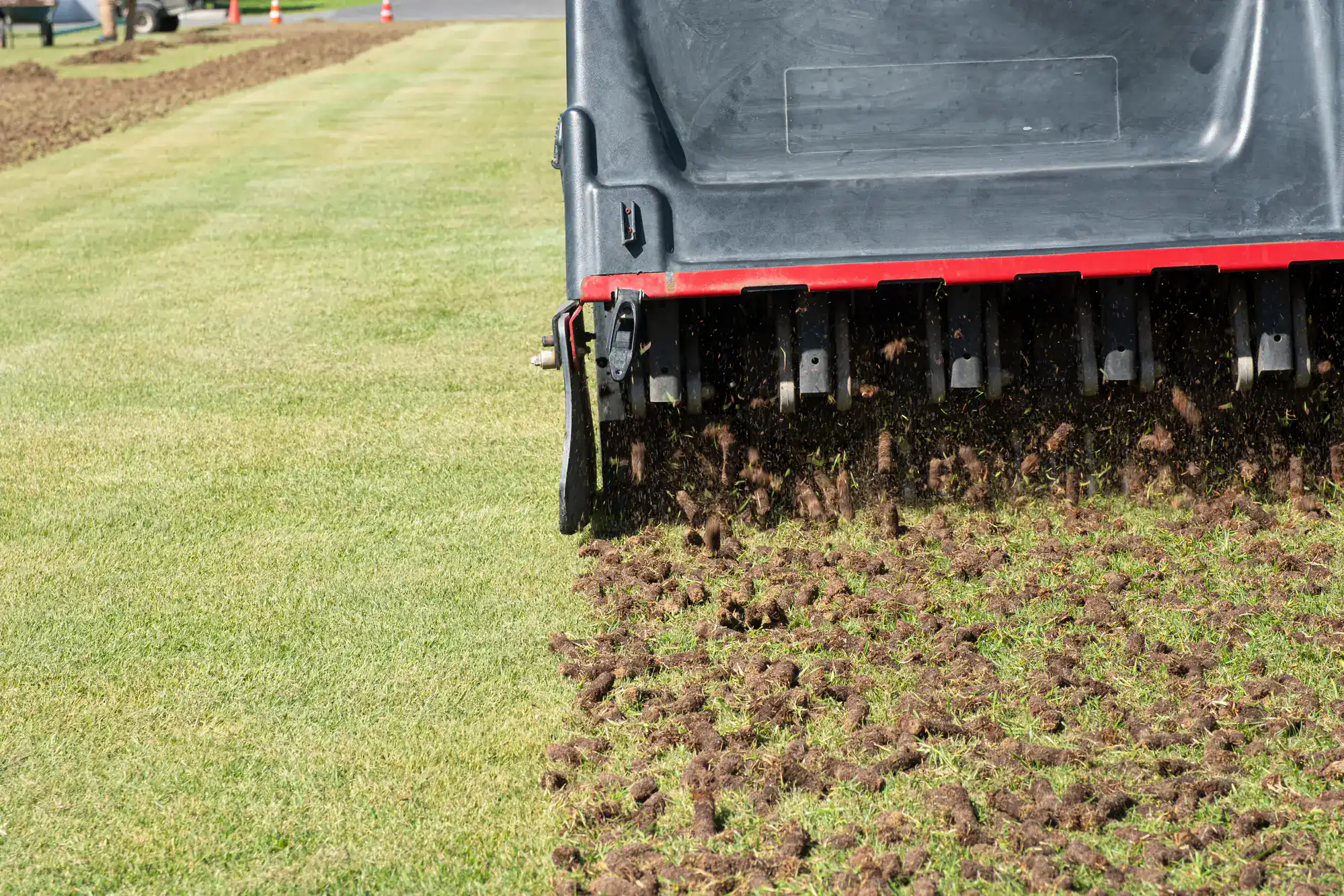
When we get to work, we’re running a hydraulic aerator not the drum-style rental equipment you’ll find at hardware stores along Route 112. The hydraulic machine drives tines 3 to 4 inches into the ground, which is deep enough to actually reach the compaction layer. Standard rental aerators typically penetrate 1.5 to 2 inches on a good day. On Medford’s surface-compacted sandy soil, that’s often not enough to do anything meaningful.
The cores pulled from the ground get left on the surface that’s intentional. They break down over a few weeks, returning organic matter and soil microbes back into the thatch layer and accelerating decomposition. If you’re pairing aeration with overseeding, the holes left behind give seed direct contact with soil, which is exactly what it needs to germinate. Germination rates on aerated lawns run 30 to 50 percent higher than on un-aerated ground. After the treatment, you’ll want to stay off the lawn for 24 to 48 hours and keep it watered and then you wait and watch it respond.
Ready to get started?
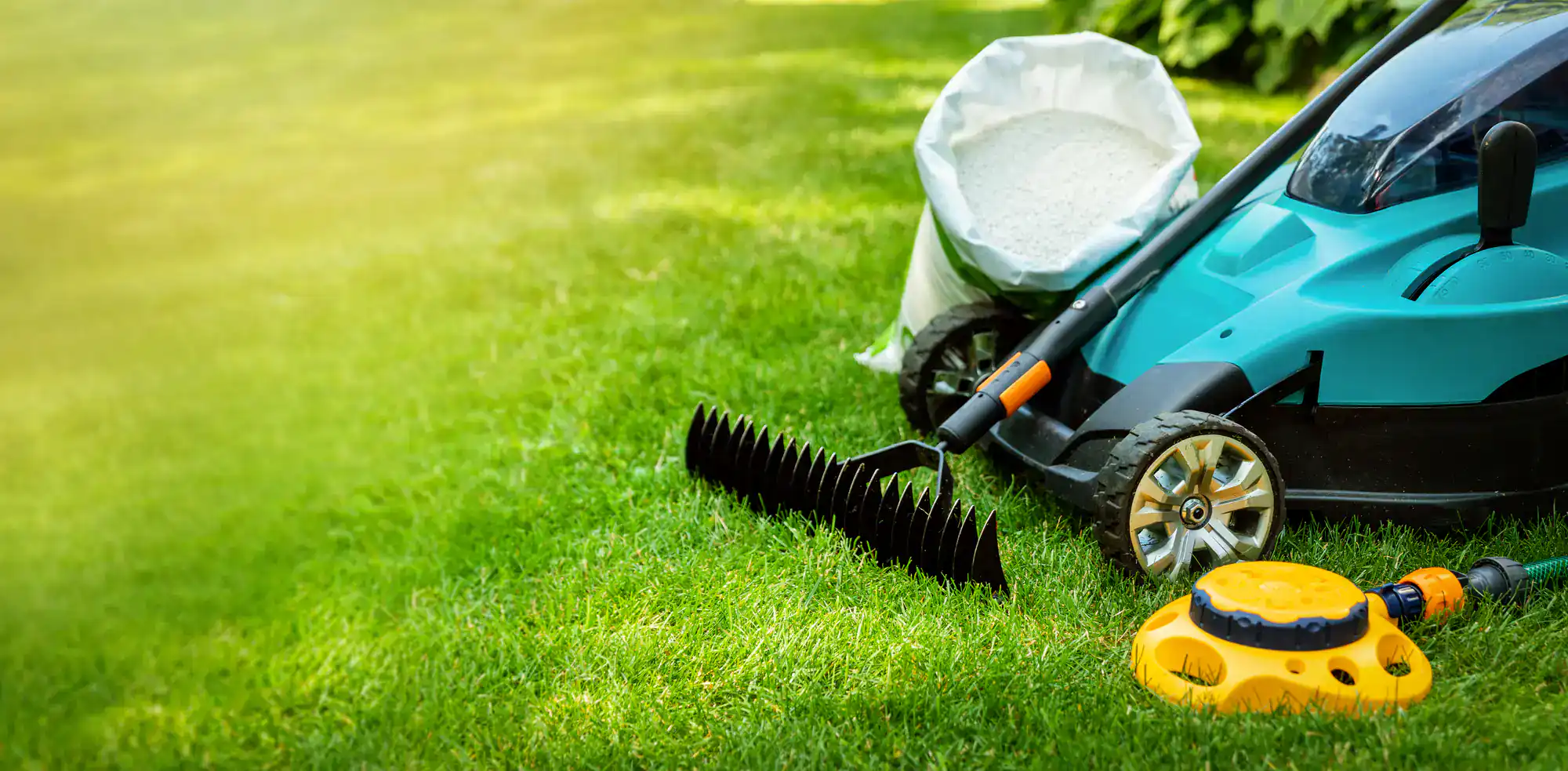
Core aeration is the foundation, but it works best as part of a broader program. After aeration, your lawn is in the best possible condition to receive seed and fertilizer the soil is open, the thatch barrier is disrupted, and nutrients can finally move where they need to go. That’s why we pair aeration with overseeding and fertilization as a natural sequence, not a bundle of upsells.
For Medford properties, the sandy soil creates a specific challenge with seed establishment: without aeration holes providing direct soil contact, most seed dropped on the surface just dries out. The aeration-overseeding combination solves that directly. We use cool-season seed mixes suited to Long Island’s climate and your lawn’s existing conditions shade tolerance, traffic patterns, and how much of the turf has thinned over the years.
Fertilization after aeration is equally important. New York State’s fertilizer law restricts phosphorus applications near sensitive water bodies, and Medford’s location within the Pine Barrens watershed means those rules apply here. Our NYS-licensed applicators understand exactly what can and can’t go down in this area, and we formulate accordingly. Whether your lawn needs a full aeration, overseeding, and fertilization program or just the aeration to start, we’ll tell you honestly what makes sense for where your lawn is right now and what it needs to actually get better.
This is one of the most common frustrations we hear from homeowners in Medford, and the answer is almost always the same: the soil is blocking it. Medford’s Pine Barrens-influenced soil is sandy and low in organic matter, which means it doesn’t hold nutrients well to begin with. When you add surface compaction and a layer of thatch on top, fertilizer has no real pathway to reach the root zone. It sits on the surface, gets washed away with the next rain, or leaches through the sandy profile before roots can absorb it.
Core aeration changes that equation by opening the soil and creating direct channels for nutrients to move downward. Once those channels exist, the fertilizer you’re applying has somewhere to go. Homeowners in Medford who aerate before fertilizing consistently see better color, denser growth, and longer-lasting results from the same products they’ve been using for years. If you’ve been on a fertilization program and not seeing the improvement you expected, aeration is almost certainly the missing piece.
Spike aeration pushes solid tines into the ground to poke holes it doesn’t remove anything. The problem is that pushing soil sideways actually compacts the area immediately around each hole, which means you’re not relieving compaction, you’re redistributing it. Spike aerator attachments and rolling spike tools are widely available at hardware and garden stores along Route 112, and they’re cheap enough that a lot of homeowners try them first. Most come away wondering why nothing improved.
Core aeration physically removes a plug of soil from the ground. That removal creates genuine open space in the soil profile room for roots to expand, for water to move, and for air to circulate. The extracted cores are left on the surface and break down naturally over a few weeks, adding organic matter back into the thatch layer. For Medford’s compacted sandy soils, core aeration is the only mechanical process that actually addresses the problem rather than working around it. If you’ve tried spike aeration and been disappointed, that’s why.
For most Medford lawns, the best window is late August through October. The cool-season grasses that dominate lawns in this area tall fescue, Kentucky bluegrass, and perennial ryegrass have their strongest growth period in fall, and aerating during that window means the grass can recover quickly and fill in the holes before winter. Soil temperatures in Medford stay warm enough through late September to support seed germination if you’re overseeding, while the cooler air temperatures reduce stress on new growth.
Spring aeration is possible typically April through May and makes sense for lawns with severe compaction that really can’t wait. But fall is where you’ll see the best results, especially if you’re pairing aeration with overseeding. Medford’s dry summers often leave lawns thin and stressed by August, and the fall aeration window is the recovery opportunity that determines how the lawn looks all the way through the following year. One thing to keep in mind: our schedule fills up fast once September hits. If you’re planning on fall aeration, reaching out in August is worth it.
Depth is where the difference between professional equipment and rental gear becomes very real. Standard drum-style aerators the kind available at rental centers near Medford typically penetrate 1.5 to 2 inches under normal conditions. On compacted soil, they often do less than that. The problem is that the actual compaction layer on most Medford lawns sits deeper than 2 inches. If the tines aren’t reaching it, you’re not solving the problem.
We use a hydraulic aerator that drives tines 3 to 4 inches into the ground. The hydraulic system adjusts pressure dynamically, which means it performs consistently across different soil conditions from the sandier patches near the Pine Barrens core to the slightly heavier surface soils in older parts of neighborhoods like Eagle Estates. That extra depth isn’t a minor upgrade. It’s the difference between a treatment that looks like it happened and one that actually changes how your soil behaves. If you’ve had aeration done before and didn’t see much improvement, the equipment depth is the most likely reason.
Overseeding immediately after aeration is the right move don’t wait. The aeration holes are at their most useful in the first 24 to 48 hours after the treatment, when they’re open and providing direct access to soil. Seed that falls into those holes has everything it needs: soil contact, moisture retention, and protection from drying out on the surface. Germination rates on lawns overseeded right after aeration run 30 to 50 percent higher than on un-aerated ground, and that gap is especially pronounced in Medford where the thatch layer and sandy surface make seed establishment difficult under normal conditions.
The timing within the season matters too. Overseeding in September gives cool-season seed varieties the best chance of establishing before the ground gets too cold. Seed that goes down in late October is racing the calendar. If you’re planning to aerate and overseed, aim to get it done in the first half of fall ideally before mid-October in Medford so the new grass has enough time to root before winter arrives.
For a typical residential lot in Medford most of which fall in the 3,000 to 6,000 square foot range given the area’s 1960s-era housing stock core aeration generally runs between $100 and $200. Larger properties or lawns with significant compaction that require a second pass will be priced accordingly. The honest way to think about cost isn’t the aeration fee in isolation it’s what you’ve already been spending on fertilization that isn’t producing results.
If you’ve been on a lawn care program for one or two seasons without seeing meaningful improvement, that’s money that’s been partially wasted because the soil wasn’t ready to receive it. One aeration treatment opens the door for all of that to actually work. Most Medford homeowners find that aeration pays for itself quickly once their fertilization program starts producing the results they were expecting from the beginning. We provide free estimates with no pressure, so you can get a specific number for your property before committing to anything.
Useful Links
Other Services we provide in Medford