

Hear from Our Customers

Most Bohemia homeowners who call us have already paid for lawn care that didn’t work. A full season goes by, the weeds are still there, the grass is still thin, and the company either stopped showing up or sent a different person every time who knew nothing about the property. That’s not a pricing problem. That’s a program problem.
Bohemia’s soil is sandy and fast-draining the kind that releases nutrients before cool-season grass roots can absorb them. A generic fertilizer product applied on a generic schedule doesn’t stand a chance here. What works is a slow-release, properly formulated blend applied at the right time in the right amount, calibrated to how this soil actually behaves. That’s the difference between a lawn that greens up and holds, and one that looks decent for two weeks and fades.
The other thing that matters here is timing. Bohemia sits right along the Connetquot River corridor, and Suffolk County’s fertilizer blackout runs from November 1 through April 1 no nitrogen, no phosphorus, fines up to $1,000 per application. Our professional program accounts for that window automatically. You get the most out of every treatment without worrying about whether your lawn care company is cutting corners on county regulations near a protected waterway.
We’ve been treating lawns in Suffolk County since 1987, which means we’ve been working on Bohemia properties through multiple decades of seasonal cycles, pest pressures, and soil conditions that are specific to this area. That’s not a rounded estimate it’s 37 years of continuous operation in this market, learning these soils, these pest cycles, and these seasons. While other companies have come and gone, rebranded, or expanded from somewhere else, we’ve been here.
Every technician who applies pesticides on your property holds a valid NYS DEC Commercial Pesticide Applicator Certificate a state credential that requires real training, a written exam, and supervised field experience. That’s not the standard across the industry. A lot of operators send unlicensed crews and keep one certificate on file. That’s not how we operate.
Our team operates a fleet of five fully wrapped trucks across central and southern Suffolk County. If you’ve driven through Bohemia, Holbrook, Sayville, or Ronkonkoma recently, you’ve probably already seen us working. That kind of visible, consistent presence doesn’t happen by accident it reflects a company that’s built to last.
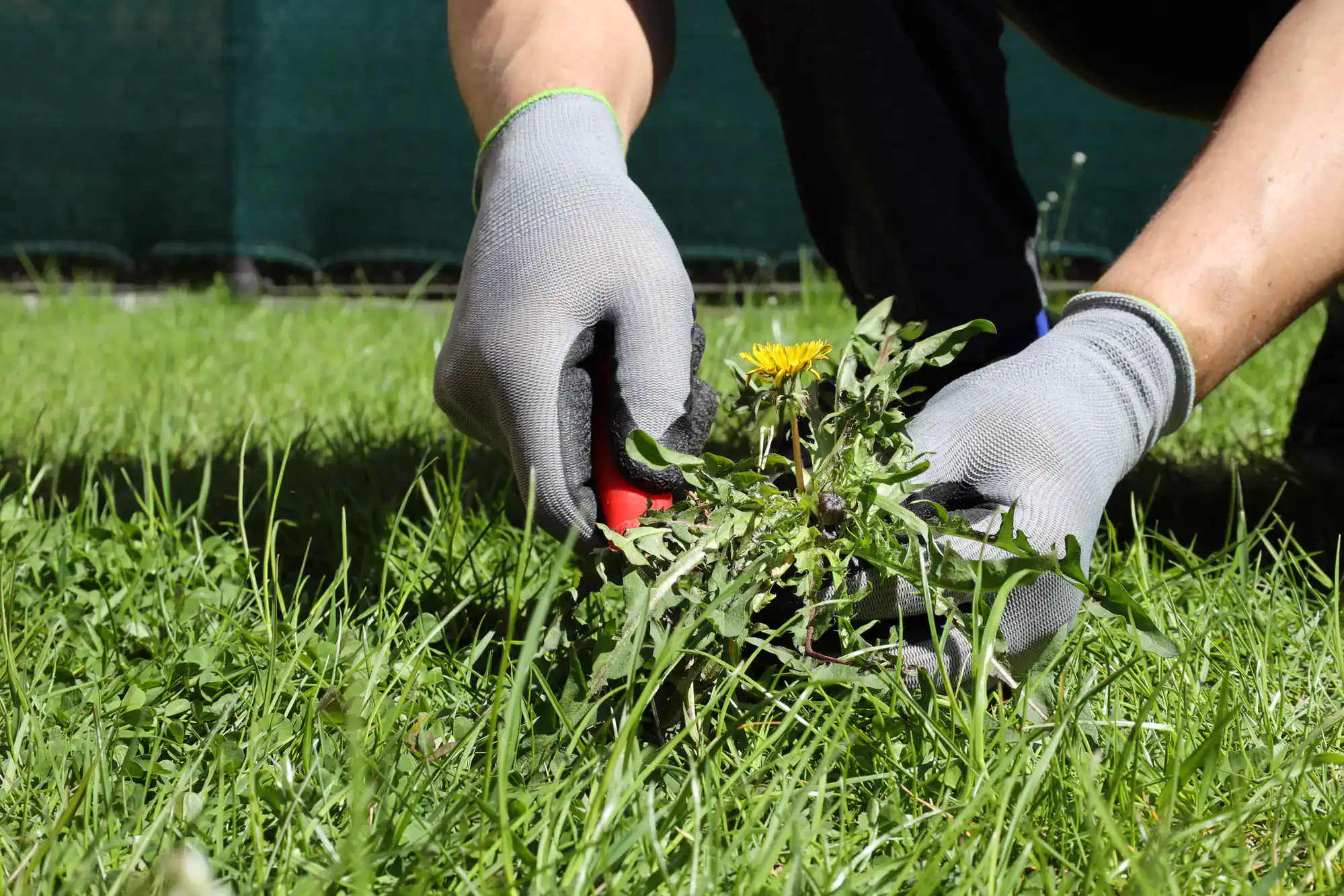
It starts with your lawn, not a package menu. Before any treatment goes down, we assess the specific conditions of your property sun exposure, soil type, visible problem areas, grass species, and history. Bohemia’s housing stock is primarily 1950s and 1960s construction, which means most lawns here have 50 to 70 years of compaction, thatch buildup, and pH drift behind them. A program that ignores that history isn’t a program it’s guesswork.
From there, treatments are scheduled around what your lawn actually needs and when it needs it. The pre-emergent window for crabgrass in Bohemia typically opens in mid-to-late March when soil temps hit 50°F. Miss that window and you’re chasing crabgrass all summer with post-emergent treatments that are far less effective. The late fall fertilizer application the most important one of the year for root development and spring green-up has to land before Suffolk County’s November 1 blackout. Every step is timed deliberately, not just dropped on a calendar.
If your lawn needs aeration, we use hydraulic aerators not the lightweight drum machines you can rent at a hardware store. Bohemia’s older residential lots have compacted soil that those rental units can’t penetrate deep enough to make a real difference. Hydraulic equipment pulls cores at the depth and consistency that actually opens the soil up and lets water, air, and nutrients reach the root zone. Overseeding follows in that same late-summer to early-fall window when soil temps are ideal for germination and the heat stress of summer has passed.
Ready to get started?
The fertilizer we use isn’t pulled off a distributor’s shelf. It’s a custom-blended product made specifically for our programs and for Long Island’s soil conditions. That distinction matters in Bohemia, where sandy, glacially deposited soils leach nutrients faster than almost any other soil type in the Northeast. A slow-release, properly formulated blend keeps nutrients available to the root zone long enough to actually produce results something a generic commercial product won’t do consistently in this environment.
Our programs cover the full treatment calendar: pre-emergent crabgrass control, broadleaf weed management, fertilization timed around the Suffolk County blackout, grub prevention which is a real and recurring issue in Bohemia’s sandy soils and late-season root-building applications before winter. If your lawn has thinner areas, disease pressure, or sections that have never responded well to past treatment, we address those specifically rather than ignore them.
For lawns that are past the point of maintenance grub damage that’s lifted the turf, years of neglect, or new construction with inadequate topsoil we also offer full lawn restoration and new installs from seed. Bohemia homeowners with properties valued well above $600,000 and property tax bills pushing $10,000 a year have real money on the line. A lawn that reflects that investment doesn’t happen by accident, and it doesn’t happen with a program designed for the national average.
The most common reason is that the fertilizer being used isn’t formulated for Long Island’s sandy soils. Bohemia sits on glacially deposited, fast-draining ground that releases nutrients quickly faster than cool-season grass roots can absorb them. A standard commercial fertilizer product applied on a generic schedule will show some early color and then fade, because the nutrients have already leached through the soil profile before the grass can use them. You end up paying for a program that’s technically being applied but isn’t actually feeding your lawn.
The other factor is timing. If treatments aren’t scheduled around the specific growth windows for cool-season turf and around Suffolk County’s November 1 fertilizer blackout you’re either missing the critical application moments or risking a compliance issue near the Connetquot River corridor. A properly designed program using a slow-release, Long Island-specific fertilizer blend, applied at the right points in the season, produces visible, lasting results. If yours hasn’t, the program itself is the problem.
Suffolk County Local Law Chapter 459 prohibits the application of nitrogen or phosphorus fertilizer to turf from November 1 through April 1 each year. Violations carry fines of up to $1,000 per application. The law also restricts phosphorus use on established turf unless a soil test confirms a deficiency, and requires a 20-foot buffer zone between any fertilizer application and water bodies, wetlands, drainage ditches, or storm drains.
For Bohemia residents, this is especially relevant because the Connetquot River runs directly through and adjacent to the hamlet before flowing toward the Great South Bay. Properties near the river or near drainage areas need a provider who understands where those buffer zones apply and builds compliance into the program automatically. The late fall application the single most important fertilizer treatment of the year for root development and spring green-up has to be completed before November 1. We account for that deadline in every program. A company that misses it, or worse, applies after it, is creating a liability on your property.
Grub damage typically shows up in late summer usually August into September when you start noticing irregular brown patches that don’t respond to watering. The clearest sign is turf that lifts off the ground like a loose mat, because the white grub larvae (most commonly Japanese beetle grubs in Suffolk County) have eaten through the root system underneath. If you can roll back a section of turf like a rug, the roots are gone and grubs are almost certainly the cause.
In Bohemia’s sandy soils, grub pressure tends to be worse than in heavier clay-based soils because the larvae move more freely through the looser substrate. Japanese beetle adults are active in July and August, laying eggs that hatch into grubs in the root zone by late summer. Preventive grub control applied in late spring to early summer before the eggs hatch is far more effective than trying to treat an active infestation after the damage is already visible. If you’re seeing the damage now, the priority shifts to assessing how much of the root system is intact and whether restoration from seed is needed before the fall overseeding window closes.
For cool-season turf which is what the vast majority of Bohemia’s residential lawns are running the aeration and overseeding window falls in late August through early October. Soil temperatures during this period are ideal for germination, the summer heat stress has passed, and new seedlings have enough time to establish before the ground goes dormant. Missing this window is one of the most costly mistakes a homeowner can make, because the next realistic opportunity is almost a full year away.
Aeration should happen first, immediately followed by overseeding so the seed makes direct contact with the soil through the aeration holes. Bohemia’s older residential lots most of the housing stock dates to the 1950s and 1960s have soil that’s been compacted by decades of mowing, foot traffic, and seasonal freeze-thaw cycles. Lightweight drum aerators won’t penetrate that compaction deep enough to make a meaningful difference. Hydraulic aerators pull cores at the depth needed to actually open the soil profile and give new seed the contact and moisture retention it needs to germinate. Done right in the fall window, the results show up the following spring as noticeably thicker, more uniform turf.
The practical differences come down to who shows up, what they know, and what happens when something goes wrong. National operators like TruGreen service the Bohemia area out of locations in Yaphank and Hauppauge, which means your account is managed through a regional call center, technicians rotate frequently, and the person treating your lawn this visit likely has no knowledge of what was applied last time or what your specific problem areas are. The program is templated the same general approach applied across thousands of accounts regardless of individual lawn conditions.
A local company with 37 years of continuous operation in Suffolk County brings a fundamentally different level of knowledge to your property. Long Island’s sandy South Shore soils, the specific pest pressure cycles in central Suffolk, the timing requirements around the county’s fertilizer blackout, the disease patterns that show up during Bohemia’s humid summer months these aren’t things you learn from a national training manual. They’re things you learn from treating lawns in this specific area for decades. That institutional knowledge shows up in the results, and it shows up in the consistency of service when issues need to be addressed.
In most cases, yes though what restoration looks like depends on how much of the existing turf is still viable and what caused the damage in the first place. Grub-damaged lawns where the root system has been destroyed, heavily weed-dominated lawns where desirable grass has been crowded out over years of inadequate treatment, and new construction properties where the builder’s topsoil was thin or poorly graded all of these are restorable with the right approach and realistic timing expectations.
The fall window is critical for restoration work in Bohemia. Late August through early October is when soil temperatures are right for cool-season seed germination, and new growth established in the fall comes back significantly stronger the following spring than anything seeded in spring or summer. Full lawn installs from seed are also an option for properties where the existing turf is too far gone to save. Bohemia homeowners with homes valued at $600,000 or more have real equity tied to their property’s curb appeal a lawn restoration is a legitimate investment in that value, not just an aesthetic preference. The key is getting an honest assessment of what the lawn actually needs before committing to a program that may not be designed for the level of damage you’re dealing with.
Useful Links
Other Services we provide in Bohemia