
Hear from Our Customers
Most lawns in Bohemia aren’t struggling because of bad luck. They’re struggling because of the wrong product, the wrong timing, or the wrong company. The sandy-loam makeup of Suffolk County soil specifically the Haven Loam that runs beneath most residential properties here drains quickly. That means nutrients from a generic fertilizer can leach right past the root zone before your grass ever gets a chance to use them. The result is a lawn that looks okay for a week and then fades right back to where it started.
When fertilization is done correctly with a product formulated for this soil type, applied at the right time of year by someone who actually knows what they’re doing you get grass that holds its color, resists weeds, and stays thick through the stress of a Long Island summer. For the large, established lots that define Bohemia’s post-war housing stock, that kind of consistency is what separates a lawn that looks maintained from one that looks genuinely cared for.
There’s also an environmental side to this that matters more in Bohemia than most people realize. Your lawn drains into the same aquifer your family drinks from. Properties along the western edge of the hamlet sit adjacent to Connetquot River State Park a 3,473-acre protected preserve. What goes on your lawn doesn’t stay on your lawn. Licensed professionals who understand application rates, product compliance, and Suffolk County’s fertilizer restrictions aren’t just a quality upgrade. They’re the responsible choice.
We’ve been servicing residential properties across Suffolk County since 1987. That’s not a number we throw around to sound impressive it means we’ve been working lawns in the Town of Islip corridor, including Bohemia, Holbrook, Sayville, and Oakdale, long enough to understand the specific conditions that define this part of Long Island. The soil, the seasonal timing, the county regulations, the way central Suffolk County lawns behave through drought summers and wet springs we know it because we’ve lived it for nearly four decades.
Every job is handled by a licensed pesticide professional. Not a seasonal hire, not a rotating technician running a corporate route someone who is NYSDEC-certified, trained, and accountable for the work they do on your property. We also use a custom-blended fertilizer made specifically for Lawn Master. It’s not an off-the-shelf product, and no other company in this area is using it. That combination local knowledge, licensed professionals, and a proprietary formula built for Long Island is what makes the difference between a lawn that gets treated and a lawn that actually improves.
It starts with understanding what your lawn is actually dealing with. Bohemia properties vary more than people expect a shaded lot near Connetquot River State Park on the western edge of the hamlet has completely different needs than a sun-exposed property near Sunrise Highway. Before any product goes down, we assess what’s in front of us: grass type, soil condition, existing weed or pest pressure, and what the lawn has been through. That assessment shapes everything that follows.
From there, we build a program around your specific lawn not a preset schedule pulled from a national playbook. Suffolk County law prohibits fertilization between November 1 and April 1, so timing isn’t optional here it’s a legal and agronomic requirement. Our licensed professionals know when soil temperatures in this area typically hit 55°F in spring (mid-April is the standard target), when the fall feeding window opens in early September, and how to work within those boundaries to get the best possible result from every application.
If your lawn needs more than fertilization compaction from decades of foot traffic on a large established lot, thatch buildup, thin or bare areas we handle that too. Hydraulic aeration, overseeding with the right cool-season grass varieties for Long Island, and lawn restoration from seed are all part of what we do. The goal isn’t just to feed your lawn. It’s to get it to a place where it stays healthy with less intervention over time.
Ready to get started?
Our fertilization programs are custom-tailored meaning the product, timing, and application approach are adjusted to what your specific lawn needs, not what’s easiest to schedule across a large route. The custom-blended fertilizer we use was formulated specifically for Lawn Master and the soil conditions of Long Island. It’s not available anywhere else. That matters on Bohemia’s Haven Loam soil, where a formula calibrated to this specific drainage profile delivers better root uptake and longer-lasting results than anything pulled off a distributor’s shelf.
Suffolk County has stricter fertilizer laws than most of New York State. Phosphorus-containing fertilizers are restricted unless a soil test indicates a deficiency. Applications outside the legal window carry fines up to $1,000. Every application we make is compliant the right product, the right rate, the right time of year. For homeowners near the Connetquot River corridor or anywhere in the 11716 ZIP code who care about what’s going into the ground beneath their property, that compliance isn’t a footnote. It’s foundational.
Beyond fertilization, we offer core aeration using hydraulic aerators that pull deeper plugs than the tow-behind units most operators use, overseeding with cool-season varieties suited to Long Island’s climate, and full lawn restoration and new lawn installs from seed for properties that need a genuine reset. Whether your Bohemia lawn needs a well-managed annual program or a complete rebuild, the work is handled by licensed professionals who have been doing this in Suffolk County since before most of our competitors opened their doors.
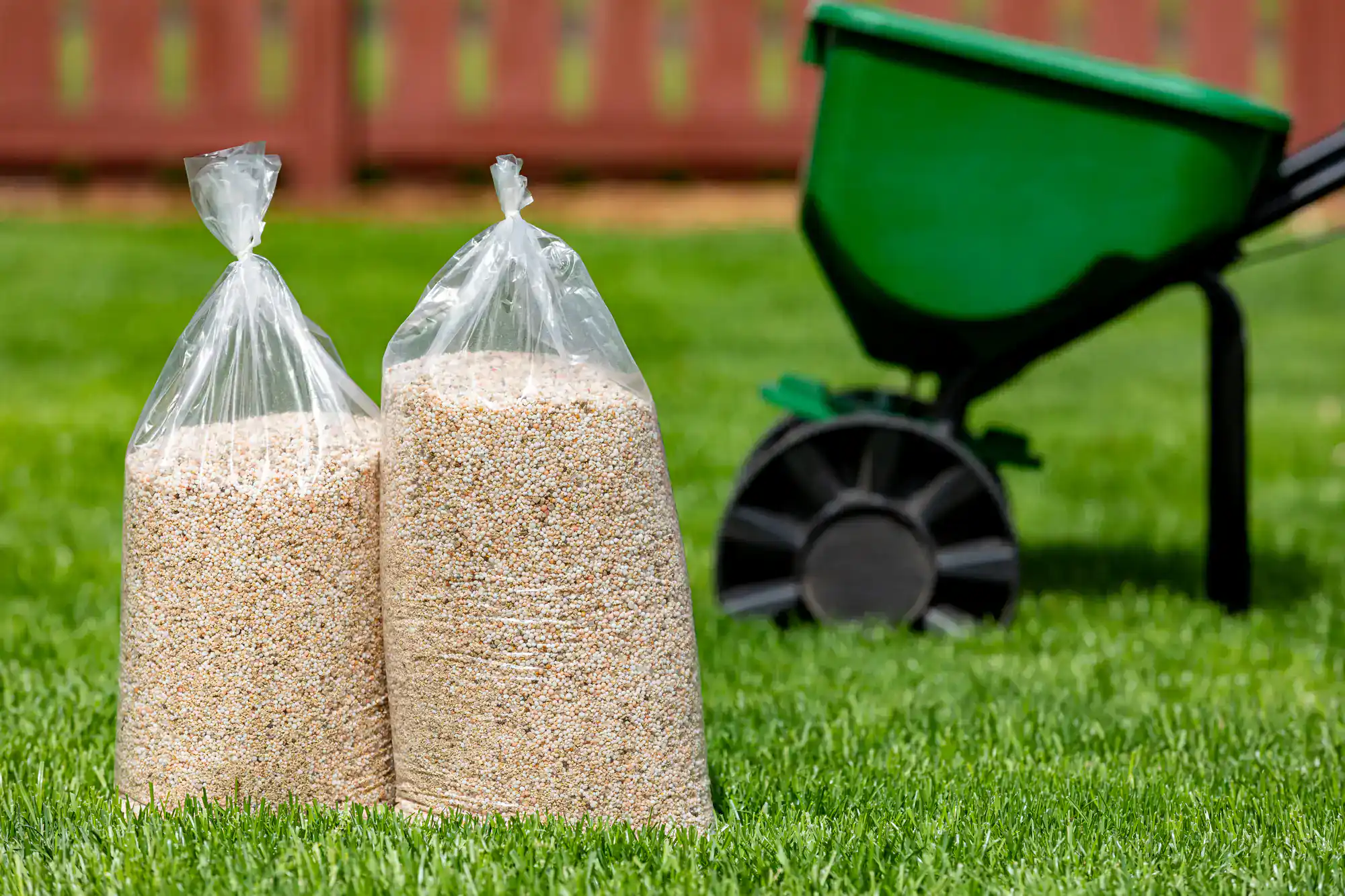
Suffolk County’s fertilizer law prohibits any lawn fertilization between November 1 and April 1. That window exists because Long Island’s drinking water comes entirely from groundwater, and fertilizer nitrogen applied to dormant or semi-dormant grass doesn’t get absorbed it leaches directly into the aquifer beneath your property. Violations carry fines up to $1,000, and the restriction applies to both homeowners and commercial applicators.
In practical terms, the earliest you should consider spring fertilization in Bohemia is mid-April, once soil temperatures reach approximately 55°F. The most important application of the year for cool-season grasses is actually in early fall typically early September when the grass is coming out of summer stress and actively building root reserves for winter. That’s the window where a well-timed, properly formulated application makes the biggest long-term difference for your lawn.
Most residential lawns in Bohemia and across Suffolk County are cool-season turf primarily Kentucky bluegrass, perennial ryegrass, and fescue varieties, or blends of all three. These grasses grow most aggressively in spring and fall, go semi-dormant under the heat stress of a Long Island summer, and respond best to fertilization during their active growth periods. Applying the wrong product during summer stress can burn the lawn rather than strengthen it.
The fertilization program needs to match the grass type and the growth cycle. A lawn that’s predominantly fescue behaves differently than one that’s Kentucky bluegrass-dominant, and a property with significant shade which is common on the large, mature lots near the western edge of Bohemia may have a mix of shade-tolerant varieties that require a different approach entirely. That’s why a one-size-fits-all program rarely produces consistent results. The program should reflect what’s actually growing in your yard.
This is one of the most common complaints we hear, and it almost always comes down to two things: the fertilizer formula and the application rate. Many national lawn care programs use quick-release nitrogen that delivers a fast flush of color and then burns off quickly. It looks good on a service report but doesn’t build the kind of root structure that keeps a lawn looking good week after week.
On Bohemia’s Haven Loam soil which has a sandy subcomponent that drains relatively fast this problem is compounded. Quick-release nitrogen leaches through the root zone before the grass can fully utilize it, especially after rain. A slow-release or controlled-release formula calibrated to this soil type feeds the turf more gradually and produces results that actually last. That’s one of the core reasons we use a custom-blended fertilizer made specifically for Long Island conditions rather than a generic commercial product.
Properties along the western edge of Bohemia that border or sit near Connetquot River State Park are adjacent to a protected waterway and a 3,473-acre natural preserve. The Connetquot River flows through that preserve and is an environmentally sensitive area. Fertilizer or pesticide runoff from nearby residential properties has a more direct potential pathway to that surface water than it would from a property in a more urbanized part of the county.
For homeowners in that part of the hamlet, the choice of product, application rate, and timing isn’t just about lawn results it’s about not contributing to the contamination of a protected natural resource. Suffolk County data shows fertilizers are responsible for approximately 50% of total nitrogen loads to groundwater in medium-density residential areas. Licensed professionals who understand buffer zones, application rates, and compliant product selection aren’t a luxury for these properties. They’re the only responsible option.
Fertilization alone won’t fix a lawn that has structural problems and most patchy, thinning lawns in Bohemia have at least one underlying issue that needs to be addressed before a fertilization program can do its job. The most common culprits on the large, established lots that define this hamlet’s housing stock are soil compaction from years of foot traffic, thatch buildup that blocks water and nutrients from reaching the root zone, and grub damage that has killed off sections of turf from below the surface.
Core aeration is usually the first step for compacted lawns our hydraulic aerators pull deeper plugs than the tow-behind units most operators use, which creates better channels for water, air, and fertilizer to reach the root zone. Overseeding with the right cool-season varieties follows, with the best window for that work running from mid-August through late September on Long Island. For lawns that are beyond a standard program, we also do full lawn restoration and new installs from seed. The goal is to get your lawn to a point where it actually responds to fertilization the way it should.
New York State requires any business applying pesticides for hire to be registered with the NYSDEC and to employ at least one certified commercial applicator. That certification requires passing the Core General Standards exam plus a category-specific exam for ornamental and turf applications and recertification every three years with 24 continuing education hours. It’s not a simple process, and not every company operating in Suffolk County meets the standard.
Beyond state licensing, New York law requires applicators to place marker flags on treated lawns on the day of application, and certain spray applications trigger a 48-hour advance written notice requirement for neighbors within 150 feet. These aren’t optional courtesies they’re legal requirements. When you hire us, every visit is handled by a licensed pesticide professional who knows and follows all of them. If a company can’t tell you the name of their certified applicator or show you their NYSDEC registration, that’s a clear signal to keep looking.
Useful Links
Other Services we provide in Bohemia