
Hear from Our Customers
Most homeowners in Bohemia aren’t starting from scratch they’re starting over. They’ve already paid for a program that didn’t deliver, and now they’re looking at the same crabgrass, the same bare patches, the same nutsedge creeping in from the edges. That’s not a lawn problem. That’s a provider problem.
Bohemia’s soil is sandy outwash it drains fast, which means nutrients move through the root zone quickly if the fertilizer isn’t formulated for it. A generic commercial blend applied on a standard schedule won’t hold up here the way it would in other parts of the country. What you actually need is a program calibrated to these specific conditions: the right fertilizer, the right timing, and someone who understands what Long Island’s South Shore soil actually does to a lawn over time.
When the program is right, the results are visible. Thicker grass, fewer weeds, no more mystery patches in August that turn out to be grub damage nobody caught in time. And because Bohemia homes are sitting near $700,000 in value right now, a lawn that looks the part isn’t just about curb appeal it’s about protecting what you’ve built here.
We’ve been treating lawns across Suffolk County since 1987, which means we’ve spent decades working in the exact soil conditions, seasonal patterns, and weed pressures that define lawns in Bohemia and the surrounding Town of Islip. The fertilizer blackout law, the sandy South Shore soils, the crabgrass timing window in mid-April none of it is new to us.
Every technician is a NYS DEC-licensed pesticide applicator. That’s a state-regulated credential that requires real training and a passing exam not a two-week orientation. Our fleet of five fully wrapped trucks means you always know who’s on your property and can hold someone accountable if anything’s ever off.
There’s no national call center here. No franchise model. When you call, you’re reaching a company that has been rooted in Suffolk County since before most of our competitors existed and one that treats every Bohemia lawn like the reputation behind it matters.
It starts with an assessment of your actual lawn not a clipboard checklist, but a real look at what’s growing, what isn’t, what the soil is doing, and what’s been tried before. Grass type, sun and shade exposure, weed history, compaction level all of it shapes what we build for your property. A lawn backing up to the tree line near the Connetquot River State Park Preserve has different needs than an open, full-sun lot on the east side of Bohemia, and the program reflects that.
From there, treatments are timed around how Bohemia’s seasons actually work. Pre-emergent crabgrass control goes down around mid-April, when soil temperatures in this part of Long Island approach 55°F the threshold where crabgrass begins to germinate. Miss that window and you’re playing catch-up all summer. Fertilization follows the Suffolk County blackout schedule, which prohibits applications between November 1 and April 1, so every treatment is planned accordingly and nothing gets wasted on dormant turf.
Fall is where the most important work happens. September and October are the power months for cool-season grass that’s when aeration, overseeding, and fall fertilization set the lawn up for the following year. We use hydraulic core aerators that pull deeper, more consistent cores than consumer equipment, which means water, air, and nutrients actually reach the root zone instead of sitting on top of compacted soil.
Ready to get started?
The fertilizer we use isn’t pulled off a commercial shelf it’s a custom blend made specifically for our company and calibrated for Long Island’s soil profile. In Bohemia, where sandy outwash soils leach nutrients faster than almost any other residential soil type in the Northeast, that distinction matters. More of every application stays in the root zone where the grass needs it, and less ends up running off toward the Connetquot River watershed that borders the western edge of Bohemia.
Weed control is handled by licensed professionals who know the difference between a broadleaf herbicide situation and a nutsedge problem that requires entirely different chemistry. Nutsedge is one of the most common and most stubborn lawn issues in Bohemia it doesn’t respond to standard treatments, and most generic programs don’t address it at all. Grub control is built into our program as a standard component, not an upsell, because Japanese beetle grub damage is a documented and recurring issue throughout the Town of Islip.
For lawns that are too far gone for maintenance alone, we also handle full lawn restoration and new lawn installs from seed. Whether you’re starting fresh or getting back on track, the program is built around what your specific lawn actually needs not what’s easiest to apply at scale.
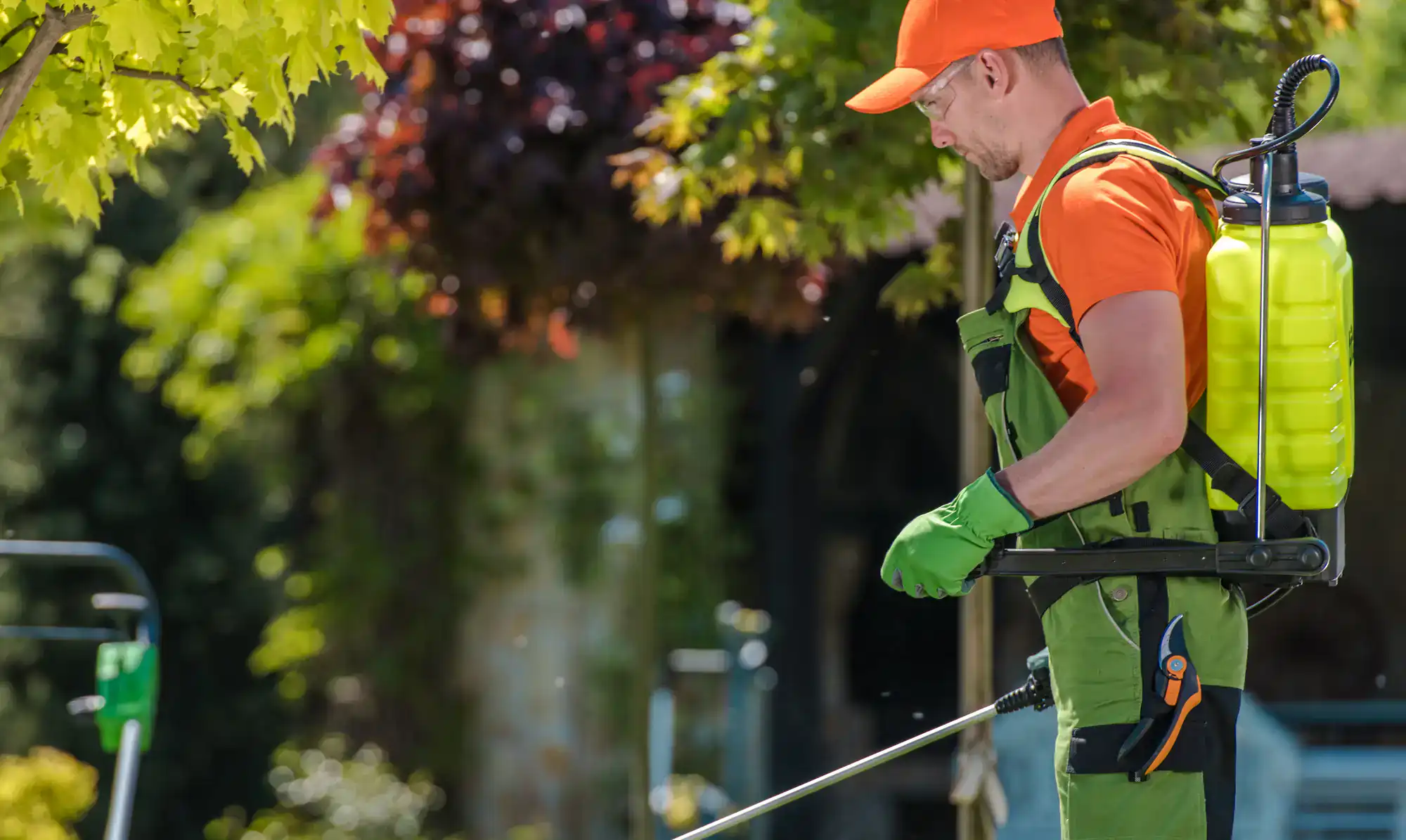
Timing matters more in Bohemia than most homeowners realize, and there’s a hard legal boundary you need to know about. Suffolk County Local Law 41-2007 prohibits fertilizer applications containing nitrogen, phosphorus, or potassium between November 1 and April 1. Violations carry fines up to $1,000. That law exists because cool-season grasses go dormant when soil temperatures drop below 55°F, and fertilizer applied during that window leaches into the groundwater rather than feeding the lawn.
Within the legal window, the most effective timing for Bohemia lawns follows the local soil temperature calendar. Spring applications should begin after the grass breaks dormancy typically late April in this part of Long Island. The most critical window is fall: September and October, when cool-season grasses like tall fescue and Kentucky bluegrass grow most aggressively. A well-timed fall fertilization does more for your lawn’s long-term health than any other single treatment. We plan around all of this so nothing gets applied at the wrong time or wasted on turf that can’t use it.
If you’re seeing irregular dead patches in July or August that don’t respond to watering, there’s a strong chance Japanese beetle grubs are the cause. Grub larvae feed on grass roots below the soil surface, and by the time the damage becomes visible above ground, the root system is already compromised. It’s one of the most common and most misdiagnosed lawn problems throughout Bohemia and the broader Town of Islip.
The frustrating part is that many homeowners and some providers treat it like drought stress and water more, which does nothing. Grub damage requires a different response entirely. Preventative grub control applied in early-to-mid summer, before eggs hatch and larvae begin feeding, is significantly more effective than trying to treat after the damage is visible. A curative application after the fact can stop further damage, but it won’t bring back dead root systems. Getting ahead of it is the only way to avoid the cycle of patchy summers and expensive repairs.
Nutsedge, sometimes called nutgrass, is one of the most stubborn lawn problems in Bohemia, and the reason nothing has worked is almost certainly that it’s been treated like a regular weed. It isn’t. Nutsedge is not a true grass and doesn’t respond to broadleaf herbicides or standard grass treatments. It requires specific chemistry sedge-targeted products applied at the right growth stage and in most cases, more than one treatment to fully suppress it.
The other issue is that many generic lawn programs don’t include dedicated nutsedge control at all. If you’ve been on a standard fertilization and weed control program and nutsedge keeps coming back, it’s likely because the program was never designed to address it. Our Nutgrass Control service targets it specifically. It won’t disappear after one application nutsedge is persistent, and its underground tubers can survive treatment but with the right product and the right timing, it can be brought under control and kept there with consistent management.
For most Bohemia homeowners, the honest answer is yes but not for the reason you might expect. It’s not just about saving time, though that’s real. It’s about the gap between what’s available at a home improvement store and what a licensed professional can legally apply and accurately diagnose.
Retail fertilizers are formulated for broad use across many soil types. Bohemia’s sandy outwash soils leach nutrients faster than average, which means standard products applied at standard rates often underperform here. A professional using a custom-blended fertilizer calibrated for Long Island’s soil chemistry will get more out of every application. Beyond that, diagnosing why a lawn isn’t responding whether it’s soil pH, compaction, grub damage, nutsedge, or a combination requires experience that most homeowners reasonably don’t have. With homes in Bohemia selling close to $700,000, the cost of a professional program is a small fraction of what a neglected or damaged lawn can subtract from your property’s value and curb appeal.
Yes, grass type affects everything what fertilizer works best, when to aerate, how to overseed, and what weed pressures to expect. In Bohemia, the most common lawn grasses are cool-season varieties: tall fescue, Kentucky bluegrass, and perennial ryegrass for open, sunny areas, and fine fescue for shaded spots under mature trees. These grasses thrive in the 60–75°F temperature range, grow most aggressively in spring and fall, and stress significantly during Suffolk County’s hot, humid summers.
A program that doesn’t account for this seasonal pattern one that pushes growth in summer instead of protecting the turf will produce inconsistent results and a lawn that looks good in May and burned out by August. The right program shifts its focus with the seasons: active feeding in spring and fall, protection and monitoring in summer, and no applications during the November–April blackout period. Knowing which grass you have and how it behaves in this specific climate is the starting point for building a program that actually works.
The most practical difference is accountability. When you call a national chain, you’re reaching a call center and the technician who shows up may be a different person every visit, working from a standardized program that wasn’t built for Bohemia’s soil or your specific lawn. The complaints that come up most often with national providers are exactly what you’d expect from that model: missed visits, no improvement, no one to actually talk to when something’s wrong.
We’ve been in Suffolk County since 1987. Our technicians are NYS DEC-licensed pesticide applicators not seasonal labor and our fertilizer is a custom blend made specifically for Long Island’s soil conditions, not a commercial product used by every other provider in the market. Our fleet of five fully wrapped trucks means you know who’s on your property every time. There’s no franchise overhead, no national script, and no one-size-fits-all program being applied to your Bohemia lawn the same way it’s applied to a lawn in Ohio. If something’s not working, you can reach someone who can actually fix it and who has a 37-year reputation in this county to stand behind.
Useful Links
Other Services we provide in Bohemia