

Hear from Our Customers

Most lawns in Central Islip aren’t struggling because of neglect. They’re struggling because they’ve been treated with products and programs built for somewhere else. The sandy, fast-draining soil that runs through this part of Suffolk County leaches nutrients before shallow roots ever get to them. Generic fertilizer programs the kind national franchises apply from Connecticut to Florida without changing a thing consistently underperform here. That’s not a theory. It shows up every summer in thin, weed-invaded turf that somehow looks worse after a full season of treatments.
When your lawn gets a program designed for how this soil actually behaves, the difference is visible within a season. Weeds get crowded out by turf that’s actually thick enough to compete. Bare spots fill in. The compaction that’s been blocking water and root development common on the smaller, older lots along Carleton Avenue and the established streets off Suffolk Avenue gets addressed through real aeration, not a surface-level pass with rental equipment.
The result isn’t just a nicer-looking yard. It’s a property that reflects the investment you’ve made in it. In Central Islip, where home values have climbed significantly, that matters.
We’ve been treating lawns in Central Islip and throughout Suffolk County since 1987. That’s not a rounded number it’s a specific founding year that predates the John P. Cohalan Jr. Court Complex, the Long Island Ducks stadium, and the redevelopment of the former psychiatric center grounds that reshaped this community. The lawns on the streets around Central Islip have changed a lot since then. The soil hasn’t.
Every job is handled with owner-level attention by licensed pesticide professionals not labor crews supervised by someone who never visits your property. Every technician holds a valid NYS DEC Commercial Pesticide Applicator Certificate, which means the person treating your lawn actually knows what they’re applying, why, and at what rate. That’s not standard in this industry. In Central Islip, where door-to-door lawn care solicitors have been a fixture for years, it’s a distinction worth asking about.
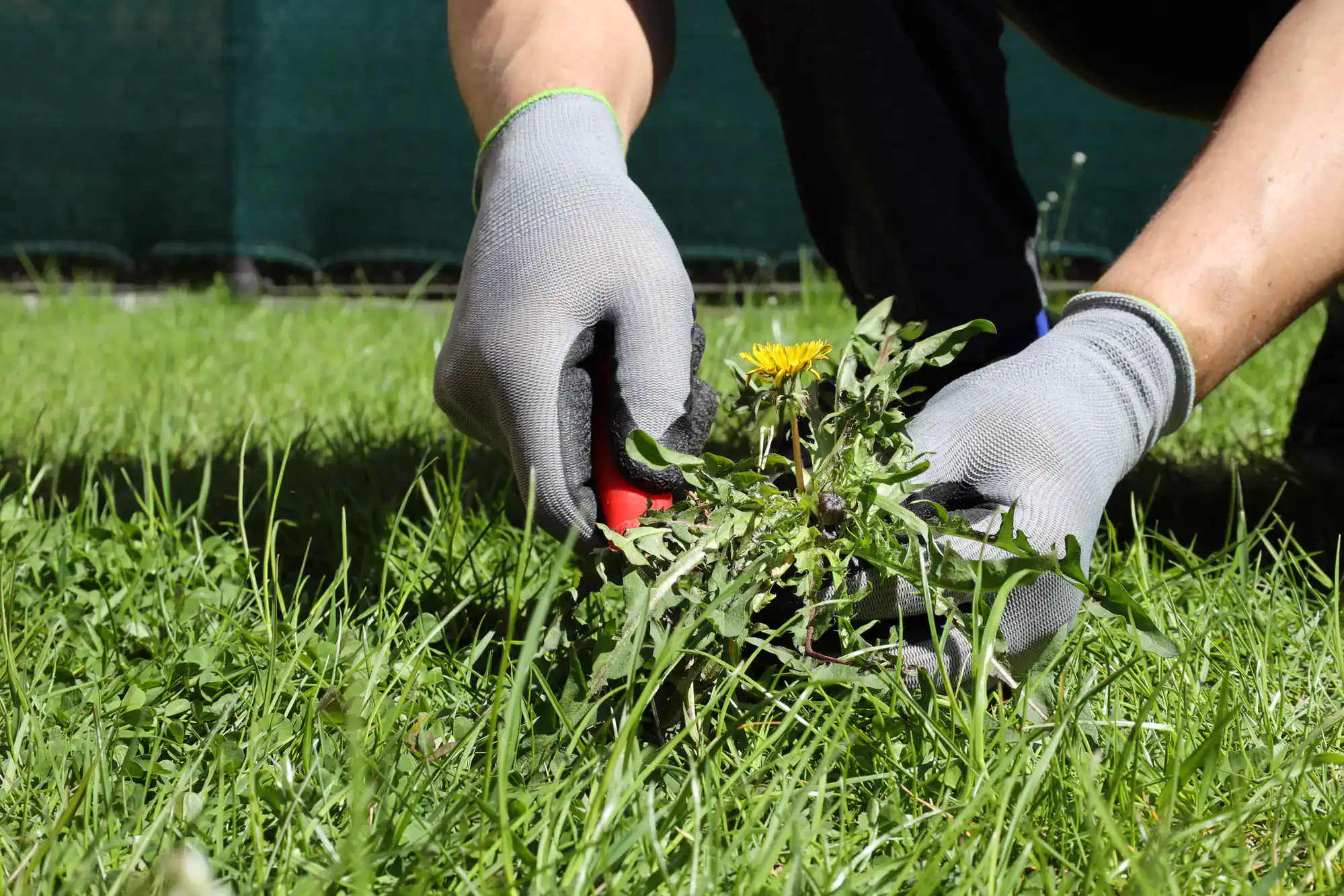
It starts with an honest look at what your lawn is actually dealing with. Not a sales pitch an assessment. Sun exposure, shade patterns from mature trees, compaction levels, soil condition, weed pressure, turf thickness. A shaded lawn on one of the older residential streets near Suffolk Avenue has completely different needs than a full-sun property in one of the newer developments near the courthouse district. We build the program around what your lawn needs, not around what’s easiest to sell.
From there, treatments are timed and sequenced around both your lawn’s condition and Suffolk County’s regulatory calendar. That includes the county’s fertilizer blackout period November 1 through April 1 which prohibits nitrogen and phosphorus applications to turf and carries fines of up to $1,000 per application for violations. That compliance is built into every Lawn Master program automatically. You don’t have to track it.
Applications are made with our custom-blended fertilizer, formulated specifically for Long Island’s soil conditions not a generic product off a pallet. Aeration is done with hydraulic aerators that actually penetrate compacted suburban soil, not lightweight drum machines that barely scratch the surface. And if your lawn is past the point where maintenance is enough, restoration from seed is available full rebuilds, not just patching.
Ready to get started?
Our programs cover the full cycle of what a Long Island lawn needs to stay healthy through every season. Fertilization, weed control, grub prevention, aeration, overseeding, and full lawn restoration are all available and each program is structured around your specific property, not a one-size-fits-all package. Grub pressure is a real and recurring problem in this part of Suffolk County, with Japanese beetle and European chafer populations creating significant damage in mid-island communities including Central Islip. Preventive treatment timed to June and July is far more effective than reactive treatment after the damage is already visible and it’s built into the program before you ever have to ask.
Fall is the single most important treatment window for cool-season turf, and it’s the one most homeowners miss. Aeration, overseeding, and winterizer fertilization done in September and October produce more measurable improvement than any other combination of treatments. If your lawn has been declining for years and you’re not sure it can be saved, that’s exactly the kind of situation we handle including complete new lawn installs from seed for properties that need a full reset.
The fleet of five fully wrapped trucks you may have already seen on Route 111 or Carleton Avenue isn’t just branding. It’s a signal that this is a company that shows up, does the work, and stands behind it. Online credit card payment is available, so managing your service is as straightforward as the work itself.
The most common reason is that the treatments weren’t designed for this soil. Central Islip sits on the glacially deposited, sandy outwash plain that runs through central Suffolk County. That soil drains fast faster than most generic fertilizer programs account for. Nutrients leach downward before shallow root systems can absorb them, which means a standard slow-release program applied at rates calibrated for clay-heavy soils in other parts of the country will consistently underperform here.
The other factor is compaction. Smaller residential lots, decades of foot traffic, and the density of development in Central Islip create compacted soil conditions that block water infiltration and restrict root development. Fertilizing compacted soil is like watering a parking lot the inputs don’t reach where they need to go. Aeration with equipment that actually penetrates the soil not a lightweight drum machine combined with a fertilizer formulated for Long Island’s specific conditions is usually what turns a chronically thin lawn around.
For cool-season turf which is what most Central Islip lawns are fall is the most important fertilization window by a significant margin. September through late October is when the grass plant is actively storing nutrients for winter and preparing for spring regrowth. A well-timed fall fertilization, combined with aeration and overseeding if the lawn needs it, produces more visible improvement than anything you can do in spring or summer.
Spring fertilization matters too, but it needs to be timed carefully. Pre-emergent crabgrass control is typically applied when soil temperatures reach around 50°F at a 2-inch depth usually late March to mid-April in Central Islip. Applying fertilizer too early in spring pushes top growth before root systems are ready, which creates stress later in the summer. And under Suffolk County’s fertilizer regulations, no nitrogen or phosphorus applications are permitted between November 1 and April 1, so timing the late-season applications correctly is both agronomically and legally important.
Grub damage in Central Islip typically shows up in late summer July through September as irregular brown patches that don’t respond to watering. The clearest sign is turf that peels away from the soil like a loose carpet, revealing a destroyed root system underneath. Japanese beetles and European chafers are the primary culprits in this part of Suffolk County, and their larvae feed on grass roots just below the soil surface through the summer months.
The important thing to understand is that by the time you see visible damage, the window for effective treatment has already passed. Preventive grub control applied in June and July before the eggs hatch and larvae begin feeding is dramatically more effective than reactive treatment after the damage appears. If you’ve had brown patches in late summer that didn’t recover with irrigation, grubs are the likely explanation, and a preventive application the following season is the right response. We build grub prevention into programs for properties with a history of damage or high-risk conditions.
TruGreen operates throughout Suffolk County and has the scale to show up consistently, which matters. But scale comes with tradeoffs that tend to show up on Long Island specifically. National programs are built around national averages they’re not formulated for the sandy, fast-draining soils that dominate central Suffolk County, and they’re not adjusted for the specific pest pressures, shade conditions, and compaction patterns that are common in Central Islip’s established residential neighborhoods.
The other consistent complaint about large national providers in this market is technician turnover. A different person shows up each visit, nobody has context on your lawn’s treatment history, and follow-up questions get generic responses. A local company with 37 years of continuous operation in Central Islip brings institutional knowledge that a national franchise simply can’t replicate knowledge of how this specific soil behaves, how the seasonal windows play out on Long Island, and what it actually takes to produce results here rather than just complete a scheduled visit.
In most cases, yes and the fall season is when that work is most effective. Cool-season grasses establish best when soil temperatures are dropping and there’s less competition from weeds and heat stress. A lawn that looks completely gone in August, after a summer of drought stress, grub damage, or years of neglect, often has more recoverable soil structure than it appears. The question is whether it needs overseeding into existing turf, a more aggressive slice-seeding process, or a full new lawn install from seed.
We handle all three scenarios. The starting point is an honest assessment of what the lawn is actually dealing with not a sales pitch for the most expensive option. Some lawns in Central Islip that have been through years of inadequate programs just need the right inputs applied correctly for one full season. Others need a more significant reset. Either way, the answer starts with understanding the specific conditions of your property rather than applying a standard protocol and hoping for the best.
The honest answer is that it depends on the size of your property, its current condition, and what the lawn actually needs. A basic fertilization and weed control program for a typical Central Islip single-family lot most of which run between 5,000 and 8,000 square feet will generally run less than most homeowners expect when they’re comparing it to what they’ve already spent on programs that didn’t work.
What’s worth thinking about is the cost of the wrong program versus the right one. A season of treatments from a provider whose product wasn’t designed for Long Island’s sandy soil, applied by someone who isn’t licensed, on a schedule that doesn’t account for Suffolk County’s fertilizer regulations that’s money spent with nothing to show for it. Our programs are priced based on what your lawn actually needs, and the first step is a real assessment of your property. The investment makes more sense once you know what you’re getting and why it’s different from what you’ve tried before.
Useful Links
Other Services we provide in Central Islip