
Hear from Our Customers
Most lawns in Farmingville aren’t struggling because the homeowner doesn’t care. They’re struggling because the program was wrong for the ground it was applied to. Farmingville sits on the Ronkonkoma Moraine glacially deposited soil that’s rocky in some spots, sandy in others, and drains fast enough in between to flush nutrients out before the grass can use them. A generic fertilizer schedule applied here the same way it would be in Holbrook or Ronkonkoma just doesn’t hold up. The results show up as thin turf, persistent weeds, and patches that never quite fill in no matter what you try.
When the program is actually built around your lawn the soil composition, the drainage pattern, the shade coverage, the grass type things change noticeably within a single season. Turf gets thicker, weed pressure drops, and the bare spots that have been there for years start filling in. That’s what happens when the right products are applied at the right times by someone who knows what they’re doing.
With an average home age of around 57 years in Farmingville, a lot of these lawns have decades of compaction, thatch buildup, and inconsistent treatment history baked in. That’s fixable. It just takes the right approach from the start not another season of the same program that hasn’t been working.
We’ve been treating lawns in Farmingville and the surrounding central Suffolk County area since 1987. That’s not a rounded number it’s a specific date that reflects nearly four decades of working in this exact market, through every drought year, every grub outbreak, and every regulatory change Suffolk County has introduced since. We know how Farmingville’s moraine soils behave because we’ve been working in them longer than most of our competitors have been in business.
Every technician who treats a lawn in Farmingville holds a valid NYS DEC Commercial Pesticide Applicator Certificate a credential that requires 30 hours of approved training, a state exam, and two years of supervised experience to earn. That’s not standard across the industry. A lot of operators send unlicensed labor crews out under a single off-site license. That’s not how we work.
The fleet of five fully wrapped trucks you’ve probably seen around Horseblock Road and the neighborhoods near Brookhaven Town Hall isn’t just branding. It’s accountability. You know who’s on your property, and so do we.
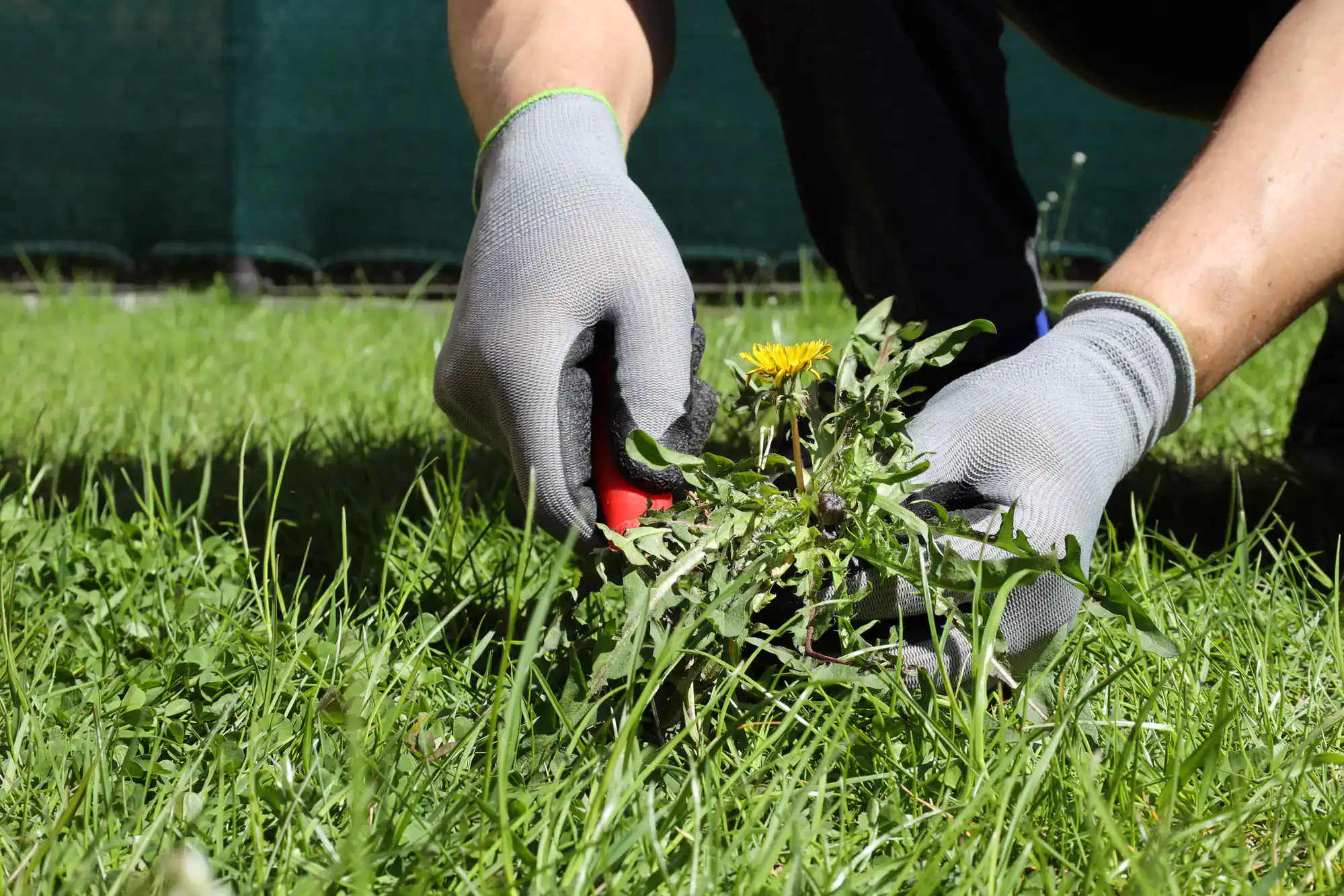
It starts with an actual assessment of your lawn not a 30-second walk-around before the truck leaves. We evaluate the condition of the turf, the soil type, the sun and shade patterns, the compaction level, and any visible problem areas. In Farmingville, that matters more than in a lot of other places because the moraine soils here can vary significantly from one side of a property to the other. What works on the front lawn may not be right for the back.
From there, we build a custom program around what your lawn actually needs. We use a proprietary fertilizer blend formulated specifically for Long Island’s soil conditions not a commercial product pulled off a distributor pallet. Applications are timed around Suffolk County’s fertilizer blackout period, which runs November 1 through April 1 and carries fines up to $1,000 per violation. That compliance is built into every program automatically, so you never have to think about it.
If aeration is part of the plan and for most Farmingville lawns with compacted moraine soil, it should be we use hydraulic aerators that reach three to four inches into the ground. That’s the depth that actually relieves compaction and makes fall overseeding work. The fall window in Farmingville, roughly late August through October, is the most important time of year for cool-season turf recovery. Missing it costs you a full season of progress.
Ready to get started?
Every program we build includes fertilization with our custom-blended formula, weed control, and seasonal treatments timed to what Suffolk County’s climate and regulations actually call for. For lawns that need more compaction relief, thinning turf, grub damage, or years of neglect aeration, overseeding, and full restoration programs are part of the picture too. Grub pressure from Japanese beetle and European chafer is a recognized, active problem in central Suffolk County, including Farmingville and the surrounding communities of Holbrook and Holtsville. A program without a grub preventive component leaves a real gap.
For lawns that are past the point of maintenance persistent bare patches, weed dominance, or turf that’s simply too far gone we offer complete lawn restoration and new lawn installs from seed. These aren’t bolt-on services. They’re a core part of what we do, built for exactly the kind of older, established lawns that make up most of Farmingville’s housing stock.
Suffolk County’s phosphorus restrictions, buffer zone requirements near water bodies, and the fertilizer blackout period are all factored into every treatment schedule from day one. Online credit card invoice payment is available, which matters when you’re commuting via the LIE and don’t have time to deal with paper billing. The whole program is designed to run without you having to manage it.
The most common reason is that the program being used wasn’t designed for Farmingville’s soil. The hamlet sits on the Ronkonkoma Moraine, which produces highly variable soil sandy and fast-draining in some areas, compacted glacial till in others. Sandy moraine soil leaches nutrients quickly, meaning a standard fertilizer application may be largely gone before the grass roots can absorb it. That leads to turf that looks okay for a few weeks and then fades, regardless of how consistently it’s being treated.
The fix usually involves a combination of the right fertilizer formulation one with slow-release nitrogen that stays available longer in fast-draining soil and mechanical work like aeration to break up compaction and improve water and nutrient penetration. If the lawn has been thinning for multiple seasons, overseeding in the fall is typically part of the solution as well. The fall window in Farmingville, from late August through October, is when cool-season grasses establish the root depth they need to come back strong the following spring.
Grub damage is easy to miss until it’s already significant. Japanese beetle and European chafer grubs feed on grass roots through late summer and fall, and the turf above them often looks stressed but not obviously damaged until it starts pulling up like a loose carpet. By that point, the root system is already destroyed. In central Suffolk County including Farmingville, Holbrook, and Holtsville grub pressure is a well-documented, recurring problem. It’s not a matter of if it will show up in your area, but when.
The most effective approach is a preventive grub treatment applied in late spring or early summer, before the eggs hatch and the larvae begin feeding. Curative treatments applied after damage is visible can stop further feeding, but they can’t restore roots that are already gone. If you’ve had sections of lawn that went brown and spongy in late summer or fall, and the turf lifts easily from the soil, grubs were almost certainly the cause. A restoration program including aeration, overseeding, and a preventive grub treatment the following season is typically what it takes to fully recover.
The products sold at hardware stores are formulated for a broad national market they’re designed to work adequately across a wide range of soil types and climates. That means they’re not optimized for any specific region, including Long Island. Farmingville’s moraine soils are sandier and more variable than the soils those products were calibrated for, so the nutrient ratios, release rates, and application timing that work elsewhere may not translate well here.
We use a proprietary fertilizer blend formulated specifically for our programs and Long Island’s soil conditions. The nitrogen release rate, the micronutrient profile, and the application schedule are all designed around what Long Island turf actually needs not what a national product line assumes. That difference shows up in how the lawn holds color through summer heat, how it responds after aeration, and how well it establishes new growth after fall overseeding. It’s also why the same lawn that underperformed on a store-bought program for years can look noticeably different after one full season on the right one.
Yes, and they’re worth understanding before you hire anyone. Suffolk County’s fertilizer regulations under the Reclaim Our Water program include a blackout period from November 1 through April 1, during which nitrogen and phosphorus fertilizer cannot be applied to turf. Violations carry fines of up to $1,000 per application. There are also phosphorus restrictions that require a soil test confirming a deficiency before phosphorus can be applied, and buffer zone requirements that prohibit fertilizer application within 20 feet of water bodies, wetlands, and storm drains.
These rules apply to every property in Farmingville, and they apply to the companies treating those properties too. An unlicensed operator or an out-of-area company unfamiliar with Suffolk County’s specific regulations may be violating these rules on your lawn without you knowing it and the liability doesn’t always stay with the contractor. Our programs are built around these regulations from the start. Every application is timed and formulated to stay within compliance, automatically, without you needing to track it.
For most lawns in Farmingville, meaningful improvement is visible within the first full season typically 60 to 90 days after the program starts, assuming it begins at the right time of year. Weed pressure usually drops first, followed by improved color and density as the fertilizer program takes hold. Thin or bare areas take longer because they depend on overseeding and root establishment, which is tied to seasonal timing.
The fall window late August through October is the single most important period for turf recovery in Farmingville. Cool-season grasses like tall fescue and Kentucky bluegrass, which make up most lawns in central Suffolk County, recover from summer heat stress and establish new root depth during this period. A lawn that gets aerated and overseeded in September will look noticeably different by the following May than one that skipped that step. If your program is starting in spring, you’ll see real improvement through the season, but the full transformation typically completes after the first fall cycle.
The most common reason is the franchise and volume model companies that grow by adding accounts faster than they can maintain quality. Routes get longer, technicians get more rushed, and the person treating your lawn changes every few visits with no knowledge of what was applied before or what your lawn’s specific issues are. Treatments get skipped without notice, callbacks go unanswered, and by the time you realize the season is gone, it’s too late to recover the year.
The other issue is licensing. Not every operator working in Farmingville sends out properly licensed technicians. NYS requires a Commercial Pesticide Applicator Certificate for anyone applying pesticides commercially a credential that takes real training and testing to earn. Some companies hold one license and send unlicensed workers out under it, which means the person treating your lawn may not know what they’re applying or why. Our technicians are individually certified, and the programs we apply are built specifically for each lawn not a standard route template applied the same way to every property on the schedule. That’s the operational difference that shows up in the results over time.
Useful Links
Other Services we provide in Farmingville