
Hear from Our Customers
Most homeowners near the Stony Brook University campus are dealing with one of two things: a lawn that never fully recovered from being neglected, or one that’s been on a national chain’s program for two years and still looks the same. Neither is acceptable when you’ve invested in a property worth $450,000 or more on Long Island’s North Shore.
The properties in this area come with specific challenges that a generic five-step program simply won’t solve. Mature oak and maple canopy common on established lots near the campus and along the residential streets feeding off Route 25A creates dense shade that demands the right grass species, not just more fertilizer. Sandy Suffolk County soils leach nutrients faster than almost anywhere else in the Northeast, which means standard application rates consistently underperform here. A program built for Long Island’s actual conditions produces a noticeably different result than one built for the national average.
When the right program is in place, you stop chasing problems and start seeing consistent improvement season over season. Thicker turf, fewer bare patches, better color through summer stress, and a lawn that actually holds up through fall that’s what properly calibrated lawn care looks like for a North Shore property.
We’ve been treating lawns across Suffolk County since 1987. The U.S. Census Bureau didn’t even formally recognize Stony Brook University as its own census-designated place until 2010 we were already here, already learning the soil, the seasonal timing, and the specific weed pressures that come with North Shore properties, more than two decades before that.
We operate out of Port Jefferson Station, roughly five miles from the Stony Brook University campus via Route 25A. That’s not a coincidence it means the team treating your lawn is your neighbor, not a dispatcher routing a crew from a regional call center. Every technician is a licensed NYS DEC pesticide applicator. Our fleet of five fully wrapped trucks means you always know exactly who’s on your property.
This is a small, focused operation that has built its reputation one lawn at a time across Suffolk County for nearly four decades. That track record isn’t a marketing line it’s the reason homeowners in this area keep calling back.
It starts with an assessment of what you’re actually working with grass type, shade exposure, soil condition, weed pressure, and any history of prior treatment. Properties near the Stony Brook University campus vary more than most people expect. Some sit under heavy canopy. Some are on land that was graded or disturbed during decades of university expansion nearby. Some have been on the wrong program for years and need restoration before maintenance even makes sense. The starting point depends on your lawn, not a package checklist.
From there, we build a customized program using our proprietary fertilizer blend formulated specifically for Long Island’s sandy, nutrient-leaching soils. This isn’t an off-the-shelf product. The release rates and nutrient ratios are calibrated for Suffolk County conditions, which is why results here look different than what you’d get from a standard commercial blend.
Timing matters enormously in this area. Suffolk County’s fertilizer blackout period runs from November 1 through April 1 no legal applications during that window, and for good reason, since every drop of fertilizer applied to dormant grass in this county can leach directly into Long Island’s sole-source drinking water aquifer. We’ve been working within these regulations since before most competitors in this market were in business. Applications are scheduled at the right soil temperatures, in the right seasons, for the right outcomes not just to fill a calendar slot.
Ready to get started?
We handle the full arc of lawn care from bare soil to a finished, maintained lawn. That includes customized fertilization programs, core aeration with hydraulic equipment that pulls deeper cores than consumer-grade machines, overseeding, new lawn installation from seed, and full lawn restoration for properties that need more than a tune-up. Nutgrass and bentgrass control are also available as dedicated treatments two of the most stubborn weed problems on Long Island that most generic programs don’t address at all.
For homeowners near Stony Brook University, core aeration is often the most underutilized service. Compacted soils are common in this area whether from decades of foot traffic, construction activity associated with the university’s ongoing expansion, or simply the age of the homes here, many of which are 55 to 60 years old. Hydraulic aeration breaks up that compaction and creates the pathways roots need to access water, air, and nutrients. Paired with overseeding in the fall the single most productive window in Suffolk County’s lawn care calendar it produces results that fertilization alone never will.
Every visit is made by a licensed NYS DEC pesticide applicator. Every program is specific to your property. And if you’ve been through the national chain experience and walked away frustrated, that’s exactly the situation we were built to fix.
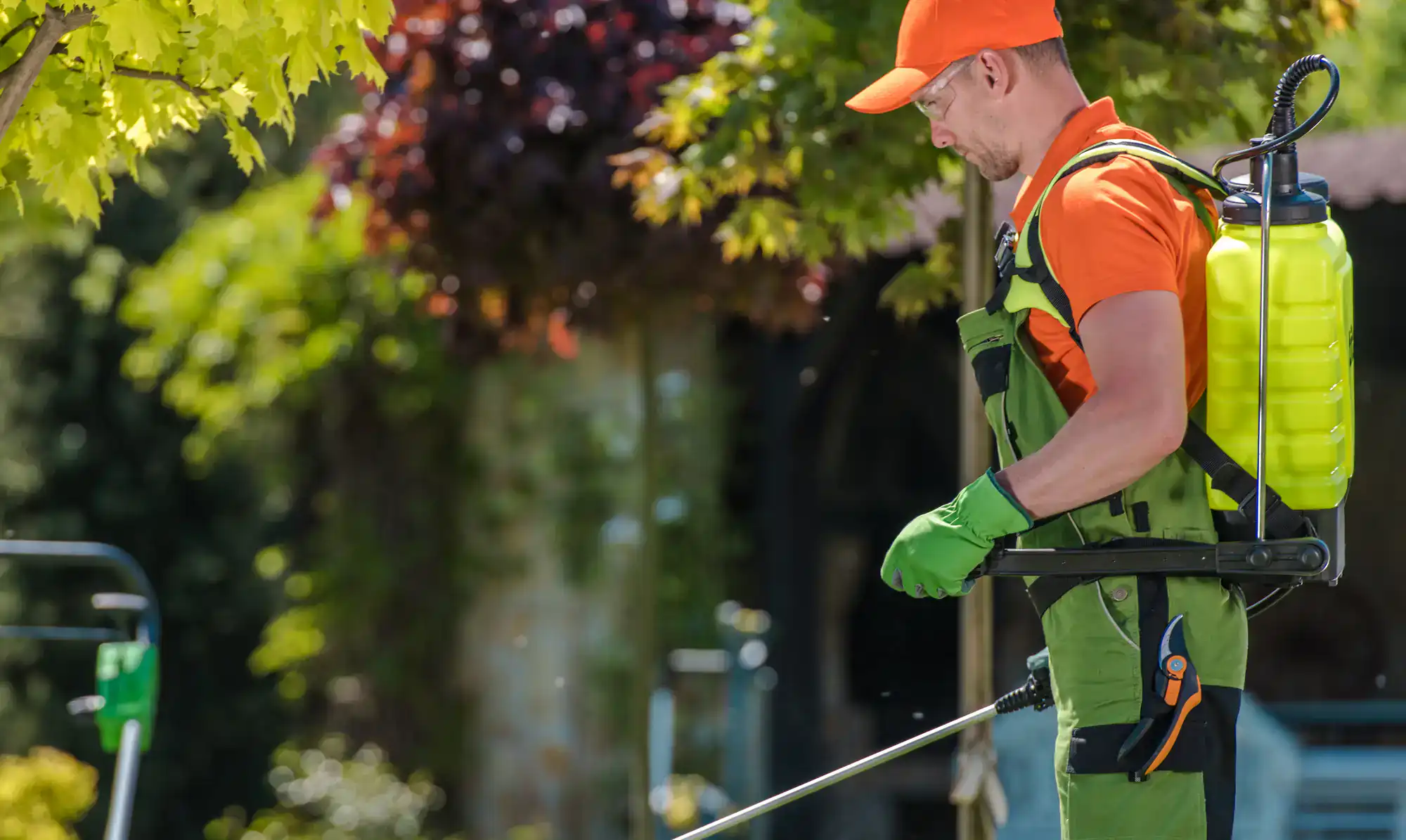
The Stony Brook University area sits on Long Island’s North Shore in the Town of Brookhaven, and the conditions here are distinct in a few important ways. The soils are sandy outwash typical of all of Suffolk County which means nutrients leach through the root zone faster than in most of the Northeast. A fertilizer program that works in Connecticut or New Jersey will consistently underperform here without adjustment for local soil chemistry.
Beyond soil, the residential properties near the campus tend to have mature tree canopy oak, maple, and other deciduous species that create significant shade. Shade-tolerant grass varieties like fine fescue behave very differently than the sun-loving bluegrass that national programs often default to, and planting the wrong species under a dense canopy is one of the most common reasons lawns in this area never seem to improve. Add in the North Shore’s slightly cooler microclimate compared to inland Suffolk County towns, and you have a set of conditions that genuinely require local expertise to navigate well.
The honest answer is that most lawns in Suffolk County need both but the order and timing matter. If your soil is compacted, fertilizer applications are significantly less effective because nutrients can’t penetrate to the root zone where they’re actually needed. You can pour product on compacted ground and see almost no improvement, which is a frustrating and expensive cycle.
A simple test: push a screwdriver into your lawn. If it meets resistance after an inch or two, compaction is a real issue. For properties near Stony Brook University particularly those on older lots or land that’s been through any kind of construction or heavy use compaction is more the rule than the exception. Core aeration should come first, ideally in September or early October when cool-season grasses are actively growing and can fill in the cores quickly. Overseeding immediately after aeration dramatically improves seed-to-soil contact and germination rates. Fertilization then supports that new growth through the fall. Running them in the right sequence makes each treatment more effective than any one would be on its own.
For cool-season grasses which is what most lawns on Long Island’s North Shore are the two most productive fertilization windows are spring and fall. Spring applications typically begin in mid-April, once soil temperatures reach around 55°F and grass is actively growing. Pre-emergent crabgrass control is the critical spring priority, and timing it to actual soil temperature rather than a calendar date makes a measurable difference in effectiveness.
Fall is the most important season for lawn care in this area. September and October give cool-season grasses ideal growing conditions moderate temperatures, typically consistent rainfall, and enough time before dormancy to build root mass for the following year. A well-executed fall fertilization and aeration program sets up a lawn for the next 12 months more than any other single treatment. One important note for Suffolk County specifically: the fertilizer blackout period runs from November 1 through April 1. Applications after November 1 are not just ineffective on dormant grass they’re illegal under Suffolk County Local Law 41-2007, with fines up to $1,000. We’ve been working within this calendar for decades and schedule every program accordingly.
In New York State, any company applying pesticides or herbicides as a commercial service is legally required to hold a NYS Department of Environmental Conservation pesticide applicator license. That license requires a 30-hour training course and a passing score on a state exam. It’s not optional it’s the law. The problem is that a meaningful number of operators in the Suffolk County market send unlicensed workers onto properties without homeowners knowing.
This matters for a few reasons. An unlicensed applicator isn’t just a legal issue it’s a competence issue. The training required to earn that license covers correct application rates, product selection for specific weed and pest problems, and safe handling practices. Without it, you’re trusting your lawn and your soil to someone who hasn’t demonstrated basic proficiency. For a community where professional credentials are the standard expectation and where your lawn sits over the same sole-source aquifer that supplies Long Island’s drinking water the distinction between a licensed professional and an unlicensed crew isn’t a minor detail. Every Lawn Master technician is fully licensed.
Nutgrass more accurately called nutsedge is one of the most persistent and frustrating weed problems on Long Island. It’s not actually a grass; it’s a sedge, which means most broadleaf herbicides and standard weed control products don’t touch it. It spreads through underground tubers called nutlets, and if those aren’t addressed, pulling or mowing the visible plant just encourages more growth.
Most national lawn care programs don’t include targeted nutsedge treatment because it requires a specific herbicide applied at specific timing it’s not part of a standard five-step rotation. If your current company has been telling you nutsedge is just something you learn to live with, that’s not accurate. It’s treatable with the right product and the right timing, typically late spring through early summer when the plant is young and actively growing. We offer dedicated nutgrass control as a specific service, not an afterthought. If you’ve been watching it spread through your lawn for a season or two despite paying for regular treatments, that’s a gap in your current program not an unsolvable problem.
The most direct answer is accountability. National lawn care chains market heavily across Long Island, and the pattern of complaints in this market is consistent: applications done incompletely or skipped, difficulty reaching anyone with authority to fix a problem, and technicians rotating through routes without any continuity or knowledge of your specific lawn’s history. When something goes wrong, you’re dealing with a call center not a neighbor.
We’ve been operating in Suffolk County since 1987, out of Port Jefferson Station, a few miles from the Stony Brook University campus. Our team knows the soil conditions on North Shore properties, the regulatory calendar, the weed pressures, and the seasonal timing that actually produces results here. Our fleet is fully wrapped and branded you know exactly who is on your property. Every technician is licensed. Our fertilizer is custom-blended for Long Island soil. And because this is a small, focused operation rather than a franchise with hundreds of routes, there’s real continuity between visits. For homeowners in the Stony Brook University area who’ve already been through the national chain experience, that difference tends to be obvious within the first season.
Useful Links
Other Services we provide in Stony Brook University