
Hear from Our Customers
If you’ve fertilized, watered, and seeded year after year without seeing the results you expected, the problem probably isn’t what you’re putting on your lawn it’s that none of it is getting through. Compacted soil acts like a barrier. Water runs off instead of soaking in. Fertilizer sits on the surface. Seed can’t make contact with the root zone. Aeration breaks that cycle by pulling out plugs of compacted soil and opening up channels for air, water, and nutrients to actually reach the roots.
For Farmingville homeowners specifically, this matters more than it does in most places. The Ronkonkoma Moraine the glacial ridge that created Bald Hill and defines the terrain throughout this hamlet left behind a mix of clay-heavy till and variable soils that compact aggressively under normal use. Fifty years of mowing, foot traffic, and freeze-thaw cycles on that kind of soil creates conditions that a bag of fertilizer alone will never fix. The soil itself needs to be opened up first.
Once it is, everything you put into your lawn actually works. Grass thickens, color improves, and the lawn holds up better through summer heat and winter stress. Roots have room to grow and resources to draw from.
We’ve been operating across Suffolk County since 1987, and that means we were working Farmingville lawns before most of our competitors started their businesses. We know how the soil in this part of Brookhaven behaves, how it compacts, and what it takes to turn it around. We’ve watched the Arboretum development on Horseblock Road break ground on what was still farmland, and we’ve handled the compaction problems that came with it.
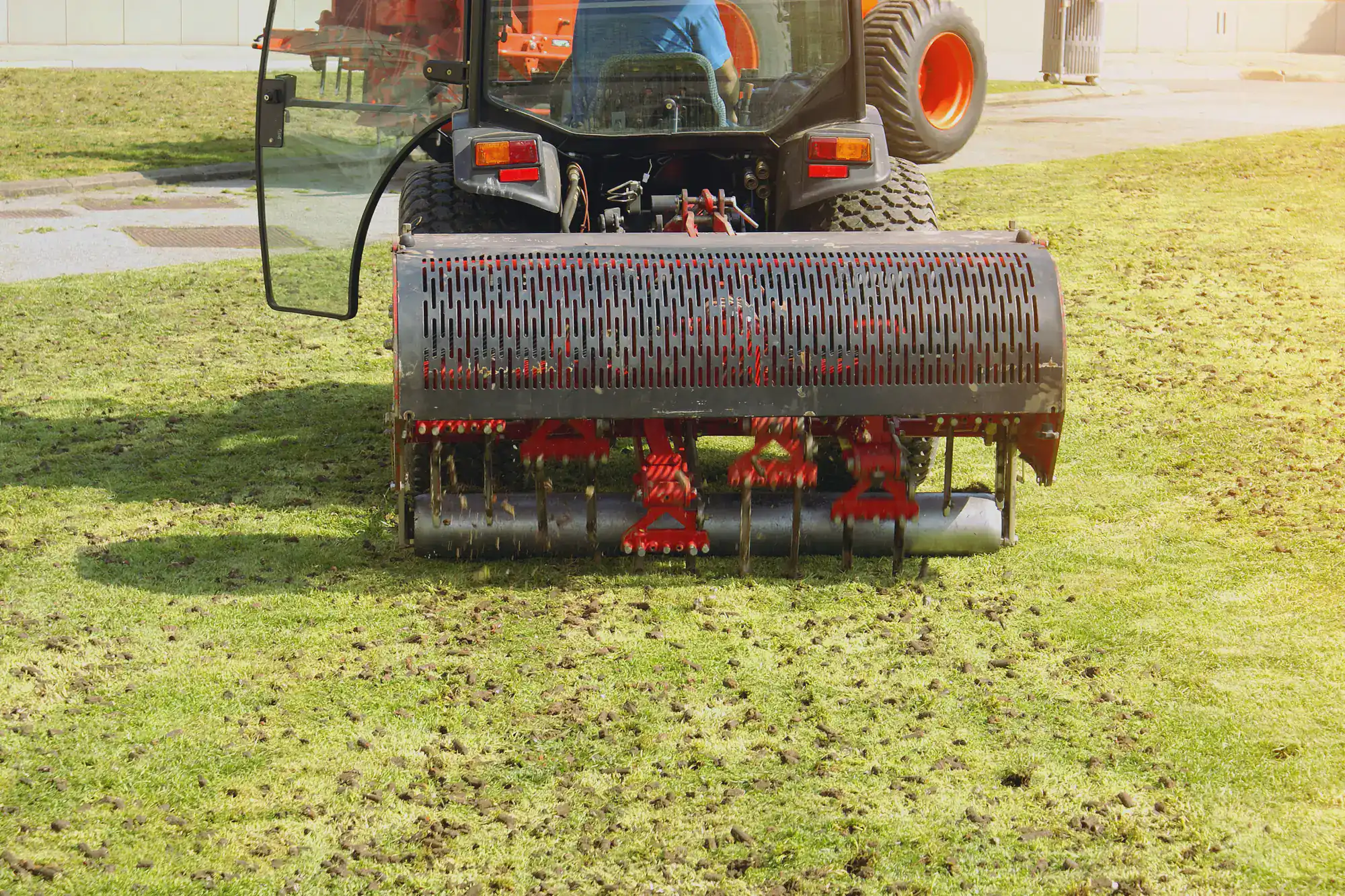
Every job is handled by a licensed pesticide professional not a seasonal crew member who showed up last week. We use hydraulic aerators built for the kind of compacted, variable soil you find on moraine terrain, not the walk-behind rental machines that barely scratch the surface of a clay-heavy lawn. Every program we build is written for your specific Farmingville property, not a generic plan designed for a lawn somewhere else in the county.
If you’ve been through a lawn care company that signed you up and then disappeared, or sent different people every time with no memory of what was done before, that’s the experience we’ve spent 37 years being the alternative to.
It starts with an honest look at your lawn. Before anything gets scheduled, we assess what you’re actually dealing with soil type, compaction level, thatch buildup, grass condition, and any grade or drainage issues on your property. In Farmingville, that assessment matters more than it might in a flat, uniform-soil community. Lots near the Bald Hill area can have meaningfully different soil composition than properties closer to Horseblock Road, and what works on one end of town may need adjustment on the other.
From there, we schedule your aeration during the right window for your lawn. For cool-season grasses which is what most Long Island lawns are running late August through October is the optimal time. The soil is still workable, the grass is heading into its strongest growth phase, and any overseeding we do alongside the aeration has the best possible chance of establishing before winter. This timing also keeps you on the right side of Suffolk County’s fertilizer ban, which prohibits applications after November 1. Missing that window means waiting until next year.
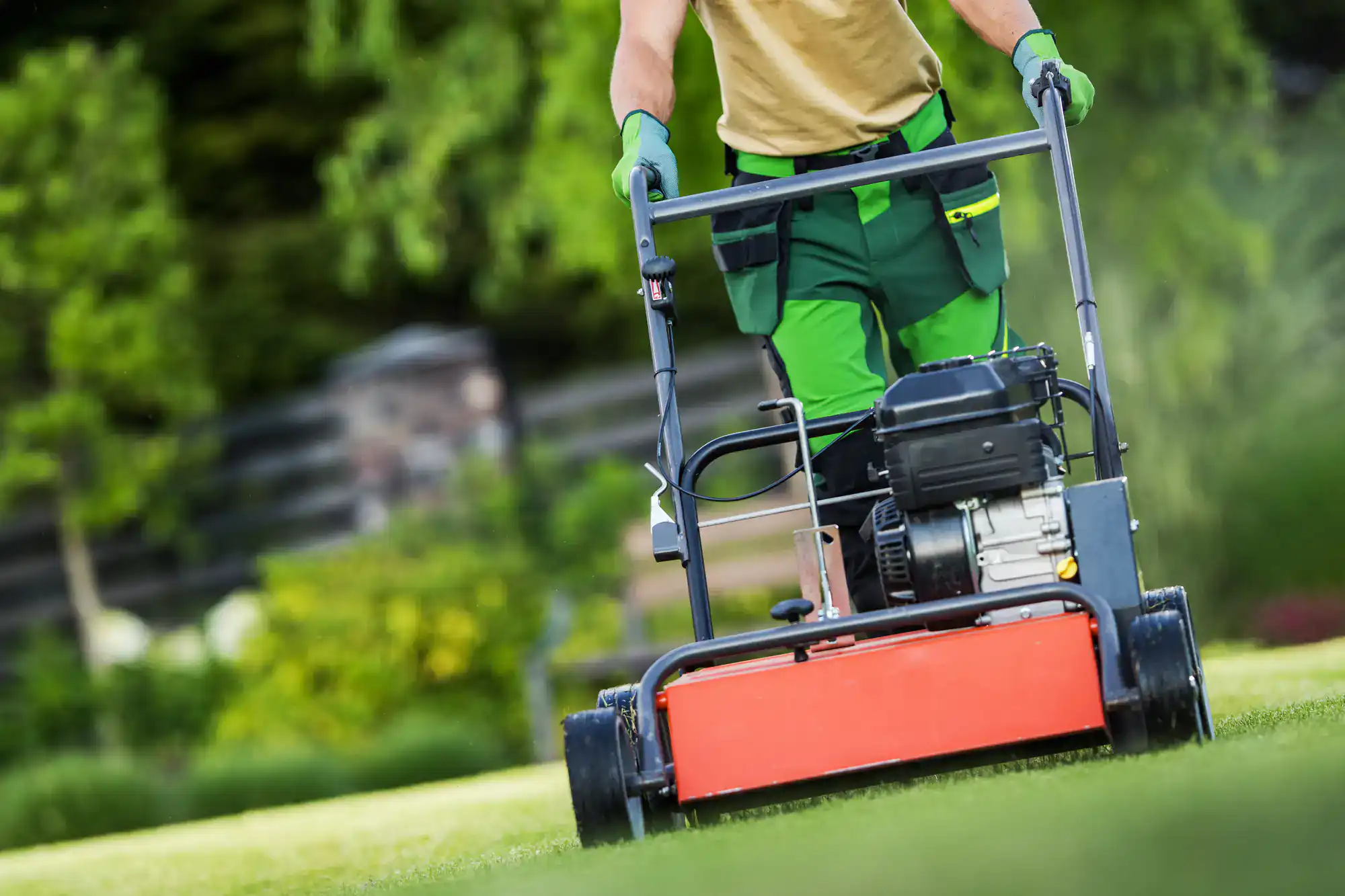
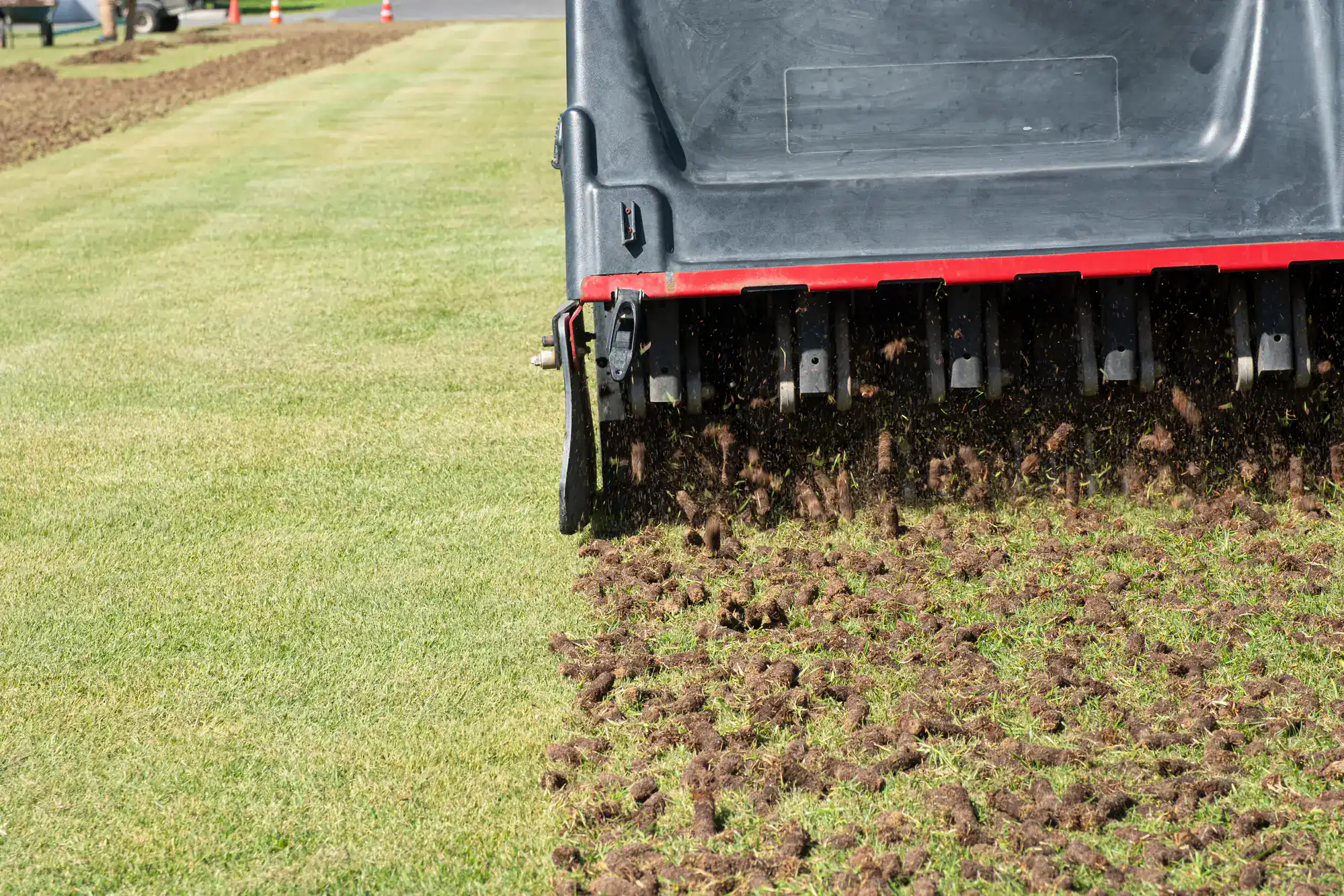
On the day of service, our hydraulic aerator pulls clean cores from the soil typically two to four inches deep across your entire lawn. Those cores break down naturally over a few weeks and return organic material to the surface. If overseeding is part of your program, seed goes down immediately after, directly into the open channels where soil contact is best. You don’t need to be home. You don’t need to do anything after. We communicate clearly, show up when we say we will, and the results speak for themselves over the following weeks.
Ready to get started?
Professional core aeration typically runs between $75 and $300 for a residential property, depending on lot size, soil conditions, and what’s being done alongside it. In Farmingville, where soil variability is real and compaction runs deep on moraine-derived terrain, the value of doing it right the first time with professional hydraulic equipment is significant. A rental aerator from a big-box store costs $75 to $100 per day and it won’t penetrate clay-heavy soil the way a hydraulic machine does. The equipment gap is where most DIY aeration attempts fall short.
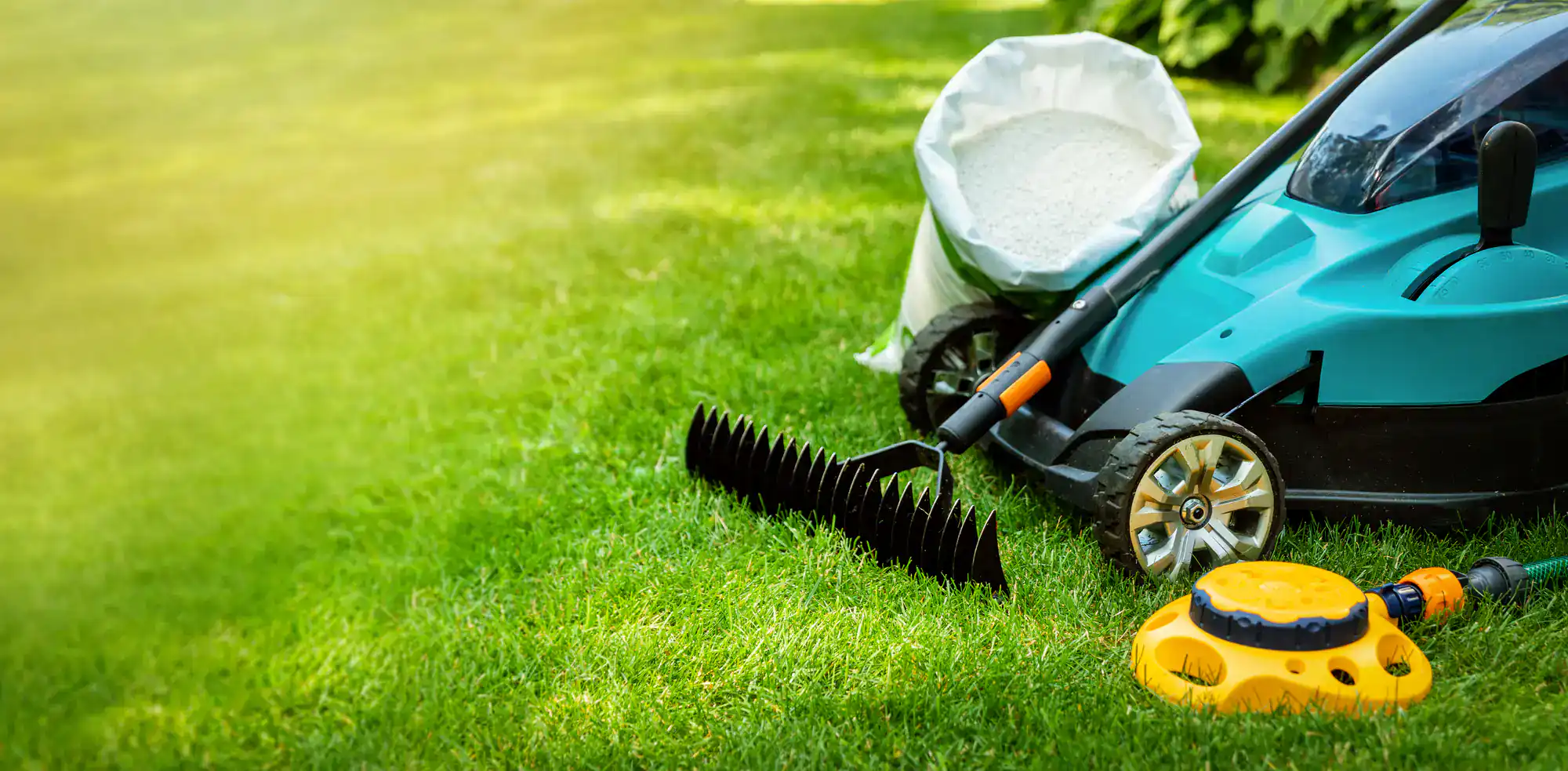
What we bring to your Farmingville property goes beyond the aeration itself. Every visit includes licensed professional oversight, custom-blended fertilizer formulated specifically for our programs, and a treatment plan built around your lawn’s actual condition not a package designed for someone else’s property. If your lawn needs overseeding alongside aeration, we handle that in the same visit, with seed placed directly into the open channels for the best possible germination. If you’re in a newer build or recently moved into a property near the Arboretum development where construction equipment compacted the soil well below the surface, we account for that in how we approach the job.
Suffolk County’s fertilizer regulations apply to every property in Farmingville no applications between November 1 and April 1, with fines up to $1,000 for violations. We schedule and execute within that window by design, not by accident. You’re not just hiring someone to poke holes in your lawn. You’re getting a program that’s been refined over nearly four decades of working Suffolk County soil.
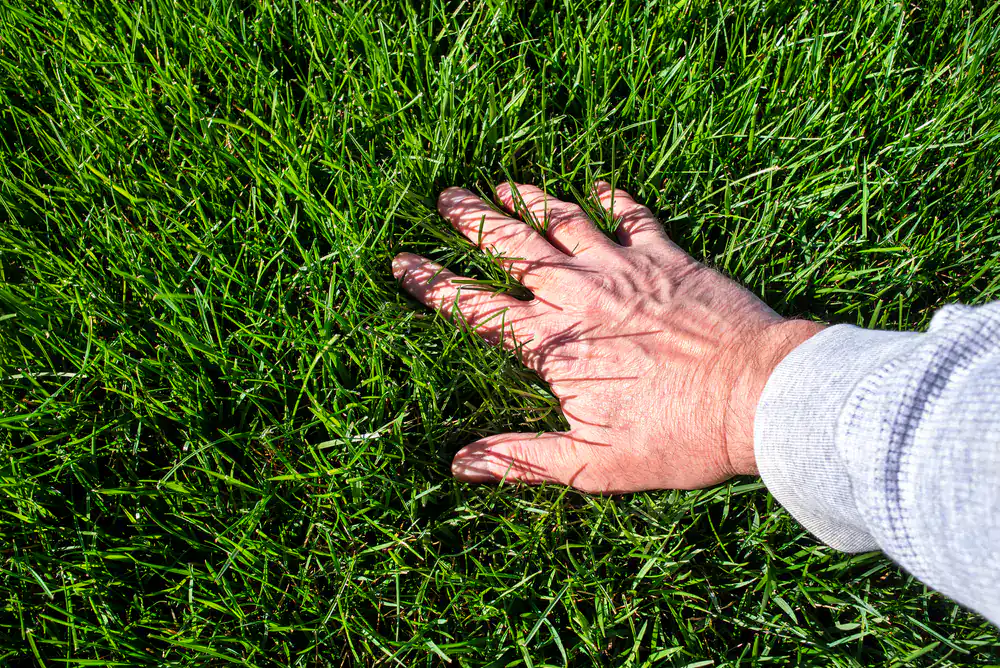
For most Farmingville lawns, the best window is late August through October. Cool-season grasses tall fescue, Kentucky bluegrass, perennial ryegrass are the dominant grass types across Long Island, and fall is when they’re actively growing and best positioned to recover from aeration and take advantage of overseeding. The soil is still soft enough to pull clean cores, and the cooler temperatures reduce stress on the grass during the recovery period.
There’s also a practical deadline to keep in mind. Suffolk County prohibits fertilizer applications from November 1 through April 1, which means the full fall treatment window aeration, overseeding, and fertilization needs to be completed before that cutoff. We build schedules around this every season. If you wait until mid-October to call, you may be working against the clock. Getting on the schedule early in the fall gives your lawn the full benefit of the season and keeps everything compliant with county regulations.
The most reliable self-test is simple: push a screwdriver into your lawn. If it goes in easily to four or five inches, your soil is reasonably healthy. If you’re pushing hard and barely getting two inches, you’ve got compaction and aeration is likely the right first move before anything else you do to that lawn will work properly.
Other signs include water pooling or running off after rain instead of soaking in, thin or patchy grass in areas that get regular foot traffic, and a lawn that looks dull and stressed even when you’ve been fertilizing and watering consistently. In Farmingville, these symptoms are especially common on properties built in the 1960s and 70s, where 50-plus years of mowing and freeze-thaw cycling on clay-bearing moraine soil has created compaction that runs well below the surface. If you’ve been doing everything right and still not seeing results, the soil is usually the reason and aeration is where the fix starts.
Spike aeration pushes solid tines into the soil to create holes. Core aeration which is what we use actually removes plugs of soil from the ground. That distinction matters a lot more than it might sound. When you push a spike into already-compacted soil, you’re often compressing the surrounding soil further rather than relieving the pressure. You get a hole, but the walls of that hole are denser than before.
Core aeration removes material, which creates genuine space for air, water, and roots to move through. For the kind of soil you find in Farmingville variable, clay-bearing moraine till that has been compacting for decades core aeration is the only method that actually addresses the problem rather than temporarily masking it. Liquid aeration products are also available on the market and make bold claims, but they don’t physically remove compacted material. On difficult soil, there’s no substitute for mechanical extraction with professional-grade hydraulic equipment.
You can, and some homeowners do. A walk-behind rental aerator from a hardware store typically runs $75 to $107 per day, so the cost difference between renting and hiring a professional isn’t always dramatic especially once you factor in pickup, transport, and the physical effort of running the machine yourself across a full lawn.
The bigger issue is what the equipment can and can’t do. Consumer rental aerators are designed for relatively light, uniform soil. Farmingville’s moraine-derived soil especially in areas with significant clay content or on properties that have been compacted for decades can exceed what those machines handle effectively. They often can’t pull clean cores at adequate depth on hard, clay-heavy ground. Our hydraulic aerators are built for exactly this kind of soil. They penetrate deeper, pull cleaner cores, and handle the variability you find across different parts of Farmingville without the operator having to fight the machine. If your lawn is in genuinely good shape and just needs light annual maintenance, a rental might do the job. If you’re dealing with real compaction, the equipment difference is where the results diverge.
Yes and honestly, new construction properties often need it more urgently than established ones. When a home is built, heavy construction equipment compacts the soil to depths that normal residential use never reaches. We’re talking about compaction at six, eight, sometimes ten inches below the surface. A standard rental aerator pulling two-inch cores doesn’t come close to addressing that. The lawn gets planted on top of what is essentially a hardpan, and no amount of fertilizer or watering fixes the underlying problem.
This is particularly relevant in Farmingville right now given the active development in the area, including the Arboretum project on Horseblock Road and newer single-family construction throughout the hamlet. If you’ve moved into a home built in the last five years and your lawn has never really taken off the way it should thin coverage, poor color, water running off instead of soaking in construction compaction is the most likely explanation. We assess each property individually, so if your situation calls for a more aggressive approach than standard annual aeration, that’s what the program reflects.
Soil variability across Farmingville is more pronounced than most homeowners realize. The Ronkonkoma Moraine didn’t deposit uniform material across the hamlet it left behind a mix of clay-heavy till, sandy pockets, and everything in between. Two properties on the same street can have meaningfully different soil composition, drainage characteristics, and compaction levels. What works on your neighbor’s lawn may genuinely not be enough for yours, through no fault of your own.
There’s also the matter of lot history. A property that had a pool removed, a large tree taken out, or any significant ground disturbance in the past 20 years may have soil conditions that bear no resemblance to a neighboring lot that was left undisturbed. The same goes for grade and slope properties with any elevation change tend to shed water and concentrate compaction at the low points, which accelerates the decline. The answer isn’t to do more of the same things. It’s to actually assess what’s happening in your specific soil and build a program around that which is exactly how we approach every property in Farmingville.
Useful Links
Other Services we provide in Farmingville