
Hear from Our Customers
Most Medford homeowners don’t have a fertilizer problem. They have a compaction problem. The fertilizer you’ve been paying for isn’t disappearing into thin air it’s being blocked by a layer of compacted soil that won’t let water, nutrients, or air reach the root zone where they actually matter. Core aeration fixes that. We pull plugs from the ground, open up channels, and give your grass the access it’s been missing.
Here’s what that looks like in practice: the thin, yellowing patches you’ve been fighting start filling in. The water that used to pool after rain starts absorbing the way it should. The fertilizer you apply actually does something. In Medford specifically, where a lot of properties sit on sandy Pine Barrens-influenced soil with low organic matter, compaction is sneaky people assume sandy soil can’t compact, but it does, especially under regular mowing and foot traffic. When it does, it loses the drainage that makes it manageable in the first place.
For a neighborhood like Eagle Estates or anywhere along the Horseblock Road corridor, where post-war homes have been mowed and walked on for decades, the compaction layer is real. Aeration is what resets it. And when you pair it with overseeding and a fertilizer program that’s actually formulated for Long Island soil not pulled off a supplier’s shelf you start to see the kind of results that hold up year after year, not just for a season.
We’ve been operating in Suffolk County since 1987, with deep roots in Medford and the surrounding communities. That’s not a tagline it’s just the truth. We were already learning how central Long Island’s soil behaves through every season, every drought, and every hard winter when most of the lawn care companies currently advertising in Medford were still years away from being founded.
Every job runs with a licensed pesticide professional on-site. Not a crew supervised remotely by someone holding a license off-property an actual certified applicator, on your lawn, accountable for every decision made that day. That’s a real difference in the Medford market, and it’s one most operators in the area can’t say.
Our equipment is professional-grade hydraulic, our fertilizer is a custom blend made specifically for Lawn Master and tuned to Suffolk County soil chemistry, and our trucks all five of them, fully wrapped show up when they’re supposed to. If you’ve been burned before by a company that didn’t, that last part matters more than it sounds.
It starts with an honest look at what’s actually going on with your lawn. Before anything gets pulled out of the truck, we assess the condition of your turf compaction level, thatch buildup, grass type, drainage patterns. In Medford, where soil can shift from sandy and fast-draining to compacted and struggling within the same property, that assessment isn’t a formality. It shapes everything that follows.
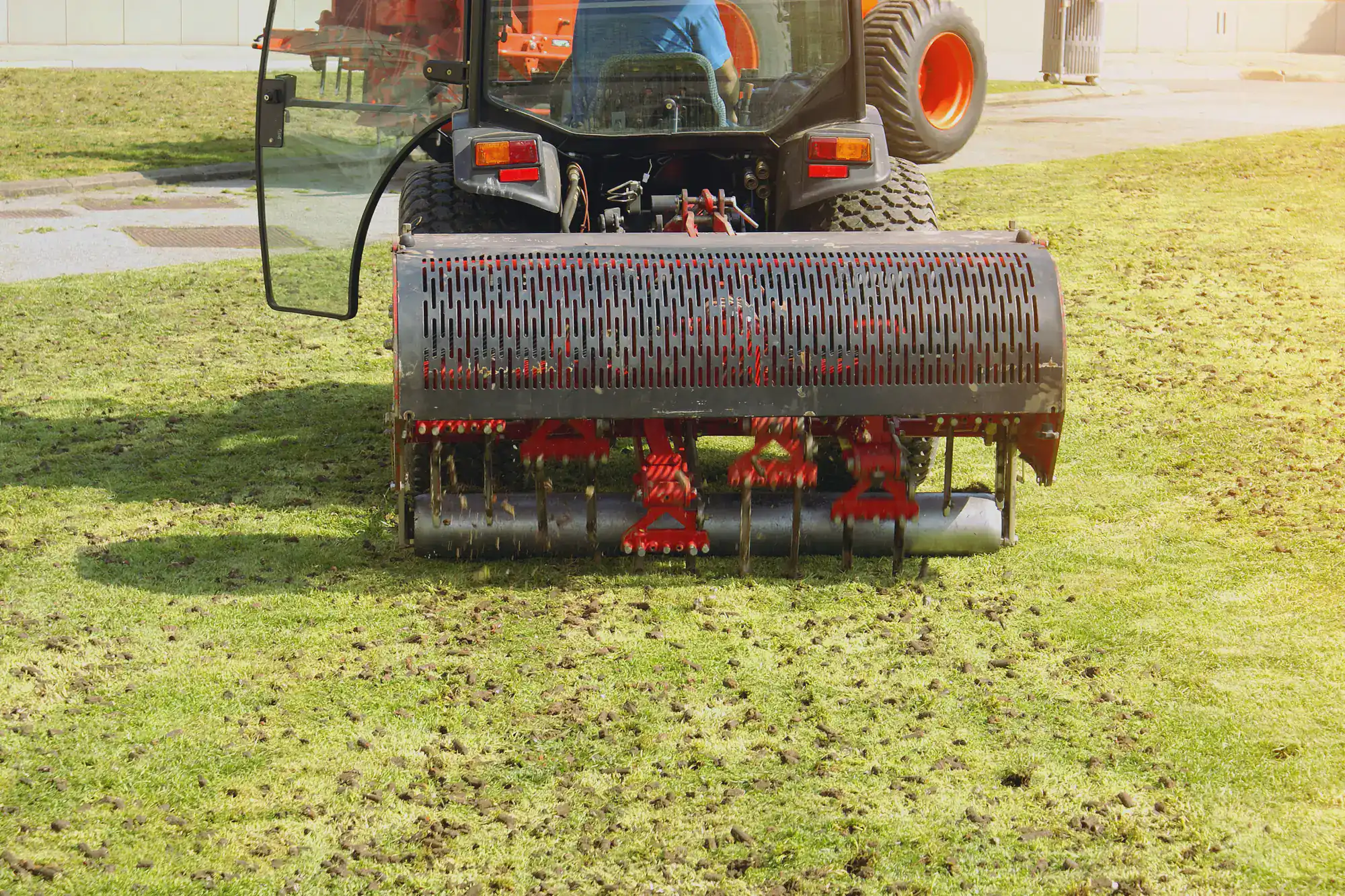
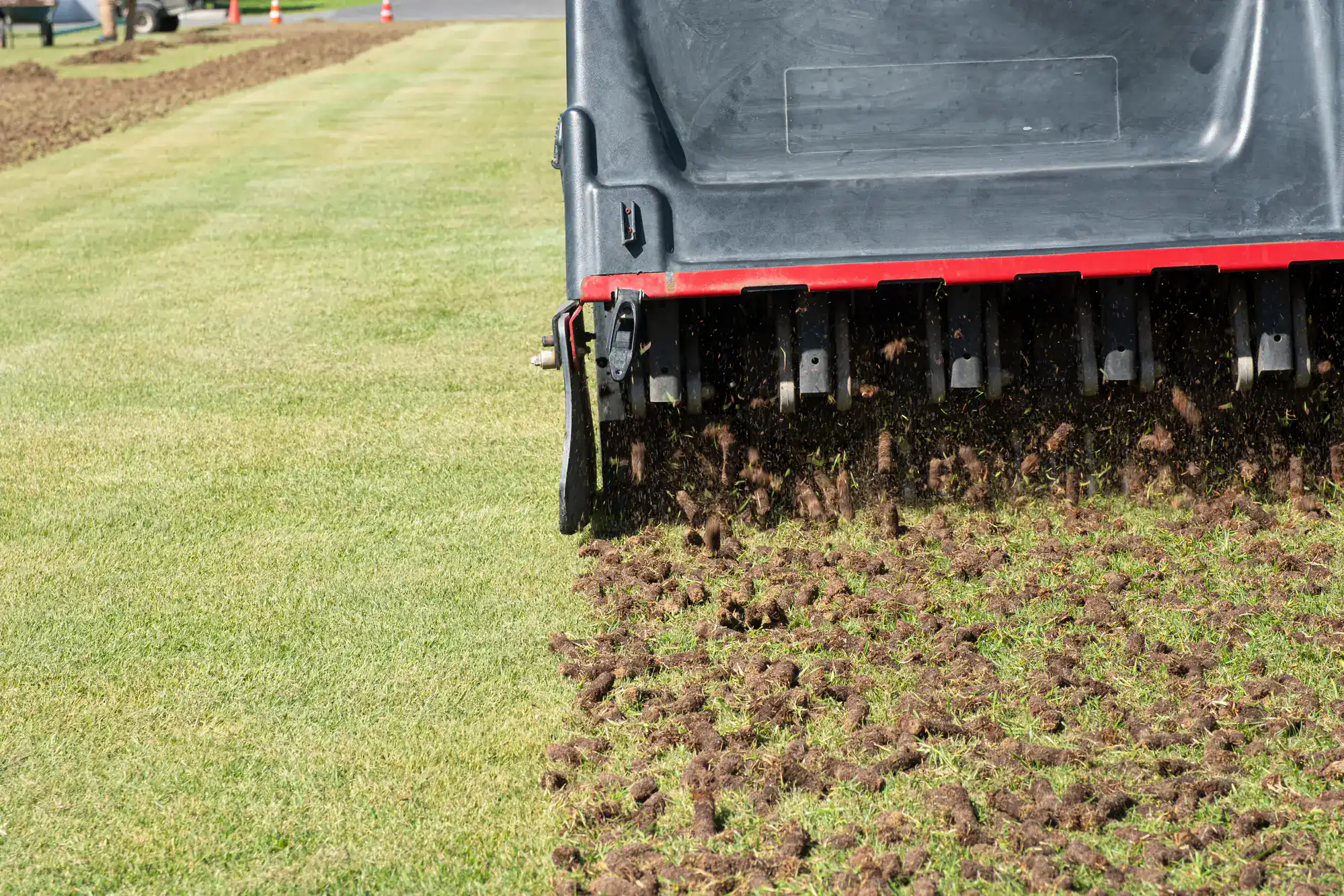
Once the evaluation is done, our hydraulic core aerator goes to work. This is not the same machine you’d rent from a hardware store on a Saturday. Hydraulic aerators penetrate deeper, pull cleaner cores, and cover the lawn more consistently which matters a lot in Pine Barrens-adjacent soil where shallow tine depth leaves the compaction layer untouched. The cores that come out get left on the surface. They break down within a couple of weeks and return organic matter directly back into the soil, which Medford lawns genuinely benefit from given how low the natural organic content tends to be.
Timing is a real factor here. For the cool-season grasses that cover most Medford properties tall fescue, Kentucky bluegrass, perennial ryegrass the fall window is when aeration and overseeding do their best work. That window closes hard on November 1, when Suffolk County’s fertilizer ban kicks in. We plan around that deadline. Five trucks, an established schedule, and 37 years of operating in this county means that when a date is set, it gets honored.
Ready to get started?
Lawn aeration through us isn’t a standalone punch on a service menu. It’s part of a custom-tailored program built around what your specific lawn actually needs not a package designed for someone else’s property in a different part of Suffolk County. Every recommendation is based on what we find on your lawn that day: soil type, grass variety, thatch depth, compaction level, and how your property drains.
The aeration itself is performed with professional hydraulic equipment not the lightweight walk-behind units that leave shallow, inconsistent cores. After aeration, overseeding is available using quality seed matched to your existing turf type, and companion fertilization uses our proprietary custom-blended formula, made specifically for our operation and calibrated for Long Island soil chemistry. For Medford properties on sandy, low-organic-matter soil, that formulation difference is not a minor detail it’s the reason nutrients actually stay in the root zone long enough to do something.
For lawns that are too far gone to respond to aeration alone, we also handle complete new lawn installs from seed. Same licensed professionals, same hydraulic seeders, same custom fertilizer just starting from the ground up. Whether your lawn needs a reset or a tune-up, the program gets built around your property, not around what’s easiest to sell. And with online invoice payment available, the whole experience from first visit to final billing is straightforward.
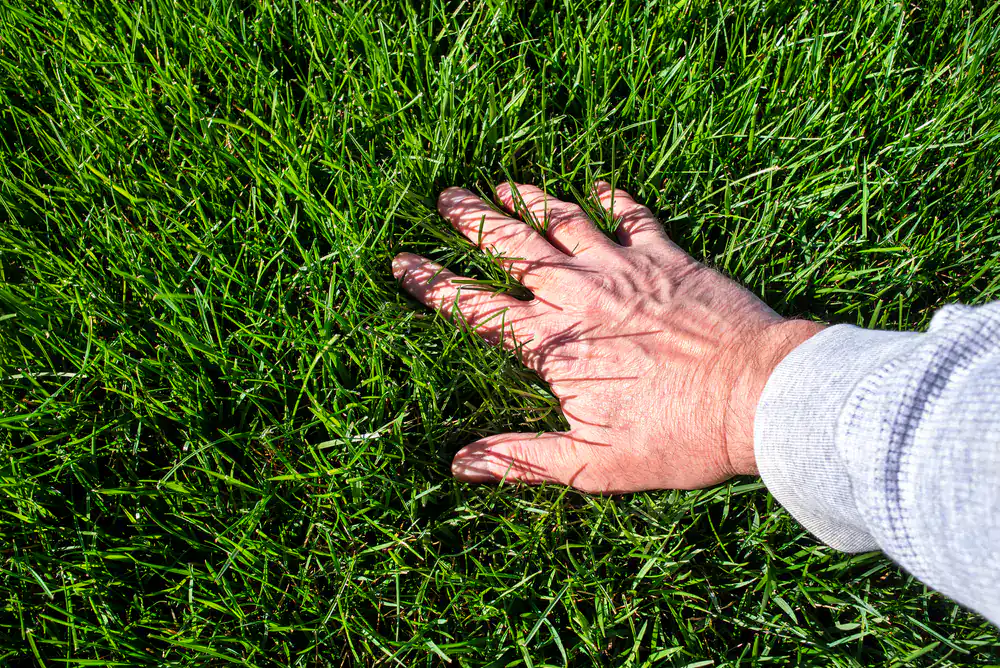
This is one of the most common misconceptions among Medford homeowners, and it’s worth clearing up directly. Sandy soil absolutely compacts it just does it differently than clay. In Medford’s Pine Barrens-influenced soil, the sand particles pack together under repeated mowing, foot traffic, and the freeze-thaw cycles of Long Island winters. When that happens, the drainage that makes sandy soil manageable gets impaired, and the air pockets that grass roots depend on disappear.
The easy way to check: after watering your lawn, push a standard screwdriver into the turf. If it won’t go three inches without real effort, the soil is compacted. In Medford, where organic matter content is naturally low and the soil structure is already fragile, compaction hits harder and faster than most homeowners expect. Core aeration is what breaks that cycle and in sandy soil, it also helps retain the nutrients and moisture that would otherwise drain through before the roots can use them.
For the grass types that cover most Medford lawns tall fescue, Kentucky bluegrass, and perennial ryegrass fall is the right window. These are cool-season grasses that grow most aggressively when soil temperatures are in the 55°F to 75°F range, which on Long Island typically runs from late August through mid-October. Aerating during that window gives the grass its best shot at recovering quickly, filling in thin areas, and establishing strong roots before winter.
There’s also a hard deadline to plan around. Suffolk County bans fertilizer applications from November 1 through April 1, with $1,000 fines for violations. That means aeration, overseeding, and any companion fertilization all need to be completed before November 1. The fall service window is real, it’s finite, and it fills up. Scheduling early especially with a company that has the fleet and staffing to honor its commitments is the difference between getting it done this season and waiting another full year.
Nationally, professional core aeration runs roughly $75 to $300 for a standard residential property, depending on lawn size, condition, and what’s included. In Medford, the actual cost for your property will depend on square footage, how compacted the soil is, whether overseeding or fertilization is being added, and whether this is a one-time service or part of an ongoing program.
What’s worth understanding is the return on that investment. In Medford’s sandy, low-organic-matter soil, every dollar you spend on fertilizer and irrigation is less effective when the ground is compacted. Aeration is what makes the rest of your lawn care program actually work it’s not an add-on, it’s the foundation. A one-time aeration that improves fertilizer uptake, water absorption, and root depth pays for itself over the course of a season. The best way to get an accurate number for your specific property is to call for a free estimate there’s no formula that beats an actual look at the lawn.
Core aeration uses hollow tines to physically remove small plugs of soil from the ground typically three to four inches deep, spaced a few inches apart across the entire lawn. Those plugs get left on the surface, where they break down over a couple of weeks and return organic matter back into the soil. The holes they leave behind are open channels that let air, water, and nutrients reach the root zone directly.
Spike aeration, by contrast, just pokes holes into the ground without removing anything. It can actually make compaction worse in some cases, because the displaced soil gets pushed to the sides and compressed further. For Medford lawns especially those with low organic matter content and a history of compaction core aeration is the only method that produces meaningful, lasting results. The plugs breaking down on the surface also add a small but real boost of organic material back into soil that genuinely needs it.
A few signs are pretty reliable. If water pools on the surface after rain instead of soaking in, that’s compaction. If your lawn looks thin or yellow despite regular fertilizing, that’s compaction blocking uptake. If the grass feels hard and springy underfoot almost like walking on packed dirt that’s compaction. And if you’ve had the same lawn for more than a year or two without aerating, it almost certainly needs it regardless of how it looks.
The screwdriver test is a simple starting point: water the lawn, then push a standard screwdriver into the turf. If it won’t go three inches without forcing it, the soil is too compacted for roots to grow properly. In Medford, where post-war homes have been mowed and used for decades and the underlying Pine Barrens soil doesn’t have much organic matter to buffer compaction, most lawns that haven’t been professionally aerated in the past year are already past due. A quick assessment from a licensed professional will tell you exactly where things stand.
Yes and for some Medford properties, that’s exactly the right call. If a lawn has been compacted, neglected, or damaged to the point where aeration and overseeding won’t produce enough recovery, a complete new lawn install from seed is the more honest answer. We handle that too, using the same hydraulic seeders, the same licensed professionals, and the same custom-blended fertilizer that goes into every other job.
What makes that relevant for Medford specifically is the soil. Starting a new lawn on Pine Barrens-adjacent sandy soil without the right seed selection, proper soil prep, and a fertilizer program calibrated for low organic matter content is a setup for disappointment. Our approach to new installs accounts for all of that the soil type, the drainage characteristics, the grass varieties that perform best in central Suffolk County conditions. Whether your lawn needs a tune-up or a full reset, the program gets built around what your property actually needs, not around what’s easiest to quote.
Useful Links
Other Services we provide in Medford