
Hear from Our Customers
Most Miller Place lawns look the way they do not because of what’s being put on them, but because of what the soil won’t let through. Decades of mowing, foot traffic, and freeze-thaw cycles build up compaction that blocks water, air, and nutrients from ever reaching the root zone. Fertilizer sits on the surface. Seed germinates thin. Water runs off instead of soaking in. The lawn looks stressed no matter what you do.
Core aeration changes that by pulling plugs of soil out of the ground and opening the profile back up. Roots can grow deeper. Water infiltrates instead of sheeting off. Nutrients actually reach the zone where the grass needs them. The results aren’t subtle you’ll see the difference in color, density, and how the lawn holds up through dry stretches.
For properties near the Long Island Sound bluffs, where the soil runs sandy and drains too fast, aeration paired with overseeding gives new roots the depth they need to survive salt air stress and summer heat. For the older established lawns that make up most of Miller Place’s housing stock homes built in the late seventies and early eighties on turf that’s been in the ground for forty-plus years aeration isn’t optional maintenance. It’s the reset the soil needs to keep performing.
We’ve been operating out of Port Jefferson Station since 1987 five miles from Miller Place on Route 25A, the same road you drive every day. That’s not a coincidence. This is our backyard, and we know how North Shore lawns behave because we’ve been watching them for nearly four decades.
Every job is handled by a licensed pesticide professional not a seasonal hire supervised from a distance. New York State requires commercial applicators to be NYSDEC-certified, and every person we send to your Miller Place property meets that standard. That matters more than most homeowners realize, especially when you’re comparing providers and not everyone in the area can say the same.
We run a fleet of five fully wrapped professional trucks, use hydraulic aerators that outperform anything available at a rental yard, and blend our own fertilizer specifically for our programs. None of that is accidental. It’s what doing this seriously looks like after thirty-seven years. Some properties do best with a complete new lawn installation for Miller Place homes.
Before anything else, we look at what’s actually going on with your lawn. Soil type, thatch depth, compaction level, grass variety all of it factors into how we approach the job. A quick field assessment tells us whether your lawn needs standard aeration, aeration with overseeding, or a more involved restoration. If you want a simple at-home check before you even call: push a screwdriver into your lawn after a rain. If it won’t go three inches without real force, your soil is compacted.
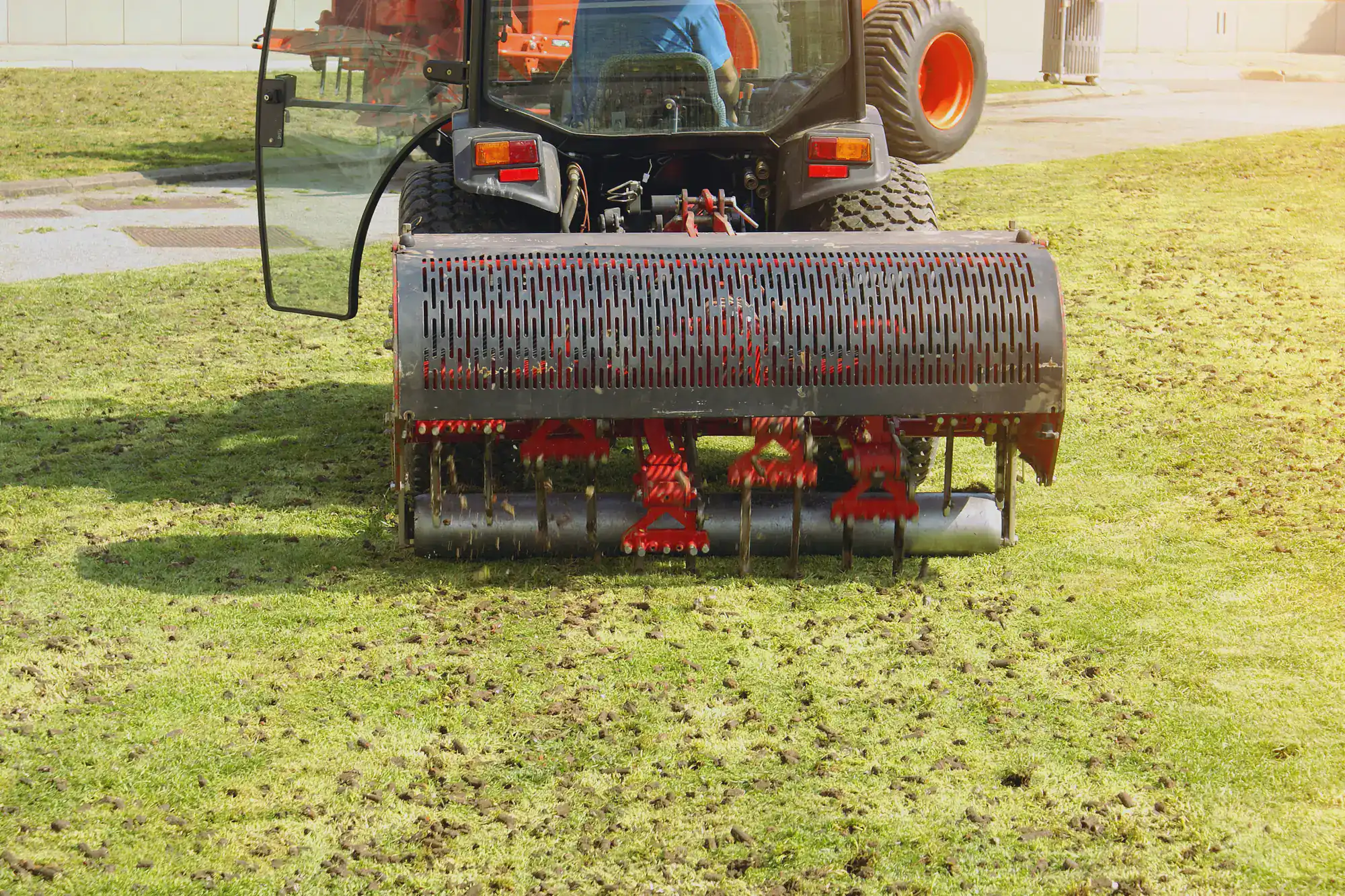
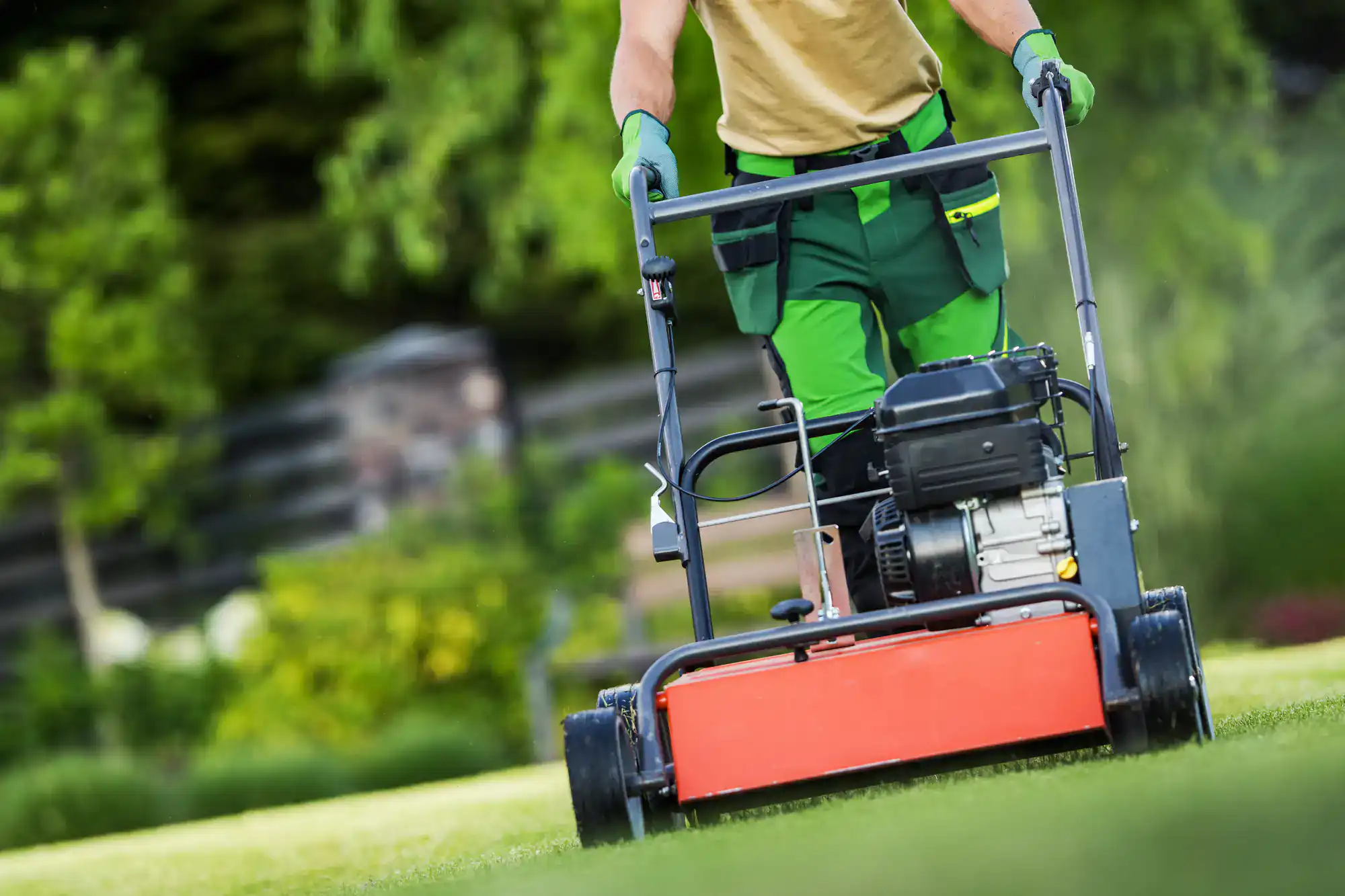
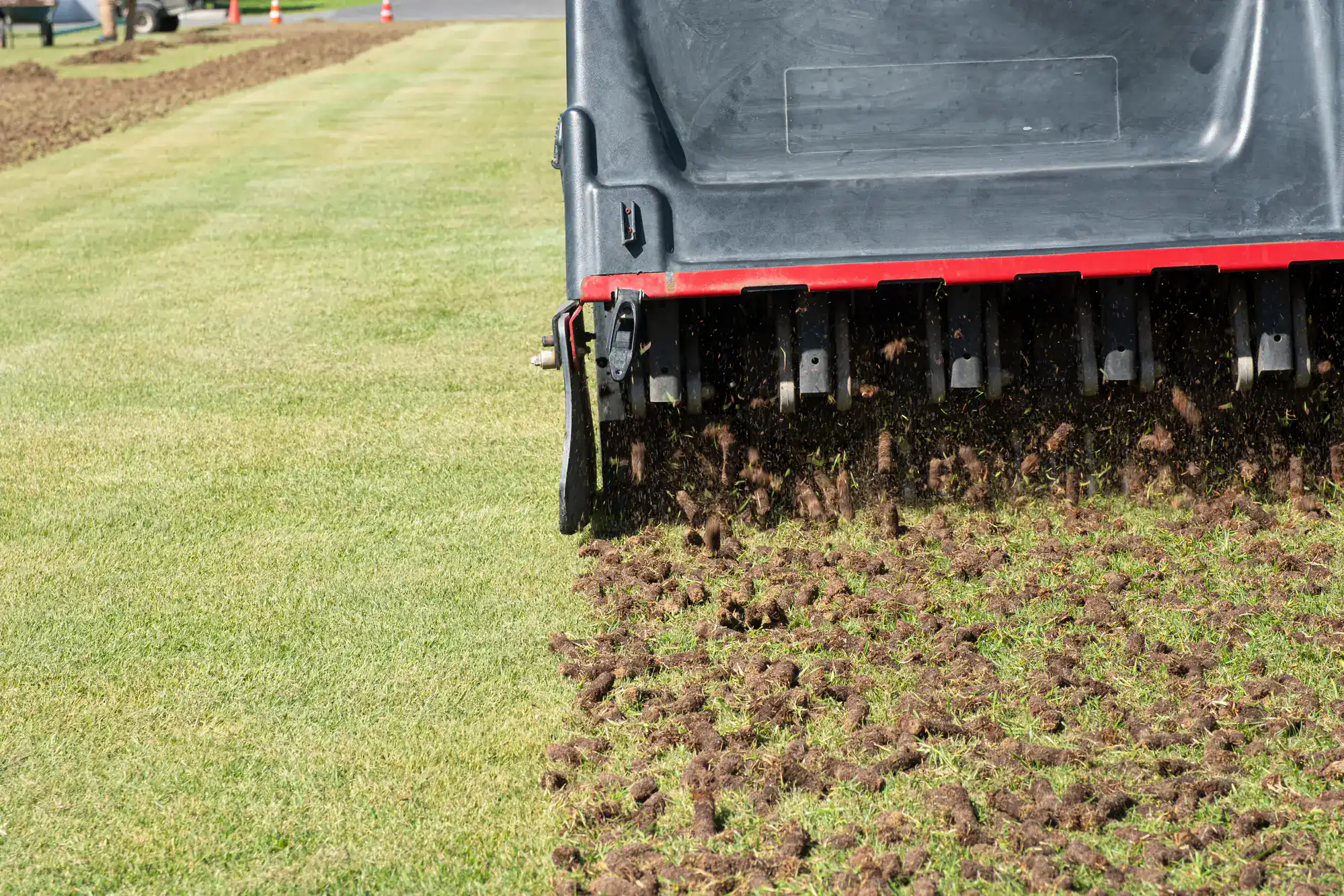
Once we’re on-site, we run our hydraulic core aerator across the lawn in a pattern that pulls clean plugs from the soil typically two to four inches deep, spaced a few inches apart. Those cores get left on the surface to break down naturally, returning organic matter back into the soil. It’s not a complicated process, but the equipment matters. Our hydraulic machines apply consistent downward pressure that rental units simply can’t match, especially on the denser, more compacted ground you find in Miller Place’s inland sections near the Coram border.
If you’re adding overseeding, that happens immediately after aeration while the channels are open and seed-to-soil contact is at its best. Timing matters here Suffolk County’s fertilizer application ban kicks in on November 1st, which means fall aeration and seeding needs to happen between late August and late October to get a fertilizer application in before the window closes. We schedule with that deadline in mind so nothing gets left half-finished.

Ready to get started?
Lawn aeration cost in Miller Place typically runs between $75 and $300 for a standard residential property, depending on lawn size, soil condition, and whether overseeding is added. Larger lots like the estate-sized properties in the North Harbor section will land toward the higher end of that range. What you’re paying for isn’t just the machine pass. It’s the assessment, the licensed professional doing the work, the hydraulic equipment that gets the job done right, and a custom fertilizer blend that we’ve formulated specifically for our programs rather than pulled off a generic supplier shelf.
Every service starts with a real look at your lawn. We don’t run the same program on every Miller Place property. A sandy coastal lawn six houses from the bluffs has different needs than a shaded, heavily compacted lawn near a mature tree line on North Country Road. That difference shows up in how we approach the aeration depth, the seed mix we recommend, and the follow-up fertilization timing.
If your lawn needs more than aeration if it’s thinned out significantly, damaged by grubs, or just worn down after years of neglect we also handle full lawn restoration and new lawn installs from seed. The same licensed professionals, the same hydraulic seeders, the same level of attention. You don’t have to find a second company to finish what we start.

The easiest test you can do yourself is the screwdriver test. After watering or a rain, push a standard screwdriver into the lawn. If it won’t penetrate three inches without significant resistance, your soil is compacted. Another clear sign is water pooling on the surface after rain rather than soaking in that’s compaction preventing infiltration. If your lawn looks thin or stressed despite regular fertilizing, the problem may not be what you’re applying. It may be that compacted soil is blocking nutrients from reaching the roots.
Miller Place properties are particularly prone to this. Most of the housing stock was built in the late seventies and early eighties, which means many lawns have been in place for four decades or more. That’s forty-plus years of mowing, foot traffic, and seasonal freeze-thaw cycles building up compaction gradually. It doesn’t happen overnight, which is why a lot of homeowners don’t connect the dots until the lawn has already declined noticeably.
Fall is the right window specifically late August through October. Miller Place lawns are predominantly cool-season grasses like tall fescue, perennial ryegrass, and Kentucky bluegrass. These varieties are in active growth during fall, soil temperatures are still warm from summer, and there’s enough time before winter dormancy for overseeded areas to establish properly.
There’s also a hard deadline to keep in mind. Suffolk County prohibits fertilizer applications from November 1st through April 1st. If you want to aerate, overseed, and get a fertilizer application in before that window closes which is important for supporting new seed germination the work needs to happen before the end of October. Spring aeration is possible but more complicated, because aerating after you’ve applied a pre-emergent weed control product breaks the barrier and lets weeds in. Fall is cleaner, more effective, and better timed for the grass varieties growing in Miller Place.
Yes, and it’s worth understanding why. The soil in Miller Place near the bluffs above the Long Island Sound tends to run sandy and loamy it drains quickly, which sounds like a good thing until you realize it also loses nutrients fast and still compacts under surface pressure in ways that restrict root growth. The compaction in sandy soil is different from clay compaction, but the result is similar: roots can’t go deep, water runs off instead of infiltrating, and the lawn stays shallow and stressed.
Aeration in sandy coastal soil opens channels that improve water retention and give roots a path downward rather than forcing them to spread laterally near the surface. Salt air from the Sound adds another layer of stress turf that’s been weakened by salt exposure needs a stronger, deeper root system to recover and stay healthy. Pairing aeration with overseeding in these areas gives new grass the best possible start, with open channels for seed-to-soil contact and improved access to water and nutrients at depth.
You can, but there’s a real difference in what you get. The machines available at equipment rental yards are walk-behind units designed for light residential use on relatively cooperative soil. They work reasonably well on younger lawns with mild compaction. For the kind of established, heavily compacted soil that’s common in Miller Place especially on properties where the ground has been compressed by decades of use or by heavy landscaping equipment rental machines often don’t penetrate deeply enough or pull clean enough cores to make a meaningful difference.
Our hydraulic core aerators apply consistent downward pressure that rental units can’t replicate. That means deeper penetration, cleaner core removal, and more effective decompression across the full lawn not just the surface layer. Add in the assessment that happens before the machine ever starts, the licensed professional doing the work, and the follow-up fertilization with a custom-blended product, and the comparison isn’t really about the machine. It’s about whether the job gets done right or just gets done.
Not always, but in most cases they’re stronger together. Aeration alone improves soil health and root development. But if your lawn has thin or bare areas which is common on Miller Place properties dealing with shade from mature trees, salt air stress near the Sound, or just the natural thinning that happens on older established turf overseeding immediately after aeration gives you the best possible germination results.
The reason timing matters so much is seed-to-soil contact. Right after aeration, the channels in the soil are open and the conditions for germination are ideal. Seed dropped into those channels has direct contact with soil, moisture, and the organic matter from the broken-down cores. Waiting even a few weeks closes that window. On a Miller Place lawn that’s been struggling for a season or two, combining aeration and overseeding in the same fall visit is the most efficient way to see real improvement before the following spring.
It matters more than most homeowners realize. In New York State, any business applying pesticides for hire including fertilizers applied as part of a lawn care program must be registered with the NYSDEC, and the work must be performed by or under the direct supervision of a certified commercial pesticide applicator. That certification requires passing state exams, maintaining active credentials, and filing annual pesticide usage reports.
Not every company operating in Miller Place meets that standard. When you hire a licensed professional, you’re not just checking a box you’re getting someone who is legally accountable for every product applied to your property, trained to identify what your lawn actually needs, and required to stay current on application standards and environmental regulations. For a property worth what Miller Place homes are worth, the person treating your lawn should be credentialed and accountable. We employ licensed pesticide professionals on every job not a certified supervisor managing uncertified workers from off-site.
Useful Links
Other Services we provide in Miller Place