
Hear from Our Customers
Most Port Jefferson homeowners who struggle with thin, patchy turf aren’t dealing with a fertilizer problem. They’re dealing with a compaction problem. The clay-dominant soils along the North Shore moraine hold moisture, expand and contract with the seasons, and compress under normal foot traffic and mowing until the root zone is essentially sealed off. Fertilizer can’t penetrate it. Water runs off instead of soaking in. And no matter what you put on top, the lawn stays stuck.
Core aeration breaks that cycle. By pulling actual plugs of soil out of the ground not poking holes, pulling plugs you open up channels that let air, water, and nutrients reach the root zone directly. The grass responds. Color deepens. Density improves. Bare patches that never seemed to fill in finally do, especially when overseeding follows right behind the aerator.
For properties near the harbor or in older neighborhoods like Harbor Hills, where mature trees and decades of mowing have compacted the soil layer by layer, the difference after a professional aeration is something you can actually measure. Push a screwdriver into your lawn after a normal watering. If it won’t go three inches without real effort, your roots are suffocating and no amount of watering or fertilizing will change that until the compaction is addressed.
We’ve been serving Port Jefferson and the broader North Shore since 1987 which means we were working in this community before most of our competitors were in business. That’s not a throwaway stat. It means we’ve spent nearly four decades learning exactly how Port Jefferson’s soils behave, how the harbor microclimate affects turf stress, and how properties with older housing stock and mature trees develop compaction patterns that generic programs simply don’t address.
Every job runs with licensed pesticide professionals not seasonal crews supervised from a distance. We use hydraulic aerators that actually penetrate compacted clay, a custom-blended fertilizer made specifically for our program, and an approach that’s tailored to your property, not copied from a route sheet. Our fleet of five wrapped trucks is visible in Port Jefferson neighborhoods because we’re based right here in Port Jefferson Station, just across the tracks.
You’re not hiring a company that drives in from the South Shore and treats your lawn like every other stop on the route. You’re hiring a team that knows this specific corner of Suffolk County better than anyone.
It starts with an assessment of your property not a glance from the truck, but an actual look at your turf density, compaction level, grass type, and shade patterns. Port Jefferson properties vary more than people expect. A lawn closer to the harbor deals with different moisture conditions than one on higher ground near Route 25A. A property with mature oaks has different compaction and pH dynamics than a newer build. That assessment shapes everything that follows.
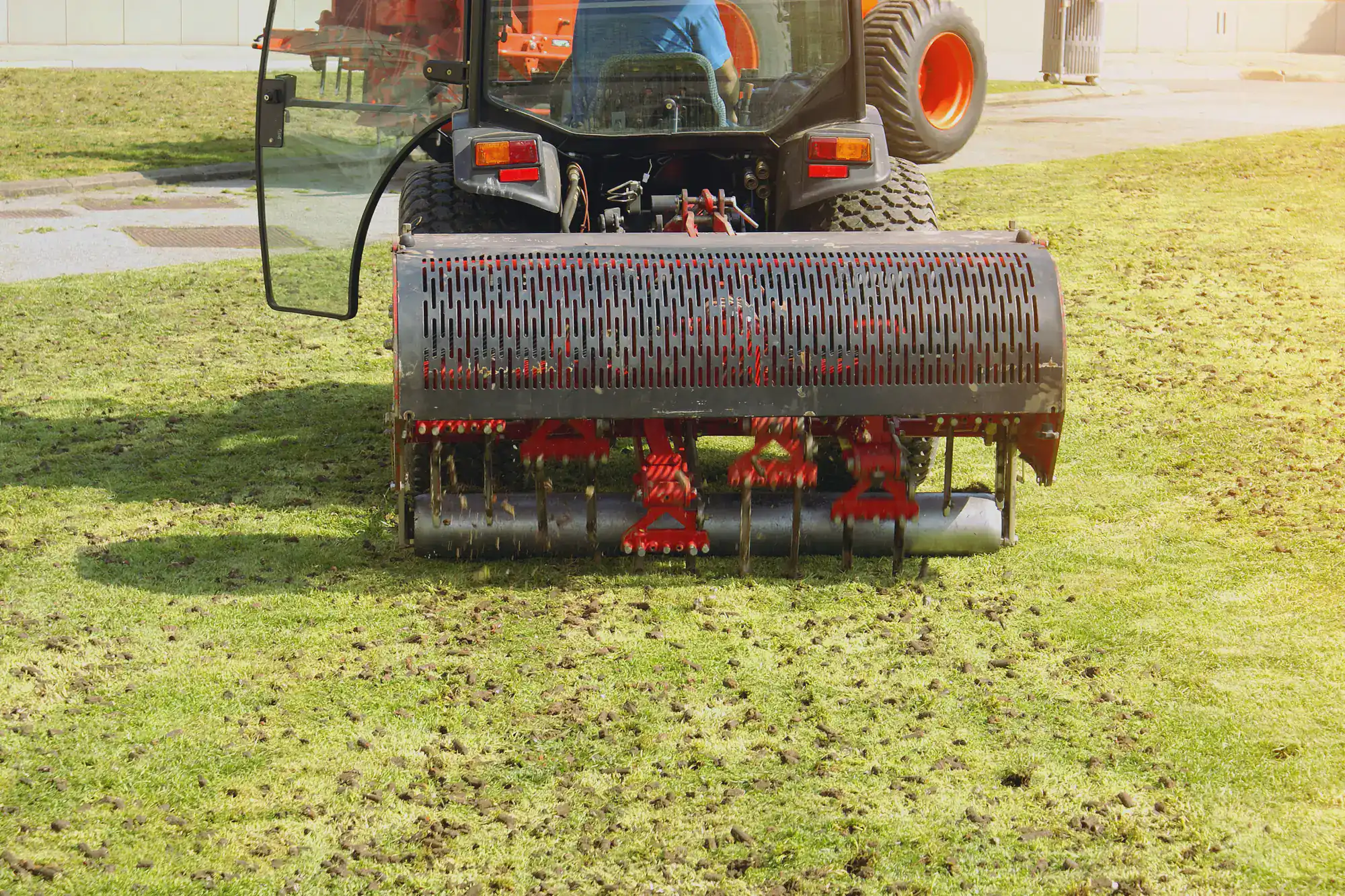
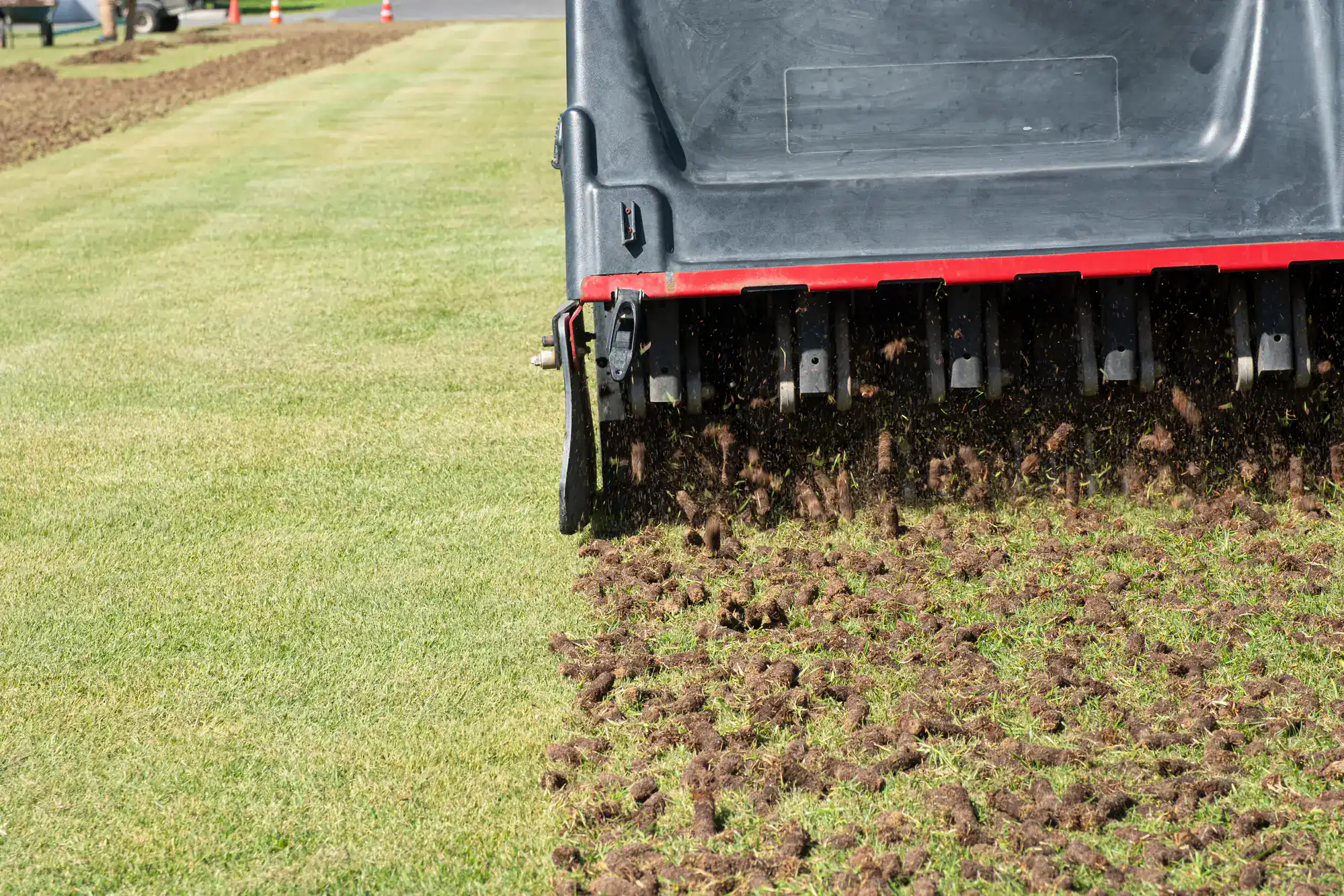
From there, we run our hydraulic aerator across the lawn, pulling cores at consistent depth typically around three inches across the entire treatment area. Consumer rental machines often can’t reach that depth in compacted clay soil. Ours do, consistently. The cores get left on the surface to break down naturally, returning organic matter back into the soil as they decompose over the following weeks.
If overseeding is part of your program, it happens immediately after aeration while the channels are open and seed-to-soil contact is at its best. Timing matters here. For Port Jefferson’s cool-season grasses fescue, bluegrass, ryegrass the fall window between late August and October is when this combination produces the strongest results. It’s also the window that closes hard on November 1 when Suffolk County’s fertilizer ban takes effect. We plan our fall schedule around that deadline, not around what’s convenient for us.
Ready to get started?
Every program we create is custom-built for the property not a package pulled off a menu. That means before anything gets applied or run across your lawn, someone who actually knows what they’re looking at has assessed what your specific turf needs. For Port Jefferson properties, that assessment almost always factors in the North Shore clay soil profile, any coastal microclimate exposure, the age of the property, and the presence of mature trees that compete with turf for nutrients and moisture.
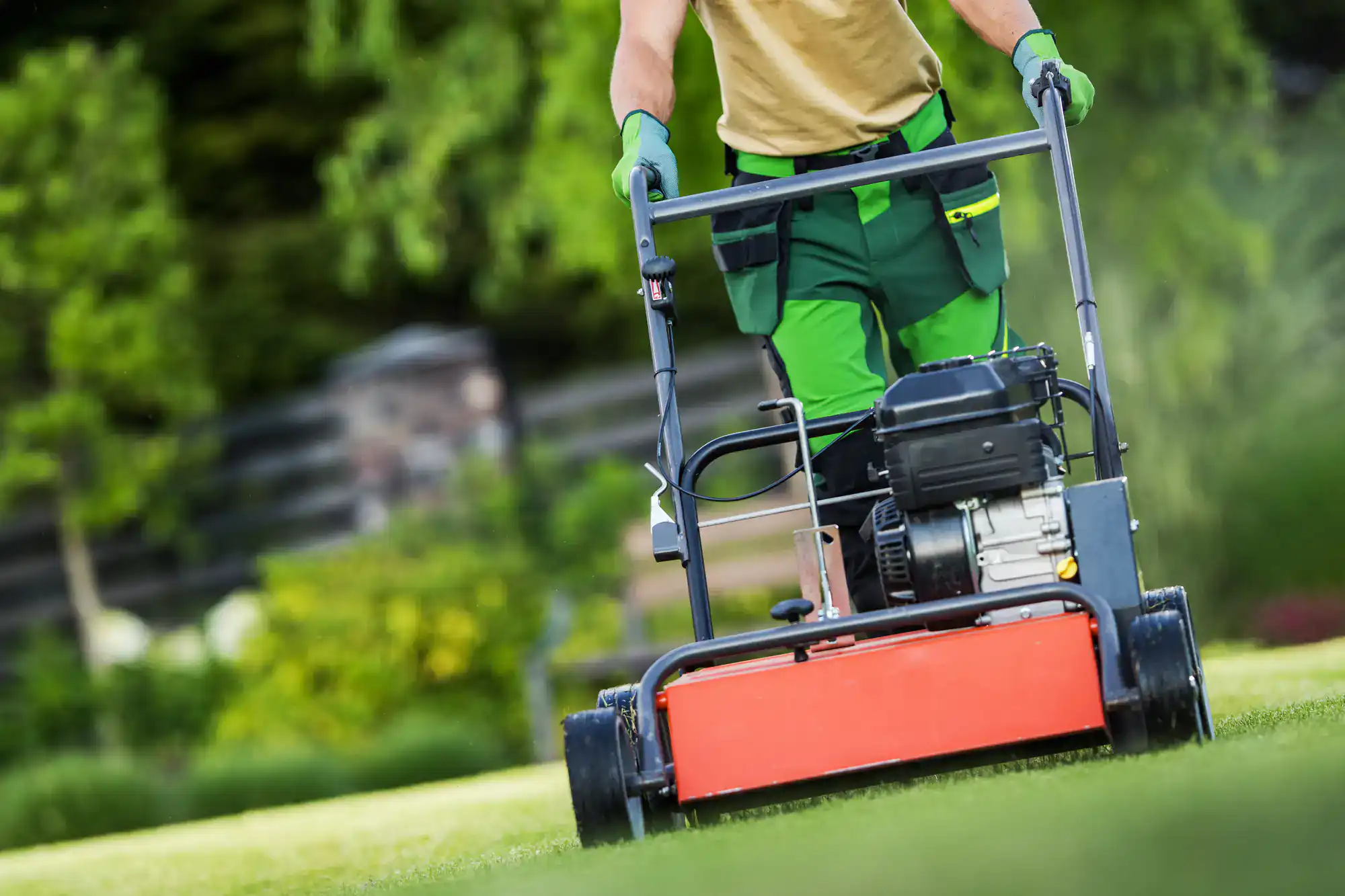
The aeration itself uses professional hydraulic equipment not the lightweight machines available at rental counters, which lack the force to pull clean cores from compacted clay at consistent depth. After aeration, if your program includes overseeding, we use a hydraulic seeder to get seed into the soil properly, not just scattered on the surface. The custom-blended fertilizer we use was formulated specifically for our program not sourced from a national distributor and applied at the same rate on every property in every county.
Because we operate under Suffolk County’s fertilizer application regulations which prohibit nitrogen and phosphorus applications from November 1 through April 1 every fall program is scheduled to deliver results within the legal and agronomic window. A $1,000 county fine for a late application isn’t a risk we take, and it shouldn’t be one your lawn care company is taking on your behalf either. Licensed professionals on every job, online account management, and credit card invoice payment mean the whole experience runs as professionally as the work itself.
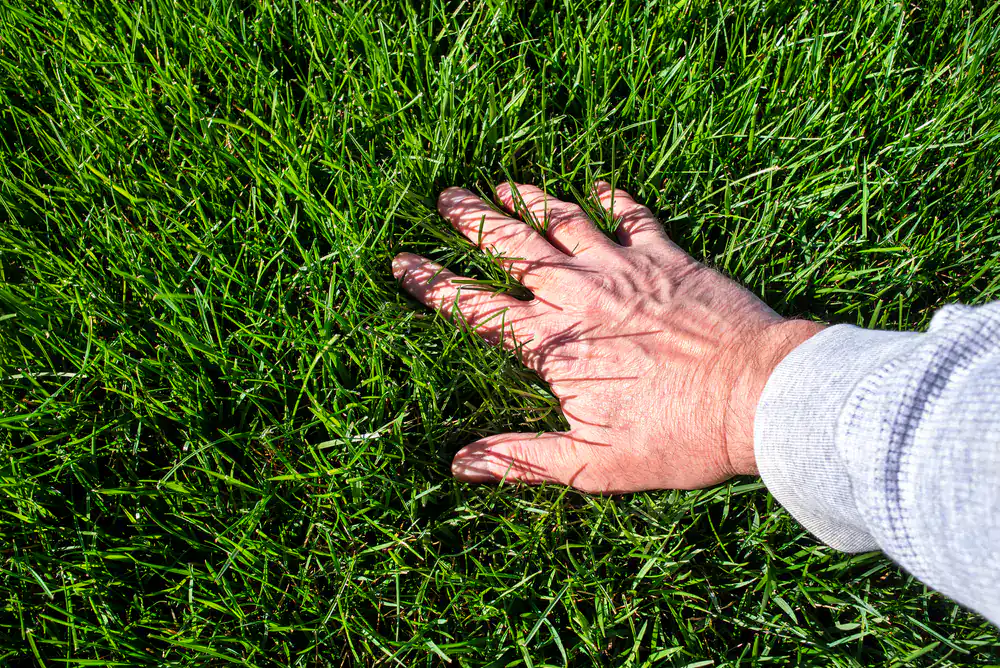
The simplest test is the screwdriver check. After a normal watering, push a standard six-inch screwdriver straight into the soil. If you can’t get it three inches deep without putting real force behind it, your soil is compacted and your grass roots are working against a barrier every single day. In Port Jefferson, this test fails on a significant number of properties that haven’t been professionally aerated in the past two years largely because the clay-dominant soils along the North Shore moraine compress more aggressively than the sandier soils you’d find further south or inland in Suffolk County.
Beyond the screwdriver test, look at how your lawn actually behaves. If water pools or runs off after rain instead of soaking in, that’s compaction. If your lawn looks thin and tired despite regular fertilizing, that’s compaction blocking nutrient absorption at the root level. If you have bare patches that never seem to fill in, especially under trees or in high-traffic areas, compaction is almost always part of the diagnosis. These aren’t random lawn problems they’re predictable outcomes of soil that’s been compressed over time and hasn’t been mechanically relieved.
For the cool-season grasses that cover most Port Jefferson lawns tall fescue, Kentucky bluegrass, and perennial ryegrass fall is the right window, and specifically late August through October. During this period, soil temperatures are still warm enough to support seed germination if you’re overseeding after aeration, air temperatures have dropped enough to reduce stress on newly germinating grass, and the turf itself is entering its strongest growth phase of the year. These conditions combine to produce the best results you’ll see from any aeration treatment.
There’s also a hard regulatory factor specific to Port Jefferson and Suffolk County that makes fall timing critical. The county’s fertilizer application ban runs from November 1 through April 1, with fines up to $1,000 for violations. That ban is particularly relevant in Port Jefferson, where the harbor and surrounding waterways are a visible, community-valued resource and where environmental compliance is taken seriously. If your aeration and overseeding program isn’t completed and followed up with a proper fertilizer application before November 1, you’ve lost the window for the entire season. Working with a company that plans its fall schedule around that deadline not around what’s operationally convenient matters more than most homeowners realize until they’ve been left waiting past the cutoff.
It matters quite a bit, especially in Port Jefferson’s heavier clay soils. Spike aeration uses solid tines to push holes into the ground, which sounds useful but actually compresses the soil further around each hole rather than removing any material. You’re redistributing compaction, not relieving it. Core aeration which is what we perform uses hollow tines that pull actual plugs of soil out of the ground and deposit them on the surface. That physical removal is what creates the open channels that allow air, water, and nutrients to reach the root zone.
In sandier soils, the difference between spike and core aeration is less dramatic because the soil structure is more forgiving. In the clay-dominant soils common across Port Jefferson and the broader North Shore moraine zone, spike aeration produces almost no measurable benefit and can actually make compaction worse in the treated zones. The cores left on the surface after a proper core aeration break down within a few weeks, returning organic matter to the soil as they decompose which is an added benefit beyond just the mechanical decompaction. If a company is offering “aeration” without specifying hollow-tine core aeration, that’s worth asking about before you book.
For most residential properties in Port Jefferson, professional core aeration falls somewhere in the $75 to $300 range depending on the size of the lawn, its condition, and what’s included in the service. Properties with larger lots which are more common in areas like Belle Terre or Harbor Hills will naturally run toward the higher end of that range. If overseeding is added after aeration, which is almost always recommended for Port Jefferson lawns with thin or bare patches, that adds to the total but also multiplies the value of the aeration treatment significantly.
The more useful way to think about the cost is in comparison to what you’re spending without it. If your lawn is compacted, fertilizer applications are largely wasted the nutrients can’t reach the root zone effectively. Repeated overseeding on compacted soil produces poor germination because seed-to-soil contact is compromised. And a full lawn renovation, if compaction is allowed to degrade the turf over multiple seasons, costs considerably more than a few years of professional aeration would have. Professional aeration is one of the higher-return investments you can make in a Port Jefferson property particularly on a North Shore home where curb appeal and turf condition directly reflect on a significant real estate investment.
You can rent a machine, but the results on a Port Jefferson property are likely to disappoint you. Consumer-grade aerator rentals the kind available at hardware stores are designed for light use on relatively loose, workable soil. They don’t generate the hydraulic force required to pull clean, consistent cores from compacted clay at the three-inch depth that actually makes a difference. In practice, what often happens is the tines skip across the surface, produce shallow or incomplete cores in the harder zones, and leave you with a lawn that looks like it was aerated without actually delivering the decompaction benefit.
There’s also the timing and calibration side of it. Knowing when to aerate based on your specific grass type, soil temperature, and where you are in the fall window relative to Suffolk County’s November 1 fertilizer ban requires some experience. Running the machine at the right spacing pattern, following up with overseeding at the right rate using the right seed blend for your shade and soil conditions, and then applying the right fertilizer formulation to support germination that’s a sequence that produces results when it’s done correctly and wastes your time and money when it isn’t. The rental cost for a consumer machine, plus your time, plus the risk of underwhelming results on a high-value North Shore property, rarely adds up to a better outcome than hiring someone who does this with professional equipment every fall.
Yes Belle Terre, Harbor Hills, and the broader Port Jefferson village area are all within our service territory. Based out of Port Jefferson Station, we’re about as local as a lawn care company gets for this part of the North Shore. Belle Terre in particular is a community where the properties tend to be larger, the lots are well-established, and the combination of coastal exposure and mature landscaping creates the exact kind of compaction and turf stress profile that responds well to professional aeration. Salt air off Long Island Sound, wind exposure on open lots, and the root competition from older trees are all factors that accelerate soil compaction on Belle Terre properties compared to more sheltered inland lawns.
For homeowners in that area who’ve dealt with companies that drive in from further away and treat every property on the route identically, the difference with a locally based, experienced team is usually apparent within a season. We’ve been working in this corner of Suffolk County long enough to know what the soils here actually need and we bring the equipment and licensed professionals to deliver it consistently. If you’re in Belle Terre, Harbor Hills, or anywhere in the Port Jefferson area and want to know where your lawn stands, the screwdriver test is a good place to start and we’re happy to take a look.
Useful Links
Other Services we provide in Port Jefferson