
Hear from Our Customers
Most Central Islip homeowners aren’t dealing with a lazy lawn they’re dealing with a lawn that’s been handled wrong. Generic fertilizer schedules, unlicensed applicators, programs built for somewhere else. The result is patchy grass, stubborn weeds, and a yard that never quite gets there no matter what you spend on it.
Suffolk County’s sandy, fast-leaching soils are a real factor here. Nutrients don’t stay in the root zone the way they do in other regions, which means a product calibrated for inland clay soils will consistently underperform on a Central Islip property. When your lawn gets a program that’s actually built for these conditions the right fertilizer blend, the right timing, the right applications you start seeing grass that’s thick, green, and genuinely weed-resistant rather than just temporarily treated.
A lot of the homes in Central Islip were built in the 1950s and 60s. Those lawns have decades of compaction behind them, and compacted soil blocks water, air, and nutrients from reaching the roots no matter how much you put down on top. Deep core aeration, proper overseeding in the fall, and a fertilization schedule that respects Suffolk County’s November 1st blackout that’s the combination that actually moves the needle. Not a one-time spray and a hope.
We’ve been treating lawns across Central Islip and Suffolk County since 1987. That’s not a tagline it means our team has been working these soils, navigating Long Island’s growing seasons, and building programs for real lawns through every trend, drought, and pest cycle this region has thrown at us. When you’re a homeowner near the Carleton Avenue corridor or in one of the established neighborhoods off Route 111, you’re not getting a crew that just arrived on Long Island last season.
Every technician is a licensed NYS DEC pesticide applicator. That’s a legal requirement in New York, and it’s one that a surprising number of smaller operators quietly skip. We don’t. Five fully wrapped, branded trucks show up on your property you know exactly who’s there, who they work for, and who’s accountable if anything isn’t right. No unmarked vans, no rotating strangers, no guessing.
The fertilizer we use is a custom blend made specifically for our programs and for Long Island’s soil chemistry. You won’t find it on a shelf at the hardware store. It’s formulated for the conditions your lawn is actually growing in not conditions somewhere else.
It starts with understanding what we’re actually working with. Grass type, sun and shade exposure, weed pressure, soil condition, and the history of the lawn all factor into what your program looks like. A newer home near Islip Landings on the former psychiatric center campus may have soil that’s been disturbed or graded very different from an older Cape in College Woods that’s been compacted for 50 years. The program gets built around what’s actually there.
From there, applications follow a schedule that’s timed to how cool-season grasses behave on Long Island. Spring activation typically starts around mid-to-late April once soil temperatures reach the right threshold. Summer is a maintenance and monitoring window pushing nitrogen during Central Islip’s hot, humid stretches can feed fungal problems rather than grass. Fall is when the real work happens: core aeration in early September, overseeding to fill in thin areas, and a final fertilizer application before Suffolk County’s November 1st blackout deadline. That sequence, done right, is what produces the results you’ll actually see next spring.
If your lawn needs more than maintenance bare patches, heavy weed infiltration, or soil that’s been neglected for years we also handle full restoration and new lawn installation from seed. You don’t need a second company for that.
Ready to get started?
Our core service is a multi-application fertilization program using a proprietary blend formulated specifically for Long Island’s sandy, leaching soils. Because nutrients move through Suffolk County’s soil faster than most homeowners expect, the timing and composition of each application matters more than it would in other regions. The program is calibrated to stay within New York State’s phosphorus restrictions and fully comply with Suffolk County’s fertilizer blackout law protecting both your lawn and the sole-source aquifer that supplies drinking water to this entire region.
Core aeration is done with hydraulic equipment, not the consumer-grade tow-behind units you can rent at a hardware store. Hydraulic aerators pull deeper, more consistent cores which matters in Central Islip where older lawns have serious compaction issues. Overseeding follows aeration to get seed-to-soil contact in the right conditions. For lawns dealing with nutsedge or bentgrass two of the most persistent weed problems on Long Island we offer targeted control programs that go beyond what a standard fertilization schedule can address.
If grub damage is showing up in late summer (a common issue throughout Suffolk County, where Japanese beetle pressure is well established), that gets factored in as well. The goal is a program where every application has a clear purpose tied to your lawn’s specific condition and the season you’re in not a fixed menu applied the same way to every yard on the block.
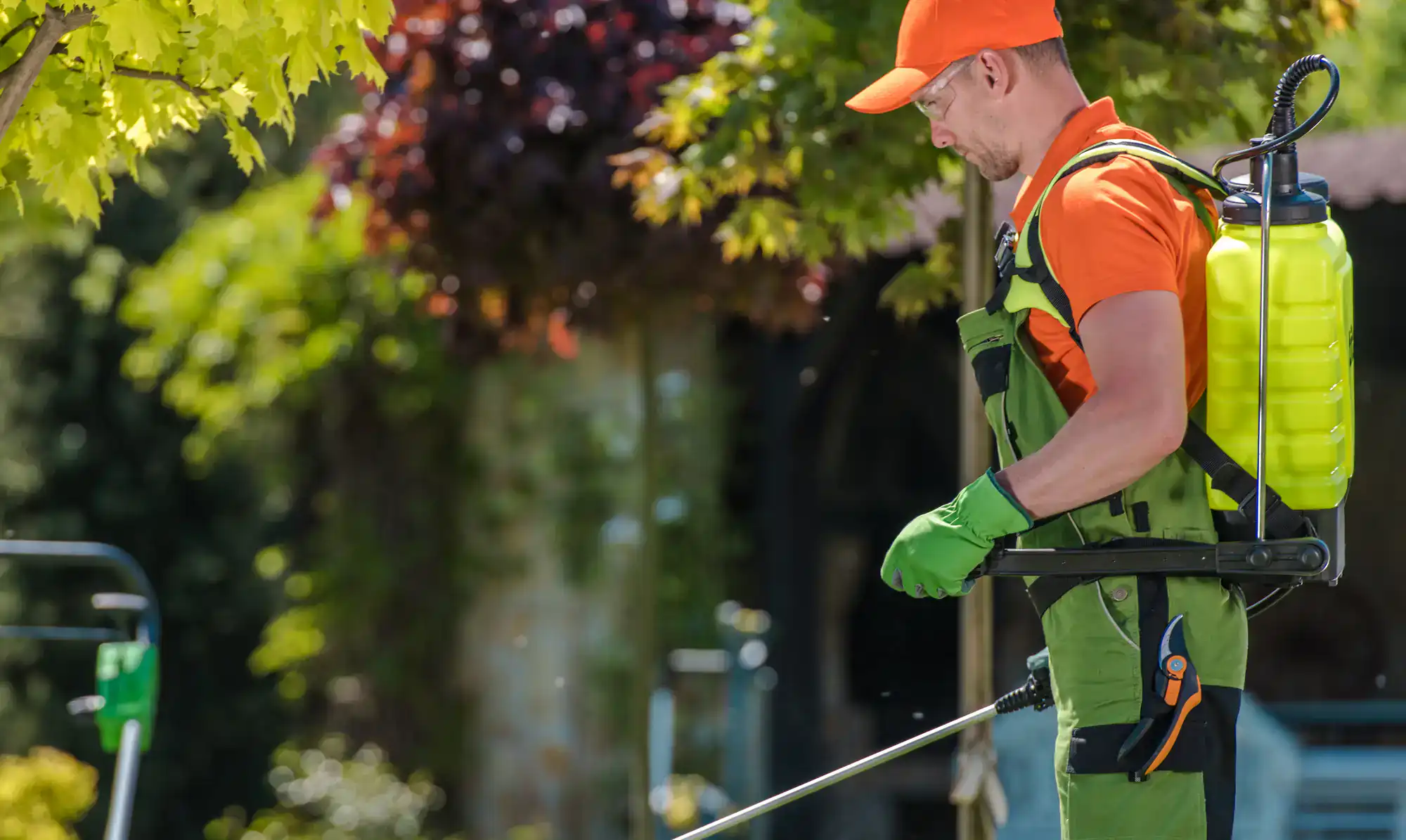
Suffolk County Local Law 41-2007 prohibits the application of lawn fertilizer from November 1st through April 1st. The law exists because Long Island sits over a sole-source aquifer meaning every drop of drinking water in Central Islip comes from groundwater beneath your feet. When fertilizer gets applied to dormant grass in late fall or winter, the turf can’t absorb it. Instead, it leaches through Long Island’s sandy soil directly into that aquifer. In 2006, 15 community water supply wells in Suffolk County exceeded safe nitrate levels fertilizer runoff was a documented contributor.
For you as a homeowner in Central Islip, this means your last application of the season needs to happen before November 1st. Violations carry fines of up to $1,000. Any lawn care company that fertilizes your lawn in November even with good intentions is breaking the law and wasting your money. We build every program around this calendar, and the late-October application timing is intentional: it’s the last productive window before the blackout, and it sets your lawn up for a stronger start the following spring.
The honest answer is that most lawns in Central Islip need both but for different reasons. Fertilization feeds the grass. Aeration fixes the soil’s ability to receive that food in the first place. If your soil is compacted, nutrients, water, and air can’t reach the root zone effectively, which means even a well-timed fertilizer application won’t produce the results you’d expect. You’ll spend money on a program and wonder why nothing’s changing.
Central Islip’s housing stock skews older a lot of the homes here were built between the 1940s and 1970s, and those lawns have been walked on, driven on, and compressed for decades. Heavy foot traffic on smaller residential lots accelerates compaction significantly. A simple test: push a screwdriver into the soil. If it doesn’t go in easily, the ground is compacted and aeration should be part of your program. Fall is the best window for aeration in this area cool-season grasses recover quickly in September and October, and the timing lines up well with overseeding before the weather turns.
This is one of the most common frustrations homeowners run into, and it usually comes down to one of three things: the wrong product, the wrong timing, or the wrong rate. Fertilizers sold at hardware stores are formulated broadly they’re not calibrated for Long Island’s sandy, fast-draining soils, which leach nutrients significantly faster than the national average. You might be applying a product that simply doesn’t hold in your soil long enough to do much.
Timing is the other big factor. Applying nitrogen to cool-season grass during Central Islip’s hot, humid summer months when the grass is already stressed can trigger fungal disease rather than growth. Brown patch is a real problem here, and excess nitrogen in July or August feeds it. The right approach is lighter, targeted applications in summer and heavier investment in the spring and fall windows when cool-season grasses are actively growing. If you’ve been fertilizing on a schedule that made sense somewhere else, it may simply be the wrong calendar for this region.
Nutsedge sometimes called nutgrass is genuinely one of the harder weed problems to solve on Long Island, and a standard fertilization program won’t touch it. It’s not a broadleaf weed, so most common herbicides don’t affect it. It spreads through underground tubers called nutlets, which means if you pull it by hand, you’re often leaving the source of the problem in the ground. It thrives in moist, poorly drained conditions which is relevant in Central Islip, where some properties have drainage challenges.
Effective nutsedge control requires a targeted herbicide application with the right active ingredient, applied at the right growth stage, often followed up more than once. We offer dedicated nutsedge control as part of our treatment programs it’s not an afterthought or an upsell, it’s a specific, planned intervention. If you’ve had other companies tell you nutsedge is “just part of having a lawn on Long Island,” that’s not an answer. It can be managed with the right approach.
It depends on where your lawn is starting from. If you have a reasonably established lawn with moderate weed pressure and no major compaction issues, you’ll typically start seeing meaningful improvement thicker grass, fewer weeds, better color within one full growing season. The spring and fall applications do the most visible work, and by the following spring after a complete program cycle, most homeowners notice a significant difference.
If the lawn is in worse shape heavy weed infiltration, bare patches, compaction, or poor establishment restoration takes longer. Overseeding in the fall is the most effective way to fill in thin areas, but new grass from seed needs to go through a full winter and spring before it fully integrates with the existing turf. The honest timeline for a lawn that needs real restoration is closer to 18 to 24 months before it looks the way you want it to. That’s not a reason to delay it’s a reason to start now rather than next year.
The difference is structural, not just in size. TruGreen is a national franchise that operates on volume standardized programs, high technician turnover, and a model built around servicing as many lawns as possible on a set schedule. The technician who shows up at your Central Islip home this visit is often not the same one who was there last time, and they’re working from a national program template, not something built around your specific lawn or Long Island’s specific soil conditions.
We’ve been operating in Central Islip since 1987 not as a franchise location following a corporate manual, but as a company that has spent nearly four decades learning exactly how Long Island lawns behave. Our fertilizer blend is proprietary and made for these soils. Our technicians are licensed NYS DEC pesticide applicators, not labor-only crews. The equipment hydraulic aerators, professional seeders is commercial grade. And when something’s not right with your lawn, you’re dealing with a company that is accountable at the owner level, not a call center routing your complaint to a regional manager. For a homeowner in Central Islip watching their property value climb, that level of accountability is worth something real.
Useful Links
Other Services we provide in Central Islip