
Hear from Our Customers
You stop checking your kids after every time they play outside. Your dog comes in from the yard and you’re not running a tick inspection every single evening. That shift from constant low-grade worry to just living your life is what professional flea and tick control actually delivers. It’s not dramatic. It’s just normal. And it’s what most Bohemia homeowners say they didn’t realize they were missing until they had it.
Living near the Connetquot River State Park Preserve changes the math on tick exposure significantly. That’s 3,473 acres of deer habitat, wetland, and woodland that backs right up to residential neighborhoods. Deer cross those property lines regularly, and they bring ticks with them. New York State recognized this directly they deployed active tick control measures inside the park itself. Your yard doesn’t get that treatment. That’s where we come in.
Fleas follow a similar pattern here. Bohemia’s mix of wooded edges, wildlife corridors, and pet-owning households creates steady flea pressure through the warmer months. If you have a dog or horses, which isn’t unusual in this part of Islip Town the risk doesn’t go away on its own. A professionally maintained yard with targeted treatment breaks that cycle before it becomes a problem inside your home.
We’ve been treating Suffolk County properties since 1987. That’s not a tagline it’s just how long it takes to actually know this area. The South Shore’s humidity, the deer pressure along the Connetquot corridor that affects Bohemia and surrounding neighborhoods, the seasonal tick patterns that come with Long Island’s maritime climate none of that is news to us. We’ve been working around it for nearly four decades.
Every technician who treats your Bohemia property is a NYSDEC-licensed pesticide professional. That’s a legal requirement in New York State, but it’s also a quality standard. It means the person applying product to your yard has completed state-mandated training, passed a certification exam, and knows the difference between a broadcast spray and a targeted application. A lot of companies operating in this area can’t say that.
We’re owner-operated, which means the accountability doesn’t get filtered through a franchise or a call center. When something needs attention, it gets handled. That’s the model that’s kept this business running in Suffolk County since the late ’80s and it’s the same model serving Bohemia today.
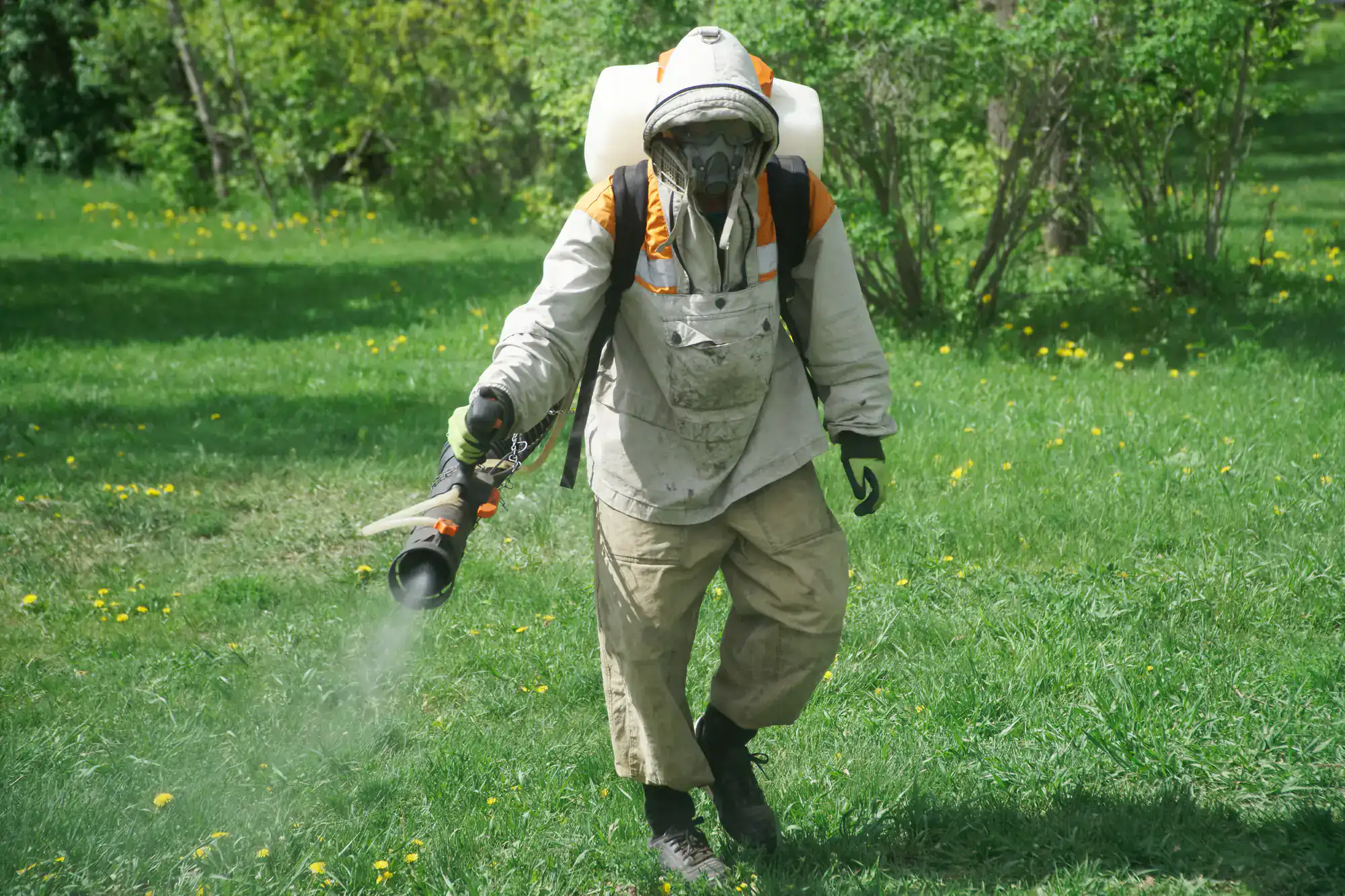
It starts with a property assessment. Before any product goes down, a licensed technician looks at your specific yard the wooded borders, the fence lines, any areas that back up toward the Connetquot River State Park Preserve, shaded beds, under-deck spaces, and anywhere organic debris collects. Ticks don’t live in the middle of your open lawn. They live in the margins, and that’s exactly where treatment is focused.
On Long Island, the first application should go down in early April before nymphal deer ticks emerge in May and June. That timing matters here more than in most places. Nymphal ticks are poppy-seed-sized, nearly impossible to spot, and at their highest density during late spring. Missing that window means playing catch-up through the most dangerous part of the season. Applications continue every 30 days through October, with fall treatment targeting the adult tick surge that typically runs September through November.
After each visit, you’ll know it happened and what was done. The program is structured, not random so you’re not guessing whether your yard is protected. For homeowners with dogs, kids, or horses, re-entry is typically safe within 30 to 60 minutes of the product drying. The goal is a yard that stays protected all season without you having to think about it.
Ready to get started?
Every program we design is built around your specific property not a generic plan designed for an average yard somewhere. In Bohemia, that means accounting for wooded property edges, proximity to the Connetquot River State Park Preserve, equestrian facilities if you have them, and the humid South Shore microclimate that keeps tick and flea pressure elevated longer than homeowners typically expect. Lone star ticks, for example, stay active on Long Island well into November. The program is timed accordingly.
Treatment targets the actual harborage zones fence lines, leaf litter, ornamental bed edges, shaded areas under decks and shrubs, and the transition zone between your lawn and any wooded border. Professional-grade products at commercial concentrations, applied with hydraulic equipment, deliver coverage that store-bought sprays simply can’t match. Retail formulations also lack the Insect Growth Regulators that break the flea reproductive cycle at the egg and larval stage without that, you’re managing adults while the next generation is already developing.
What further separates us from a standalone pest control company is the integrated lawn care approach. Properly maintained turf aerated, fertilized, and healthy is genuinely less hospitable to fleas and ticks. Compacted, thatch-heavy, moisture-retaining grass is tick habitat. We address both the pest and the conditions that attract it, which is something a company that only sprays cannot offer.
Yes and it’s not just a local rumor. New York State formally deployed 4-Poster tickicide deer feeding stations at Connetquot River State Park as part of a statewide Lyme and tick-borne disease control plan. That’s the state acknowledging, with an active intervention, that tick pressure at this specific location is elevated enough to require treatment. The preserve covers 3,473 acres of deer habitat, woodland, and wetland and deer, which are the primary reproductive host for blacklegged ticks, routinely cross from the park into adjacent residential yards in Bohemia and surrounding neighborhoods.
Visitor reviews of the park include firsthand accounts of ticks found on clothing after short trail visits. For homeowners whose properties border or sit within a few streets of the preserve, that risk doesn’t stay inside the park boundary. Professional yard treatment creates a protective barrier between your family and that exposure something the state’s park treatment doesn’t extend to your property.
The first application should go down in early April, when temperatures are consistently reaching 50°F. On Long Island’s South Shore, that window matters more than most homeowners realize. Nymphal blacklegged ticks the stage most responsible for Lyme disease transmission emerge in May and June and are roughly the size of a poppy seed. They’re nearly impossible to spot before they bite. Getting treatment down before that emergence window gives you a protective barrier in place when tick activity is at its most dangerous.
From there, applications continue every 30 days through October. Fall treatment is just as important as spring adult blacklegged ticks surge again in September through November, and lone star ticks, which are common across Long Island, stay active through the end of fall. A single spring spray is not a season-long solution. The biology of tick activity on Long Island requires a structured, multi-application program to maintain real protection.
Yes, when applied correctly by a licensed professional. NYSDEC-licensed applicators are trained to apply product to specific harborage zones not broadcast-spray an entire property indiscriminately. The difference matters. A targeted application uses the right amount of product in the right places, which means you’re not getting an unnecessarily heavy chemical load across your entire yard. Re-entry is typically safe for people and pets within 30 to 60 minutes after the product has dried.
For households with dogs, children, or horses which is not uncommon in Bohemia given the equestrian culture in this part of Islip Town the application approach is designed with that in mind. If you have specific concerns about a particular pet or a child with sensitivities, the technician can walk you through exactly what was applied and where. That conversation is part of working with a licensed professional rather than a labor-only crew that shows up and leaves without explanation.
The gap is bigger than most people expect. Retail flea and tick sprays use lower active ingredient concentrations than professional-grade products they’re formulated to meet consumer safety standards for self-application, which means they’re intentionally diluted compared to what a licensed applicator can use. That lower concentration translates directly to shorter residual protection, typically two to three weeks before populations start rebounding.
The bigger difference is Insect Growth Regulators, or IGRs. Professional flea control programs include IGRs that disrupt the flea life cycle at the egg and larval stage stopping the next generation before it matures. Without that, you’re only eliminating the adults you can see while the eggs and larvae in your lawn are already developing. Commercial hydraulic equipment also delivers more even, thorough coverage than a hose-end attachment or backpack sprayer can achieve. For a yard in Bohemia with wooded borders and wildlife pressure from the Connetquot corridor, that precision and product strength is the difference between control and temporary suppression.
A minimum of three applications per season provides basic control, but the professional standard for full-season protection on Long Island is six applications one every 30 days from early April through October. That schedule aligns with Long Island’s actual tick activity calendar: the nymphal surge in May and June, sustained summer pressure during peak outdoor use season, and the adult tick resurgence in September through November.
Single treatments provide roughly four to six weeks of protection before populations begin recovering. For a yard in Bohemia that’s adjacent to or near the Connetquot River State Park Preserve, where deer pressure keeps tick populations consistently high, a single spring spray leaves your yard unprotected through most of the season. The structured seasonal program is what actually maintains the population reduction you’re paying for not a one-time application and a handshake.
No, you don’t need to be home. Most Bohemia residents are commuters whether that’s driving to the Long Island Expressway, heading to the Ronkonkoma LIRR station, or working locally along the Veterans Memorial Highway corridor. Our program is designed around that reality. A licensed technician treats the property, documents the visit, and you’re notified when it’s done. You don’t need to rearrange your schedule or take time off to be present.
The one thing to plan for is keeping pets inside or away from the treated areas until the product has dried, which typically takes 30 to 60 minutes depending on conditions. If you have horses or other animals with specific needs, that’s worth a quick conversation when you set up the program so the technician can coordinate timing accordingly. The goal is a treatment that fits into your life not one that creates another thing to manage.
Useful Links
Other Services we provide in Bohemia