
Hear from Our Customers
A properly restored lawn isn’t just green it’s dense, rooted, and built to hold up through the conditions that keep breaking Holbrook lawns down year after year. For homeowners here, that means a lawn that handles the heat and drought of a Suffolk County summer without thinning out, and one that doesn’t turn into a patchy mess every time grub season rolls around in late August.
The homes in neighborhoods like Somerset Estates and Timber Ridge aren’t cheap, and a struggling lawn doesn’t just look bad it pulls down the value of a property you’ve invested real money into. When the restoration is done right, you stop fighting the same losing battle every season. The bare patches fill in. The soil holds moisture instead of shedding it. The grass actually competes with weeds instead of surrendering to them.
What changes most is the cycle. Right now, you’re probably spending money on quick fixes that don’t last bags of seed that don’t germinate, fertilizer that leaches straight through Holbrook’s sandy soil before the roots can use it. A real restoration breaks that cycle. You get a lawn that performs the way it should, without the constant retreating.
We’ve been restoring Holbrook and central Suffolk County lawns since the mid-1980s long before most of the homes in Parkland and the Colony had the lawn problems they have today. That kind of experience isn’t just time served. We know what Holbrook soil actually does, how it behaves across seasons, and why lawns here fail in ways that generic lawn care programs never fully address.
Every technician working in Holbrook is a licensed NYS pesticide applicator required by state law, and something not every company operating in this area can honestly say. Suffolk County’s groundwater protection regulations are strict for good reason, and every treatment we apply here is fully compliant and properly documented.
We’re not a national franchise learning your zip code. We’ve been working the central Suffolk corridor Holbrook, Ronkonkoma, Bohemia, Holtsville, Selden for nearly four decades. We know the soil. We know the timing. We know what actually works here.
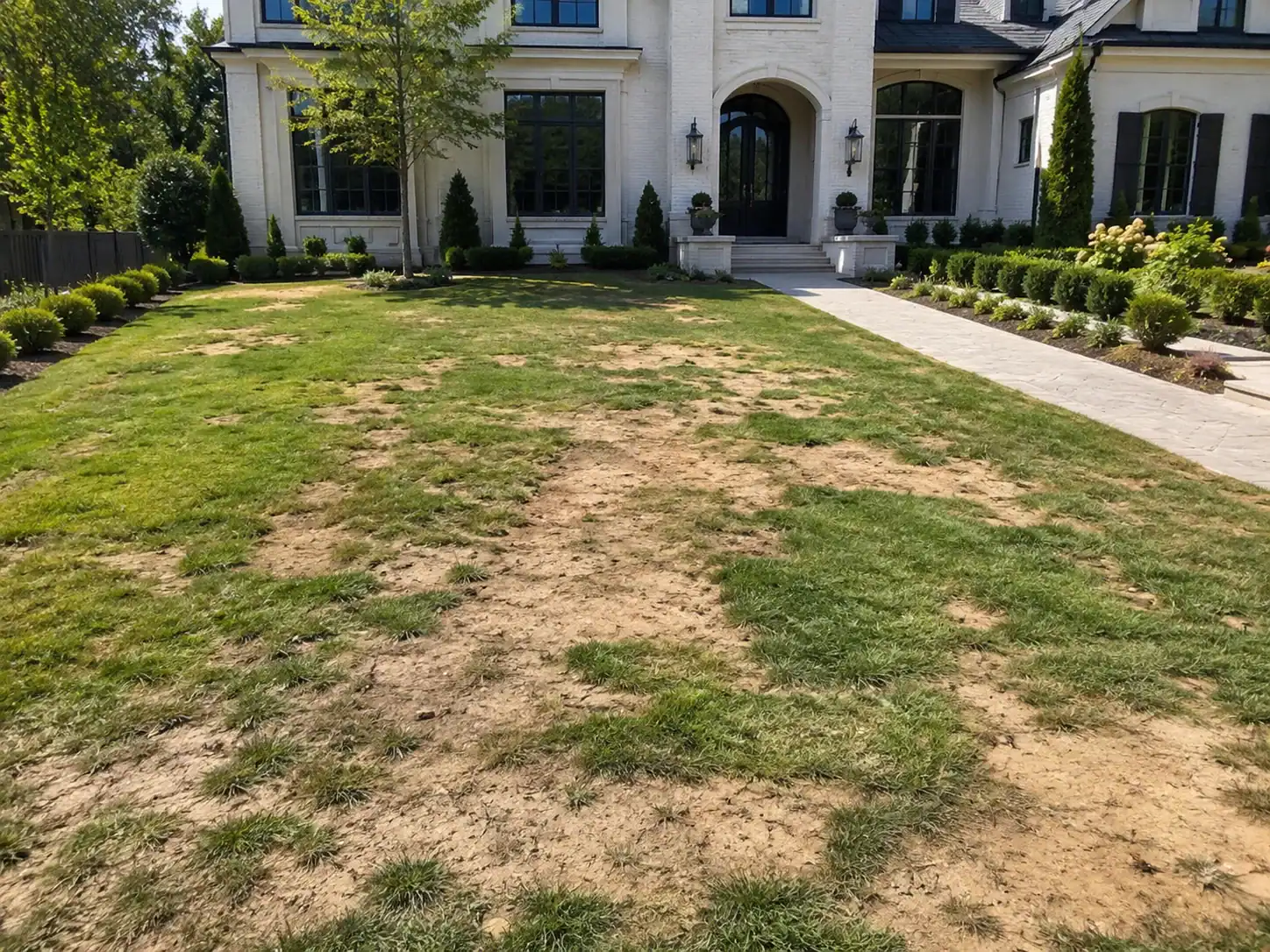
It starts with an honest assessment. Before anything gets applied or seeded, we evaluate your lawn’s actual condition soil pH, compaction depth, thatch buildup, root zone health, and what’s driving the damage. In Holbrook, that last part matters more than most people realize. A dead patch could be grub damage, fungal disease, drought stress, or compacted sandy soil and each one requires a completely different fix. Treating the wrong cause is why so many restoration attempts fail.
Once we know what we’re dealing with, soil correction comes first. Holbrook’s sandy loam soils are naturally prone to pH drift and rapid nutrient leaching, which means seeding into uncorrected soil almost always underperforms. We adjust pH with lime applications, improve moisture retention where needed, and apply starter fertilization before a single seed goes down. This is the step most lawn care companies skip entirely and it’s the reason their results don’t last.
From there, we use professional slice seeding equipment that cuts directly into the soil and deposits seed into the slices. That seed-to-soil contact is what drives germination. Broadcast seeding on top of existing turf is far less effective, especially in Holbrook’s sandy conditions where seed can shift or dry out before rooting. The fall window late August through October is when this work performs best in Suffolk County, and we time every restoration accordingly. After seeding, you’ll get a clear post-care plan so you know exactly what to do and what to expect while the new grass establishes.
Ready to get started?
Lawn restoration in Holbrook isn’t a single service it’s a sequence. Soil testing and pH correction, core aeration to break up decades of compaction in older subdivisions, slice seeding with professional-grade cool-season seed blends matched to Long Island’s climate, and targeted grub or disease treatment where the damage has a biological cause. Every step is informed by what the assessment finds, not by a preset package that gets applied the same way regardless of what’s actually going on.
One distinction worth making clearly: restoration means bringing your existing lawn back to health. It means working with the turf base you have, correcting the conditions that caused it to fail, and reintroducing grass where it’s thinned or died. That’s different from renovation, which means stripping the lawn and rebuilding from scratch. If your lawn genuinely needs a full rebuild, we’ll tell you that and we’ll connect you with our lawn renovation service. But if restoration is the right path, we’re not going to recommend the more expensive option just because it’s easier to sell.
The seed blends we use aren’t available at Holbrook Commons or any big-box store on Patchogue-Holbrook Road. They’re professional-grade cool-season mixes primarily tall fescue and Kentucky bluegrass blends with higher germination rates and better disease resistance than retail products. That difference shows up in how the lawn performs through its first summer after restoration, which is the real test of whether the work actually held.
Restoration means bringing an existing lawn back to health correcting the soil, treating the underlying cause of decline, and reintroducing grass where it’s thinned or died. The lawn’s basic structure is still viable, and the goal is to work with what’s there rather than starting over. Renovation is a full rebuild: stripping the existing turf, regrading if needed, and replanting from the ground up. They’re fundamentally different scopes of work with different timelines and costs.
For most Holbrook homeowners, especially those dealing with bare patches, grub damage, or thinning from drought stress, restoration is the right answer. The lawn hasn’t failed completely it’s been damaged by something correctable. Where the damage is severe enough that the soil profile itself is compromised, or where the lawn has never performed well since the home was built, renovation may be the better path. We assess both options honestly and will tell you which one actually fits your situation not whichever one costs more.
Most lawns that look beyond saving in Holbrook aren’t they’re just dealing with problems that haven’t been properly diagnosed or treated. Sandy loam soils with pH drift, compaction from decades of foot traffic and mowing, grub infestations that went undetected until the damage was visible, or fungal disease that got mistaken for drought stress these are all fixable conditions. The lawn looks bad, but the soil and the root zone still have enough to work with.
The honest answer is that you won’t know until someone actually looks at it. Our assessment evaluates soil pH, thatch depth, root zone condition, and the specific cause of damage before drawing any conclusions. In our experience, the majority of Holbrook lawns that homeowners think need full replacement can be brought back through restoration it just requires the right sequence of treatments and the right timing. If renovation genuinely is what’s needed, we’ll say so directly. But we won’t recommend it when restoration is the right call.
Late August through mid-October is the optimal window for lawn restoration in Holbrook and throughout Suffolk County. Soil temperatures are still warm enough to support germination, air temperatures have moderated from the peak summer heat, and crabgrass which competes aggressively with new seedlings is dying off as the first frost approaches. That combination gives new grass the best possible conditions to establish before winter.
Spring is a secondary option, but it comes with a real complication: if pre-emergent herbicide has been applied for crabgrass prevention, you can’t overseed at the same time. The pre-emergent that blocks crabgrass will also block your desirable grass seed from germinating. Summer is generally when the damage occurs grubs feeding below the surface, heat stress, drought but it’s not the time to seed. If you’re noticing problems in July or August, the right move is to document the damage, schedule an assessment, and plan the restoration for fall. That timing almost always produces better results than trying to force a fix mid-season.
With a fall restoration in Holbrook, you’ll typically see germination within 10 to 21 days of seeding, depending on soil temperature and moisture. The new grass will be visible and filling in by late September or October if the work was done in late August or early September. It won’t look fully established before winter that’s normal and expected. What you’re looking for in the first season is solid germination and root development. The lawn will thicken and fill in more completely through the following spring and early summer.
The timeline depends on a few factors specific to your property: how much of the lawn was damaged, whether the soil required significant correction before seeding, and how well the post-restoration care instructions are followed particularly watering in the first three to four weeks. Holbrook’s sandy soils drain quickly, which means new seedlings can dry out faster than they would in heavier soil. Consistent, light watering during the germination window is critical. We provide specific post-care guidance for every restoration so you’re not guessing through the most important part of the process.
The most common causes we see in Holbrook come down to three things: grub damage, soil chemistry problems, and compaction. Japanese beetle grubs are a well-documented problem throughout Suffolk County, and by late August, Holbrook homeowners often discover irregular dead areas that pull up from the soil like a loose carpet the telltale sign of grub feeding on roots just below the surface. These areas don’t recover on their own and require proper treatment and reseeding.
Soil chemistry is the second major factor. Holbrook’s sandy loam soils naturally drift toward acidity over time, and without regular pH correction, the soil chemistry gets too acidic for cool-season grasses to thrive. Nutrients leach through the sandy profile before roots can absorb them, leaving turf chronically underfed even when fertilizer is being applied. Compaction is the third especially in older Holbrook subdivisions where the same lawn has been mowed and walked on for 40 or 50 years. Compacted soil prevents roots from going deep enough to access water and nutrients, which means the lawn fails during any extended dry stretch. All three of these are fixable, but they each require a different treatment approach.
New York State requires a Commercial Pesticide Applicator License for any company applying pesticides or herbicides as part of a lawn restoration program. This isn’t optional it’s a legal requirement, and it matters in Holbrook specifically because Suffolk County has some of the most stringent groundwater protection regulations in the state. The county sits above a sole-source aquifer that supplies drinking water to a large portion of Long Island, and unlicensed or improperly applied chemicals represent a real environmental and legal risk. We hold all required NYS DEC licensure, and every application we make in Holbrook is fully documented and compliant.
Holbrook’s position straddling the Town of Islip to the south and the Town of Brookhaven to the north means some homeowners interact with two different municipal frameworks depending on which side of the LIRR tracks their property sits. Both towns enforce local noise ordinances that restrict power equipment to daytime hours on weekdays, which we factor into scheduling. Beyond licensing, New York State’s fertilizer law also restricts nitrogen applications near water bodies and during certain seasons another compliance layer that a properly licensed operator handles automatically, and that unlicensed or gig-economy providers often don’t.
Useful Links
Other Services we provide in Holbrook