
Hear from Our Customers
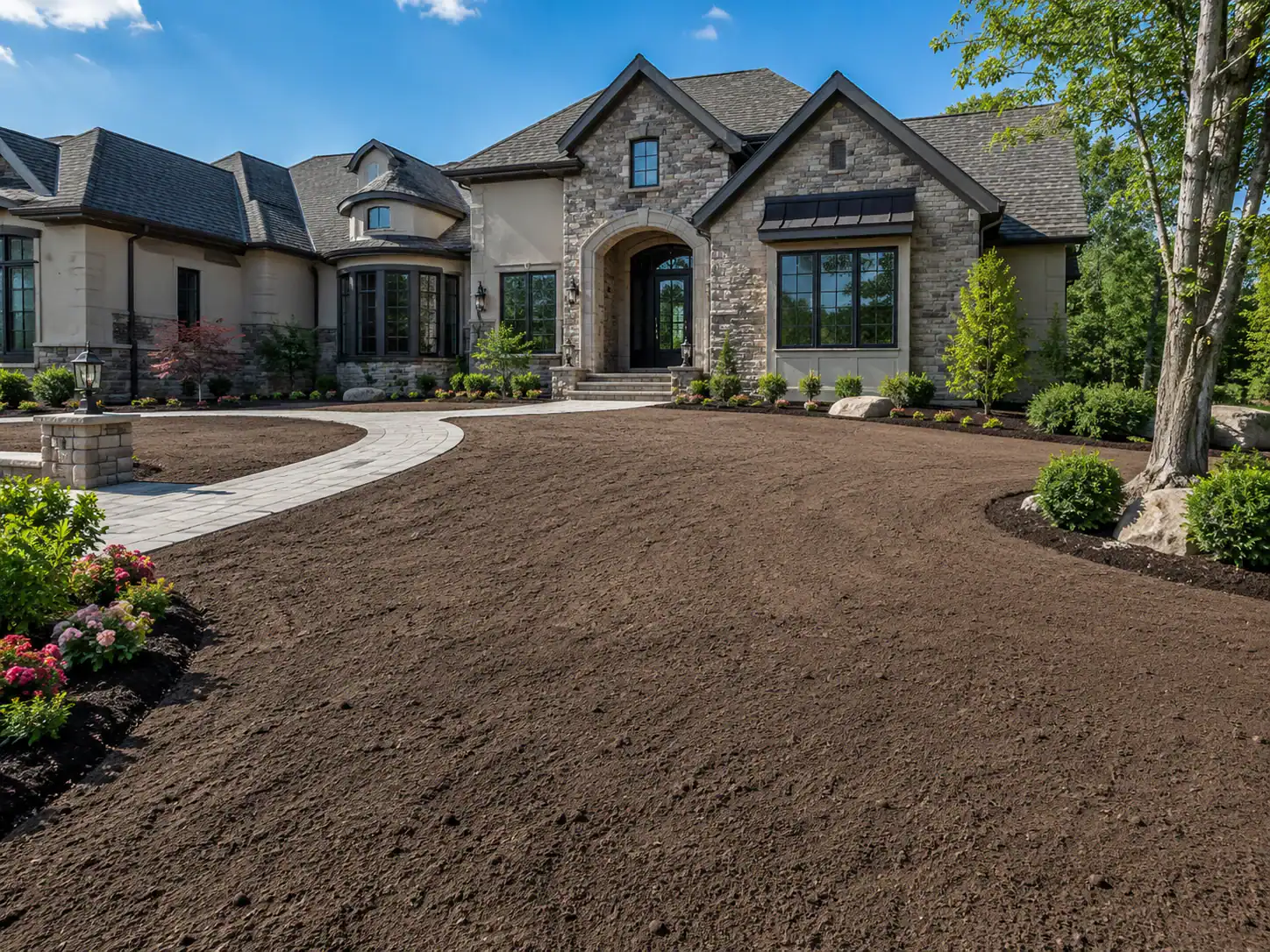
A properly restored lawn in Medford isn’t just greener it’s structurally healthier. Bare patches fill in. Thin areas thicken up. The color that’s been missing for two or three summers finally comes back and holds. That’s what happens when you stop treating symptoms and start correcting the actual cause.
Here’s what most homeowners in Medford don’t realize: the soil underneath your lawn is working against you from the start. The sandy, coarse-textured soils in this part of Long Island sitting right at the edge of the Pine Barrens zone drain nutrients and moisture faster than turf can use them. No amount of surface fertilizer fixes that. The lawn keeps struggling because the foundation was never right.
Compounding that is the postwar construction reality. Most homes in Medford were built between the 1950s and 1980s, which means the original topsoil was stripped or heavily disturbed during construction. Decades of foot traffic and seasonal stress have compacted what’s left. Lawn restoration in Medford means correcting that foundation adjusting soil chemistry, breaking up compaction, and introducing new turf that can actually establish not just throwing seed on top of a problem that’s been there for decades.
We’ve been doing this work in Suffolk County since 1987. That’s not a number thrown in to sound impressive it means our technicians have worked on lawns throughout Medford, Patchogue, Coram, Holtsville, and across central Long Island through drought years, grub cycles, wet summers, and every seasonal extreme this region produces. We know what these soils do, and we know what it takes to fix them.
We operate as a fully NYS-licensed contractor, which matters more in this area than most homeowners realize. Medford sits adjacent to the Long Island Central Pine Barrens, and the aquifer recharge zone runs beneath a significant portion of central Suffolk County. Suffolk County’s fertilizer regulations apply here, and every application we make follows those guidelines protecting your property and the groundwater Long Island depends on.
You’re not getting a national chain that applies the same program everywhere. You’re getting a local team that’s been working this specific area for nearly four decades.
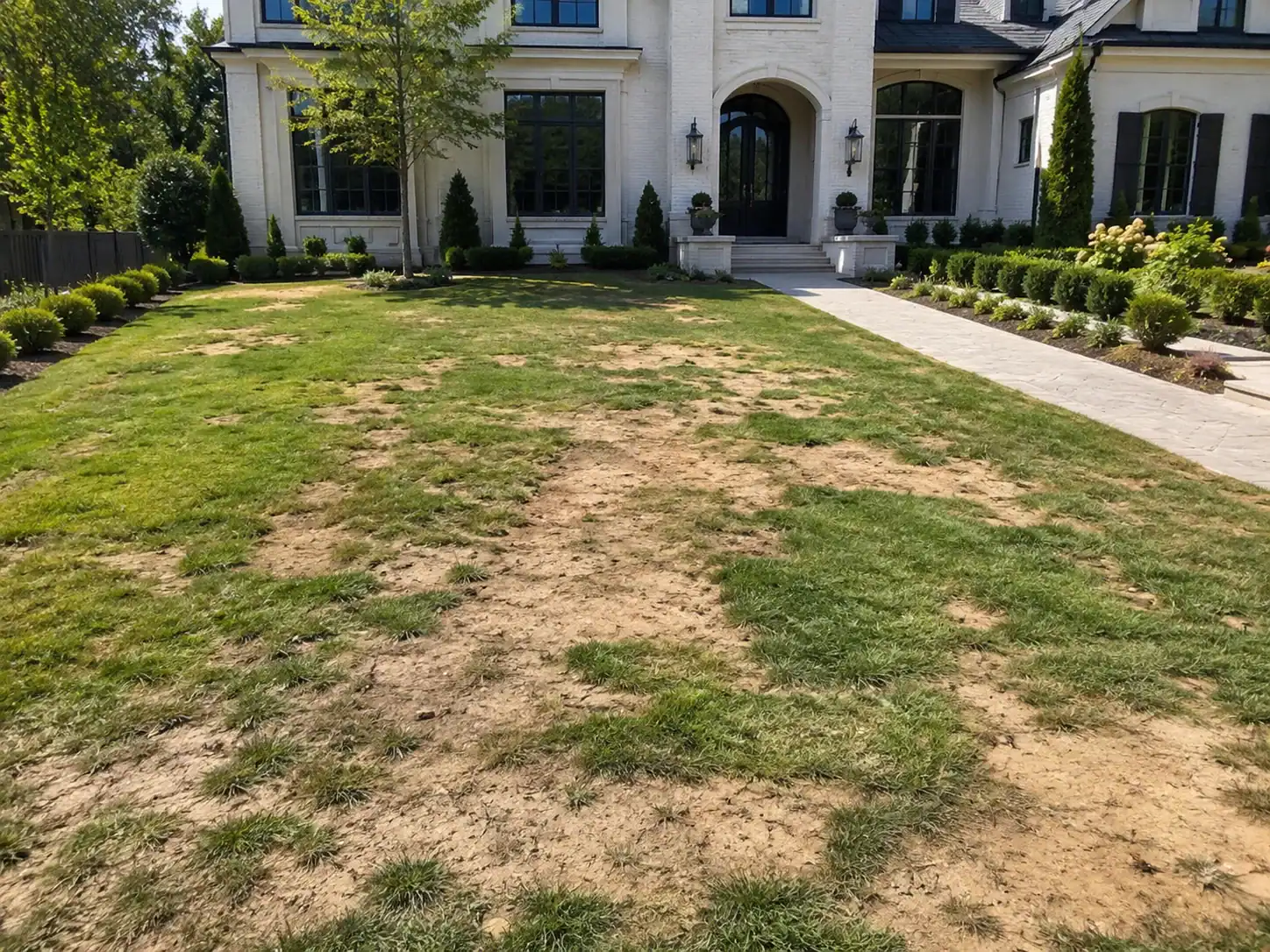
It starts with a proper assessment. Before anything gets applied or seeded, we look at what’s actually wrong soil pH, compaction depth, thatch buildup, pest pressure, and whether the existing turf is viable or too far gone. That last part matters, because if your lawn is beyond restoration, we’ll tell you honestly, and point you toward a full renovation instead. We don’t upsell the most expensive option.
If restoration is the right path, the work follows a logical sequence. Soil correction comes first adjusting pH, adding organic matter where the sandy Suffolk County soils have stripped it out, and addressing any compaction that’s blocking root development. Core aeration is typically part of this phase, opening up the soil profile so water and nutrients can actually reach the root zone. From there, we move into slice seeding or overseeding cutting seed directly into the soil rather than broadcasting it on top, which is the difference between real germination rates and wasted product on compacted ground.
Timing matters significantly on Long Island. The fall window late August through October is the optimal period for lawn restoration in Medford. Soil temperatures are still warm enough to support germination, but the brutal summer heat has broken, so new seedlings can establish without drought stress. Homeowners who miss that window are looking at another full year with a damaged lawn. We build our scheduling around this window, so if you’re thinking about it, sooner is better.
Ready to get started?
Lawn restoration isn’t a single service it’s a diagnosis-driven process that looks different depending on what your specific lawn needs. For most Medford properties, that means some combination of soil pH correction, core aeration, slice seeding or overseeding, bare patch repair, and targeted treatment for whatever pest or disease damage is present. White grubs are a common culprit in this area they feed on roots through late summer and leave behind brown, dead patches that look exactly like drought stress. If grubs are the cause and nobody catches it, you can water and seed all you want and nothing will hold.
The distinction between restoration and renovation is worth understanding before you spend money on either. Restoration means your existing lawn still has enough viable turf to work with the goal is to correct the soil, fill the gaps, and strengthen what’s already there. Renovation means the lawn is effectively dead across most of its surface and needs to be rebuilt from the ground up. If you’re not sure which situation you’re in, that’s exactly what the assessment is for. And if it turns out you need a full rebuild, we offer that separately we’ll point you in the right direction rather than oversell a restoration that won’t hold.
Every service we deliver in Medford is performed by NYS-licensed applicators, in full compliance with Suffolk County’s fertilizer restrictions. That’s not a formality it’s a real regulatory requirement in a community this close to the Pine Barrens recharge zone.
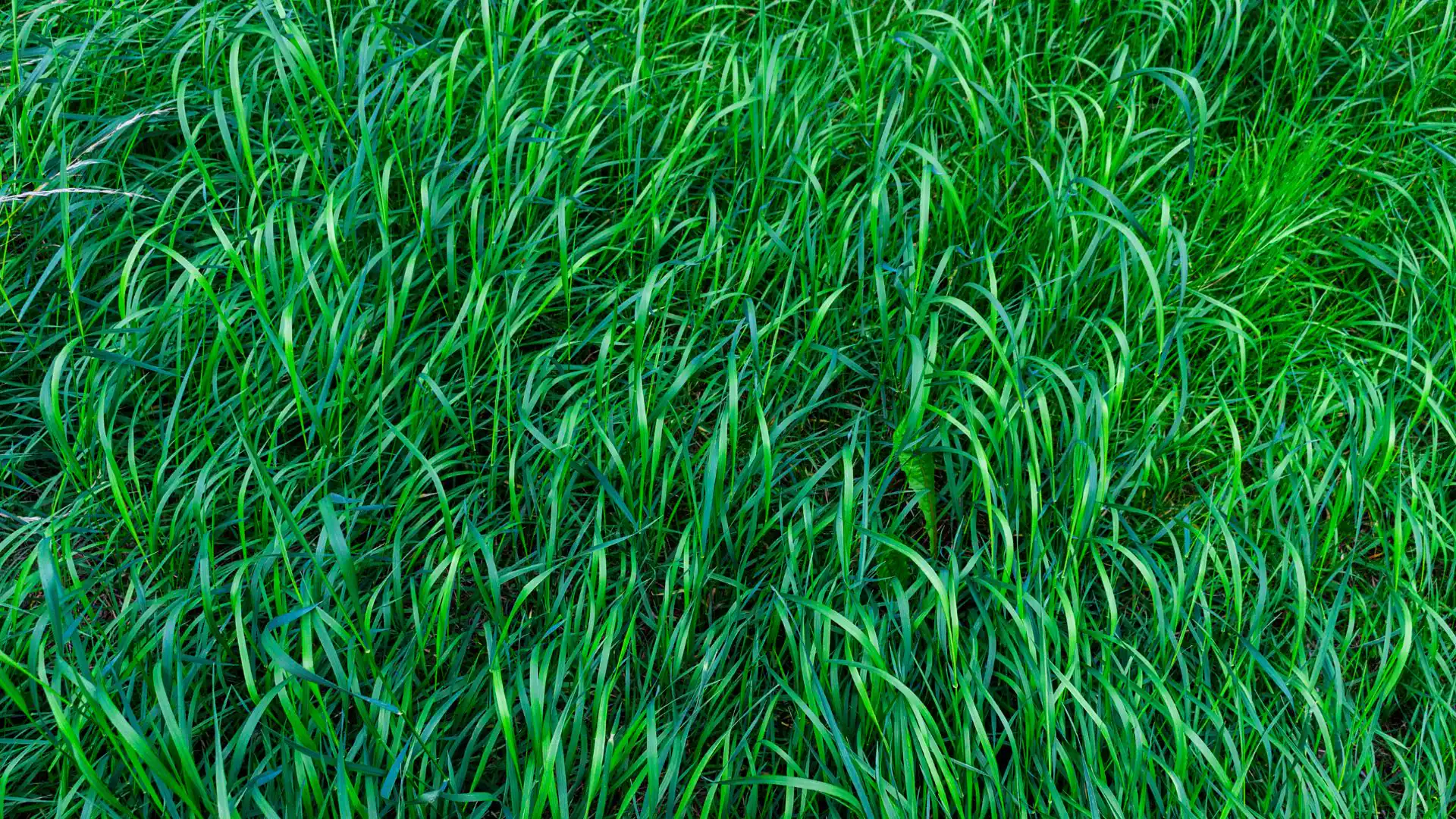
Restoration means your existing lawn still has enough living turf to work with. The goal is to correct what’s wrong soil chemistry, compaction, thatch, pest damage and strengthen what’s already there through overseeding, aeration, and targeted treatment. Renovation is a different conversation entirely: that’s when the lawn is too far gone to rehabilitate, and the turf needs to be removed and rebuilt from scratch.
For most Medford homeowners, the honest answer falls somewhere in the middle, which is why a proper assessment matters before any work begins. A lawn that looks completely dead in August might still have viable root systems that can recover with the right treatment. Alternatively, a lawn that looks thin but manageable might have underlying grub damage or soil pH problems severe enough that seeding into it won’t hold. We determine which path makes sense for your property before recommending anything.
In most cases, yes a damaged lawn in Medford can be restored without starting over. The key is identifying the real cause of the damage. Thin, patchy turf in this part of Suffolk County is often the result of sandy soil that’s depleted of organic matter, compaction from years of use, grub feeding on the root zone, or some combination of all three. None of those problems require tearing the lawn out. They require correcting the conditions that caused the damage in the first place.
That said, there are situations where restoration won’t hold typically when the viable turf coverage has dropped below roughly 40 to 50 percent of the lawn’s surface. At that point, the math on restoration doesn’t work, and a full renovation is the more cost-effective path. We’ll give you a straight answer on which situation you’re in after the assessment. If your lawn can be saved, we’ll restore it. If it can’t, we’ll tell you that too.
If the restoration work is done in the fall window which is the optimal timing for cool-season turf on Long Island you’ll typically see germination within 14 to 21 days of seeding. By the following spring, a properly restored lawn will show meaningful density improvement in areas that were thin or bare, and the color difference compared to the previous summer is usually noticeable.
The full establishment process takes one complete growing season. That means a lawn restored in September or October of one year will be at its strongest by the summer of the following year, assuming proper post-seeding care. The fall window matters because soil temperatures in Medford stay warm enough for germination well into October, while the drop in air temperature reduces the drought stress and disease pressure that would compromise new seedlings during a summer seeding.
This is one of the most common questions we hear from homeowners in Medford, and the answer almost always points to the soil. Medford’s soils are sandy and low in organic matter a direct result of the area’s proximity to the Long Island Central Pine Barrens and the way most of the housing stock was developed on disturbed ground after World War II. Sandy soil drains quickly, which means nutrients leach out before the turf can use them, and moisture disappears faster than roots can absorb it. Surface fertilization helps temporarily, but it doesn’t fix the underlying structure.
The other common culprit is white grub damage that goes undiagnosed. Grubs feed on grass roots through late summer, and the resulting dieback looks nearly identical to drought stress brown patches, turf that lifts easily, irregular dead zones. Homeowners water more, which doesn’t help, and the damage gets worse each year. A proper assessment identifies whether the problem is soil-based, pest-based, or both, so the treatment actually addresses what’s happening rather than masking it.
The cost of lawn restoration in Suffolk County varies based on the size of the lawn, the extent of the damage, and what the assessment reveals about the soil and turf condition. A straightforward restoration on a modest residential lot core aeration, soil correction, and slice seeding will typically run less than a full renovation. More complex situations involving significant grub damage, severe soil pH imbalance, or heavy thatch accumulation will require additional steps that affect the overall cost.
What affects cost most in Medford specifically is the soil condition. Lawns that need more substantial organic matter addition or pH correction before seeding require more product and more labor than lawns where the soil is in reasonable shape. The assessment tells us what we’re actually working with, and that’s when we can give you a specific number. We provide estimates before any work begins no surprises after the fact.
For cool-season turf on Long Island, fall is the clear window and it’s not a close call. From late August through October, soil temperatures in Medford are still warm enough to support rapid seed germination, typically above 50 degrees Fahrenheit at the four-inch depth. At the same time, air temperatures are dropping, which reduces the drought stress, heat stress, and fungal disease pressure that make summer seeding so unreliable in this region.
Spring seeding is possible, but it puts new seedlings on a short runway before Long Island’s summer heat arrives. Grass established in spring has less time to develop a deep root system before it faces its first summer drought on Medford’s fast-draining sandy soils. Fall-established turf has an entire cool season to develop roots before the following summer, which is why fall restorations consistently outperform spring restorations in this area. If you’re considering restoration work, the fall window is the one worth planning around and it fills up. Reaching out before the season starts is the best way to secure your spot.
Useful Links
Other Services we provide in Medford