
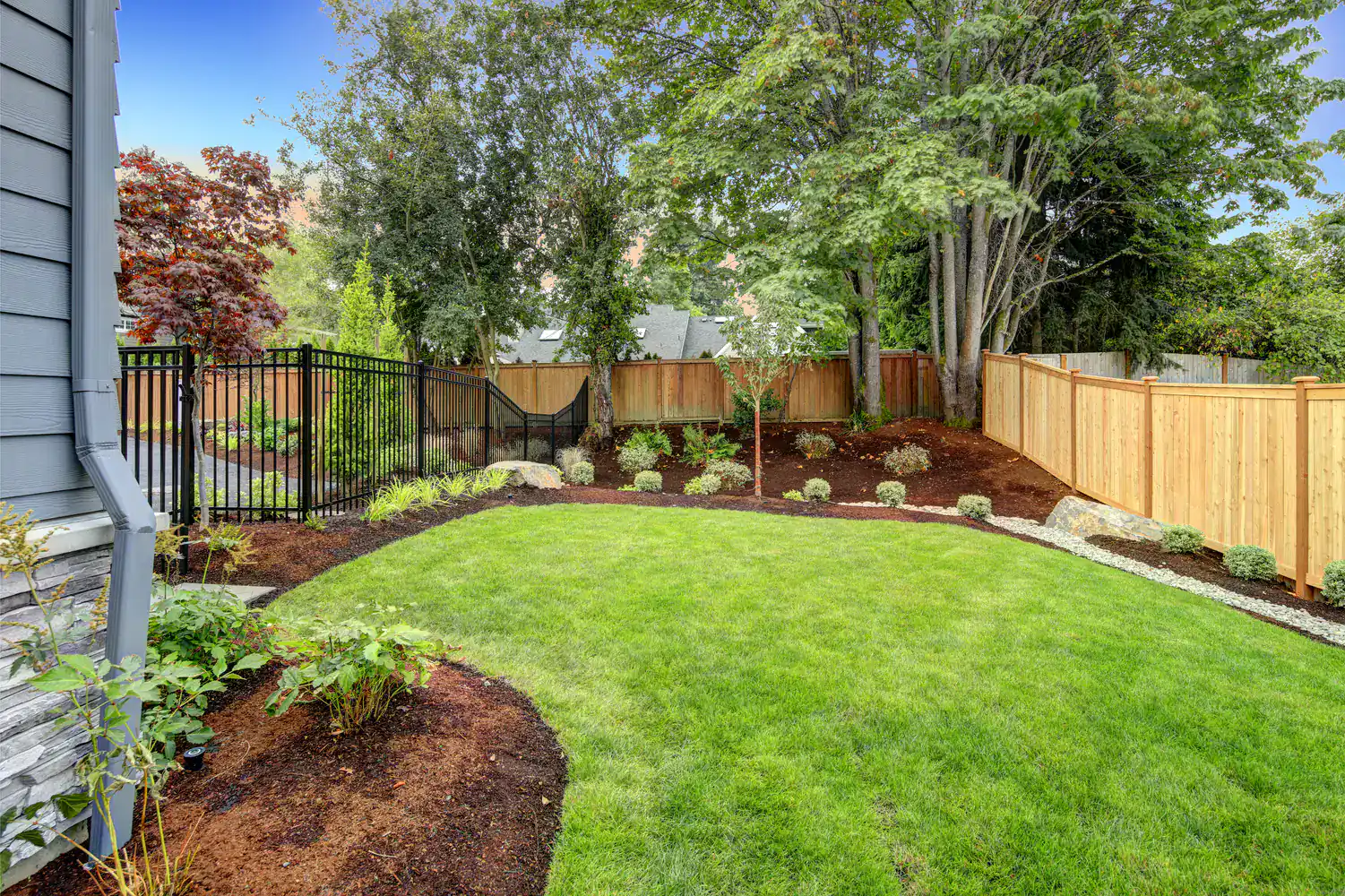
Hear from Our Customers
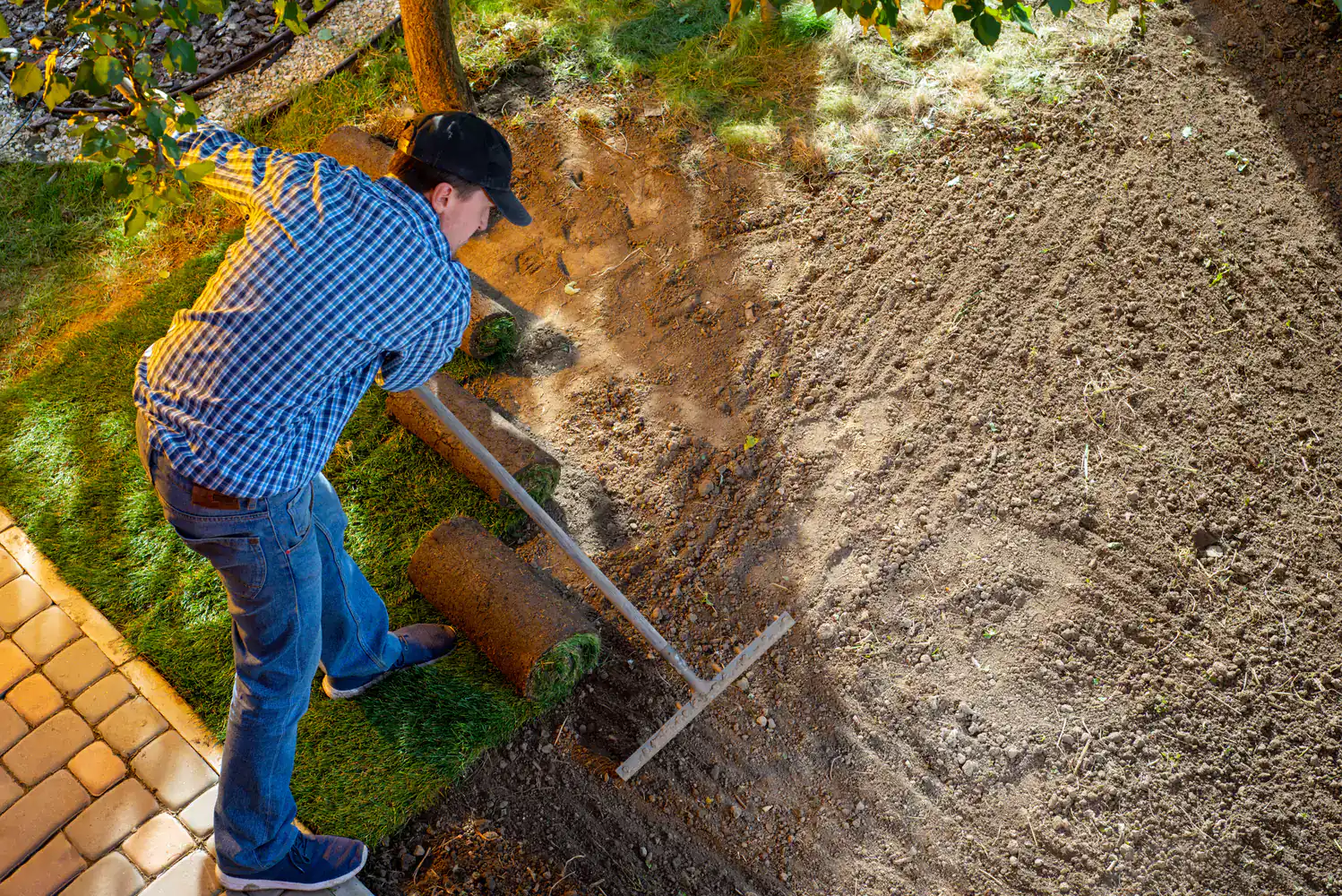
Most lawns in Medford don’t fail because of bad luck. They fail because the soil underneath them was never set up to support healthy turf. The Pine Barrens-adjacent soils throughout this area drain fast, go acidic without active management, and lose moisture faster than almost anywhere else in Suffolk County. When a lawn planted in that environment gets hit with a dry July and a grub cycle in the same season, it doesn’t just thin out it collapses. Fertilizer and overseeding won’t fix that. A rebuild will.
After a proper lawn renovation, you’re not just looking at greener grass. You’re looking at a lawn that can actually hold through a Long Island summer because the soil was tested, corrected, and prepared before a single seed went down. Deep-rooted turf in properly amended soil doesn’t go brown the moment the rain stops. It doesn’t peel back after grubs move through. It stays dense, it crowds out weeds, and it recovers when stress hits.
For homeowners in Medford sitting on properties worth $575,000 or more, the lawn is the first impression for neighbors, for guests, and eventually for buyers. A renovation isn’t a cosmetic fix. It’s what makes the rest of the property look like it belongs.
We’ve been working in Suffolk County since 1994. That’s more than three decades of Long Island summers, Long Island soils, and Long Island homeowners who’ve already tried the cheaper route and watched it fail. We’re not a franchise with a call center somewhere else. We’re locally operated, and we know the difference between the sandy loam running through Medford’s Pine Barrens-adjacent neighborhoods and the heavier soils you’ll find in other parts of the county and we build every renovation plan around what’s actually in the ground beneath your property.
Most companies in the Medford area offer lawn maintenance. Some do fertilization and weed control well. But when a lawn is structurally compromised patchy, grub-damaged, weed-dominated, or just worn out after decades in aging post-war soil maintenance isn’t the answer. Renovation is. That’s the work we were built around, and it’s the only thing we specialize in.

It starts with the soil, because that’s where most Medford lawns are already losing. Before anything gets seeded or applied, we test the soil. pH levels, nutrient deficiencies, organic matter content all of it gets evaluated so the renovation plan is built on real data, not a standard program. In Medford’s fast-draining, Pine Barrens-adjacent soils, skipping this step is exactly why previous treatments haven’t held.
From there, we prepare the lawn for renovation. Depending on the condition, that means aeration, power seeding, full seedbed preparation, or in more severely damaged cases, a complete new lawn installation. The right intervention depends on what the lawn actually needs not what’s easiest to sell. Timing matters too. The fall window on Long Island roughly late August through mid-October is when cool-season grasses germinate best, and it’s the window we work hardest to book. Suffolk County’s fertilizer blackout starts November 1 under Local Law 41-2007, which means fall renovation has a real deadline.
Once the seed is down and established, we follow up with a proper annual care program that keeps the momentum going. A renovation that transitions into ongoing maintenance is what produces the lawn that holds year after year not just one good spring.

Ready to get started?
Lawn renovation in Medford isn’t one-size-fits-all, and our service shouldn’t be either. We cover the full range from targeted renovation seeding programs for lawns that are thinning but structurally sound, to complete new lawn installation for properties where decades of grub damage, drought stress, and compaction have left nothing worth saving. If your lawn has been invaded by nutsedge or bentgrass two of the most aggressive and difficult turf problems on Long Island we address those specifically, not with a generic herbicide pass.
Soil preparation is built into every renovation we do, not treated as an add-on. That means pH correction, amendment where needed, and proper seedbed conditioning before anything gets seeded. For Medford homeowners near the Route 112 corridor or in subdivisions like Eagle Estates where post-war soils have been compacted and depleted over 50+ years, this step is often what separates a renovation that holds from one that looks good for a season and fades.
Every renovation we execute is in full compliance with Suffolk County Local Law 41-2007 and New York State pesticide applicator licensing requirements. If you’re near a groundwater protection zone which is a real consideration in Medford given its proximity to the Long Island Central Pine Barrens that’s already factored in before the first application goes down.
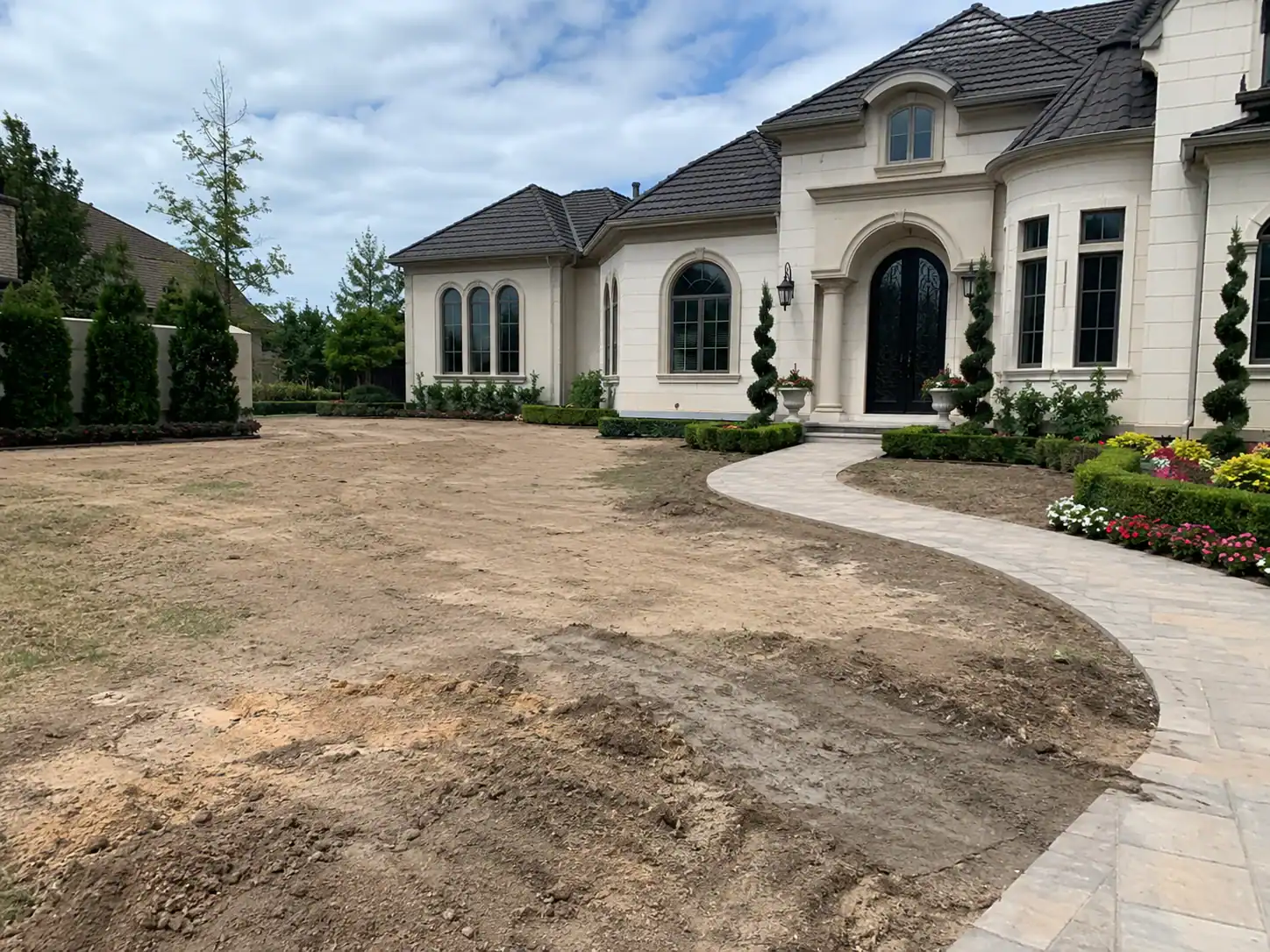
Overseeding is spreading seed over an existing lawn to fill in thin spots. It works well when the lawn’s foundation is still intact the soil is healthy, the turf is mostly there, and the bare patches are minor. Lawn renovation is a different scope of work entirely. It means addressing the underlying problems compaction, pH imbalance, depleted organic matter, grub damage before any seed goes down. In Medford, where soils are sandy, acidic, and drain fast due to the area’s proximity to the Long Island Central Pine Barrens, overseeding without soil preparation rarely holds. The seed germinates, the seedlings struggle through their first summer in nutrient-poor soil, and by August the lawn looks the same as it did before. If you’ve overseeded and it hasn’t worked, that’s usually why. Renovation fixes the reason overseeding failed.
Fall is the window specifically late August through mid-October. Cool-season grasses like tall fescue and Kentucky bluegrass, which are the dominant turf types in Medford and across Suffolk County, germinate best when soil temperatures are between 50 and 65 degrees. That range occurs naturally on Long Island in late summer and early fall. Weed competition drops off as crabgrass completes its life cycle in September, and the cooler temperatures reduce stress on new seedlings as they establish. There’s also a regulatory deadline to factor in: Suffolk County Local Law 41-2007 prohibits fertilizer applications from November 1 through April 1, which means any renovation seeding needs to be established and supported before that window closes. Spring renovation is possible but carries more risk new seedlings have to survive a Long Island summer before they’ve had time to develop deep roots, and crabgrass competition is intense. Fall is the right call for most Medford properties.
The cost depends on what the lawn actually needs, which is why a site visit matters before any number gets quoted. For a typical Medford property a quarter-acre to half-acre lot with a post-war single-family home a targeted renovation seeding program might run in the $1,500 to $4,000 range depending on scope and soil conditions. A more comprehensive renovation that includes full seedbed preparation, soil amendment, and power seeding on a heavily damaged lawn can run $4,000 to $10,000 or more. Complete new lawn installation on a severely degraded property sits at the higher end of that range. What’s worth keeping in mind is that the median home value in Medford is around $575,000. A well-maintained lawn adds measurable curb appeal and resale value to a property at that price point. Spending $4,000 to $8,000 to properly rebuild a lawn on a home worth that much isn’t a luxury it’s a reasonable investment in protecting what you already own.
This is one of the most common frustrations we hear from homeowners in central Suffolk County, and Medford’s soil type is usually the core reason. The soils in this area particularly in neighborhoods close to the Long Island Central Pine Barrens are sandy, low in organic matter, and drain extremely fast. When a dry stretch hits in July or August, those soils lose moisture before cool-season grass roots can access it. If the soil pH is also off which it frequently is in Pine Barrens-adjacent areas grass roots can’t take up nutrients properly even when fertilizer is applied. The result is a lawn that looks decent in May and falls apart by midsummer. Reseeding without fixing the soil just repeats the cycle. The fix is a renovation that starts with a soil test, corrects the pH, builds organic matter into the seedbed, and establishes grass varieties selected for drought tolerance on Long Island’s specific soil profile. That’s the version that holds.
Yes, but it requires renovation not just treatment. Grub damage in Suffolk County, including Medford, typically comes from Japanese beetle larvae feeding on grass roots from late summer through fall. When the damage is severe, the turf separates from the soil like a carpet because the root system has been destroyed. At that point, applying grub control and throwing down seed isn’t enough. The root zone is gone, the soil is compacted and disrupted, and weeds move in fast to fill the bare areas. A proper restoration starts by addressing the soil structure aerating, amending, and preparing a seedbed before any new seed is introduced. In most cases of significant grub damage, this is a full renovation scope of work, not a light overseeding. The good news is that a properly renovated lawn, with the right grass varieties and a follow-up care program, can come back completely and with deeper roots than the original lawn had.
Medford is squarely in our service area. We operate out of central Suffolk County and work throughout the Route 112 corridor and the broader Brookhaven Township area on a regular basis. Medford’s specific conditions the Pine Barrens-adjacent sandy soils, the aging post-war housing stock, the grub pressure that runs through this part of the county are well-known to us, not guesswork. That matters because a renovation plan built for Medford soil is different from one built for the heavier soils you’d find in other parts of Long Island. Our approach starts with what’s actually in the ground on your property, not a standardized program applied regardless of where you live. If your lawn is in Medford whether you’re off Medford Avenue, near Eagle Estates, or anywhere else in the 11763 ZIP code the process gets built around your specific conditions from the first site visit forward.
Useful Links
Other Services we provide in Medford