
Hear from Our Customers
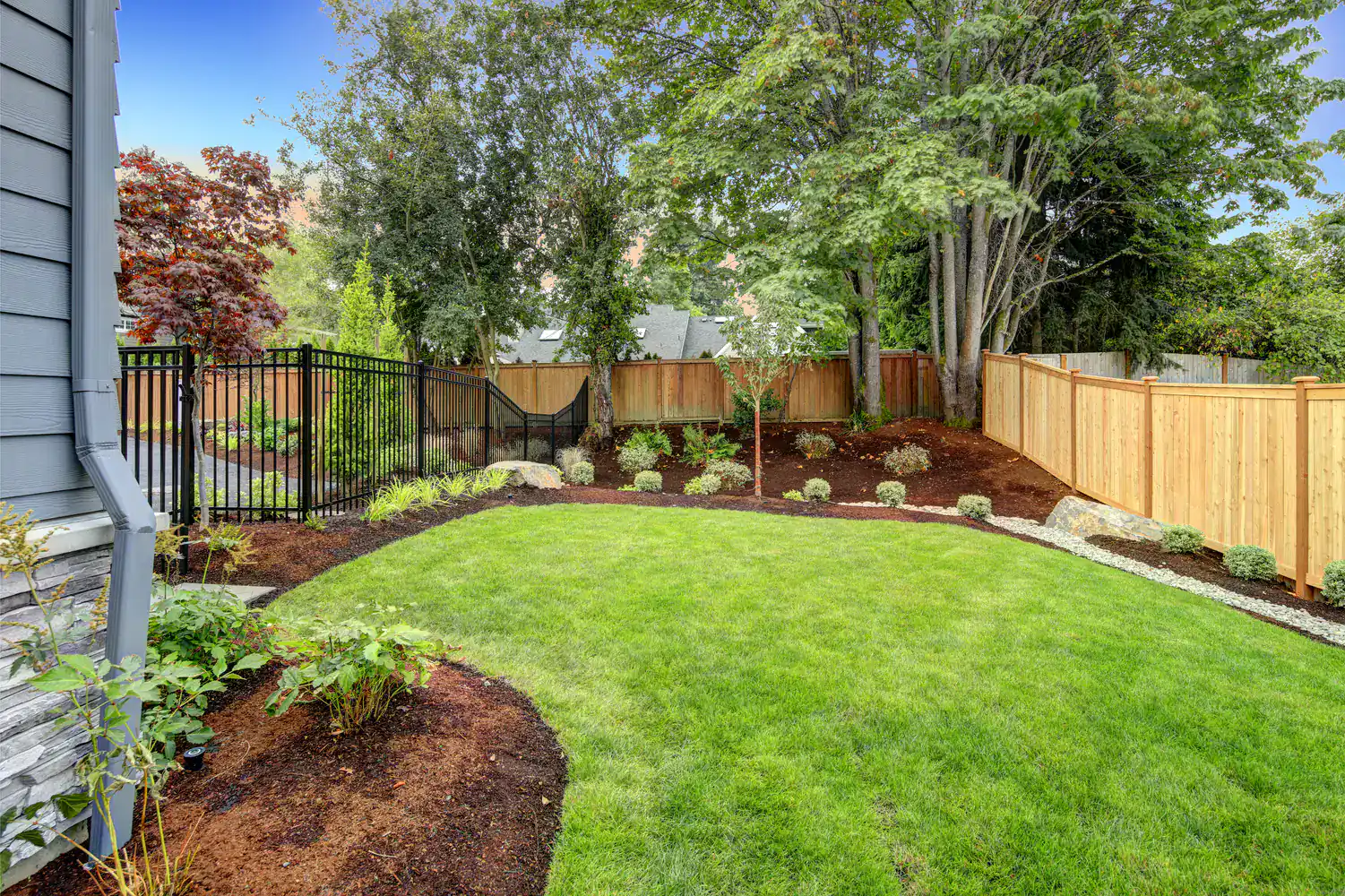
A real lawn renovation in Miller Place doesn’t just look better for a season. It holds through the summer humidity that drives brown patch and dollar spot, through the salt air off Long Island Sound that slowly stresses turf year after year, and through the kind of July drought that exposes every weakness in a lawn that was only patched, not rebuilt. When the soil is actually prepared and the right grass varieties are established correctly, the results don’t disappear by August.
The properties throughout Miller Place sit on some of the most variable soil on Long Island. Glacial moraine terrain means you might have fast-draining sandy loam on your upper slope and waterlogged clay in the lower section sometimes in the same yard. That variability is why the same overseeding job that works somewhere else doesn’t hold here. A renovation that accounts for what’s actually under your lawn is a different outcome entirely.
For a home in Miller Place where median values are pushing well past $600,000 and curb appeal is part of what you’ve invested in a lawn that finally looks the way it should isn’t a luxury. It’s the logical next step after everything else you’ve already put into the property.
We’ve been doing this work since 1994. That’s more than three decades of working with Long Island soils, Long Island seasons, and Miller Place homeowners who’ve already been through the cycle of programs that didn’t hold. Our founder built this business from the ground up starting in the industry while earning a business degree and never leaving it. There’s no national franchise behind this. No call center. Just a genuinely local operation based out of Port Jefferson Station, less than five miles west of Miller Place on Route 25A.
That proximity matters in ways that go beyond convenience. The North Shore has its own specific challenges the salt air off the Sound, the clay pockets that stay wet after every rain, the grub pressure that hits hard every summer. These aren’t conditions you learn about from a manual. You learn them from working properties in this corridor for thirty years. When we assess your Miller Place lawn, you’re getting someone who already knows what they’re looking at.

It starts with an honest assessment of what you’re actually dealing with. Before any seed goes down or any product gets applied, we evaluate the condition of your soil, the degree of weed invasion, and the specific failure pattern of your lawn. On a Miller Place property, that means accounting for the soil variability that comes with North Shore glacial terrain not just eyeballing the surface. If there’s nutsedge or bentgrass present, we identify it here, because treating those invasions requires a specific protocol that has to happen before renovation seeding begins.
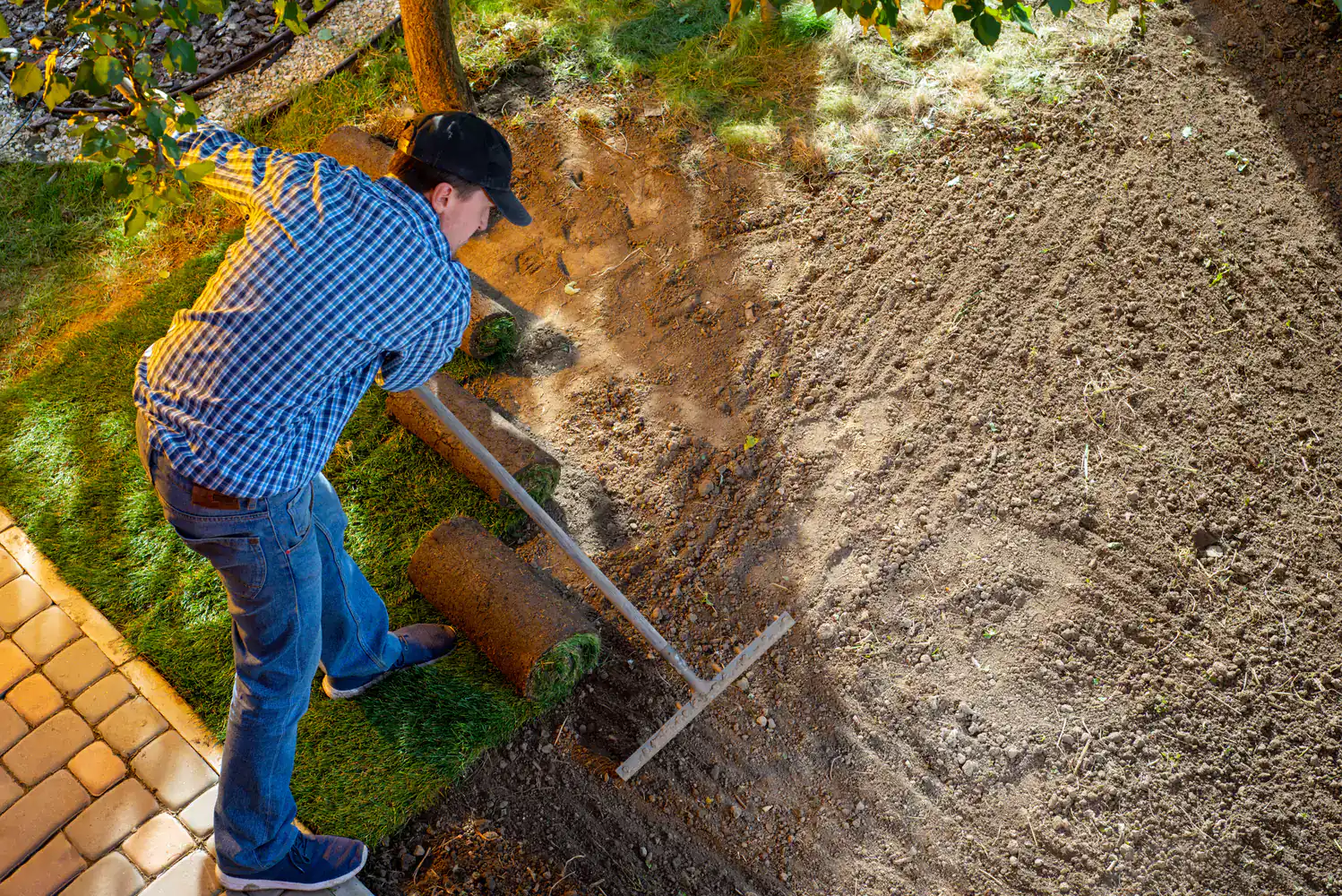
From there, the preparation work happens. Depending on what the assessment shows, that might include weed elimination, dethatching, core aeration, and soil amendment to address the organic matter deficiency that’s common in this area’s sandy loam zones. This is the step most companies skip or shortcut and it’s exactly why their results don’t last. Proper soil preparation is what separates a renovation from an overseeding.
Once the ground is ready, we apply professional-grade power seeding not bag seed broadcast over dead thatch. The grass varieties we select are appropriate for North Shore Long Island conditions: the shade patterns, the salt exposure, the summer stress cycle. After seeding, a starter fertilizer program supports early establishment. Suffolk County’s nitrogen application restrictions apply here, and everything we do is compliant with those rules which matters especially given Miller Place’s proximity to Long Island Sound and Mount Sinai Harbor.

Ready to get started?
Our renovation work covers the full range of what a genuinely damaged lawn requires not a menu of add-ons you have to piece together yourself. Core aeration and power seeding are standard parts of the renovation process, not upgrades. Weed elimination, including treatment for nutsedge and bentgrass two of the most persistent and damaging turf invasions on the North Shore is handled before seeding begins, because putting new grass into a lawn that still has those problems is a waste of everyone’s time and money.
For properties where the damage goes deeper, we also install completely new lawns. That capability isn’t just a separate service it’s proof that the renovation work is built on the same foundation as a full ground-up installation. If your lawn is beyond patching, that’s not a problem that requires a different company. We handle it here.
Our full service offering also includes annual lawn programs, fertilization, lime applications, flea and tick programs, and ongoing maintenance once the renovation is established. Everything is performed by a NYSDEC-licensed applicator, which is a legal requirement for pesticide application in New York State and a meaningful distinction in a market where unlicensed operators are common. For a Miller Place homeowner near the Sound or the Harbor, that compliance isn’t a technicality it’s the difference between doing the job right and creating a problem on your property.
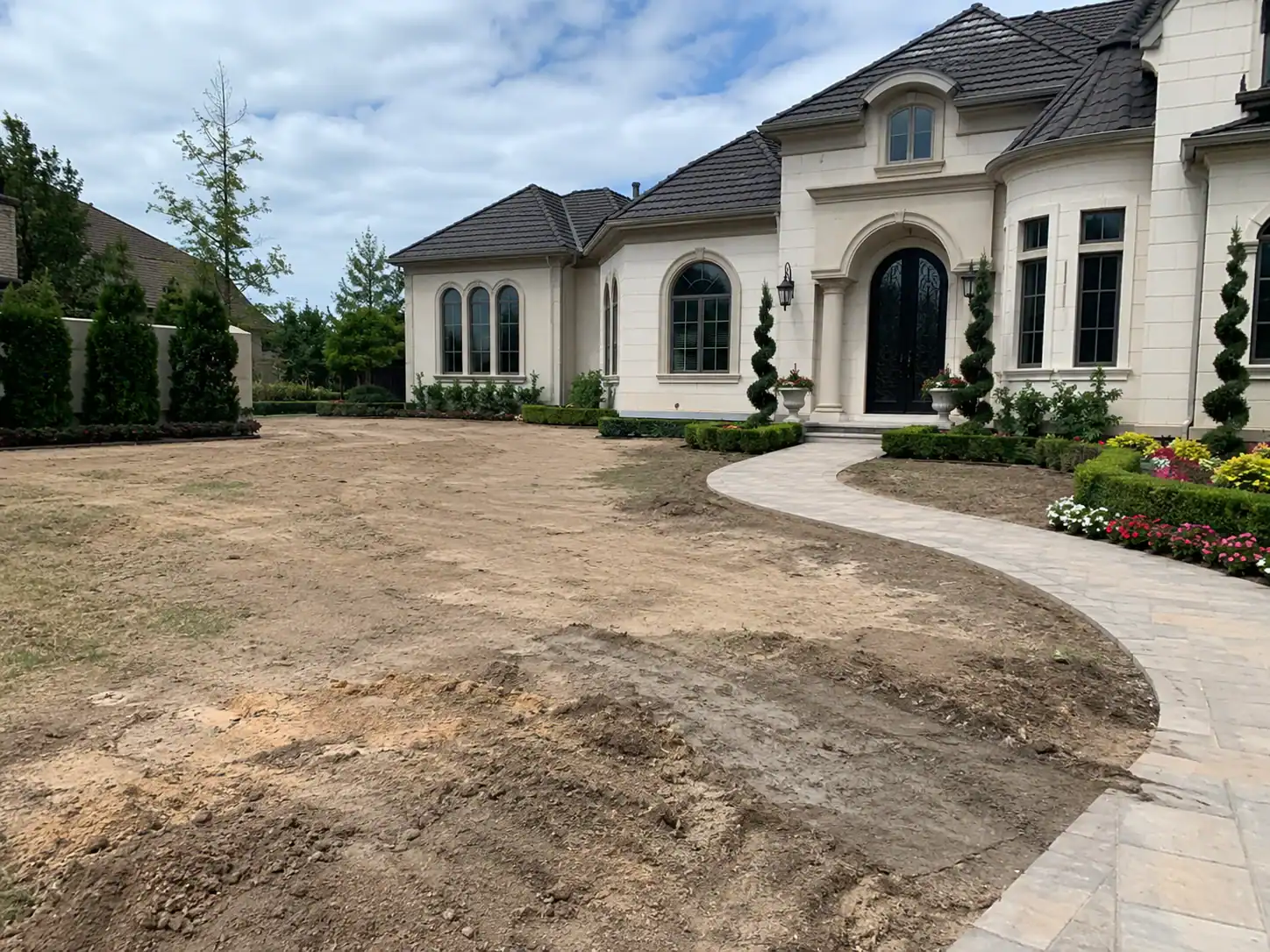
Overseeding means spreading seed over an existing lawn usually after aeration to thicken it up. It works reasonably well when the underlying lawn is basically healthy and just thinning out. Renovation is a different process entirely. It starts with eliminating what’s currently there weeds, dead thatch, invasive species then preparing the soil properly before any seed goes down. On a Miller Place property, where the soil profile is often a mix of sandy loam and clay depending on where you are on the lot, skipping that preparation step is why overseeding jobs don’t hold. The seed germinates, looks decent for a season, and then fails the following summer because nothing was done to fix the conditions that caused the problem in the first place. If you’ve already overseeded and the results didn’t last, that’s the likely reason.
This pattern is one of the most common we see on North Shore Long Island, and it almost always comes back to soil. Sandy loam soils which are common on the upper slopes of Miller Place properties drain quickly and reach drought stress fast once summer heat sets in. A lawn that was never properly established, or that has significant thatch buildup blocking water from reaching the roots, will look decent when the weather is mild and moisture is available, then collapse the moment conditions get difficult. Compaction makes it worse. When soil is compacted from years of mowing and foot traffic, roots can’t go deep enough to access moisture during dry stretches. The fix isn’t more watering or more fertilizer. It’s addressing the soil structure through proper renovation aeration, amendment, and establishing grass varieties that are actually suited to handle the summer stress cycle this area sees every year.
Renovation costs vary based on the size of the lawn, the severity of the damage, and what the assessment reveals about your soil and weed situation. As a general range, patch work on smaller areas typically runs $0.75 to $4.00 per square foot. A full renovation on a typical Miller Place property which might have 5,000 to 8,000 square feet of lawn can run anywhere from $5,000 to $15,000 or more depending on what’s involved. If the damage is severe enough to require a complete new lawn installation, the cost reflects that scope. The best way to get an accurate number is an on-site assessment, because two lawns that look equally bad on the surface can require very different levels of work underneath. What’s worth keeping in mind is that a properly executed renovation, done once, costs significantly less over time than repeating cheaper fixes that don’t hold.
Nutsedge often called nutgrass is a grass-like weed that thrives in wet, poorly drained soil. It’s particularly common in Miller Place because of the clay-heavy lower sections that many properties have due to the North Shore’s glacial terrain. Those areas stay saturated after rain, and nutsedge loves exactly that environment. It grows faster than turf grass, has a waxy coating that resists many standard herbicides, and reproduces through underground nutlets that can survive in the soil for years. Pulling it by hand makes it worse disturbing the root system spreads the nutlets. Effective nutsedge control requires the right chemistry applied at the right time, followed by proper renovation of the affected area. Most general lawn care companies either don’t treat it or apply products that suppress it temporarily without addressing the root issue. It’s one of the specific reasons we list nutgrass control as a named service because it requires a different approach than standard weed control.
Late August through October is the window you want. Soil temperatures on the North Shore during that stretch are in the 50 to 65 degree range ideal for cool-season grass germination. Crabgrass and summer annual weeds are dying off naturally, so new seedlings aren’t competing with aggressive weed pressure. Fall rainfall supports establishment without heavy irrigation. And the grass has enough time to root in before winter, which means it comes back strong in spring instead of starting from scratch. Spring renovation is possible, but it carries real risk on the North Shore. The glacial moraine soils here warm 7 to 14 days later than South Shore soils, which compresses the usable window significantly. Crabgrass pressure starts early and hits hard. If you’re considering a renovation, fall is when it should happen and our schedule fills up during that window, so waiting too long means waiting another full year.
Yes, and it’s more common than most homeowners realize. Miller Place has two miles of beach on Long Island Sound and borders Mount Sinai Harbor which means properties throughout the hamlet are within range of ongoing salt air exposure, not just the ones directly on the water. Salt accumulates in soil over time and disrupts how grass roots absorb water. The result looks a lot like drought stress or disease browning, thinning, die-off in patches which is why it often gets misdiagnosed and treated with the wrong solution. Fertilizing or watering a lawn that’s dealing with salt accumulation doesn’t fix the underlying problem. Addressing it properly involves soil amendment, and in some cases gypsum application to help displace the sodium that’s built up. It also means selecting grass varieties that have better tolerance for coastal conditions. This is part of why a cookie-cutter renovation program doesn’t work as well in Miller Place as it might further inland the coastal environment here is a real factor that has to be accounted for in how the work is done.
Useful Links
Other Services we provide in Miller Place