
Hear from Our Customers
There’s a specific frustration that comes with owning a $700,000 home in Port Jefferson and looking out at a lawn that’s half weeds and half bare dirt. You’ve probably already tried something a bag of seed, a basic overseeding, maybe a fertilizer program that greened things up for a few weeks before it all fell apart again. The problem isn’t your effort. It’s that none of those fixes addressed what’s actually going on underneath.
Port Jefferson sits on Long Island’s glacial moraine, which means your soil isn’t the same predictable sandy mix you’d find on the South Shore. Depending on where your property sits whether you’re on the bluffs above the harbor, tucked into the wooded hills near Belle Terre, or on one of the older residential streets near Upper Port your soil could be compacted clay that suffocates roots, or sandy loam that drains too fast to hold moisture through July. Either way, throwing seed at the surface without addressing what’s below it doesn’t work. It never has.
Salt air off Long Island Sound adds another layer that most lawn companies in this area don’t account for. If your waterfront or bluff-facing lawn has dead patches that showed up after winter and never came back, that’s not drought stress that’s salt damage. It needs soil amendment, lime correction, and a proper renovation from seed to actually recover. After a real renovation, you get a lawn that holds through summer heat, doesn’t thin out under your tree canopy, and doesn’t invite weeds back in six months. That’s the difference between a patch job and a rebuild.
We were built by Matt Shaker, who has been working on Long Island lawns since 1994. That’s three decades of North Shore properties the wooded Belle Terre lots, the bluff-top yards with salt exposure from the Sound, the older homes near Mather Hospital with soils that have never been properly renovated. This isn’t franchise knowledge. It’s the kind of experience that only comes from showing up on these specific Port Jefferson properties, season after season, and learning what actually works here.
We operate out of Port Jefferson Station, which means Port Jefferson village and the surrounding North Shore corridor are home territory for us not a service area we drive two hours to reach. We know the nutsedge pressure in this community. We know what the glacial moraine soil does to grass roots. We know which neighborhoods deal with shade from mature canopy and which ones get hammered by salt air every winter. When you call Lawn Master, you’re not getting a call center or a regional manager you’re getting people who have worked these Port Jefferson streets for years and know what your lawn is dealing with before we even pull up.
It starts with an honest assessment. Before anything gets applied or seeded, we look at what’s actually going on soil compaction, pH levels, weed species present, drainage patterns, shade coverage, and any signs of grub damage or salt injury. In Port Jefferson, that assessment matters more than it does in a lot of other communities, because the variables here are real. A bluff-top property in Belle Terre has different needs than a shaded lot near the LIRR station, and we treat them differently.
Once we understand what we’re working with, we prepare the soil. That means core aeration to break up compaction, lime application if your pH is off which it often is in wooded North Shore yards with acidic leaf litter and eliminating existing weed material that would compete with new seedlings. If nutsedge or bentgrass is present, we address that specifically before we seed, because overseeding into an active nutsedge problem just wastes seed. This soil preparation phase is what separates a renovation that lasts from one that looks good for a month.
Then we seed with varieties selected for your specific conditions, not off a generic price sheet. Shaded areas under Port Jefferson’s mature tree canopy get fine fescue blends built for low light. Sunny, open areas get a mix suited for the North Shore’s summer heat and drought patterns. After seeding, we give you clear guidance on watering and follow-up care so the establishment phase goes the way it should. Fall is the primary window for lawn renovation on Long Island soil temperatures between 50 and 65°F give cool-season grasses the best possible start, and that window on the North Shore runs from late August through October. If your lawn needs work, that timing matters.

Ready to get started?
A complete lawn renovation from Lawn Master covers the full scope not just the visible surface, but everything underneath it. Core aeration, soil preparation, pH correction through lime application, targeted weed control including nutsedge and bentgrass treatment, renovation seeding with variety selection matched to your property’s specific light and drainage conditions, and follow-up guidance through the establishment period. If your lawn is beyond renovation and needs to be rebuilt entirely from bare soil, we do that too new lawn installation is part of what we offer, and having that capability means no Port Jefferson property is too far gone for us to handle.
For homeowners in Belle Terre and the harbor-facing streets of Port Jefferson village, salt damage assessment is part of our evaluation process. We look for the specific pattern of crown damage and pH disruption that salt air creates, and we factor that into the soil amendment plan before we seed. This isn’t something that comes up in Medford or Holbrook it’s a North Shore-specific issue that requires a North Shore-specific approach.
All pesticide and herbicide applications are performed under a New York State DEC Commercial Pesticide Applicator license, and we operate in full compliance with Suffolk County Local Law 41-2007, which governs applications near drinking water wells. In a waterfront community like Port Jefferson where runoff into Long Island Sound is a real concern that compliance isn’t a formality. It’s how we do the work. Every renovation is also backed by Lawn Master’s annual lawn program options, so once your lawn is rebuilt, you have a clear path to keeping it that way.
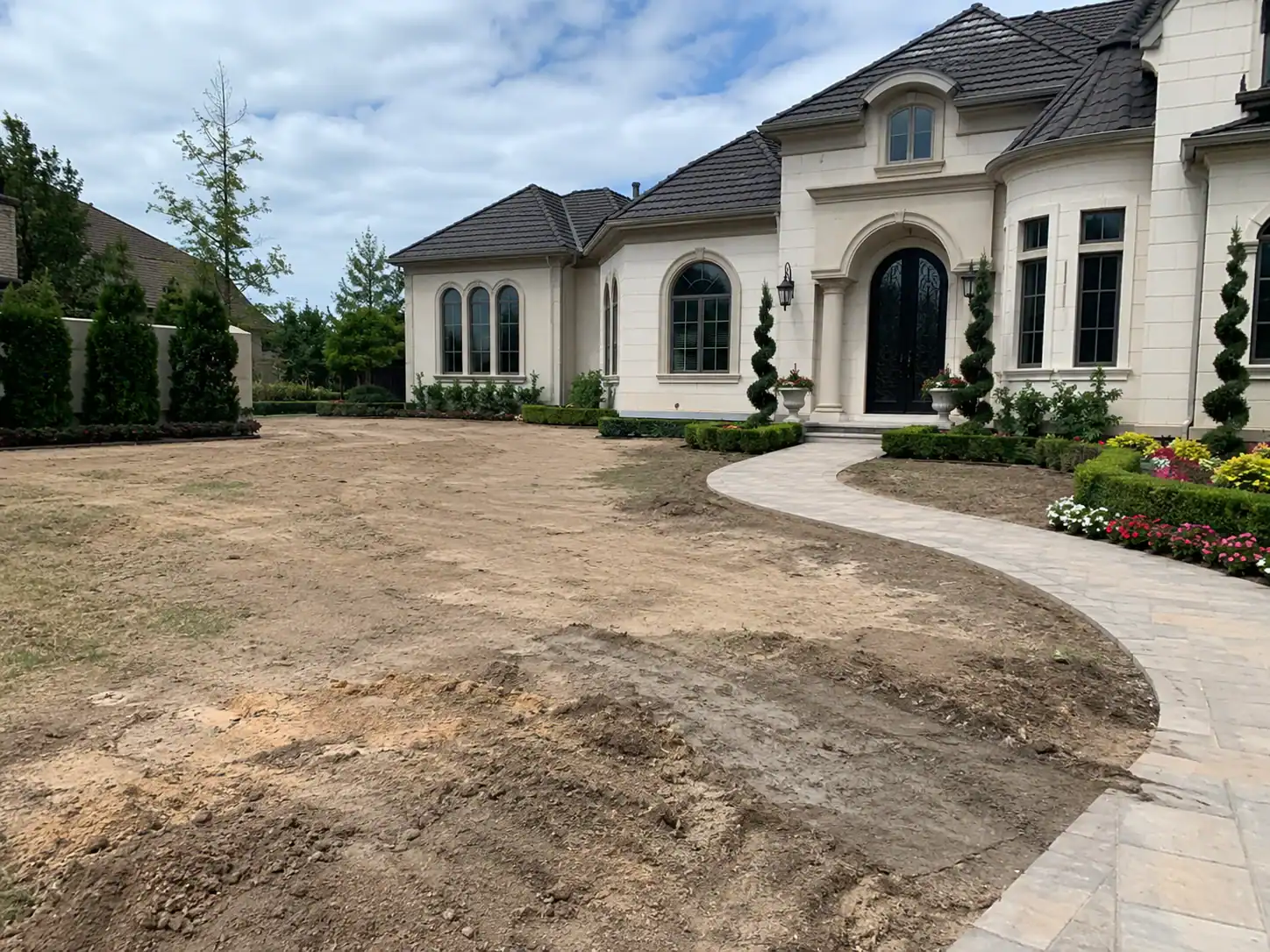
This is the most common question we hear, and the honest answer depends on what percentage of your lawn is still healthy turf versus weeds or bare soil. If you’re looking at a lawn that’s 30% or less weeds and the underlying soil is in reasonable shape, aeration and overseeding can work. But if your lawn has crossed the point where weeds, dead patches, or bare areas make up more than 40–50% of the surface, overseeding into that mess typically fails the weeds outcompete new seedlings, the same bare spots return, and you’ve spent money without solving anything.
In Port Jefferson specifically, we see a lot of lawns that have been overseeded two or three times without lasting results, because the underlying issues compacted glacial moraine soil, low pH from years of acidic leaf litter under tree canopy, or unaddressed nutsedge were never treated. Overseeding on top of those conditions is like painting over a water stain. A proper renovation eliminates the problem at the source before new seed ever goes down, which is why the results hold when previous attempts haven’t.
Fall is the right window and on Long Island’s North Shore, that means late August through October. Cool-season grasses like tall fescue and Kentucky bluegrass, which perform best in this region, germinate most successfully when soil temperatures are between 50 and 65°F. In the fall, weed competition drops significantly compared to spring, and natural rainfall helps new seedlings establish without as much supplemental irrigation. Port Jefferson’s North Shore location means soil temperatures cool slightly earlier than South Shore communities, which can give you a marginally longer fall window.
Spring renovation is possible and sometimes necessary particularly for lawns that took salt damage over the winter, which is a real pattern on the harbor-facing and bluff-top properties in Port Jefferson and Belle Terre. But spring seeding requires careful weed management to prevent crabgrass from overtaking new turf before it establishes. Fall is cleaner, more predictable, and produces better results in most cases. The practical reality is that our fall renovation schedule in the Port Jefferson area fills up if you’re thinking about it, earlier in the season is better than waiting until the window is almost closed.
Yes, and it needs to be addressed before renovation seeding happens, not after. Nutsedge sometimes called nutgrass is not a true grass. It’s a sedge, and standard broadleaf herbicides don’t touch it. If a company overseeds your lawn without treating the nutsedge first, the sedge will outcompete your new turf seedlings and you’ll be back to the same problem within a season. This is one of the most common reasons renovations fail in the Port Jefferson area nutsedge is documented as one of the most prevalent turf problems in this community, and a lot of companies either don’t recognize it or don’t carry the right treatment for it.
We specifically offer nutsedge control as a named service, which means we identify it, treat it with the appropriate chemistry at the right timing, and verify it’s been addressed before renovation seeding goes down. The same applies to bentgrass, which creates a patchy, matted, off-color appearance in lawns and spreads aggressively if left untreated. Getting both of these right before seeding is what separates a renovation that produces a clean, uniform lawn from one that just adds new grass around existing problem species.
Lawn renovation cost on Long Island typically runs between $0.75 and $4.00 per square foot, depending on the scope of work involved. For a standard residential property with a 5,000 to 10,000 square foot lawn area, a complete renovation including soil preparation, aeration, lime application, weed treatment, and renovation seeding generally falls in the range of $1,500 to $4,000 for targeted work, with full rebuilds on larger or more severely damaged properties running higher. Properties in Belle Terre or on larger wooded lots in Port Jefferson that require more extensive soil amendment or new lawn installation from bare soil will be at the upper end of that range.
The more useful way to think about the cost is relative to your property’s value. In a market where median home values sit around $710,000 and Belle Terre properties approach $1,000,000, a properly renovated lawn is a proportionate investment not a luxury expense. A lawn that has been rebuilt correctly holds for years, not months, which means you’re not spending money on repeated failed overseedings that add up over time without fixing anything. We assess each property individually and give you a clear picture of what the work involves before you commit to anything.
Large irregular dead patches that appear in late summer and seem to lift or peel away from the soil are a strong indicator of Japanese beetle grub damage. Grubs feed on grass roots through late summer, and by the time the damage is visible on the surface in August or September, the root system underneath has already been destroyed. This is a well-documented problem across Long Island, including the North Shore, and Port Jefferson properties are not immune to it.
The important thing to understand is that overseeding a grub-damaged lawn without addressing the infestation first doesn’t work you’ll seed into soil where the root zone has been compromised and the grubs may still be active. A proper response involves confirming the grub damage, treating the infestation, and then renovating the affected areas with soil preparation and fresh seed once conditions are right. Fall is actually a good time to address grub-damaged areas in Port Jefferson because the renovation window aligns with the period after grub activity peaks. If you’re seeing this pattern on your property, it’s worth getting an assessment before the fall window closes.
It can, but the renovation has to account for what salt damage actually does to your soil and turf not just reseed over it. Salt air deposition from Long Island Sound, particularly after winter storms, disrupts soil pH and damages grass crowns in a way that looks like drought stress or disease but doesn’t respond to fertilizer or water. Properties on the bluffs above the harbor, in Belle Terre, and along the harbor-facing streets of Port Jefferson village deal with this more than inland communities do it’s a condition that’s largely absent in places like Medford or Coram, but it’s a real and recurring issue here.
Fixing it properly means testing and correcting soil pH with lime application, amending the affected soil to restore its ability to support root development, and then seeding with varieties that are appropriate for the specific conditions on your property. Skipping the soil correction step and just throwing down seed on salt-damaged ground produces thin, patchy results that won’t hold. We’ve worked on enough North Shore waterfront properties over the past 30 years to know what this damage pattern looks like and how to address it correctly it’s not a mystery, it’s just a problem that requires the right process rather than a generic fix.
Useful Links
Other Services we provide in Port Jefferson