
Hear from Our Customers
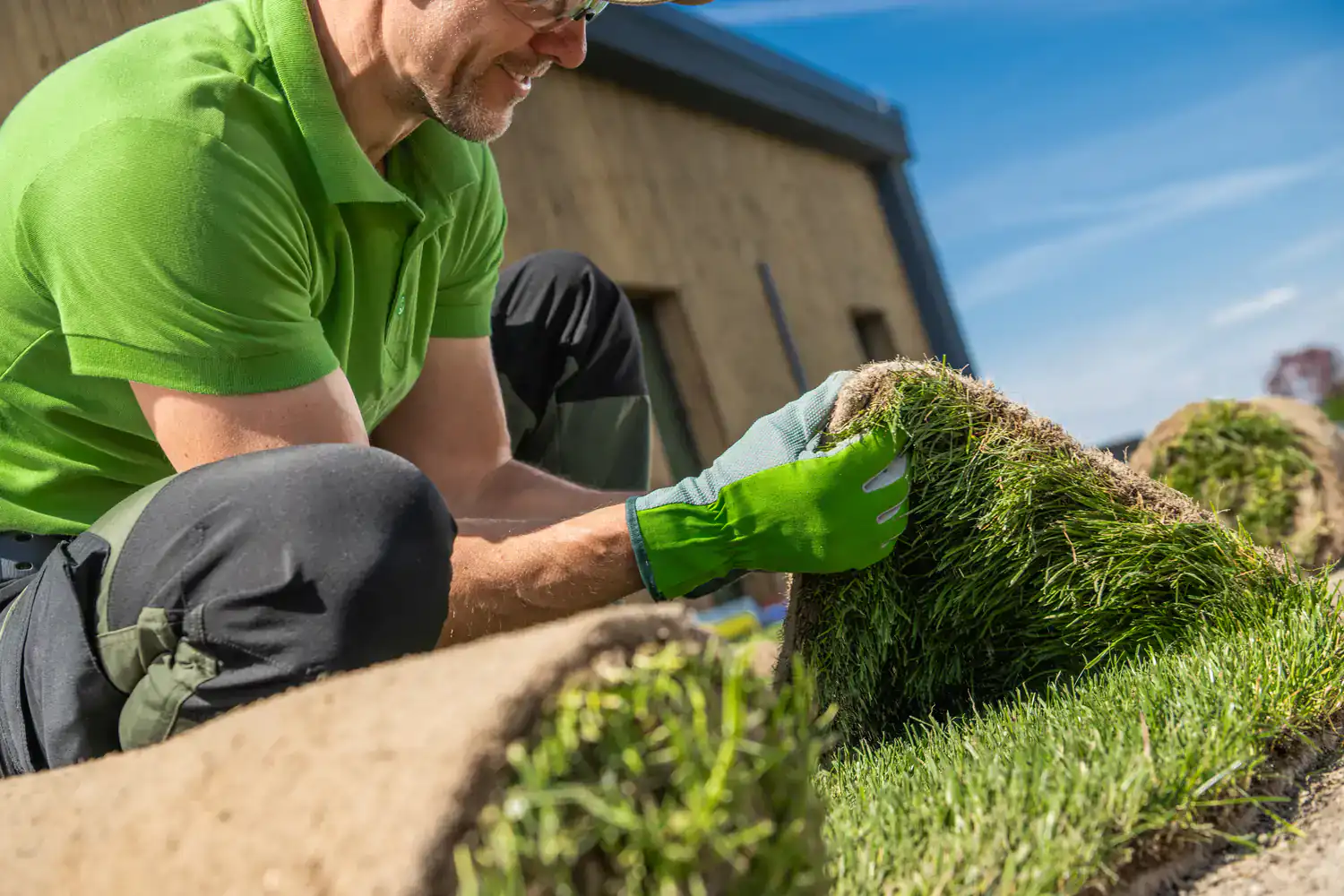
When lawn seeding is done right for East Patchogue’s conditions, the difference shows up fast. You get a dense, thick turf that fills in bare spots, crowds out crabgrass, and holds up through the dry stretches that hit the South Shore every July and August.
The sandy loam that runs through most of East Patchogue drains water and nutrients faster than almost any other soil type on Long Island. That’s why a bag of seed from the hardware store rarely takes hold here. Professional lawn seeding in East Patchogue means correcting those soil conditions first adjusting pH, improving organic matter, and ensuring seed-to-soil contact that actually supports germination before a single seed goes down.
And if your lawn has been hit by Japanese beetle grub damage which is a documented, recurring problem throughout the Patchogue area overseeding alone won’t cut it. The damaged root zones need targeted soil prep and premium cool-season grass seed matched to South Shore conditions. That combination is what turns a patchy, struggling lawn into something your neighbors actually notice.
We’re a Suffolk County-based lawn seeding company not a national franchise routing calls through a regional center. The people doing the work know East Patchogue, the Patchogue-Medford school district neighborhoods, the South Shore soil conditions, and the seasonal windows that determine whether a seeding program succeeds or fails.
That local knowledge matters more than most homeowners realize. The sandy soil near Great South Bay behaves differently than what you’d find in Hauppauge or Commack. Crabgrass germinates earlier here because the soil warms faster. Salt air off the bay stresses turf in ways that inland towns don’t deal with. A company that treats every Suffolk County lawn the same will get the same inconsistent results.
When we show up in East Patchogue, it’s with a program built for these specific conditions not a generic template applied across fifty zip codes.
It starts with an honest assessment of what you’re working with. Whether your lawn has bare patches from grub damage, thinning turf from years of sandy soil stress, or a newly graded area that needs grass from scratch, the starting point determines the program. We evaluate soil condition, pH levels, thatch depth, and existing turf density before recommending anything.
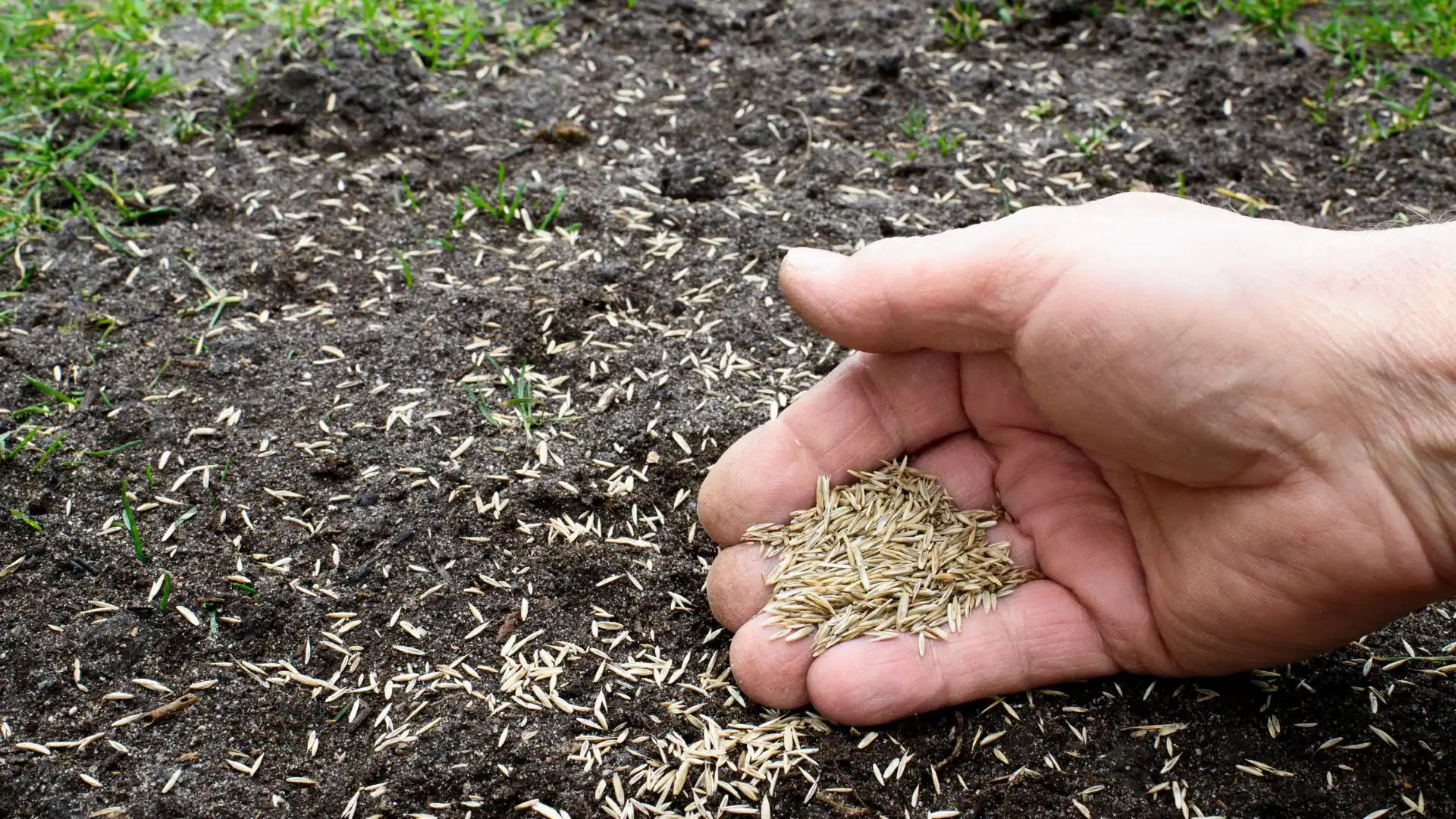
From there, the ground gets prepared not just raked over. For most East Patchogue lawns, that means core aeration to break up compaction and open channels in the soil so seed can actually reach the ground instead of sitting on top of thatch. Starter fertilization goes down with the seed to give new seedlings the nutrition they need during the critical first weeks. For larger bare areas or slopes, we use hydraulic lawn seeding where seed is suspended in a slurry of water, fertilizer, and protective mulch which delivers better germination rates on the fast-draining South Shore soils where dry seeding struggles.
Timing is built into the program, not left to chance. The fall window late August through mid-October is when cool-season grass seeding on Long Island performs best. Soil temperatures are still warm enough for germination, but the air has cooled below the threshold that stresses new seedlings. You’ll also get clear post-seeding care guidance so the investment holds through establishment and into the following season.
Ready to get started?
Every lawn seeding program we run in East Patchogue uses professional-grade seed tall fescue blends, Kentucky bluegrass, and perennial ryegrass mixes selected for performance in Suffolk County’s transitional climate. These aren’t big-box varieties. They’re drought-tolerant enough to survive the South Shore’s summer dry spells, dense enough to crowd out weeds, and adapted to the salt air exposure that comes with living near Great South Bay.
What’s included in your program depends on what your lawn actually needs. New lawn establishment from bare or graded ground gets full seedbed preparation, soil amendment, and starter fertilization alongside the seeding. Restoration programs for thinning or patchy lawns combine core aeration with overseeding the aeration punches holes in compacted soil so seed drops directly into the ground, not onto a thatch layer where it’ll dry out and fail. Suffolk County’s fertilizer regulations, which restrict nitrogen applications to protect groundwater and the health of Great South Bay, are built into every program you won’t have to worry about compliance.
We also hold all required New York State DEC pesticide applicator licenses and carry full liability insurance. In a county with some of the strictest environmental regulations in the state, that’s not a footnote it’s the baseline for doing this work responsibly in East Patchogue and across the South Shore.
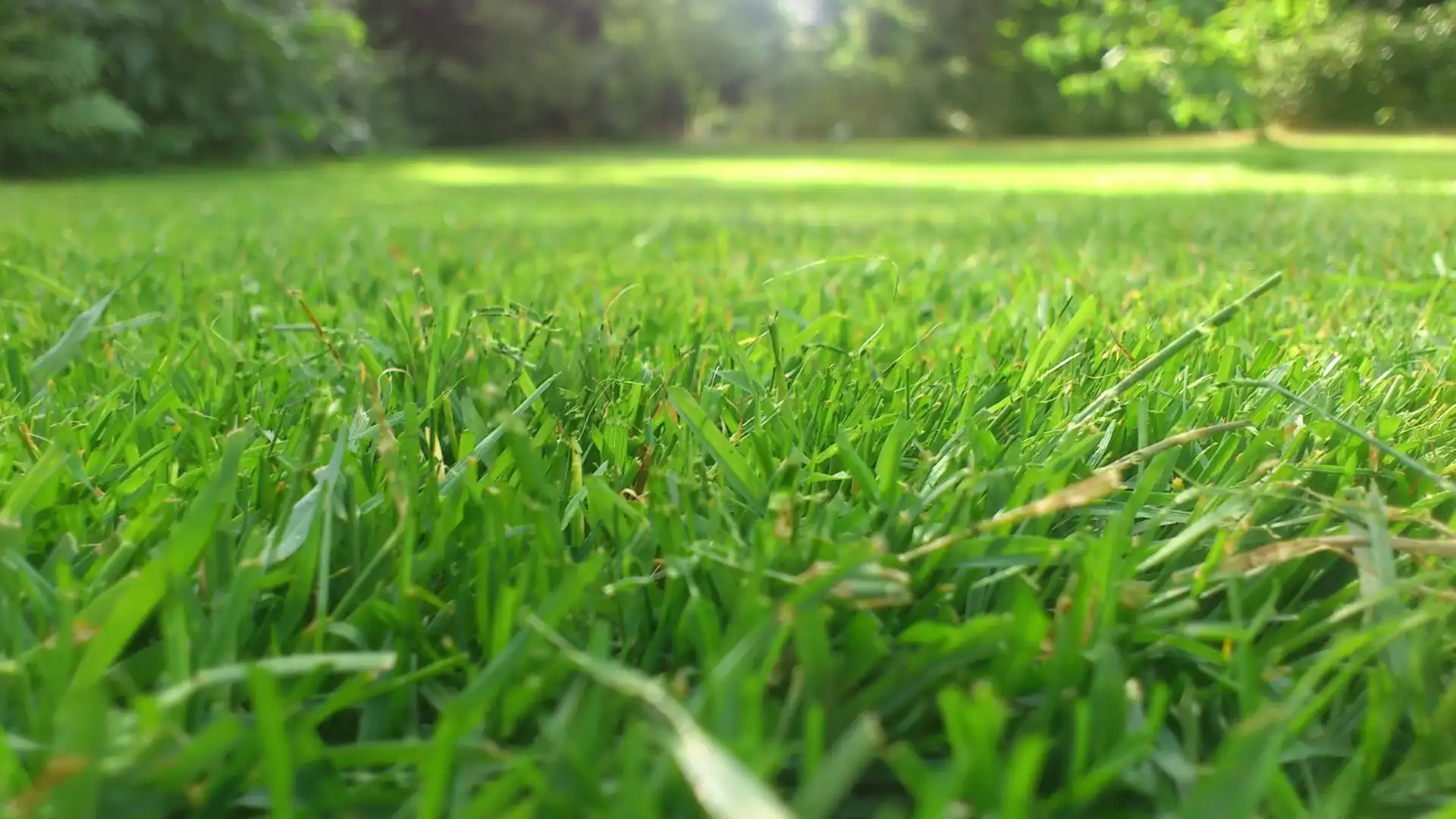
The best window for lawn seeding in East Patchogue is late August through mid-October. During that stretch, soil temperatures are still warm enough above 50°F to support fast germination, but the air has cooled below the 85°F range that stresses cool-season grass seedlings before they can establish. That combination is what makes fall seeding so much more reliable than spring on Long Island’s South Shore.
Spring seeding isn’t impossible, but it comes with real risks here. East Patchogue’s sandy soil warms up faster than inland Suffolk County, which means crabgrass germinates earlier and competes aggressively with new grass before it can get established. If you seed in spring and don’t apply a pre-emergent, you’re often fighting crabgrass by June. If you do apply a pre-emergent, it can interfere with grass seed germination. Fall sidesteps that entire problem and the cooler, more consistent temperatures give new seedlings a much better shot at rooting deeply before winter.
The most common reason is the soil itself. East Patchogue sits on sandy South Shore soil that drains water and nutrients faster than most homeowners expect. When you broadcast seed over unprepared ground, that seed either dries out before germination or washes away during rain. It’s not a seed quality problem it’s a soil preparation problem, and no amount of watering fixes it after the fact.
The second most common reason is timing. Seed applied in late spring or early summer hits the worst possible window on the South Shore soil is warming fast, crabgrass is already competing, and summer heat stress arrives before the new grass can establish deep enough roots to survive it. Professional lawn seeding in East Patchogue addresses both issues: soil is assessed and amended before seeding, and the program is timed to the fall window when conditions actually support establishment. That’s the difference between a lawn that takes hold and one that doesn’t.
Japanese beetle grubs feed on grass roots through late summer and fall, and the damage often looks like drought stress large brown patches that don’t recover when you water them. That’s because the roots are gone. The turf above looks dead because it is dead, and watering the surface doesn’t help when there’s nothing left underneath to absorb it. This is a well-documented problem throughout Suffolk County, including the Patchogue area, and it shows up in East Patchogue lawns every year.
After grub treatment, those damaged areas need professional lawn seeding to come back. The bare zones left behind have compacted, disturbed soil that requires preparation before seed will take especially in the sandy conditions common to the South Shore. Our grub damage restoration program includes targeted soil prep, core aeration of the affected areas, and premium cool-season grass seed applied at the right rate to restore density. Skipping the prep and just throwing seed on a grub-damaged patch is one of the most common reasons reseeding fails the first time around.
For most thinning lawns in East Patchogue, professional overseeding is enough and it’s significantly more cost-effective than sod or full lawn replacement. If your lawn still has a reasonable percentage of live grass and the soil underneath is workable, a well-executed overseeding program paired with core aeration can restore density within a single growing season. The aeration opens up the compacted soil, the seed gets direct ground contact, and the existing turf fills in around the new growth.
Full lawn replacement makes sense in specific situations when grub or disease damage has killed more than 50–60% of the turf, when the soil has been severely disturbed by construction, or when the existing grass species is so mismatched to your conditions that starting over with the right varieties makes more long-term sense. We’ll give you an honest read on which direction makes sense for your specific lawn. There’s no benefit to overselling a full renovation when overseeding will get you the same result for less money and less disruption.
Cool-season grass varieties are the right choice for East Patchogue and the broader South Shore specifically tall fescue blends, Kentucky bluegrass, and perennial ryegrass mixes. Tall fescue is the workhorse of the group: it’s drought-tolerant enough to handle the dry spells that hit this area in July and August, it roots deeply in sandy soil, and it holds up well against the salt air exposure that comes with proximity to Great South Bay. A quality tall fescue blend is the most forgiving and durable option for most East Patchogue lawns.
Kentucky bluegrass adds density and a rich, dark-green color but requires more consistent moisture and performs better in blended mixes than on its own in this climate. Perennial ryegrass germinates quickly often within 5–7 days which makes it useful in blends where fast coverage matters, like post-grub restoration or newly seeded areas that need to establish before winter. The right blend depends on your specific site conditions: sun exposure, soil drainage, irrigation availability, and how the lawn is used. We select seed based on those factors, not a one-size-fits-all formula.
Lawn seeding costs in East Patchogue vary based on the size of the area being seeded, the condition of the soil, and the type of program new lawn establishment from bare ground costs more than an overseeding program on an existing lawn, and seeding for larger or sloped areas is priced differently than standard dry seeding with aeration. For a typical residential overseeding program on a mid-sized Suffolk County lawn, most homeowners are looking at somewhere in the range of $300–$700. Larger properties or full lawn establishment programs run higher.
What’s worth keeping in mind is the cost of doing it twice. A lot of East Patchogue homeowners have already spent money on DIY seed bags or lower-cost services that didn’t hold partly because of the sandy soil conditions here, partly because of timing, and partly because of seed quality. A professional program that accounts for those local factors costs more upfront, but it produces a result that actually lasts. We’ll give you a clear, straightforward estimate based on your specific property before any work begins no surprises, no pressure.
Useful Links
Other Services we provide in East Patchogue