
Hear from Our Customers
Most lawns in Miller Place aren’t thin because of bad luck. They’re thin because the soil, the shade, and the timing were never accounted for. The glacial moraine soil that runs through this part of the North Shore is heavier and slower to warm than what you’ll find further south and if seed goes down before soil temperatures hit the right window, it simply doesn’t take. That’s the most common reason a bag of store-bought seed disappoints.
When seeding is done right here with the correct cool-season grass blend, proper soil prep, and timing that accounts for North Shore conditions the results are visible and they last. A lawn that was thin and weedy in September can be noticeably denser by the following spring. Not just greener, but thicker in a way that actually crowds out weeds over time.
For Miller Place properties near Cedar Beach or along the North Country Road corridor where mature oaks create real shade and salt air off the Sound stresses turf through the summer, the right grass species makes all the difference. We use shade-tolerant fescue blends for the wooded lots and salt-tolerant cultivars for the waterfront-adjacent properties that level of specificity is what separates a lawn that establishes from one that struggles year after year.
We serve Suffolk County homeowners not as a national franchise running the same program everywhere, but as a locally focused lawn seeding company that understands how North Shore conditions differ from the rest of Long Island. The soil in Miller Place behaves differently than what’s in Medford or Patchogue, and the seeding calendar here doesn’t match what the bag instructions say. That gap is exactly where most DIY and cut-rate jobs fall apart.
The Miller Place homeowners we work with tend to have owned their homes for years sometimes decades. The housing stock here dates back to the late 1970s on average, and a lot of those lawns have been compacted, shaded out, or just worn down over time. We’ve seen it from the North Country Road historic corridor all the way out to the newer development lots near Route 25A, and the approach is never the same twice.
You get a company that asks questions before it does anything because the right answer on your property depends on what’s actually happening there.
It starts with a real look at your lawn not a quick walk-by, but an actual assessment of soil conditions, sun exposure, drainage, and what’s already growing (or not growing). In Miller Place, that step matters more than most places because the soil variability here is real. Houdek sandy loam can drain fast in one corner of a yard and hold water in another. pH levels affect germination even when timing and seed selection are perfect. We check before we commit to anything.
From there, seed selection is matched to what your property actually needs. Full-sun lots along the Route 25A corridor get a different blend than a shaded backyard under a 50-year-old oak near Cordwood Landing. If your property has any slope to it especially near the coastal bluffs hydraulic lawn seeding may be the right call, bonding seed directly to the soil surface so it doesn’t wash before it germinates.
For lawns being restored rather than started from scratch, core aeration comes first. Pulling plugs from compacted soil opens up direct channels for seed-to-soil contact, which is the single biggest driver of germination success in an overseeding program. After seeding, we walk you through exactly what to expect watering schedule, first mow timing, and what the lawn should look like at each stage. Fall is the primary window for seeding in Miller Place, with soil temperatures in the 50–65°F range from late August through mid-October. That’s when we do our best work.
Ready to get started?
The grass seed used on your lawn matters more than most homeowners realize. The retail blends at big-box stores often contain annual ryegrass it germinates fast, looks okay for a season, and then disappears. We use professional-grade seed that includes named cultivars of turf-type tall fescue, Kentucky bluegrass, and perennial ryegrass selected for Long Island’s cool-season climate and the specific conditions of North Shore properties.
Turf-type tall fescue is the workhorse for most Miller Place lawns drought-tolerant, adaptable to the sandy loam and heavier glacial soils here, and capable of handling the transition between full sun and partial shade that a lot of properties in this hamlet deal with. Kentucky bluegrass is the premium option for full-sun lawns with irrigation, producing a dense, blue-green turf that fills in over time. Fine fescues go into the shaded areas where nothing else holds reliably.
For Miller Place properties near the Long Island Sound Cedar Beach, Landing Road, the bluff areas salt spray is a real factor that affects species selection. We also calibrate any fertilization paired with seeding to comply with Suffolk County’s fertilizer regulations near waterways, which restrict certain nitrogen applications close to the Sound and Mount Sinai Harbor. You get a lawn that grows well and a program that doesn’t create runoff problems for the water your neighborhood sits next to.
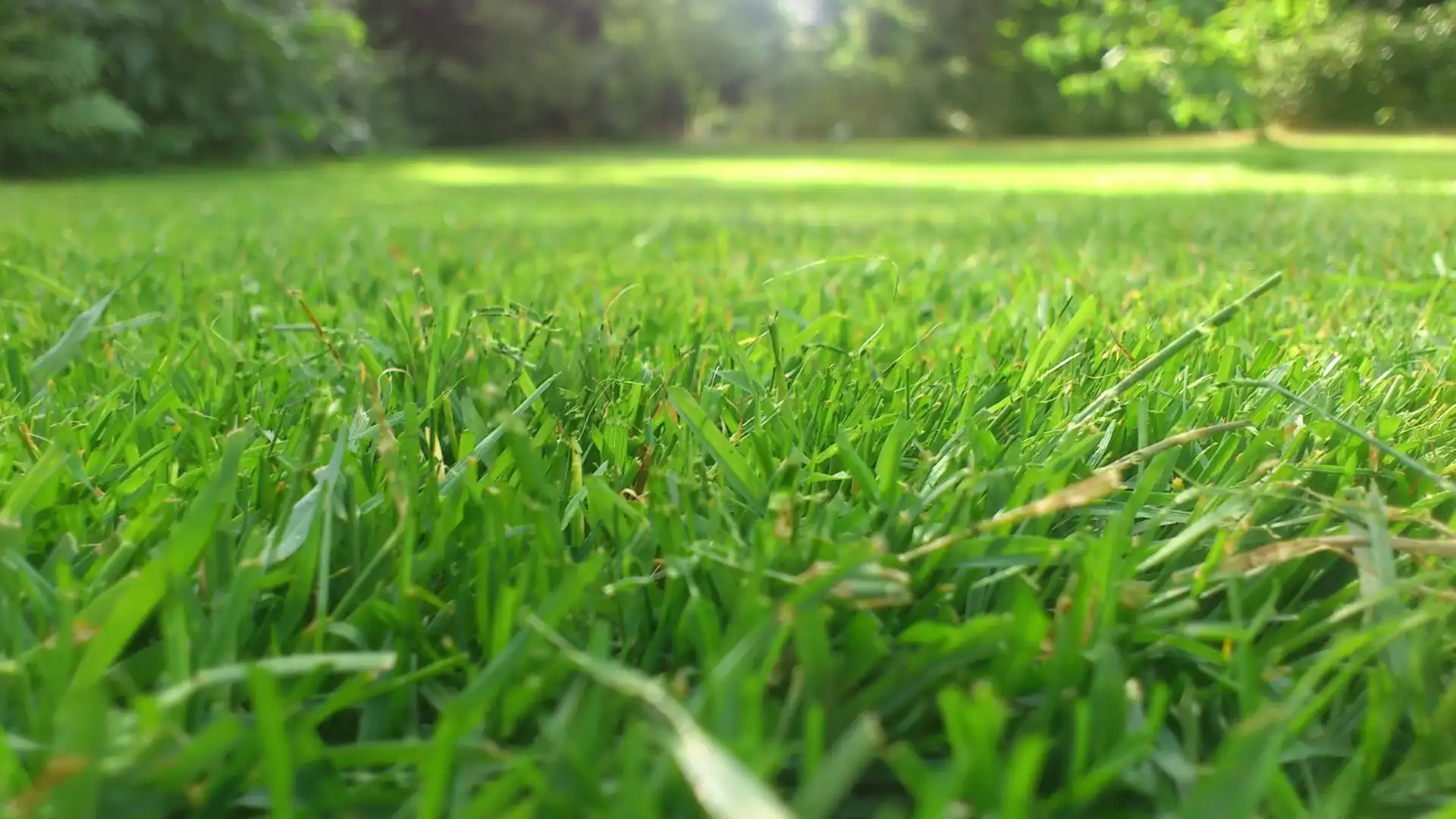
The best window for lawn seeding in Miller Place is late August through mid-October. That’s when soil temperatures consistently sit between 50°F and 65°F the range where cool-season grasses germinate reliably and have enough time to establish roots before the ground freezes. Weed competition also drops off significantly in fall, which gives new seedlings a much better chance of taking hold without fighting crabgrass and other summer annuals.
Spring is a secondary option soil temperatures in this part of North Shore Suffolk County typically reach 50°F by mid-March but it comes with a real trade-off. If you’re running a pre-emergent herbicide program to control crabgrass, you can’t seed at the same time. New seedlings that germinate in spring also face summer heat stress before they’ve had a full season to develop deep roots. For most Miller Place homeowners doing a full lawn renovation or significant overseeding, fall is the right call.
For most Miller Place properties, turf-type tall fescue is the most practical choice. It handles the variable sandy loam and glacial soils in this area well, tolerates drought during Long Island summers, and adapts to both full-sun and partially shaded conditions which covers a lot of ground given how many properties here have mature trees creating mixed light. It’s also more forgiving of the salt air stress that affects lawns within a half-mile or so of the Long Island Sound.
Kentucky bluegrass is the premium option if you have full sun and a working irrigation system. It produces a denser, darker lawn and has the ability to spread and self-repair over time, but it needs consistent moisture through summer to stay healthy in this climate. Fine fescues are the right choice for heavily shaded areas under large oaks along the North Country Road corridor, for example where most other species thin out and fail. In practice, most Miller Place lawns do best with a blend that accounts for the specific sun and shade patterns on that individual property, not a one-size bag off a shelf.
Overseeding is adding seed to an existing lawn that has thinned out over time compaction, shade, drought stress, or just age. The goal is to increase density in what’s already there, and it’s typically paired with core aeration so the seed has direct soil contact rather than sitting on top of thatch. This is the right approach for Miller Place homeowners whose lawns were once decent but have degraded over 10, 20, or 30 years of use.
Starting a new lawn from seed is a different scope entirely it applies when you’re working with bare or near-bare ground, whether that’s from construction, a pool installation, or a complete lawn removal. In this case, soil preparation is more involved: grading, amendment, and sometimes pH correction before any seed goes down. The seeding method may also differ seeding is often the better choice for larger bare areas or any property with slope, because it bonds the seed to the soil surface and dramatically reduces the erosion risk that comes with broadcast seeding on open ground.
For certain Miller Place properties, seeding isn’t just worth it it’s the smarter method. The hilly terrain near Cedar Beach, Landing Road, and the bluff areas along the Long Island Sound creates erosion risk that conventional broadcast seeding can’t handle. When you broadcast seed on a slope, rain moves it before it germinates. Seeding solves that by mixing seed, starter fertilizer, wood-fiber mulch, and a tackifier into a slurry that’s sprayed directly onto the soil surface. It adheres, holds moisture, and gives the seed a protected environment to germinate in.
For flat Miller Place properties with a large bare area a backyard after construction, for example seeding also has advantages over broadcast seeding in terms of germination consistency. The mulch layer retains moisture between waterings, which matters a lot during the dry spells that hit Long Island in late summer and early fall. The cost is higher than broadcast seeding, but so is the success rate. If your property has any meaningful grade to it or a large open area to establish, it’s worth having the conversation about whether hydraulic lawn seeding is the right fit.
With fall seeding in Miller Place which is the recommended window you’ll typically see germination within 7 to 21 days depending on the species. Perennial ryegrass germinates fastest, often within a week. Turf-type tall fescue follows at 10 to 14 days. Kentucky bluegrass is the slowest, sometimes taking 3 weeks or longer. By the time the ground freezes, a properly seeded lawn should have visible coverage and some root establishment enough to come back strong in spring.
The first full growing season after seeding is when density really builds. A lawn seeded in September won’t look like a finished product in October, but by the following May or June, the difference is significant. Watering in the weeks after seeding is the biggest variable you control the seed needs consistent moisture to germinate, and any dry stretch that lets the surface dry out completely can set things back. We walk you through the watering schedule for your specific lawn so you’re not guessing during that critical establishment period.
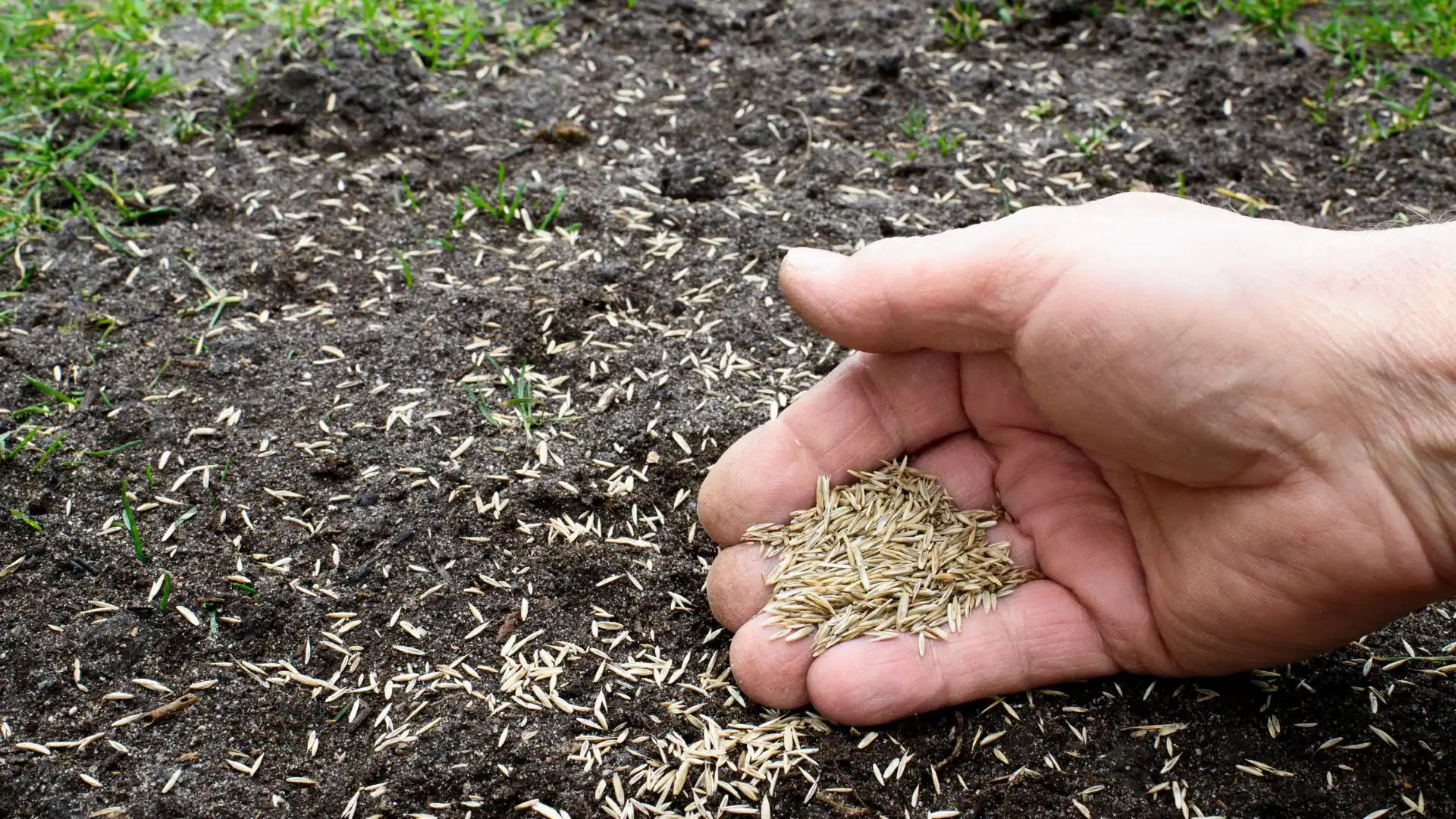
The most common reason DIY reseeding fails in Miller Place is seed-to-soil contact or the lack of it. Broadcasting seed over existing turf, thatch, or hard ground means most of it never actually reaches the soil. It sits on the surface, dries out, and either doesn’t germinate or produces weak seedlings that don’t survive their first summer. The lawn looks marginally better for a few weeks and then goes back to where it started.
The second most common issue is timing and species mismatch. North Shore soils in Miller Place warm later than the rest of Long Island, so the standard spring seeding calendar that works elsewhere often means seed going down before soil temperatures are actually ready. And if the wrong species goes in something that can’t handle the shade from your mature trees, or that can’t tolerate the salt air if you’re near the Sound it will thin out no matter how well it germinates initially. Professional overseeding that starts with aeration, uses the right blend for your specific conditions, and hits the fall window correctly produces results that hold because the foundation is actually right.
Useful Links
Other Services we provide in Miller Place