
Hear from Our Customers
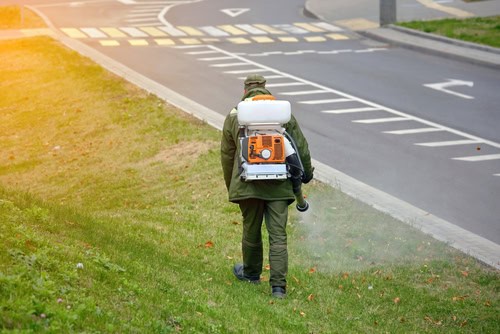
Most East Patchogue homeowners don’t realize their lawn has a disease problem until they’re staring at brown, spreading patches in the middle of August. By that point, the damage is already done and reseeding over active disease doesn’t fix anything. The fungus just kills the new growth before it ever roots. What changes when you address it correctly is simple: the patches stop spreading, the turf recovers, and your lawn goes into fall looking like something you’re not embarrassed by.
Living near the Great South Bay and the Swan River corridor means your lawn is working against conditions that most inland Suffolk County properties never deal with. The nighttime humidity that rolls in off the bay keeps your grass blades wet long after the sun goes down and that’s exactly when brown patch spreads. Sandy loam soils drain fast, which stresses your turf during dry stretches and leaves it wide open for dollar spot. These aren’t random bad luck events. They’re predictable, recurring conditions that a professional fungicide program can actually get ahead of.
When the disease cycle is broken not just treated after the fact, but interrupted before it starts your lawn stops being a seasonal project and starts being something that holds up. That’s the outcome. No patches by Labor Day. No wasted seed money in October. Just grass that looks the way it should.
We are a licensed commercial pesticide applicator registered with the New York State Department of Environmental Conservation. That license isn’t just a piece of paper it’s what gives us legal access to professional-grade, restricted-use fungicide formulations that aren’t sold at any hardware store on Sunrise Highway. The active ingredients we work with are the same class used on golf courses and professional sports turf. What you can buy off the shelf is a fundamentally different product, and that gap in chemistry is usually why DIY attempts fail.
We’re a Suffolk County-based operation serving the Town of Brookhaven the same town East Patchogue falls under. We know the South Shore. We know what the Swan River corridor does to ambient moisture levels in summer, we know what the sandy soils along the bay do to cool-season turf under stress, and we know which diseases show up on which side of the season. That local knowledge isn’t incidental it’s what makes the difference between a generic spray schedule and a program that actually works for your specific lawn.
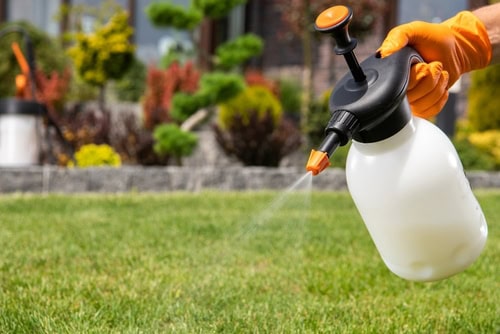
The first thing we do is identify what’s actually happening in your lawn. Brown patch, dollar spot, and red thread all look similar at a glance patchy, discolored, thinning turf but they’re caused by different fungi, they peak at different points in the season, and they respond to different fungicide chemistries. Treating the wrong disease with the wrong product doesn’t just fail; it wastes time while the actual problem keeps spreading. So before anything gets applied, we know what we’re dealing with.
Once the disease is identified, we select the right fungicide for that specific pathogen and apply it at the correct rate and timing. For East Patchogue lawns near the bay or the Swan River, that timing matters more than most people realize. Brown patch pressure in this area typically builds from late June through August, when South Shore nighttime temperatures stay above 70°F and humidity stays elevated. Red thread shows up in spring and again in early fall when temperatures cool back into that 60–75°F window. Dollar spot can run from late spring through October on lawns with thin turf and inconsistent nitrogen. We time applications around those windows not a fixed calendar date that ignores what’s actually happening outside.
We also rotate fungicide chemistries across the season to prevent resistance. Applying the same product repeatedly trains the fungus to survive it. Rotating between strobilurin-class and triazole-class fungicides prevents that from happening. After every application, you receive written documentation of what was used, at what rate, and on what date a legal requirement under NYS DEC rules, and something an unlicensed operator simply can’t provide.
Ready to get started?
The three fungal diseases that hit East Patchogue lawns hardest are brown patch, dollar spot, and red thread and each one takes advantage of something specific about this area. Brown patch thrives in the warm, humid nights that come with living close to the Great South Bay. Dollar spot exploits the fast-draining sandy loam soils that stress cool-season grasses and deplete nitrogen during dry spells. Red thread moves in during the cool, moist shoulder seasons spring and fall when the South Shore’s maritime air keeps conditions ideal for Laetisaria fuciformis to spread across turf that’s running low on nitrogen.
What you get with our fungicide program is treatment matched to those specific conditions, not a generic spray schedule designed for a lawn in a different climate. We account for your proximity to the water, your soil profile, and the age of your lawn because most East Patchogue homes were built between the 1940s and 1980s, and those established lawns carry decades of thatch buildup that traps moisture and limits airflow at the soil surface. That’s a structural disease accelerator, and it’s something we factor in.
Every application is fully documented per NYS DEC requirements. We’re also compliant with Suffolk County’s fertilizer restrictions, which specifically limit applications near water bodies directly relevant for properties that drain toward the Swan River, Patchogue Bay, or the Great South Bay. You’re not just getting a lawn treatment. You’re getting a licensed, accountable program from a company that understands what makes this corner of Suffolk County different from everywhere else.
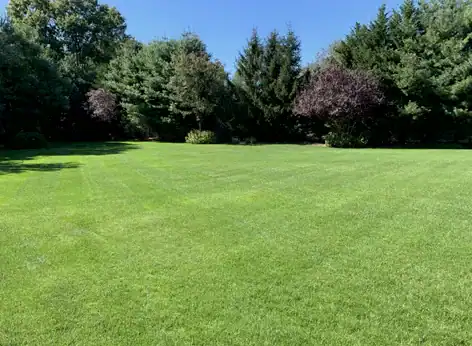
Brown patch is caused by a fungus called Rhizoctonia solani, and it has very specific requirements to become active: nighttime temperatures above 70°F combined with sustained high humidity and moisture on the grass blades. East Patchogue’s position on the South Shore, right next to the Great South Bay and the Swan River corridor, creates exactly those conditions every July and August without any unusual weather required. The bay generates maritime air that keeps nighttime temperatures elevated and humidity higher than you’d find just a few miles inland. Your lawn isn’t unlucky it’s in the wrong microclimate for brown patch prevention without a deliberate program.
The other factor is the age of most East Patchogue lawns. Homes built in the mid-20th century have established turf with decades of thatch accumulation. When that thatch layer exceeds about half an inch, it traps moisture at the soil surface and limits air circulation which is exactly the warm, wet, low-oxygen environment that brown patch needs to spread. A professional fungicide program timed to the South Shore’s disease windows stops the cycle before the damage becomes visible.
They look similar from a distance patchy, discolored, thinning turf but they’re distinct diseases that require different treatments. Brown patch creates large, irregular circles that can span several feet, and it moves fast during hot, humid nights. Dollar spot leaves smaller, silver-dollar-sized straw-colored patches scattered across the lawn, and it tends to show up when turf is drought-stressed and running low on nitrogen common on East Patchogue’s sandy soils during dry stretches. Red thread is the one with the telltale pink or coral-colored threads on the grass blades, and it peaks in spring and early fall when temperatures are in the 60–75°F range.
The reason this distinction matters is that each disease responds to different fungicide chemistry. Applying a product designed for brown patch to an active red thread outbreak won’t give you the results you’re looking for. This is one of the most common reasons DIY fungicide programs fail the product wasn’t wrong because fungicide doesn’t work, it was wrong because it was the wrong product for the specific pathogen. Diagnosis before application isn’t optional; it’s the whole reason the treatment works.
If you’re reseeding the same areas repeatedly and the grass either doesn’t germinate or dies shortly after it does, there’s a very high probability you’re putting seed down over active fungal disease. New grass seedlings can’t establish in soil with a living pathogen the fungus attacks the seedlings before they ever root. This is one of the most frustrating and expensive cycles homeowners get stuck in, and it’s especially common in East Patchogue because the environmental conditions that cause the disease in the first place don’t go away on their own.
The fix isn’t a better seed or more water. It’s treating the disease first, giving the soil time to stabilize, and then reseeding into clean conditions. Fall is typically the best window for overseeding cool-season turf on Long Island but it’s also when red thread and lingering dollar spot are still active. If you’re planning to reseed this fall, getting a fungicide application in before you put seed down is the difference between a lawn that fills in and another season of wasted effort.
You can buy fungicide products at a garden center or home improvement store, and some of them will have a limited effect on mild outbreaks under ideal conditions. But there are two real limitations. First, the products available to homeowners contain lower concentrations of active ingredients and are generally contact-based, meaning they work on the surface of the blade rather than systemically through the plant. Professional-grade fungicides the kind we can legally use as a NYS DEC-licensed applicator are restricted-use products that aren’t sold at retail. They work at a different level and deliver meaningfully better results on established disease.
Second, the timing and chemistry rotation matter as much as the product itself. Applying the right fungicide at the wrong point in the disease cycle, or using the same product repeatedly until the fungus develops resistance, will eventually leave you with a worse problem than you started with. Licensed applicators are trained in resistance management rotating between fungicide classes across the season to prevent that from happening. If you’ve used store-bought products and watched the disease come back anyway, that’s usually why.
Timing depends on which disease you’re trying to prevent or treat. For brown patch the most common summer disease on East Patchogue lawns the high-risk window runs from late June through August, when South Shore nighttime temperatures stay above 70°F and humidity stays elevated near the bay. Preventative applications applied before symptoms appear are significantly more effective than curative treatments applied after the disease is already visible and spreading. By the time you see the brown circles, the fungus has already been active for days.
For dollar spot and red thread, the windows are different. Dollar spot can be active from late spring through October on stressed turf. Red thread peaks in May through June and again in September through October when temperatures cool back into that moderate range. A properly structured fungicide program accounts for all three windows not a single application in midsummer that misses the shoulder-season diseases entirely. If your lawn has a history of recurring disease, the most cost-effective approach is a preventative program that starts before the first symptoms of the season appear.
This is a legitimate concern for East Patchogue homeowners, and it’s one that we take seriously. Suffolk County has fertilizer and pesticide restrictions specifically designed to protect South Shore waterways including limits on applications near water bodies and buffer requirements for properties that drain toward tidal systems like Patchogue Bay and the Great South Bay. We operate in full compliance with those county-level restrictions and with all NYS DEC label requirements, which include specific guidance on application rates, setback distances, and weather conditions that affect runoff risk.
The practical reality is that a licensed, properly applied professional fungicide program is far less of an environmental risk than a homeowner applying over-the-counter products without training, without knowledge of buffer requirements, and without documentation of what was used or where. Licensed applicators are legally accountable for every application and that accountability is part of what you’re paying for. After every visit, you receive written records of what was applied, at what rate, and on what date. That paper trail protects you, your property, and the waterways your neighborhood borders.
Useful Links
Other Services we provide in East Patchogue