
Hear from Our Customers
If you’ve reseeded the same dead patches in your Eagle Estates or Pine section lawn two or three falls in a row and they keep dying the following July, that’s not a seed problem. That’s an undiagnosed fungal disease living in your soil and no amount of reseeding fixes it until the disease is treated first. Brown patch, dollar spot, and red thread are all common on Medford lawns, and each one requires a different approach. Spraying the wrong product at the wrong time doesn’t just waste money it lets the infection spread while you wait for results that never come.
Medford’s soil is part of why this keeps happening. The sandy, low-organic-matter substrate left behind by the Central Long Island Pine Barrens drains fast and depletes nitrogen quickly, which keeps turf stressed and vulnerable. Add in Medford’s warm, still summer nights when temperatures stay above 70°F and dew sits on the grass for hours and you have near-perfect brown patch conditions from late June through August. When we treat the actual disease, with the right chemistry, timed to what’s actually happening in your lawn, the results stick. The patches stop coming back. The grass fills in and holds.
We are a New York State DEC-licensed commercial pesticide applicator serving Suffolk County, including Medford and the surrounding Patchogue-Medford area. That license isn’t a marketing line it’s a legal requirement to do this work professionally, and not every lawn care company operating in Medford holds one. It requires passing state exams, meeting experience standards, and renewing every three years with continuing education. It also means we have access to restricted-use fungicide formulations that aren’t available at any retail store the same professional-grade products used on golf courses across Long Island.
We’ve worked on lawns throughout Medford and the surrounding area, on the kind of post-war housing stock built over Pine Barrens soil that creates chronic turf stress year after year. We know what brown patch looks like on a Medford lawn in July, what dollar spot does to nitrogen-deficient turf by August, and why red thread keeps coming back in the fall if the underlying soil conditions aren’t addressed. After every application, you receive written documentation of exactly what was applied, at what rate, and when because that accountability is both a legal requirement for licensed applicators and something you deserve to have. Many of the same Medford properties we treat for disease also face seasonal pest pressure, which is why we also provide flea & tick control in Medford.
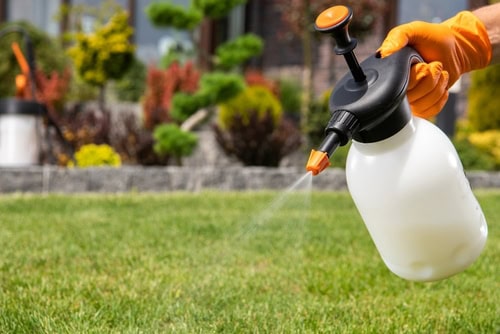
It starts with identifying what’s actually in your lawn. Brown patch, dollar spot, and red thread are the three diseases we see most often on Medford properties but they look different, spread differently, and respond to different chemistries. Before any product is selected, we assess the symptoms, the soil conditions, the turf type, and the time of year. That evaluation drives every decision that follows.
Once the disease is identified, we select the appropriate fungicide and application timing for what’s actually present. For brown patch, that often means getting ahead of Medford’s humid July nights with a preventative application before the conditions that trigger the disease arrive not after you’re already looking at a lawn-wide infection. For dollar spot and red thread, timing aligns with the cool, damp windows in spring and fall when those pathogens are most active on nitrogen-depleted sandy soil. We also rotate fungicide modes of action across the season alternating chemistries like triazoles and strobilurins so the disease doesn’t build resistance to treatment over time.
After each visit, you get written documentation of the product applied, the rate, and the date. That’s required under New York State DEC regulations for licensed commercial applicators, and it gives you a clear record of everything that’s been done to your lawn.
Ready to get started?
Every fungicide treatment we provide starts with expert disease identification not a generic program applied on a calendar schedule. You get a licensed applicator who knows the difference between what brown patch looks like on a Medford lawn in late June versus what dollar spot looks like on the same lawn in September. That distinction matters because the products, timing, and follow-up are completely different for each disease.
The fungicide formulations we use are professional-grade, restricted-use products the same active ingredients used on the golf courses and athletic fields across Long Island. These are not available over the counter. If you’ve tried a store-bought fungicide and watched the patches come back, this is the reason. Concentration matters. Chemistry match matters. Timing matters. And because Medford sits within the Central Long Island Pine Barrens aquifer recharge zone a New York State-designated Critical Resource Area we apply only what’s necessary, at label-compliant rates, with full documentation on every visit.
If you’re planning to reseed this fall, that conversation starts here too. Reseeding into soil with active fungal disease is one of the most common and costly mistakes we see on Medford lawns new seed fails to establish because the pathogen destroys seedlings before they root. A pre-seeding fungicide application is often the step that makes the difference between a lawn that fills in and one that dies in the same spots again by next July.
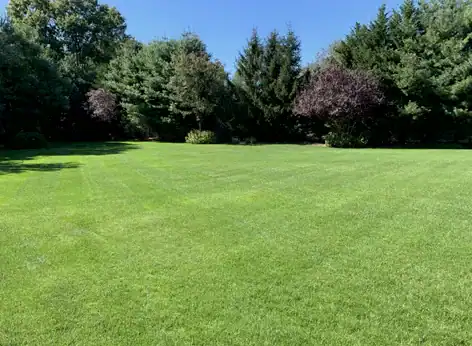
The most likely answer is brown patch a fungal disease caused by Rhizoctonia solani that thrives when nighttime temperatures stay above 70°F and humidity is elevated. In Medford, those conditions arrive reliably in late June and hold through August. The disease can spread from a few small circles to a widespread infection within days, which is why lawns that looked fine in early June can look like they need a full renovation by mid-July.
What makes Medford lawns especially vulnerable is the underlying soil. The sandy, low-organic-matter substrate common throughout this area a direct legacy of the Central Long Island Pine Barrens dries out quickly, depletes nitrogen fast, and keeps turf under chronic stress. Stressed turf has less natural disease resistance, which is why the same patches tend to die in the same spots year after year. The soil conditions that favor the disease are still there even after the visible symptoms go away. A proper fungicide treatment from a licensed applicator, timed to Medford’s specific disease pressure windows, breaks that cycle.
They’re three distinct fungal diseases that look different, spread differently, and require different fungicide chemistries to treat. Brown patch shows up as large, irregular brown circles often with a dark border and spreads fastest during Medford’s hot, humid summer nights. Dollar spot creates small, silver-dollar-sized tan spots and tends to hit lawns that are low on nitrogen, which is a common condition on Medford’s sandy, fast-draining soil. Red thread appears as pink-to-red thread-like strands extending from grass blades and is most active in spring and fall when temperatures are cooler.
The reason this matters isn’t just academic. Applying a fungicide designed for brown patch to a lawn that actually has dollar spot won’t work and while you’re waiting to see results, the disease keeps spreading. Getting the diagnosis right before selecting a product is the difference between a treatment that works and money spent on something that doesn’t. This is one of the core reasons a licensed professional applicator produces better outcomes than a generic spray program or a store-bought bag from the hardware store.
You can try, and many Medford homeowners do usually before they end up calling us. The problem isn’t effort. It’s that over-the-counter fungicide products contain lower concentrations of active ingredients and are frequently the wrong chemistry for the specific disease present in your lawn. Without a proper diagnosis, there’s no reliable way to know which product to reach for, and the retail shelf doesn’t give you that answer.
We have access to restricted-use fungicide formulations professional-grade products that are not available at any retail store. These are the same active ingredients used on golf courses and sports turf across Long Island, at concentrations that actually match what a serious lawn disease requires. Add in the ability to rotate chemistries across the season to prevent resistance buildup, and the gap between a professional fungicide program and a DIY attempt becomes significant. If you’ve already tried a store-bought product and the patches came back, that experience is the most honest answer to this question.
Yes when it’s done by a licensed applicator following New York State DEC label requirements. Medford sits within the Central Long Island Pine Barrens, a state-designated Critical Resource Area that overlies the primary drinking water aquifer for much of Suffolk County. That’s a real environmental consideration, and it’s one that licensed commercial applicators are trained and legally required to account for.
We apply only the products and rates necessary to treat the specific disease present nothing more. Every application follows NYS DEC label directions precisely, and you receive written documentation after every visit confirming what was applied, at what rate, and when. Unlicensed operators who apply pesticides without a commercial applicator license, at incorrect rates, or without proper records are not only producing worse results they’re operating illegally in a sensitive recharge area. Hiring a licensed professional isn’t just about getting better outcomes for your lawn. In Medford specifically, it’s also the environmentally responsible choice.
Timing depends entirely on which disease you’re treating, and in Medford the seasonal windows are fairly predictable once you know what to look for. Brown patch is the primary concern from late June through August Medford’s warm, still summer nights create near-ideal conditions for it, and preventative applications timed to the first stretch of hot, humid weather are significantly more effective than waiting until you can already see the damage. By the time circular brown patches are visible, the disease has typically been active for a week or more.
Dollar spot and red thread are cool-season diseases that peak in spring and again in early fall, when temperatures drop back into the 60–75°F range and nitrogen-depleted turf is most vulnerable. Medford’s sandy soil loses nitrogen quickly through leaching, which means lawns coming out of winter or heading into fall are often at their lowest fertility and their highest risk. A well-timed fungicide program accounts for all three windows across the season, not just the most visible summer damage.
If your lawn has had recurring dead patches especially in the same locations year after year yes, a pre-seeding fungicide treatment is often the most important step you can take before putting seed down. This is one of the most common and costly mistakes we see on Medford lawns: homeowners reseed in September, the seed germinates, and by the following July the same patches are dead again. The reason is that the fungal pathogen responsible for the original damage is still present in the soil. New seedlings don’t have the root development to survive contact with an active disease, and they fail before the grass ever has a chance to establish.
Medford’s thin topsoil layer typically two to four inches of sandy soil over coarse Pine Barrens subsoil makes this even more likely, because there’s less buffer between the seedling root zone and the pathogen living in the soil. Treating the disease first, confirming the infection is suppressed, and then reseeding gives your investment in new grass a real chance to hold. Without that step, you’re likely repeating the same cycle next year.
Useful Links
Other Services we provide in Medford