
Hear from Our Customers
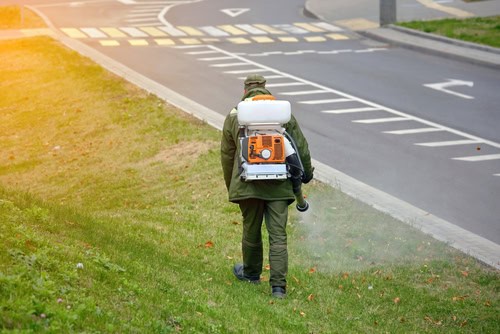
If the same corner of your Miller Place lawn dies every August and you reseed it every September, you’re not dealing with bad luck. You’re dealing with an active fungal disease that never got properly treated and new seed cannot establish in soil where that disease is still present. Once the right fungicide is applied at the right time, that cycle stops.
Miller Place’s position on the North Shore creates conditions that are genuinely harder on lawns than most of inland Suffolk County. The Long Island Sound drives coastal humidity that lingers through summer nights, keeping grass blades wet for hours after dark. Combined with the sandy, fast-draining soils that dominate this part of Brookhaven Town, you get the exact environment where brown patch and dollar spot thrive warm, humid nights above the surface and dry, nitrogen-starved soil below it.
The outcome of professional fungicide treatment isn’t just a green lawn. It’s not watching the same damage return next season. It’s reseeding once, in healthy soil, and having it actually take. For a home worth what Miller Place homes are worth today, that’s not a small thing.
We hold a New York State DEC commercial pesticide applicator license the credential that legally separates professional fungicide application from anyone spraying without authorization. That license requires passing state examinations, meeting experience requirements, and renewing every three years with continuing education. It also grants us access to restricted-use pesticides that are simply not sold at any retail store on Route 25A or anywhere else in Miller Place.
Operating out of Port Jefferson Station, we serve the North Shore corridor Miller Place, Mount Sinai, Sound Beach, and the surrounding hamlets as a local operator who understands the coastal conditions, sandy soils, and seasonal disease patterns specific to this stretch of the Sound. Not a franchise. Not a template program. A licensed professional who knows what grows here, what kills it, and what actually fixes it.
Every application we complete is documented. Every product we use is disclosed. That’s not a courtesy it’s what New York State law requires of licensed applicators, and it’s what accountability looks like.
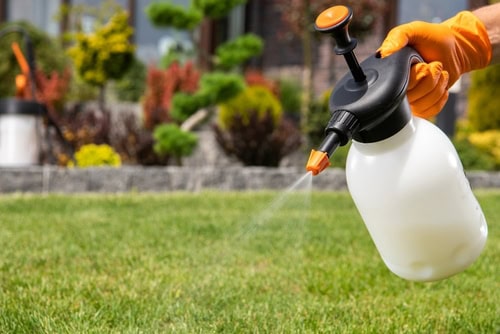
The first step isn’t spraying. It’s figuring out what’s actually happening. Brown patch, dollar spot, and red thread look similar to the untrained eye, but they respond to different fungicide chemistries, have different environmental triggers, and require different application timing. Treating the wrong disease with the wrong product is a waste of money and it happens constantly with generic lawn programs that spray on a schedule regardless of what’s going on in the turf.
Once the disease is identified, we match the right product to it. For Miller Place lawns, that often means timing preventative brown patch applications to when nighttime temperatures approach 70°F in late June before the visible damage appears because by the time you see the circular patches, the disease has already been active for days. Red thread gets addressed in spring and fall when cool, moist conditions off the Sound create its ideal window. Dollar spot treatment accounts for the sandy soil drought stress that’s common on North Shore properties even in humid summers.
After every application, you receive documentation what was applied, at what rate, and the re-entry interval for your family and pets. New York State requires this of licensed applicators, and we provide it every time.
Ready to get started?
The fungicide program we provide in Miller Place is built around the three diseases most common on Long Island’s sandy, coastal North Shore soils. Brown patch is the most destructive in summer it spreads rapidly when nighttime temperatures stay above 70°F and humidity is high, both of which are reliable conditions in Miller Place from July through August. Dollar spot is the quiet one it shows up as small tan spots that look like drought damage, and it loves the dry-soil, moist-air combination that Miller Place’s sandy loam creates all summer. Red thread arrives in spring and fall, spreads fast in cool and wet conditions, and is especially aggressive on nitrogen-depleted lawns coming out of winter which describes most lawns on the North Shore after a cold season.
Properties near North Country Road and the historic district face an added layer of challenge. The mature tree canopy that makes that part of Miller Place so distinctive also traps moisture and limits airflow, creating shaded conditions where fungal disease pressure is higher and spreads faster than in more open suburban areas along Route 25A.
The program we deliver uses professional-grade, restricted-use fungicide formulations the same chemistries used on golf courses that are not available at retail. Chemistries are rotated across the treatment season to prevent resistance from building up, which is one of the most common reasons DIY programs stop working over time. Suffolk County’s nutrient management regulations near water bodies are followed in full, which matters for properties close to Cedar Beach and the Sound.
The most common reason is that the underlying fungal disease almost always brown patch on North Shore lawns was never actually eliminated. It was either treated with the wrong product, treated too late after visible damage had already spread, or not treated at all and just mowed over. The pathogen stays in the soil and thatch layer, and when conditions return the following summer warm nights, Sound-driven humidity, wet grass blades it picks right back up where it left off.
Miller Place’s coastal position makes this cycle more predictable than it is for inland Suffolk County communities. The Long Island Sound keeps nighttime temperatures elevated and humidity high from July through August, which is exactly the environmental window brown patch needs. A licensed fungicide program timed to those conditions applied preventatively before the damage appears breaks the cycle. Once the disease is suppressed and the soil is healthy, reseeding actually works.
They’re three distinct fungal diseases caused by three different pathogens, and they each have their own environmental triggers and treatment requirements. Brown patch is a warm-season disease it thrives when nighttime temperatures stay above 70°F and humidity is high, which makes July and August the peak window on North Shore Long Island. It creates large, circular brown areas that can expand quickly. Dollar spot shows up as small, straw-colored spots roughly the size of a silver dollar, and it’s most active when soil is dry at the root level but air and leaf surfaces are moist a combination that’s very common on Miller Place’s sandy soils during dry summer stretches. Red thread is a cool-season disease that peaks in spring and fall, produces a distinctive pinkish-red color at the tips of grass blades, and spreads aggressively on nitrogen-deficient lawns.
The reason it matters which one you have is that they respond to different fungicide chemistries. Applying a product labeled for brown patch to an active red thread outbreak won’t do much. Diagnosis first is not a formality it’s the difference between treatment that works and money wasted.
You can try, and a lot of Miller Place homeowners do usually after watching the same problem return for two or three seasons. The limitation isn’t effort. It’s chemistry access. Retail fungicide products contain lower concentrations of active ingredients and are available only in a narrow range of formulations. The professional-grade, restricted-use products that licensed applicators use the same chemistries on golf courses and athletic fields are not sold at any consumer retailer. They require a New York State DEC commercial pesticide applicator license to purchase and apply.
Beyond the chemistry gap, timing is the other major factor. Preventative fungicide applications need to go down before visible disease appears, timed to specific temperature and humidity thresholds. Most homeowners apply after the damage is visible, which means the disease has already been active for days or weeks. Curative treatment at that stage is harder, slower, and less effective than prevention timed correctly to Miller Place’s seasonal disease windows.
The most obvious signs are circular or irregular brown patches that appear or expand rapidly during warm, humid stretches in summer that’s brown patch. Small tan or straw-colored spots scattered across the lawn during dry spells are usually dollar spot. A pinkish or reddish tinge at the tips of grass blades in spring or fall, especially on areas that look thin or pale, is almost always red thread. If you’re seeing any of these and the damage keeps coming back after reseeding, there’s a fungal pathogen involved.
For properties close to the Sound along North Country Road, Landing Road, or near Cedar Beach the combination of coastal humidity and sandy soil makes fungal disease more likely than it would be for lawns further inland. If your lawn is in a shaded area with limited airflow, the risk is even higher. The honest answer is that the only way to know for certain is to have a licensed professional look at it, because several of these diseases look similar and misidentification leads to the wrong treatment.
It depends on the disease, the severity of the history, and the specific conditions of your lawn. For brown patch on a North Shore property with a history of summer outbreaks, a preventative application in late June followed by a curative or follow-up application if conditions persist through August is a common approach. Dollar spot can require multiple applications across the summer if the soil stays dry and humidity remains high. Red thread is typically addressed in spring and sometimes again in fall if conditions favor a second outbreak.
What matters more than a fixed number is timing and chemistry rotation. Applying the same product repeatedly across a season or across multiple seasons builds fungicide resistance in the pathogen population, meaning the treatment becomes less effective over time. A properly structured program rotates between different modes of action to prevent that from happening. For most Miller Place lawns dealing with one or two recurring diseases, two to three targeted applications per season is a reasonable range, but that gets determined after looking at the actual lawn, not before.
If you’ve reseeded the same area more than once and it keeps failing, you’ve already answered that question with your own money. New grass seed cannot establish in soil with active fungal disease. The seed germinates, the disease takes hold before the roots can develop, and the patch dies again usually by the following summer. The cost of reseeding the same 200 square feet two or three times adds up quickly, and none of it solves the underlying problem.
Professional fungicide treatment in Miller Place addresses what’s actually causing the failure. With median home values above $665,000 in this area, the lawn is part of a significant asset. A diseased, patchy lawn in a neighborhood where most properties are well-maintained affects curb appeal and the general condition of the property. The cost of a targeted, licensed fungicide program is a fraction of what repeated reseeding costs over time and it’s the only approach that actually gives new seed a healthy environment to establish in.
Useful Links
Other Services we provide in Miller Place