
Hear from Our Customers
If the same dead spots keep coming back every summer, you’re not dealing with a watering problem or a soil problem. You’re dealing with an active fungal pathogen and reseeding over it every fall just feeds the cycle. Once we correctly identify and treat the disease, those spots stop coming back. That’s the actual outcome you’re after.
Oakdale’s geography makes fungal lawn disease more likely than most homeowners realize. The Connetquot River State Park Preserve borders the western and northern edges of the hamlet 3,473 acres of wetlands, ponds, and pine barrens that keep ambient humidity elevated at the turf surface well into the evening. Add the maritime air off the Great South Bay to the south, and you’ve got a lawn environment where brown patch, dollar spot, and red thread aren’t occasional problems. They’re seasonal expectations.
The sandy, fast-draining soils common across the South Shore add another layer. Your Oakdale lawn can be drought-stressed at the root level while the humidity at the blade level stays high enough to sustain active fungal growth. That combination dry roots, humid canopy is exactly what dollar spot and brown patch thrive in. Our professional fungicide application in Oakdale addresses both the pathogen and the conditions driving it, not just what you can see on the surface.
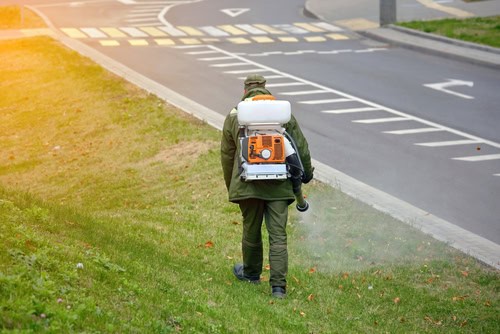
We are a licensed commercial pesticide applicator serving Suffolk County, including Oakdale and the surrounding South Shore communities. Our license issued by the New York State Department of Environmental Conservation isn’t a formality. It’s a legal requirement that many lawn care operators in this area simply don’t hold.
What our license means for you: We can legally purchase and apply restricted-use pesticides professional-grade fungicide formulations that aren’t available at any retail store and can’t be legally used by unlicensed operators. Every application we perform comes with written documentation of what was applied, at what rate, and when. For homeowners near the Connetquot River watershed and the Great South Bay, that accountability matters.
We start with diagnosis. Brown patch, dollar spot, and red thread each respond to different fungicide chemistries, peak at different times of year, and spread under different conditions. Applying the wrong product to the wrong disease produces nothing except a bill. We identify what’s actually in your Oakdale lawn before selecting a treatment, which is why our results hold up.
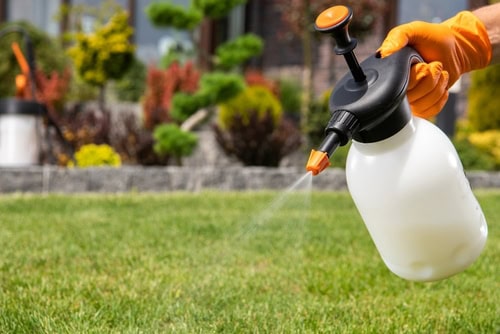
It starts with an on-site assessment. Before anything gets applied, we take a proper look at your lawn identifying which disease is active, how far it’s spread, and what conditions are driving it. In Oakdale, that assessment always factors in your property’s proximity to the water. A lawn backing up to a canal in Oakdale Shores faces different disease pressure than one in the Idle Hour community near the park’s edge, and our treatment approach reflects that.
Once we identify the disease, we select the right fungicide chemistry. This isn’t a one-product-fits-all situation. Brown patch requires a different active ingredient than dollar spot. Red thread responds to different chemistry than either. We use professional-grade formulations including triazoles and strobilurins and rotate modes of action across the season to prevent resistance from building up in your soil. That rotation is something most generic spray programs skip entirely, and it’s a big reason why those programs stop working after a season or two.
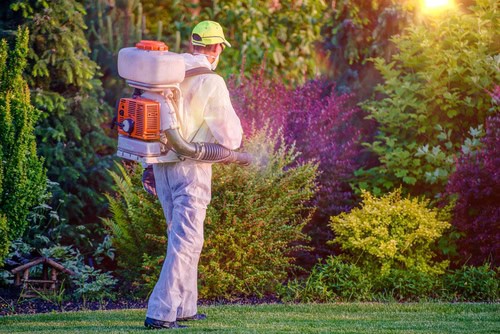
After the application, you receive written documentation of exactly what we used and when. New York State requires this of licensed commercial applicators, and it’s something unlicensed operators typically don’t provide. If your Oakdale lawn has a history of recurring disease especially in the humid summer months when coastal humidity is at its most intense we can schedule a preventative program ahead of the season to stop the damage before it starts.
Ready to get started?
The three fungal diseases most common on Long Island’s South Shore each have their own window, their own look, and their own treatment. Brown patch is the dominant summer threat in Oakdale it activates when nighttime temperatures hold above 70°F and humidity stays elevated, which describes much of July and August here. The Great South Bay’s thermal effect keeps overnight temperatures from dropping the way they do inland, which extends that window. A lawn can go from a few suspicious circles to widespread damage in under a week when conditions are right.
Dollar spot is the other warm-season concern, and it’s particularly aggressive in the sandy, low-nitrogen soils that drain fast between rain events along the South Shore. It’s most active from late spring through early fall and shows up as small, silver-dollar-sized bleached patches scattered across the lawn. Red thread runs on a different schedule it peaks in spring and fall when temperatures sit between 60°F and 75°F, and it spreads quickly. Spores can travel several feet from an active outbreak, so a small patch of red thread in April can cover a significant section of your lawn by May.
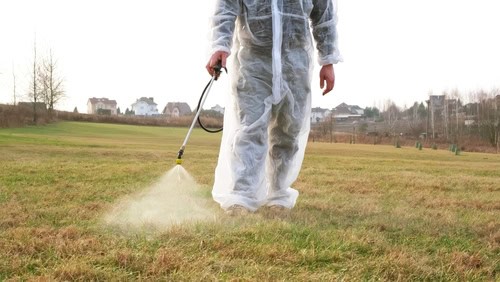
We cover all three diseases with our fungicide treatment program in Oakdale, NY. Curative applications address active disease. Preventative programs available for lawns with a documented history of recurring infection intercept the pathogen before visible damage occurs. Every application is performed by or under the direct supervision of a NYS-licensed commercial pesticide applicator, using restricted-use professional-grade products and documented in writing after every visit, in compliance with New York State pesticide application law.
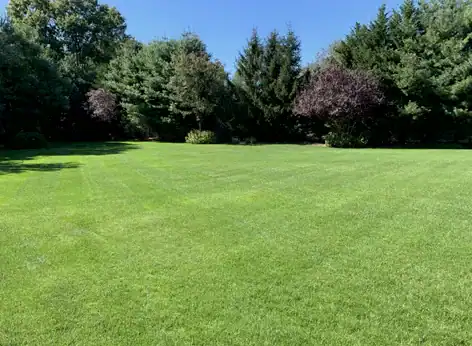
Brown patch is caused by a fungal pathogen called Rhizoctonia solani, and it becomes most destructive when nighttime temperatures stay above 70°F and relative humidity at the turf surface stays elevated. Oakdale’s location bordered by the Great South Bay to the south and the Connetquot River State Park Preserve to the west and north creates exactly those conditions. The wetlands and ponds inside the park generate persistent ground-level humidity that doesn’t dissipate the way it does in more inland communities. Properties along Connetquot Drive and the river corridor are in a particularly high-pressure zone.
The other factor is soil. Oakdale’s sandy, fast-draining soils can leave turf drought-stressed between rain events, which weakens the grass and makes it more susceptible to infection. Brown patch doesn’t spread because your lawn is weak it spreads because the conditions are right for the fungus. The only way to break the cycle is to treat the active pathogen with the correct fungicide chemistry, not to reseed over the damage and hope it doesn’t come back next July.
A curative application is what happens after you already see disease symptoms brown circles, bleached patches, or the pink threads of red thread spreading through your lawn. It stops the active infection and prevents further spread, but it can’t undo damage that’s already occurred. A preventative application is timed ahead of the disease pressure window before symptoms appear to intercept the pathogen before it establishes.
For Oakdale lawns with a documented history of recurring brown patch or dollar spot, a preventative program is almost always the better investment. If the same area of your lawn has shown disease two summers in a row, the fungal spores are already in the soil. Waiting until you see the damage means you’re already behind. Preventative applications, timed to Oakdale’s specific disease windows typically late May for dollar spot and early June for brown patch give the fungicide time to build a protective barrier in the turf before the South Shore’s summer humidity peaks.
You can try, but there are two significant limitations. First, the fungicide products available at retail stores contain lower concentrations of active ingredients than the professional-grade formulations we can legally use. The restricted-use pesticides we apply aren’t available to homeowners or unlicensed operators period. That’s not a marketing distinction, it’s a legal one under New York State DEC regulations.
Second, applying the wrong fungicide to the wrong disease produces no results. Brown patch, dollar spot, and red thread each respond to different active ingredients. If you’re applying a broad-spectrum consumer product without knowing which pathogen is active in your lawn, you’re guessing and in Oakdale’s humid coastal environment, where disease pressure is elevated by the bay and the river, a wrong guess means the disease continues spreading while you wait to see if the product worked. Most homeowners who call us have already spent money on store-bought treatments that didn’t hold. Professional diagnosis before treatment is what changes the outcome.
Each disease has a distinct appearance, but they’re easy to confuse if you don’t know what to look for. Brown patch shows up as roughly circular brown or tan areas often with a darker outer ring that can range from a few inches to several feet in diameter. It spreads fast in hot, humid weather, which is why Oakdale lawns near the water can go from a few spots to widespread damage in a matter of days during peak summer.
Dollar spot produces smaller, bleached patches roughly the size of a silver dollar, scattered irregularly across the lawn. It’s most common in sandy, nitrogen-deficient turf which describes a lot of South Shore lawns and tends to appear from late spring through early fall. Red thread is easier to identify: look for a pinkish-red thread-like growth extending from the grass blade tips, usually in the cooler shoulder seasons of spring and fall. The challenge is that all three can be active simultaneously in some conditions, and each requires a different fungicide chemistry. Misidentifying the disease is one of the most common reasons DIY treatments fail.
In some cases, disease symptoms will fade when the weather shifts red thread, for example, tends to slow down once temperatures climb above 75°F in late spring. But fading symptoms don’t mean the pathogen is gone. The fungal spores remain in the soil and in the thatch layer, ready to reactivate when conditions return to the disease’s preferred range. In Oakdale, where the Great South Bay and the Connetquot River keep humidity elevated for much of the growing season, those conditions come back reliably every year.
More importantly, the damage that’s already occurred doesn’t recover on its own. Turf killed by brown patch or dollar spot needs to be replaced either through natural recovery if the crowns survived, or through reseeding. If you reseed without treating the active disease first, the new seedlings are germinating into infected soil. They’ll often die before they establish, which is why so many Oakdale homeowners end up reseeding the same spots fall after fall without making any real progress. Treating the disease first is what makes reseeding actually work.
Yes. We serve Oakdale and the surrounding South Shore communities throughout Suffolk County, including the Idle Hour neighborhood, Oakdale Shores, and waterfront properties along the Connetquot River corridor. These areas are actually among the highest-priority candidates for a professional fungicide program, precisely because of their proximity to the water.
Waterfront and near-waterfront lawns in Oakdale face a compounding set of conditions maritime humidity off the Great South Bay, moisture from the river, and in some cases organic debris accumulation from the adjacent Connetquot River State Park Preserve that make fungal disease significantly more likely than on a comparable inland property. The Idle Hour community in particular, with its premium home values and strong neighborhood character, is an area where a diseased lawn stands out. Our fungicide treatment program is built around the specific disease pressures of coastal Suffolk County properties, not a generic Long Island template. Every application is documented, every product is professionally selected, and every visit is performed under a valid NYS DEC commercial pesticide applicator license.
Useful Links