
Hear from Our Customers
Here’s what most Holbrook homeowners don’t find out until they’ve spent a few seasons and a few hundred dollars wondering why nothing sticks: fertilizer doesn’t work when your soil pH is too low. When the pH drops below 6.0 which is common for untreated lawns in this area nitrogen, phosphorus, and potassium get chemically locked in the soil. Your grass can’t absorb them. The fertilizer just sits there, and you’re left looking at a thin, patchy lawn that seems immune to everything you throw at it.
Holbrook sits on classic central Long Island sandy loam. It drains fast, which is great for avoiding standing water, but it also means calcium and magnesium the minerals that keep your soil pH in a healthy range leach out with every rain and every irrigation cycle. This isn’t something you did wrong. It’s just what this soil does over time, especially in homes built during Holbrook’s big growth period in the late ’60s and ’70s. Many of those lawns have been fertilized for decades without anyone ever checking the pH.
Once the pH is corrected and held in the 6.3–6.5 range that Cornell Cooperative Extension recommends for Long Island turf, everything changes. Fertilizer gets absorbed the way it’s supposed to. Grass thickens. Weeds lose their foothold. You stop retreating the same problem every spring and start seeing a lawn that actually responds.
We’re a Suffolk County lawn care company, based in Port Jefferson Station and serving homeowners across central and western Long Island including Holbrook. This isn’t a franchise. There’s no national call center. When you reach out, you’re talking to Carol, who handles scheduling and accounts directly. She knows Holbrook, she knows the service, and she’ll get you taken care of without the runaround.
What sets our approach apart is that nothing gets applied before the soil gets tested. That matters more in Holbrook than most people realize. With Long Island Analytical Laboratories right here in town one of the soil testing labs recommended by Cornell Cooperative Extension of Suffolk County there’s no excuse for guessing. The right lime type, the right dose, and the right timing all come from what the test actually shows. Not from a generic program built for any lawn in any ZIP code.
Our focus is total lawn renovation, and pH correction is the foundation of that. If the soil chemistry isn’t right, nothing else you do to your lawn will deliver what it should.
It starts with a professional soil test not a hardware store kit, but a lab-analyzed test that gives you an actual pH reading and tells you exactly how much lime your lawn needs to reach the target range. DIY kits can give you a rough number, but they don’t calculate dosage, and they can’t tell you whether you need calcitic lime, dolomitic lime, or pelletized lime based on your specific soil profile. Getting that wrong means either under-correcting the problem or pushing pH too far in the other direction, which creates a whole new set of nutrient issues.
Once the test results come back, lime is applied at the correct rate for your lawn’s square footage and current pH level. For most Holbrook lawns, fall is the right window. Rain, snow, and the freeze-thaw cycle that Long Island winters bring work the lime down through the soil profile over the colder months. By the time spring green-up arrives, the correction is already in place. Homeowners who wait until April to address an acidic lawn are starting the growing season a step behind the soil is still too acidic when the grass needs it most.
After application, lime takes time to work. You’re typically looking at three to six months for full integration, which is exactly why fall timing matters. We track your soil’s progress and will let you know when it’s time to retest because in Holbrook’s sandy loam, pH will drift back toward acidic over time. Staying ahead of it is what keeps the results holding season after season.
Ready to get started?
Our pH treatment service is built around one principle: fix the foundation before anything else. That means a professional soil test comes first, every time. The results determine which lime product is right for your lawn, how much is needed, and when it should go down. Nothing is applied on assumption.
For Holbrook homeowners, there’s an added layer worth knowing about. Suffolk County has a fertilizer blackout period running from November 1 through April 1 meaning fertilizer applications are prohibited during that window. Lime is a soil amendment, not a fertilizer, so it isn’t subject to that restriction. A fall lime application can go down during the exact period when fertilization is off the table, making it one of the most productive lawn investments you can make in the late season. That timing also lines up perfectly with the freeze-thaw integration cycle that Long Island winters provide.
Because Holbrook sits just a mile or two from Lake Ronkonkoma the largest freshwater lake on Long Island responsible application matters here. When soil pH is off and grass can’t absorb fertilizer, that unused nutrition doesn’t disappear. It leaches into the groundwater or runs toward nearby surface water. Professional, test-based lime application reduces that waste and keeps your lawn program working the way it should, without the runoff that comes from throwing fertilizer at soil that can’t use it. That’s good for your lawn and good for the water table that the whole community shares.
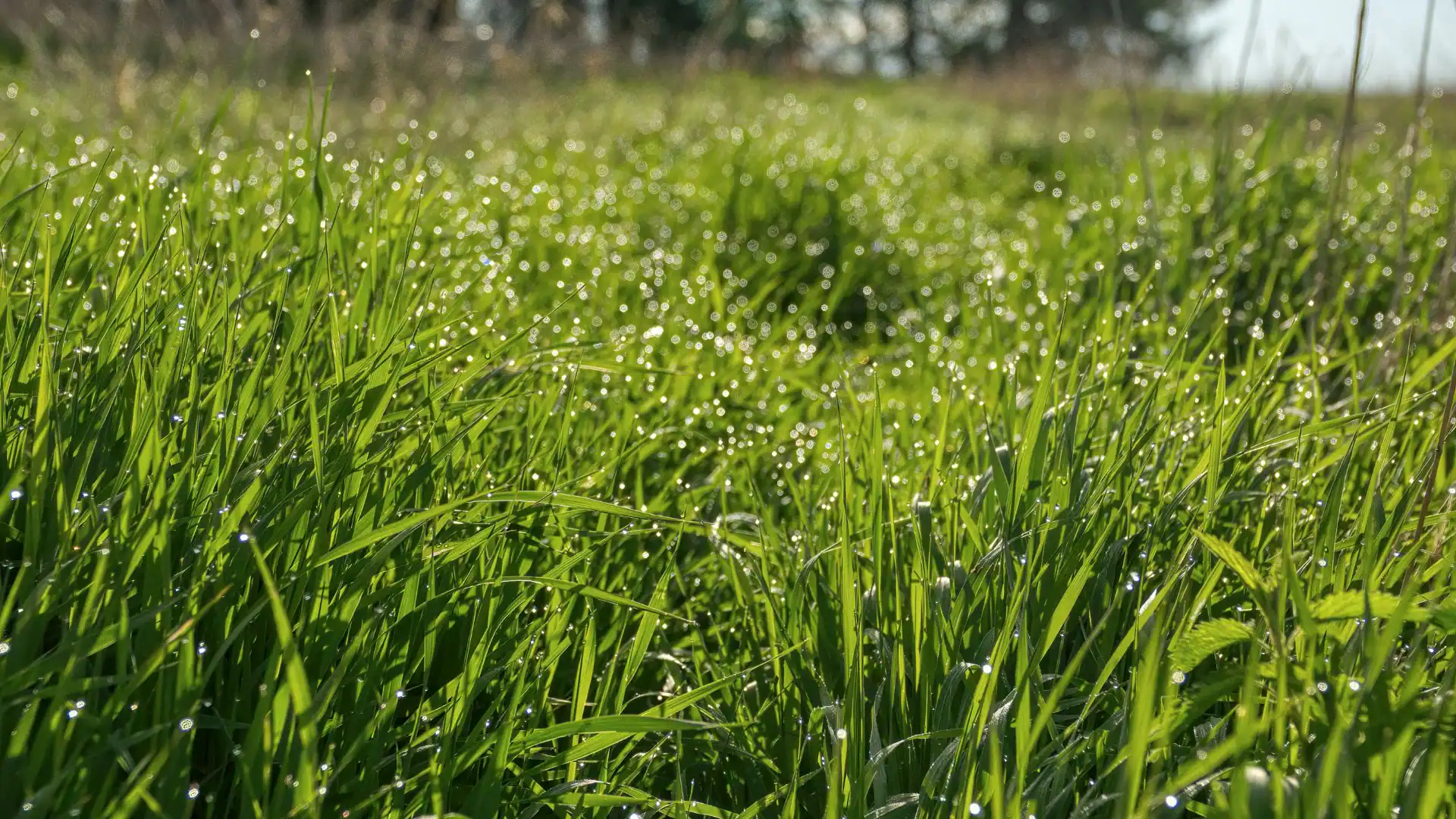
The only reliable way to know is a professional soil test. Visual symptoms like thin grass, persistent yellowing, moss growth, or weeds that keep coming back despite regular fertilization are all signs that pH could be the underlying issue but they’re not proof on their own. Those same symptoms can have other causes, and applying lime to a lawn that doesn’t need it can push pH too alkaline, which creates a different set of nutrient problems.
A professional soil test gives you an actual pH number and tells you how far off you are from the 6.3–6.5 range that Cornell Cooperative Extension of Suffolk County recommends for Long Island turf. It also calculates how much lime is needed to correct the imbalance. In Holbrook specifically, where sandy loam soils naturally trend acidic over time due to rapid calcium and magnesium leaching, testing every two to three years is a reasonable baseline more often if you’re running an active fertilization program.
This is one of the most common frustrations we hear from Long Island homeowners, and soil pH is the answer more often than not. When pH drops below 6.0, the essential nutrients in your fertilizer nitrogen, phosphorus, potassium become chemically unavailable to grass roots. They’re in the soil, but your lawn can’t access them. On the logarithmic pH scale, a reading of 5.0 isn’t slightly worse than 6.0 it’s ten times more acidic. That’s a significant difference in how your soil behaves and how much of your fertilizer investment is actually doing anything.
For Holbrook lawns, this problem compounds over time. Sandy loam drains quickly, which means alkalizing minerals leach out faster than they would in heavier soils. If your lawn has been fertilized for years without a pH correction, you may have been spending money on nutrients your grass was never able to use. Fixing the pH first doesn’t just improve results going forward it makes the fertilization program you already have start working the way it was supposed to.
Fall is the professional standard for lime application in Holbrook, and there are a few reasons why. First, lime needs time to work typically three to six months to fully integrate into the soil profile. Applying it in fall means the correction is in place by spring green-up, when your grass needs it most. Second, Long Island’s freeze-thaw cycle through winter actually helps. Rain, snow, and temperature fluctuations work the lime progressively deeper into the root zone, improving contact and integration without any additional effort.
There’s also a practical regulatory reason. Suffolk County’s fertilizer blackout period runs from November 1 through April 1, prohibiting fertilizer applications during that window. Lime is classified as a soil amendment, not a fertilizer, so it’s not subject to that restriction. That makes fall lime application one of the few productive lawn investments you can make during the late season and it sets you up for a spring that actually delivers results instead of another frustrating cycle of fertilizing soil that can’t absorb it.
Yes, and it matters more than most people realize. The two most common options are calcitic lime, which is primarily calcium carbonate, and dolomitic lime, which contains both calcium and magnesium. For Holbrook lawns specifically, dolomitic lime is often the better fit. Sandy loam soils leach magnesium along with calcium over time, and if your soil test shows a magnesium deficiency alongside low pH, applying calcitic lime alone won’t address the full picture. You’d be correcting pH without replacing one of the minerals that helps keep it stable.
Beyond the type of lime, the form matters too. Pelletized lime is easier to spread evenly and faster to begin working than powdered agricultural lime, making it the more practical choice for residential lawns. The application rate also has to be right too little and the pH doesn’t move enough; too much and you overshoot the target range, creating alkalinity problems. All of this is why a professional soil test isn’t optional if you want the correction to actually work. The test tells you which product and which dose your specific lawn needs.
Lime isn’t a fast fix, and setting realistic expectations upfront is important. Depending on the lime product used and how far off your soil pH is, you’re typically looking at three to six months for meaningful integration. Pelletized lime works faster than powdered agricultural lime, but neither delivers overnight results. This is one of the main reasons fall application is recommended for Holbrook homeowners the lime has the entire winter to work into the soil, so by the time the growing season starts in spring, the correction is already in place.
What you’ll notice first, once pH starts moving into the right range, is that your grass responds better to fertilization. Color improves. Density improves. Weeds that were thriving in acidic conditions start losing their competitive edge. The full visual transformation takes a full growing season in most cases, especially for lawns that have been running acidic for several years. Soil that’s been neglected for a long time doesn’t turn around in a month but with the right correction in place, the trajectory changes clearly and measurably.
Lake Ronkonkoma sits about one to two miles north of Holbrook, and Long Island’s water table is shallow throughout this area. That combination makes responsible lawn care application genuinely important here not as a marketing point, but as a practical reality. When soil pH is too acidic and grass can’t absorb applied fertilizer, that unused nitrogen and phosphorus has to go somewhere. In sandy loam soil with fast drainage, it moves through the profile quickly and can reach groundwater or nearby surface water. That’s a real concern in a community this close to the largest freshwater lake on Long Island.
Professional, test-based lime application addresses this directly. By correcting soil pH to the range where grass can actually use the fertilizer applied to it, you reduce the amount of nutrient waste that leaches out of the root zone. You’re not just improving your lawn you’re running a more efficient program that puts less unused chemistry into the ground. For Holbrook homeowners who care about the local environment and the health of Lake Ronkonkoma, that’s a meaningful side benefit of getting the soil chemistry right.
Useful Links
Other Services we provide in Holbrook