
Hear from Our Customers
If you’ve been fertilizing for years and your lawn still looks thin, pale, or weed-heavy, the soil is almost certainly the reason. When pH drops below the optimal range which it does consistently on Long Island’s North Shore nitrogen, phosphorus, and potassium get locked in the soil and your grass roots can’t reach them. You’re essentially spending money on fertilizer that never gets used.
Researchers at Stony Brook University, just a few miles west of Port Jefferson along Route 25A, documented that North Shore topsoil pH dropped from 6.5 in 1922 to as low as 4.1 by 1985. That’s not a gradual drift that’s soil that became hundreds of times more acidic over a few decades, driven by acid rain and the natural leaching that happens through Long Island’s sandy, porous soil profile. Most homes in the 11777 zip code were built in the 1950s and 1970s, which means many of these lawns in Port Jefferson have been accumulating that pH damage for 50 or 60 years without a single professional test.
Once the pH is corrected, everything else starts working the way it should. Grass thickens, color returns, and the weeds that thrive in acidic conditions lose their foothold. You also stop losing fertilizer nutrients to runoff which matters in Port Jefferson, where lawns drain toward Port Jefferson Harbor and the Sound. Proper pH management means more of what you apply actually stays in the root zone where it belongs.
We’re based in Port Jefferson Station right on the other side of the LIRR tracks from the village. This isn’t a regional franchise routing calls through a call center. When you reach out, you get Carol Broecker, our office manager, who handles accounts directly and actually knows the area. That kind of access matters when you have a real question about your lawn and need a straight answer.
We work across Suffolk County every day, including the North Shore communities along Route 25A Port Jefferson, Belle Terre, Old Field, Poquott, and the surrounding areas. We understand the bluff terrain, the sandy loam soil types common here, and the specific drainage patterns that accelerate acidification on elevated properties overlooking the harbor. That’s not something you pick up from a training manual.
Every service we provide is built around a program model, not a one-time visit. We send seasonal reminders, track your account over time, and adjust treatment as your soil conditions change because a lawn that’s been neglected for decades doesn’t get fixed in a single application.
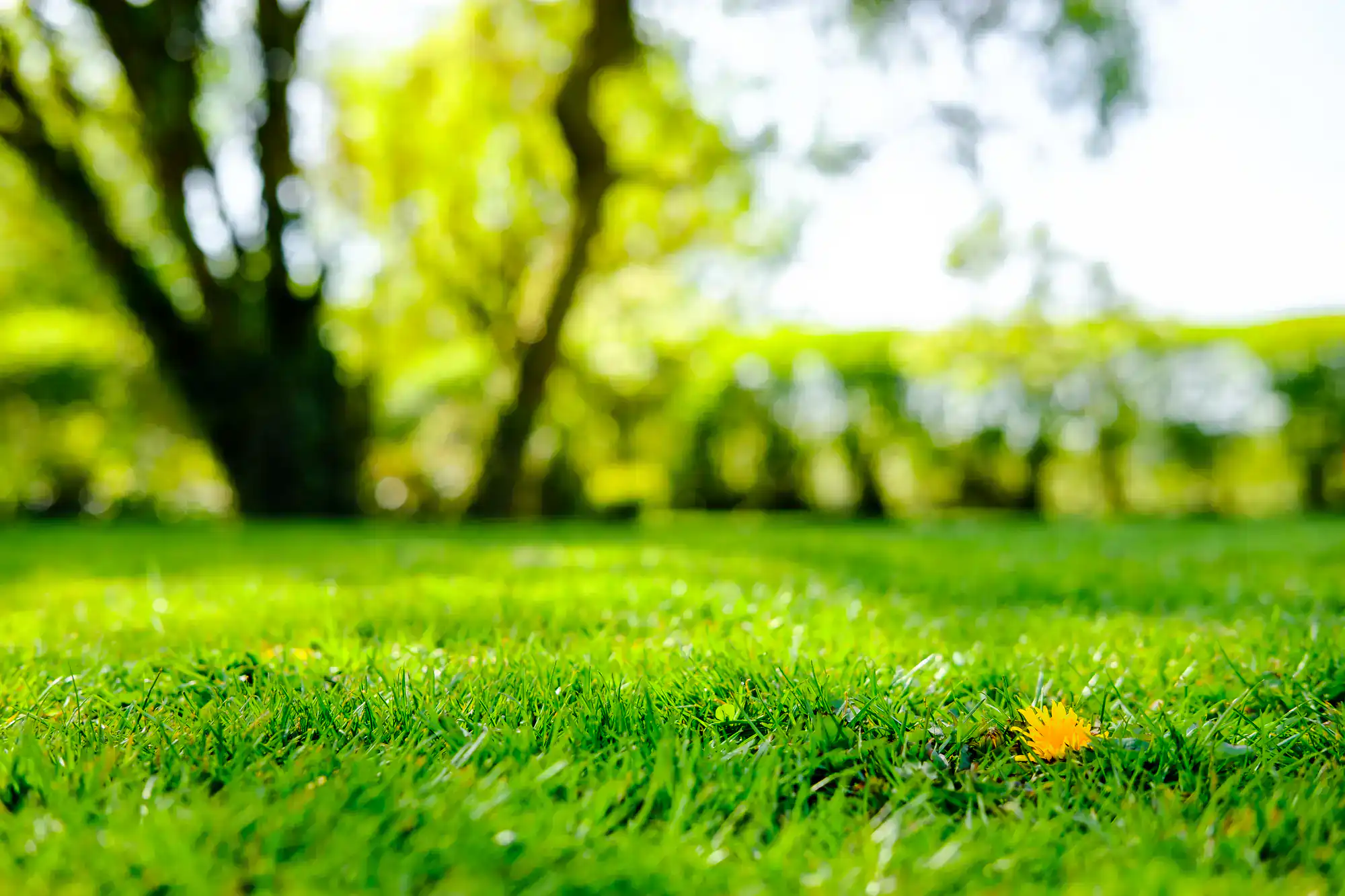
It starts with a soil test. Before any lime gets applied, the soil needs to be sampled and analyzed so you know the actual pH level, not a rough estimate based on how the lawn looks. Cornell Cooperative Extension Suffolk County recommends testing every two to three years for established lawns, and for good reason the right lime type and the right application rate both depend entirely on what the test shows. Skipping this step and applying lime based on a guess is how you end up overshooting the target and creating a new set of problems.
Once the results are in, the treatment plan is straightforward. If your soil is acidic which it almost certainly is if you’re on an older property in Port Jefferson pelletized lime gets applied at the rate your specific soil requires. Pelletized lime is a ground limestone mineral, not a synthetic chemical. It’s non-toxic, safe for kids and pets after application, and it works by neutralizing the acidity that’s been blocking nutrient absorption.
Timing matters here. Fall is the optimal window for lime application on Long Island. The rain, snow, and freeze-thaw cycle through a North Shore winter does the work of integrating lime into the soil, so it’s fully active by the time the growing season starts in spring. If you wait until spring to address a pH problem, you’re already a full season behind. We build this timing into the program so you’re not scrambling to catch up.
Ready to get started?
Lawn pH treatment through us isn’t a standalone product you order once and forget. It’s part of a broader lawn renovation program that treats soil correction as the foundation not an afterthought. That means soil testing comes first, lime application gets calibrated to your specific results, and the treatment integrates directly with fertilization and overseeding so every step reinforces the last.
For Port Jefferson properties especially those on elevated terrain near the bluff, or in adjacent areas like Belle Terre and Old Field where lots are larger and soil drainage is more aggressive the application rate and lime type get adjusted based on what the test actually shows. Suffolk County’s sandy loam profile leaches nutrients faster than inland clay-heavy soils, so our approach here isn’t the same as what works in other parts of Long Island. We account for that.
New York State requires all commercial pesticide applicators to be NYSDEC-registered and certified, and we operate in full compliance. We also follow New York’s fertilizer law, which restricts phosphorus applications near waterways relevant in a village where stormwater drains toward Port Jefferson Harbor. You get a provider that does the work correctly and keeps the harbor out of the equation. Seasonal reminders keep your program on track, and soil retesting on the recommended two-to-three-year cycle ensures the correction holds over time.
The most reliable way to know is a soil test not a visual inspection, and not a hardware store pH strip. A professional soil test gives you an actual pH reading along with the buffering capacity of your soil, which determines how much lime would be needed to bring it back into range. Visual clues like thinning grass, yellowing, persistent moss, or weeds that keep coming back after treatment are all consistent with acidic soil, but they don’t tell you how far off your pH is or what it will take to fix it.
In Port Jefferson specifically, the odds are high that your soil is acidic. The North Shore has been accumulating pH damage from acid rain and natural leaching for well over a century, and homes built in the 1950s and 1970s the dominant housing stock in the 11777 zip code have had decades for that drift to compound. If you’ve been fertilizing without seeing results, or if your lawn has struggled despite regular care, a soil pH test is the first thing worth doing before spending another dollar on product.
Lime is ground limestone a naturally occurring mineral that contains calcium and magnesium. It’s the same material used to balance the pH of drinking water. It is not a pesticide, herbicide, or synthetic chemical, and it doesn’t carry the same handling concerns as fertilizers or weed control products. Professional-grade pelletized lime, which is what we use in a lawn program, is non-toxic and non-irritating once it’s settled into the grass after application.
The standard guidance is to keep children and pets off the lawn until the lime has been watered in or has had a chance to settle usually a few hours after application or after the next rainfall. After that, there’s no residual concern. For Port Jefferson families who are already mindful of what goes onto their lawns given the proximity to the harbor and Long Island Sound, lime is one of the most benign amendments available. It’s a mineral that belongs in the soil you’re just restoring what decades of rain and acidification have removed.
For most Long Island lawns, lime is needed every two to three years but that interval depends on your soil’s specific buffering capacity, how much rainfall your property gets, and how aggressively your soil leaches nutrients. Properties on well-drained, sandy loam soils which describes a lot of Port Jefferson, especially on elevated terrain near the bluff tend to acidify faster than properties with heavier, clay-rich soils further inland. That means some lawns here may need attention closer to the two-year mark.
The only way to know for sure is to retest. Cornell Cooperative Extension Suffolk County recommends soil pH testing every two to three years for established lawns, and that’s the cadence we build into our program. Rather than applying lime on a fixed schedule regardless of need, the soil test drives the decision. If the pH is still in range, you skip the application and save the cost. If it’s drifted back down, we correct it before the grass starts showing the effects. That approach keeps your lawn healthy without over-treating.
Yes and this is one of the most common frustrations homeowners run into without ever knowing the real cause. When soil pH drops below 6.0, the chemical environment in the soil changes in a way that locks up nutrients. Nitrogen, phosphorus, and potassium are all present, but they bond to soil particles in forms that grass roots can’t absorb. You’re essentially applying fertilizer to soil that can’t process it. The nutrients sit there, leach out with the next rain, and end up in the groundwater or running off into the harbor while your lawn stays thin and pale.
Correcting the pH doesn’t just fix the soil chemistry in isolation it unlocks the fertilizer you’ve already been applying. Once the pH is back in the 6.0 to 7.0 range that cool-season grasses like tall fescue and Kentucky bluegrass require, nutrient uptake improves significantly and you start seeing the results from your fertilization program that you were never getting before. For Port Jefferson homeowners who have spent real money on lawn care without seeing a return, this is usually the missing piece.
Fall is the best window, and it’s not a close call. Applying lime in the fall gives it the entire winter to work its way into the soil profile. The increased rainfall, snow, and the freeze-thaw cycle that Long Island’s North Shore winters bring all help integrate the lime and neutralize acidity gradually so by the time the soil warms up in spring and your grass starts actively growing, the pH correction is already in place. That’s the timing that produces visible results in the spring growing season.
Spring applications aren’t useless, but they work more slowly and you lose that full winter integration period. If you apply lime in April, you may not see the full benefit until late summer or fall and in the meantime, your lawn is still competing against weeds and struggling with nutrient lockout. Scheduling in the fall, ideally before the ground freezes, gives you the best outcome for the following year. We build fall lime application into the program schedule and send reminders so you don’t miss the optimal window.
It does because weeds and moss aren’t random. They thrive in acidic soil because those are the conditions they’re adapted to. Moss in particular is almost always a sign of low pH combined with poor drainage or shade, and it spreads aggressively in the kind of acidic, leached soil that’s common on North Shore Long Island properties. Crabgrass and broadleaf weeds follow the same logic they outcompete grass in acidic conditions because the grass is already weakened and nutrient-deprived.
Weed control treatments can suppress what’s visible, but if the underlying pH problem isn’t addressed, the weeds come back every season because the conditions that favor them never changed. Correcting the soil pH shifts that dynamic. When the pH is in the right range, your grass has access to the nutrients it needs to grow dense and competitive and dense turf is the best weed barrier there is. For Port Jefferson lawns that have been fighting a losing battle against moss on shaded bluff-adjacent properties or crabgrass in sunnier areas, pH correction is the step that makes everything else actually work.
Useful Links
Other Services we provide in Port Jefferson