
Hear from Our Customers
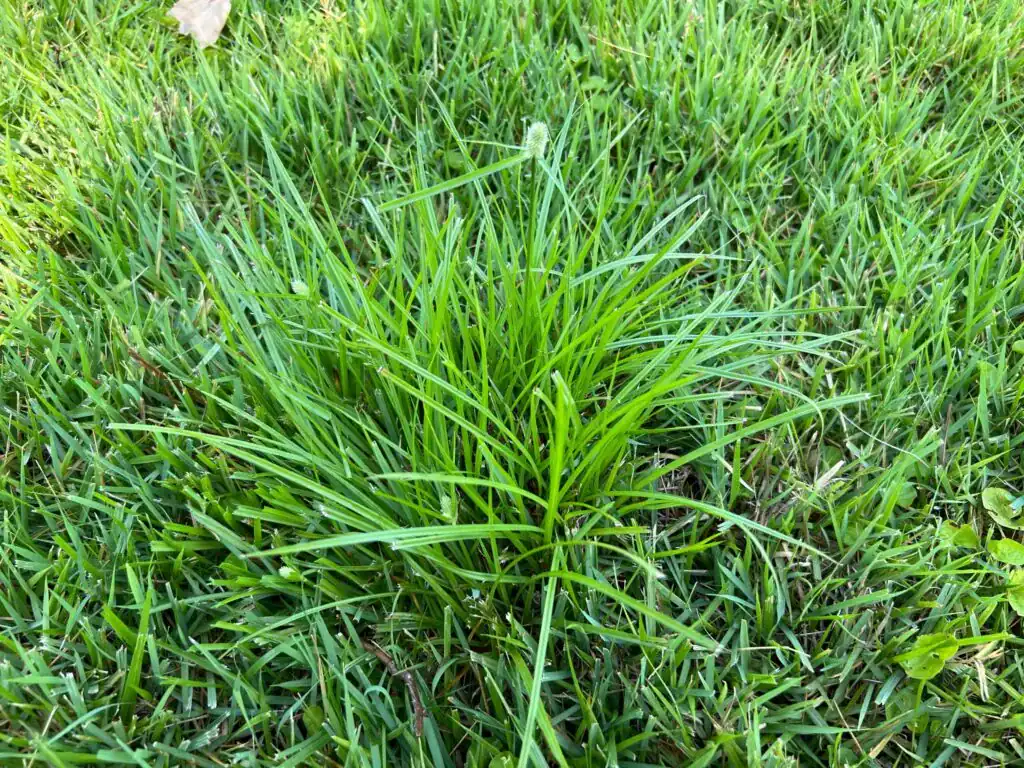
If you’ve been watching a low-growing, dark green patch spread through your lawn every summer while the rest of your grass slows down in the heat, you already know something is wrong. That’s kyllinga and it doesn’t respond to the weed killers most companies reach for first. Standard broadleaf herbicides don’t touch it. Neither do the grassy weed controls you’ll find at any hardware store on Montauk Highway. It’s a sedge, which puts it in a completely different botanical category, and that single fact explains why every previous attempt probably failed.
East Patchogue’s South Shore geography makes this problem worse than it would be in an inland community. The low-lying lots near the Great South Bay, the canal-front properties in areas like Patchogue Shores, the drainage patterns that come with living on the water these are exactly the conditions kyllinga thrives in. Moist, stressed soil is where it establishes fastest, and once it does, it spreads through both underground rhizomes and seed, producing up to 5,000 seeds per plant each season.
When kyllinga is treated correctly and eliminated, your lawn gets its density back. The thin, mat-covered areas fill back in. And because we handle post-treatment overseeding as part of the restoration process, you’re not just left with dead patches where the weed used to be you’re left with actual turf.
We operate out of Port Jefferson Station, within the Town of Brookhaven the same municipality that governs East Patchogue. That’s not a coincidence. It means the people treating your lawn are familiar with South Shore soil conditions, Suffolk County’s groundwater regulations, and the specific drainage and moisture challenges that come with properties near the bay. This isn’t a national franchise applying a generic program. It’s us, working in your town’s regulatory environment every day.
Our focus is lawn care specifically not tree service, not hardscape, not irrigation. Just lawns. That narrow focus is why our approach to kyllinga control in East Patchogue is different from what a general landscaping company offers. Our applicators are licensed by the NYSDEC (Category 3a, Ornamental and Turf), which is what’s required to access and properly apply the professional-grade herbicides that actually work on sedge weeds in East Patchogue. When the treatment is done, the restoration work follows because eliminating kyllinga is only half the job.
It starts with identification. Kyllinga and nutsedge are both sedges, but they’re different plants and treating them as interchangeable produces incomplete results. Before anything is applied to your East Patchogue lawn, we confirm the specific sedge species present. That step alone separates a program that works from one that partially suppresses the problem and lets it return.
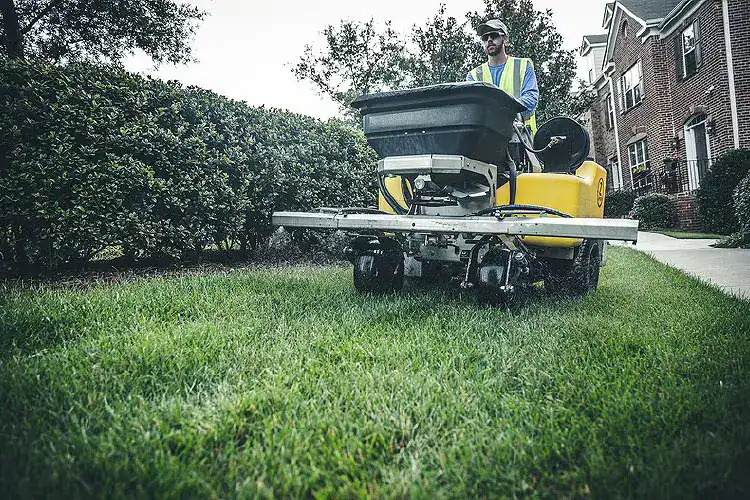
Once identified, we use professional-grade herbicides halosulfuron-methyl or sulfentrazone applied during the plant’s active growing window. On Long Island’s South Shore, that window runs from late May through late August. East Patchogue’s coastal climate keeps soil temperatures elevated slightly longer than inland Suffolk County communities, which means our treatment calendar here is calibrated to the actual growing season in this area, not a generic schedule. Kyllinga’s rhizome network survives a single application and regenerates new growth within weeks, so we structure the program around a minimum of two to three applications spaced four to six weeks apart. That’s not upselling that’s the biology of the plant.
Every application in East Patchogue is made in full compliance with Suffolk County Local Law 41-2007 and SCDHS pesticide buffer zone requirements, which matter here because the county’s sole-source aquifer sits beneath all of it. When the treatment phase is complete, we finish with post-treatment overseeding and soil restoration filling back in what kyllinga left behind so the bare areas don’t become next season’s problem.
Ready to get started?
The herbicides that eliminate kyllinga halosulfuron-methyl (Sedgehammer) and sulfentrazone (Dismiss) are not available in the formulations that produce real results over the counter. Accessing them requires a NYSDEC Commercial Pesticide Applicator License, Category 3a. Our applicators hold that license, which is why we can deliver what retail products and unlicensed applicators cannot.
For East Patchogue homeowners dealing with green kyllinga removal, our service includes species-level identification before treatment begins, a structured multi-application program timed to the South Shore growing season, and full compliance with Suffolk County’s groundwater protection requirements. Properties near the Great South Bay, along canals, or in low-lying areas of the hamlet are assessed with drainage conditions in mind because the moist soil environment that created the infestation affects how we sequence the program and where follow-up attention is needed most.
Post-treatment restoration is included in our program, not offered as an add-on. Once kyllinga is eliminated, the areas it occupied need overseeding and soil care to recover properly. Without that step, those thin spots become re-entry points for kyllinga and other opportunistic weeds the following season. The full program identification, treatment, and restoration is what makes the result last rather than just buying another season of suppression.

Kyllinga is a sedge not a broadleaf weed and not a grassy weed. The herbicides that control broadleaf weeds (like 2,4-D, dicamba, and triclopyr) and the products that target grassy weeds (like quinclorac) have no meaningful activity on sedge plants. This is a botanical fact, not a matter of application rate or timing. If you’ve tried a retail weed killer and watched kyllinga come back untouched, the product simply wasn’t designed for the plant you’re dealing with.
The professional-grade herbicides that actually work on kyllinga halosulfuron-methyl and sulfentrazone require a NYSDEC Commercial Pesticide Applicator License to purchase in professional formulations. They are not the same as what’s sold in consumer packaging, and the difference in performance reflects that. For East Patchogue homeowners who’ve already spent money on failed treatments, this is the explanation and the reason we produce results that DIY programs don’t.
Most established kyllinga infestations require a minimum of two to three applications to eliminate. A single treatment will damage the visible plant tissue, but kyllinga spreads through underground rhizomes that survive the initial application and push up new growth within a few weeks. If a company tells you one spray will solve the problem, they’re either underestimating the infestation or setting you up for disappointment.
The applications are spaced four to six weeks apart and need to fall within the plant’s active growing window late May through late August on Long Island’s South Shore. East Patchogue’s coastal proximity to the Great South Bay keeps soil temperatures elevated slightly longer into fall than inland areas of Suffolk County, which can extend the effective treatment window modestly. We structure the program around that biology, not around what’s most convenient to schedule. After the treatment phase, overseeding and soil restoration complete the process so the areas kyllinga occupied don’t stay bare heading into the next growing season.
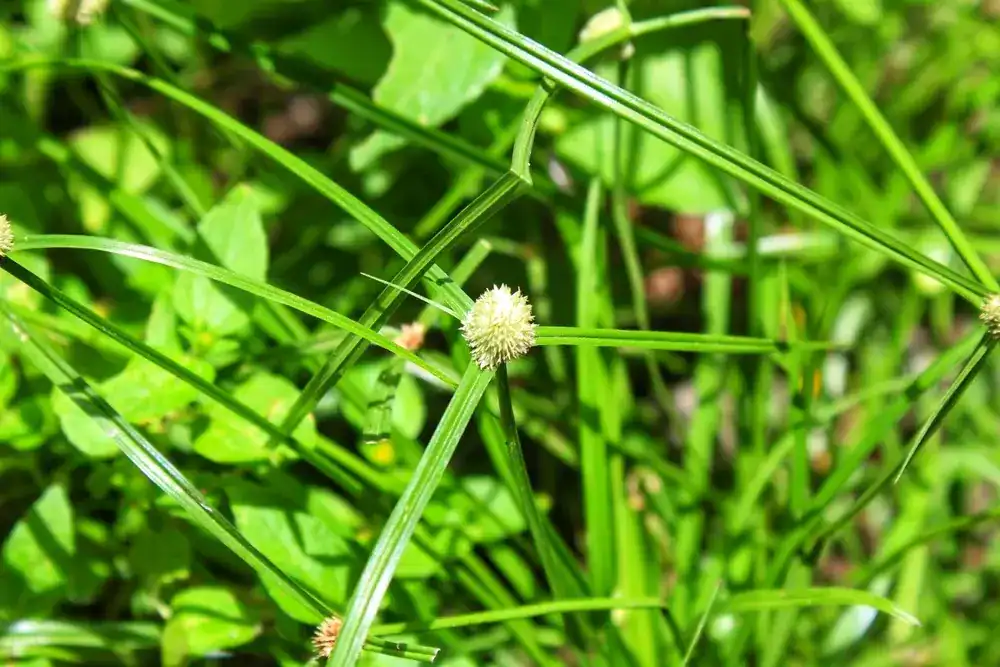
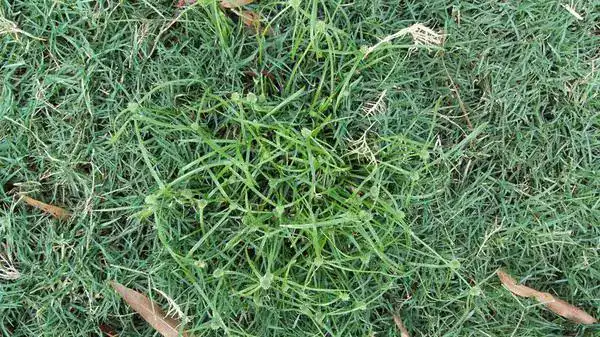
Kyllinga and nutsedge are both sedges in the family Cyperaceae, but they’re different genera with distinct growth habits. Kyllinga particularly false green kyllinga, which is increasingly common in Northeast lawns including those across Suffolk County tends to grow lower and denser than nutsedge, forming a tight mat rather than the more upright, scattered growth pattern of yellow nutsedge. The seed heads are different too: kyllinga produces a round or slightly triangular head, while nutsedge has a longer, more elongated structure.
For treatment purposes, the distinction matters because misidentifying the plant leads to a mismatched program. Some general lawn care companies see a sedge and apply a nutsedge protocol without confirming what they’re actually dealing with. That can produce incomplete results, particularly with false green kyllinga, which has its own response profile. Correct identification before the first application is the foundation of a program that works and it’s the first step in every kyllinga control program we run in East Patchogue.
Kyllinga is a perennial sedge, which means the rhizome network in the soil survives winter dormancy and resumes growth the following spring. An untreated infestation will return every year and typically expand its coverage with each growing season. In East Patchogue’s moist, low-lying conditions especially on properties near canals or the bay that expansion can be significant. A patch that covers a few square feet in July can triple in size by the following summer if left unaddressed.
A properly structured treatment program that completes the full application sequence and is followed by post-treatment overseeding will eliminate the active infestation. The restored turf density that follows is your best long-term defense a thick, healthy lawn leaves far less room for kyllinga to re-establish from seed or from any rhizome fragments that may persist in the soil. Annual monitoring in the seasons following treatment is a reasonable precaution, particularly for properties with the drainage conditions that made East Patchogue lawns vulnerable in the first place.
Hand-pulling is not an effective control strategy for established kyllinga. The plant spreads through a dense rhizome network beneath the soil surface, and pulling the visible growth above ground leaves the root system largely intact. New shoots emerge from the rhizomes within days to weeks, and the physical disturbance of hand-pulling can actually fragment the rhizome network and spread the infestation to new areas of your lawn.
For a very small, newly established patch caught early, manual removal combined with immediate overseeding of the disturbed area might slow the spread. But for any infestation that has been growing for more than one season which describes most of the cases we see in East Patchogue, where the moist South Shore conditions let kyllinga establish quickly hand-pulling will not keep pace with the plant’s regrowth rate. Professional herbicide treatment targeting the active rhizome system is the only approach that systematically eliminates the plant rather than temporarily reducing its visible presence.
Kyllinga is highly sensitive to soil moisture. It establishes and spreads most aggressively in areas where the soil stays consistently moist low spots that collect water after rain, areas near irrigation heads that receive more water than surrounding zones, and sections of the lawn where drainage is restricted. In East Patchogue, this pattern is especially pronounced on properties with bay or canal frontage, in the low-lying areas along South Country Road, and on any lot where the South Shore’s naturally variable drainage creates wet pockets within an otherwise manageable lawn.
The areas where kyllinga is thickest are telling you something about your soil and drainage conditions, not just about the weed itself. Addressing those underlying conditions improving drainage where possible, adjusting irrigation run times in affected zones supports the long-term success of the treatment program by making the environment less hospitable to kyllinga after it’s been eliminated. We remove the plant. The follow-up restoration and any drainage improvements you make reduce the conditions that invited it in the first place.
Useful Links
Other Services we provide in East Patchogue