
Hear from Our Customers
Kyllinga doesn’t respond to the products you can buy at the store. It doesn’t respond to broadleaf weed killers. It doesn’t respond to a single spray from a company that lumped it in with everything else on their route. What it responds to is the right chemistry, applied at the right time, more than once and that’s where most programs fall short before they even start.
Holbrook’s soil profile works against you here. The sandy, loamy composition that’s common throughout this part of Suffolk County drains well under natural conditions, but the moment you add a set-schedule irrigation system which is standard in most of the single-family homes built here in the late ’60s and ’70s you’re creating the kind of persistently moist surface layer that kyllinga exploits better than almost any other weed. It doesn’t need much. It just needs wet, and it spreads from there.
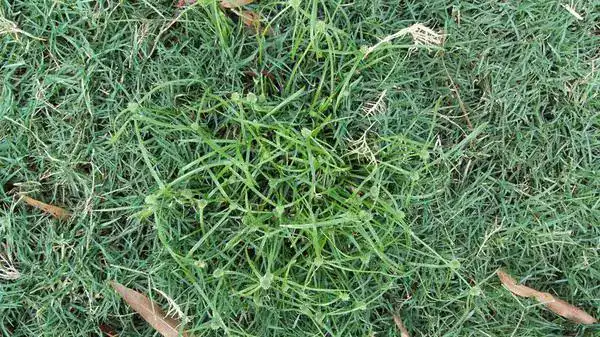
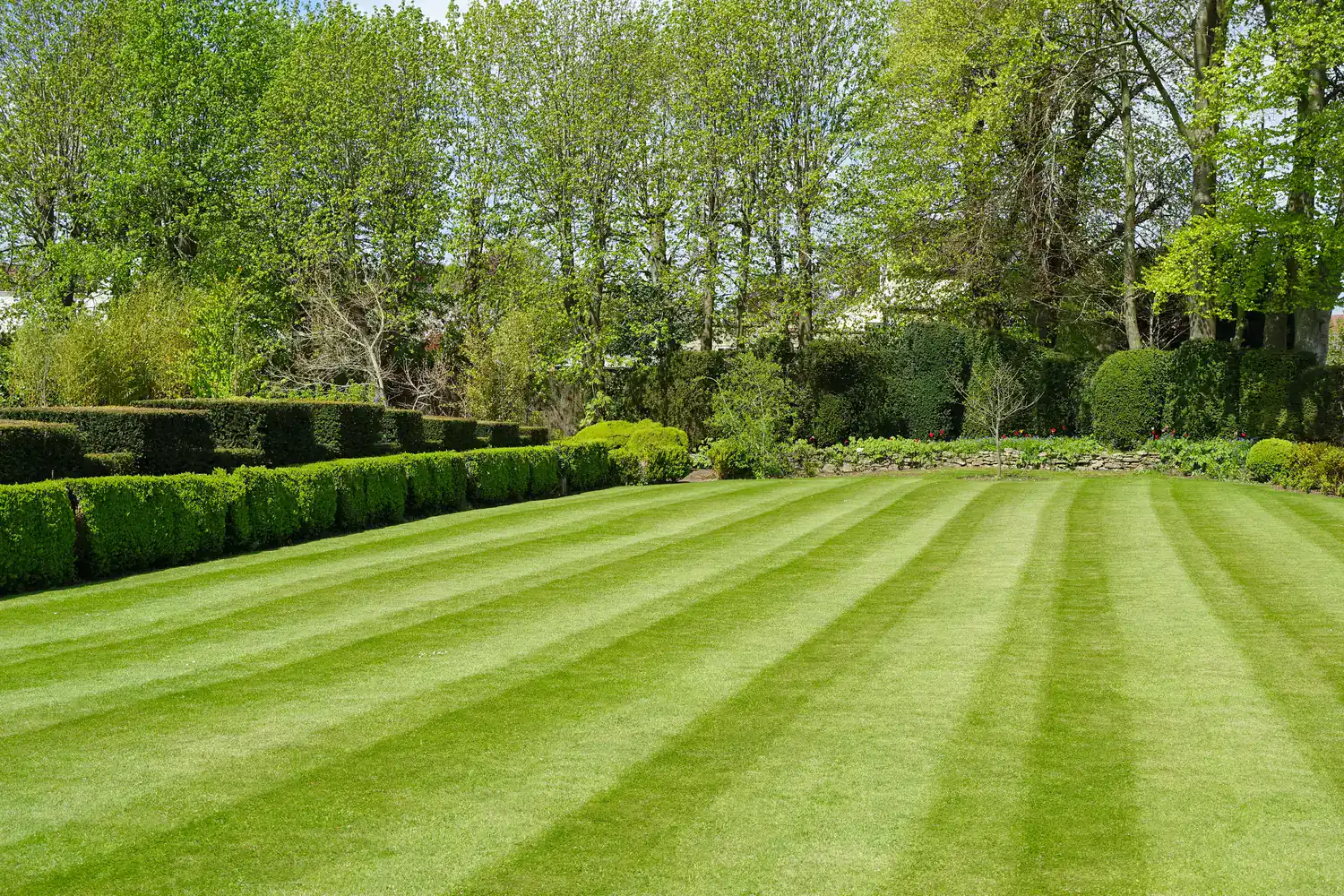
When kyllinga control is done correctly, the result isn’t just a cleaner-looking lawn. The dense, mat-forming patches disappear. The surrounding turf fills back in. And because a real program addresses the conditions that let the weed establish in the first place, you’re not just treating what’s visible you’re closing the door on what kept coming back.
We’re a lawn-specific company based right here in Suffolk County. Not a general landscaping operation that handles lawn care on the side a lawn specialist. That distinction matters when the problem in your yard is something as specific as kyllinga, because a generalist is going to treat it like nutsedge, and you’re going to be right back here next summer.
We hold the NYSDEC Commercial Pesticide Applicator License (Category 3a, Ornamental and Turf) required to legally purchase and apply the professional-grade herbicides that actually work on sedge species in New York State. We also operate in full compliance with Suffolk County Local Law 41-2007, which establishes pesticide-free buffer zones around drinking water supply wells something that matters in Holbrook, where homes sit directly over the Long Island aquifer system. Not every company that shows up in your driveway knows those rules exist.
Holbrook is the kind of community where the lawn has been part of the property for decades. We understand what it takes to restore it and what it takes to keep it that way. For unsalvageable turf, we offer Holbrook new lawn installation.
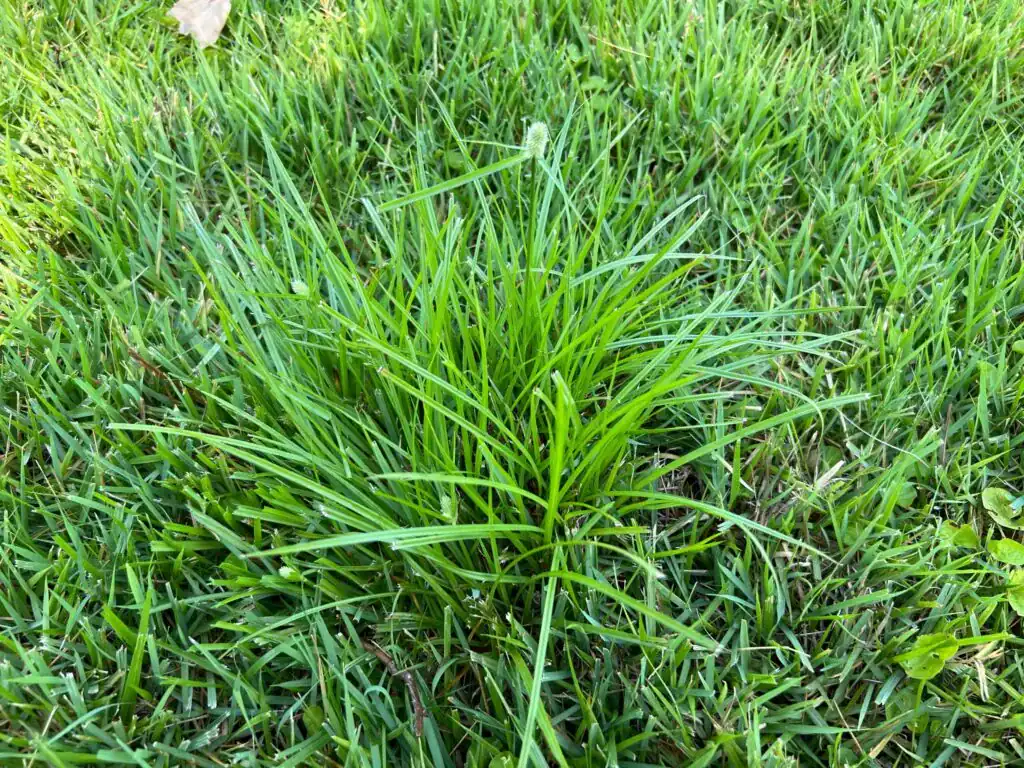
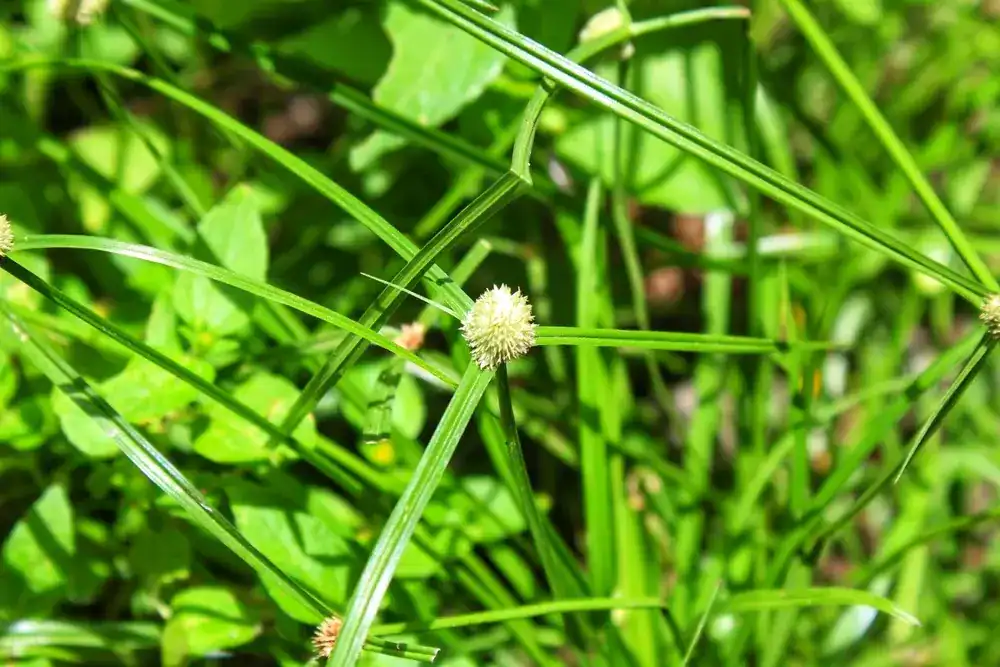
It starts with identification. Before anything gets applied, we confirm what we’re actually dealing with. Kyllinga and nutsedge are both sedges, but they’re not the same plant, and they don’t always respond identically to the same chemistry. Green kyllinga grows low, forms dense mats, and has a round seed head not the elongated, star-shaped structure you see on nutsedge. That difference matters when we’re selecting a protocol.
Once we’ve confirmed the species, we time the first application to the plant’s active growth window. In Holbrook’s climate, that’s typically late May through early June when kyllinga is metabolically active and most vulnerable to herbicide uptake. Applying too early in spring or waiting until fall significantly reduces efficacy, because the plant isn’t moving product through its system the same way. A minimum of two to three targeted applications, spaced four to six weeks apart, is what a real kyllinga control program looks like. Anyone offering you a single visit is offering you a temporary result.
After the weed is gone, the work isn’t over. The areas where kyllinga was crowding out your desirable turf are now thin or bare, and bare soil is an open invitation for reinfestation. Post-treatment restoration overseeding, soil support is part of how we close the loop and give your lawn the density it needs to resist the next round.
Ready to get started?
The professional herbicides used to control kyllinga primarily halosulfuron-methyl and sulfentrazone are not available over the counter. They require a New York State commercial pesticide applicator license to purchase and apply in professional formulations. What you find at the home improvement stores along the Holbrook Commons corridor are retail products not formulated for sedge species. That’s not a knock on you for trying them it’s a product access problem that only a licensed applicator can solve.
Every program we run in Holbrook is built around what’s actually on your property. That means a site assessment before any application, a treatment schedule timed to the plant’s biology, and full compliance with Suffolk County’s pesticide buffer zone requirements under Local Law 41-2007. If your property is near a designated well protection area and in Holbrook, that’s a real consideration we check the SCDHS compliance map before any product goes down. That’s not optional for us. It’s how we operate.
For Holbrook homeowners whose kyllinga is concentrated near the western side of their property particularly those close to the MacArthur Airport boundary we also look at drainage as a contributing factor. Persistent moisture from altered drainage patterns near large impervious surfaces can keep reintroducing the conditions kyllinga needs to establish. Treating the weed without understanding why it’s there is how programs fail.
Kyllinga is a perennial sedge, which means it doesn’t die at the end of the season it goes dormant. The rhizome network underground survives the winter and picks right back up in spring. So if you noticed the dark green patches disappear in October and assumed the problem resolved itself, that’s a reasonable assumption that unfortunately isn’t accurate. It’s coming back, and it’s often slightly larger the next time around.
The other reason it keeps returning is that most treatments don’t address the full biology of the plant. A single herbicide application may knock back the visible growth, but the rhizome system can regenerate new shoots within four to six weeks. An effective kyllinga control program in Holbrook requires a minimum of two to three applications spaced throughout the active growing season not one visit and a follow-up call. If you’ve been treated once and told to wait and see, that’s likely why you’re still dealing with it.
They’re related both are sedge species in the Cyperaceae family but they’re not the same plant, and assuming they are is one of the most common reasons kyllinga control fails. Nutsedge tends to grow taller and more upright, with an elongated seed head. Kyllinga grows lower, spreads into dense mats, and produces a round or oval seed head. The growth habit alone should tell you something’s different.
From a treatment standpoint, the same professional herbicide chemistries halosulfuron-methyl and sulfentrazone are used against both, but the timing, application rate, and program structure may vary depending on species and infestation severity. The more important issue is that many lawn care providers in the area don’t make the distinction at all. They treat it as a generic sedge problem, apply a standard round, and move on. If your lawn has kyllinga specifically, that approach tends to produce inconsistent results. Correct identification before treatment is the step that makes everything else work.
Standard retail herbicides including most weed-and-feed products and broadleaf weed killers containing 2,4-D or dicamba have no meaningful efficacy against sedge species. Kyllinga is not a broadleaf weed and it’s not a grass. It’s a sedge, and it requires herbicide chemistry specifically formulated to work on that plant family. The products that actually work, halosulfuron-methyl (sold commercially as Sedgehammer) and sulfentrazone (sold as Dismiss), require a New York State commercial pesticide applicator license to purchase in professional-grade formulations.
This isn’t a gap in your effort it’s a product access problem. The retail version of these products, if available at all, is diluted and formulated differently than what a licensed applicator uses. If you’ve spent money on store products and watched the kyllinga come right back, that’s not a reflection of how bad the infestation is. It’s a reflection of the fact that you were using the wrong tool for the job. A licensed applicator is the only way to access the right one.
For most Holbrook lawns, a properly structured kyllinga control program involves a minimum of two to three targeted applications during the active growing season, spaced four to six weeks apart. The first application is typically timed to late May or early June, when the plant is in active growth and most responsive to herbicide uptake. Follow-up applications are scheduled based on how the infestation responds and how much of the rhizome network was disrupted by the initial treatment.
The number of applications needed can vary based on how long the infestation has been established and how far it’s spread. A patch that was caught early a few square feet is a different program than a lawn where kyllinga has been spreading unchecked for two or three seasons. Holbrook’s combination of sandy soil and irrigation-heavy properties means infestations here can spread faster than homeowners expect, particularly through summer months with above-average rainfall. Getting ahead of it early is always less involved and less expensive than managing a lawn that’s been significantly overtaken.
This is a reasonable question, and it’s one that matters more in Suffolk County than in most other places. Holbrook sits over the Long Island aquifer system, and Suffolk County has specific local regulations under Local Law 41-2007 that establish pesticide-free buffer zones around public drinking water supply wells. Licensed commercial applicators are legally required to check the Suffolk County Department of Health Services compliance map before applying any pesticide product in this county. We do that on every job.
Beyond the regulatory side, the professional herbicides used for kyllinga control are applied as targeted treatments to the affected areas of your lawn not broadcast applications across the entire property. Once the product has dried and the appropriate re-entry interval has passed, the treated areas are safe for normal activity. We’ll give you specific guidance on timing based on what was applied and the conditions on your property. If you have children in the Sachem school district, pets, or any specific concerns about a particular area of your yard, that’s part of the conversation we have before we start not after.
You can try, but it’s not going to solve the problem. Kyllinga spreads through an underground rhizome network, and hand-pulling removes what’s visible above ground while leaving the root system intact. Within a few weeks, new shoots emerge from the rhizomes you couldn’t reach, and the patch is back. In Holbrook’s sandy, loamy soil, the rhizomes can extend laterally further than the visible spread of the plant suggests, which means pulling the surface growth often doesn’t come close to addressing the actual extent of the infestation.
There’s also the seed side of the equation. Kyllinga produces a significant number of seeds per plant each season, and any seeds already deposited in your soil will continue to germinate in future years regardless of what you do to the existing plants. Hand removal can be a useful supplementary step in a very small, newly established patch but as a primary strategy for an established infestation in a Holbrook lawn, it’s not going to get you where you want to be. A licensed applicator using the right chemistry, on the right schedule, is the only approach that addresses both the living plant and the conditions that allowed it to take hold.
Useful Links
Other Services we provide in Holbrook