
Hear from Our Customers
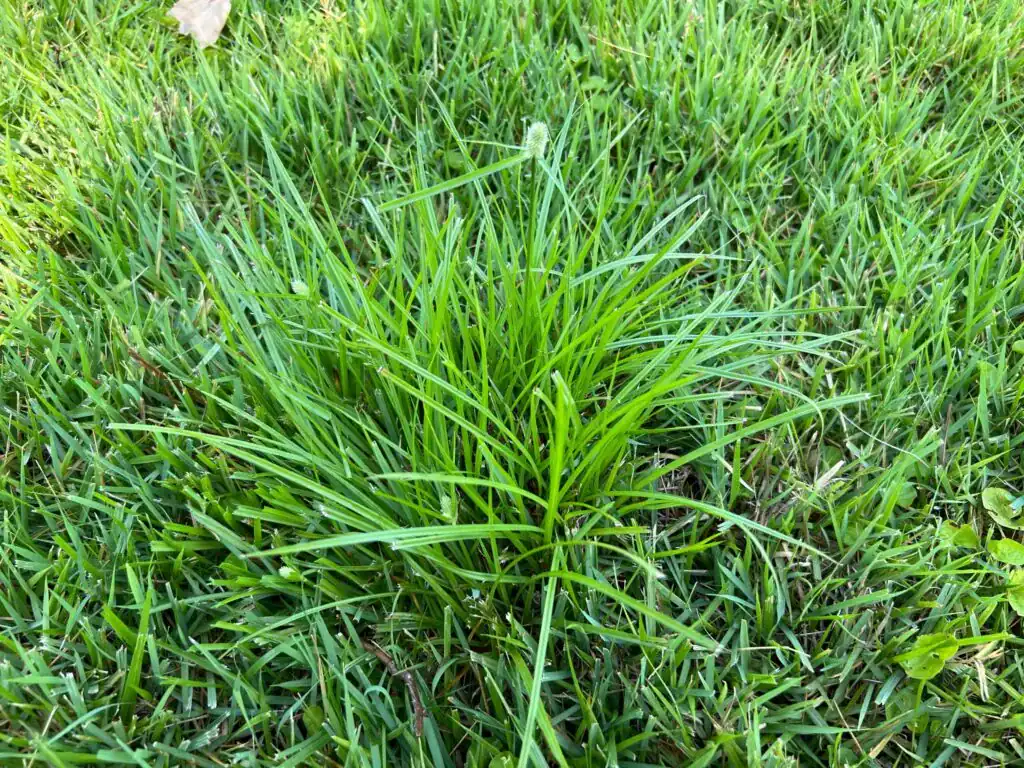
Kyllinga doesn’t respond to the stuff on the shelf at the Stop & Shop on Patchogue-Yaphank Road. It’s a sedge not a broadleaf weed, not a grassy weed and it requires a completely different class of herbicide to eliminate. When you’re using the wrong product, you’re not slowing it down. You’re just watching it spread while the season burns off.
What makes Medford lawns especially vulnerable is the combination of sandy glacial soils and in-ground irrigation systems. Those two things together soil that drains fast and homeowners running sprinklers to compensate create exactly the moist, consistently watered conditions kyllinga thrives in. It establishes in weak spots, sends rhizomes underground, and expands outward faster than most people expect.
Once we apply the right chemistry at the right time and bring the infestation under control, you get your lawn back. Not just weed-free actually dense and competitive again, the kind of turf that doesn’t give kyllinga a foothold the next time around. That’s the difference between treating the symptom and solving the problem.
We’re a locally owned, lawn-specific company based out of Port Jefferson Station connected directly to Medford via Route 112. This isn’t a national brand with a local phone number. We’re a company that has treated lawns throughout the central Suffolk County corridor, including the older residential neighborhoods of Medford where post-war housing stock and decades of turf aging have made kyllinga pressure a real and growing issue.
Every application we make is performed by a NYSDEC-licensed applicator holding a Category 3a Commercial Pesticide Applicator credential the license required to legally purchase and apply the professional-grade sedge-active herbicides that actually eliminate kyllinga. That matters in Suffolk County, especially in a community like Medford that sits adjacent to the Central Pine Barrens and above a sensitive aquifer system. Compliance with Suffolk County’s pesticide buffer zone regulations isn’t optional here and it’s something we handle on every job.
When something needs to be addressed, there’s a real person to call. No call centers, no rotating technicians who’ve never seen your lawn before. When ticks and fleas become a problem on these same properties, we also handle flea and tick control for Medford homes.
It starts with a proper identification. Kyllinga and nutsedge are both sedges and both common in Suffolk County lawns, but they’re not the same plant. Treating one with a protocol designed for the other produces incomplete results. Before we apply anything to your Medford lawn, we confirm the specific species green kyllinga, false green kyllinga, or nutsedge because that determination shapes the entire treatment approach.
From there, we build the program around the plant’s active growing season. In Medford’s climate, that window runs from late May through late August. Applications made outside that window too early in spring before the plant is metabolically active, or too late in fall when it’s going dormant are significantly less effective. A properly structured kyllinga control program requires a minimum of two to three targeted applications spaced four to six weeks apart. That’s not a sales tactic. That’s the biology. One visit doesn’t cut it when rhizomes are still alive underground.
After the herbicide program is complete, the bare and thinning areas kyllinga leaves behind need attention. We overseed and restore soil in those gaps and rebuild the turf density that keeps kyllinga from re-entering the following season. In Medford’s aging residential lawns many of which were already thinning before the kyllinga arrived that restoration step is what turns a treatment into a lasting result.
Ready to get started?
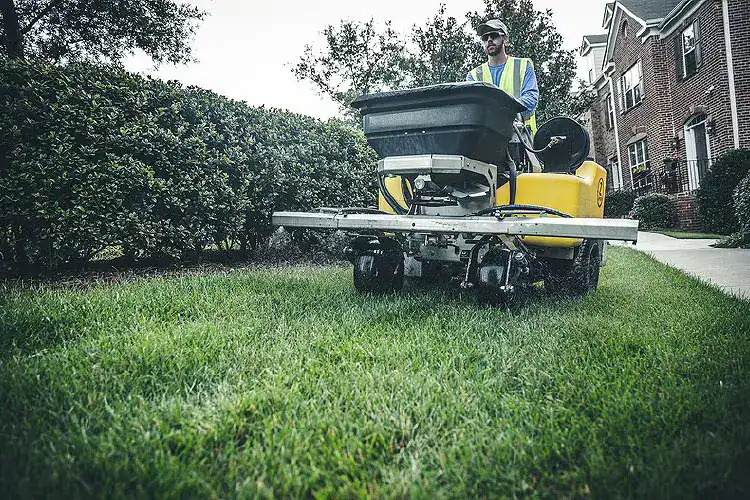
The herbicides that eliminate kyllinga halosulfuron-methyl and sulfentrazone are professional-grade products. They’re not available in the retail lawn care aisle, and they require a NYSDEC Commercial Pesticide Applicator License to purchase and apply. When we treat kyllinga in Medford, the chemistry we’re using is not something a homeowner could have tried on their own. That’s a meaningful distinction, especially after you’ve already spent money on retail products that didn’t work.
Every kyllinga control program we offer includes correct species identification before treatment, properly timed applications calibrated to the Long Island growing season, and full compliance with Suffolk County Local Law 41-2007 pesticide buffer zone requirements which is particularly relevant for Medford properties near designated well buffer zones in the Pine Barrens region. We also provide irrigation management guidance, since overwatered lawns in Medford’s sandy soil are one of the primary drivers of kyllinga establishment in the first place.
Post-treatment overseeding and turf restoration are part of the conversation from day one not an upsell at the end. Kyllinga leaves behind thin and bare areas when it’s eliminated, and without restoring competitive turf density in those spots, reinfestation is just a matter of time. Our goal is a Medford lawn that doesn’t just look better this season it stays better.
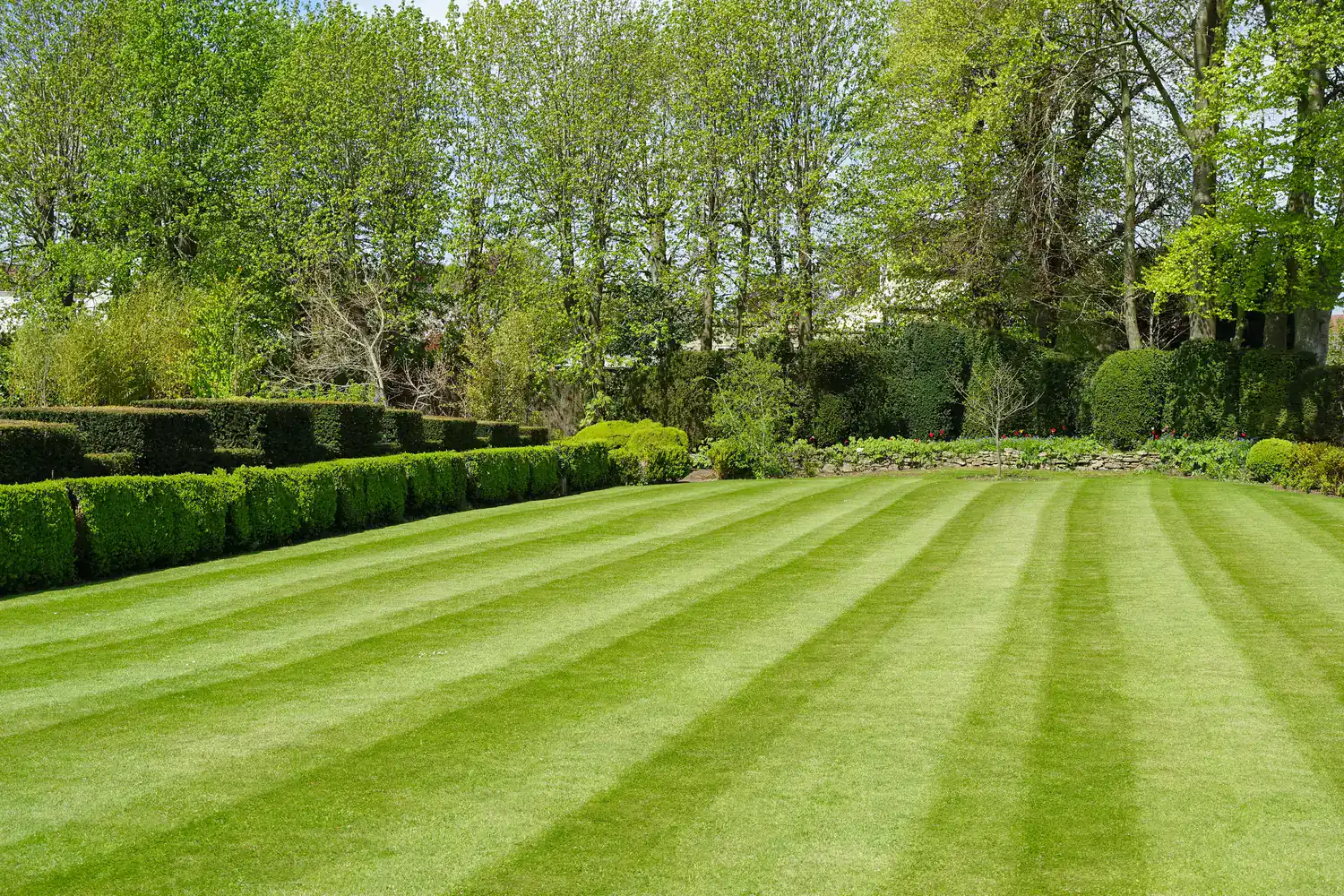
Kyllinga is a sedge, not a broadleaf weed and not a grassy weed. The herbicide categories that cover those two groups products containing 2,4-D, dicamba, quinclorac, or similar active ingredients have no meaningful activity on sedges. So if you’ve applied a standard weed control product and watched the kyllinga keep growing, the product wasn’t failing. It was just never designed for this plant.
The herbicides that actually work on kyllinga are halosulfuron-methyl and sulfentrazone. Both require a commercial pesticide applicator license to purchase in professional formulations, which means they’re not available at any retail store in Medford or anywhere else in Suffolk County. This isn’t a gap you can close with a better product from Home Depot it’s a licensing and chemistry gap that only a licensed applicator can bridge. That’s the core reason DIY attempts on kyllinga almost always fail, regardless of effort.
A properly structured kyllinga control program requires a minimum of two to three targeted applications. The reason is the rhizome the underground root stem that kyllinga uses to spread. Even when a well-chosen herbicide kills the visible plant tissue above ground, the rhizome network can survive and push up new growth. One application is rarely enough to reach all of that underground system effectively.
Applications need to be spaced four to six weeks apart and timed within the active growing season, which in the Medford area runs from late May through late August. Treatments made too early in spring or too late in fall when kyllinga isn’t actively growing and metabolically vulnerable are significantly less effective. Any company offering to solve an established kyllinga infestation in a single visit either doesn’t understand the biology or isn’t being straight with you about what the process actually involves.
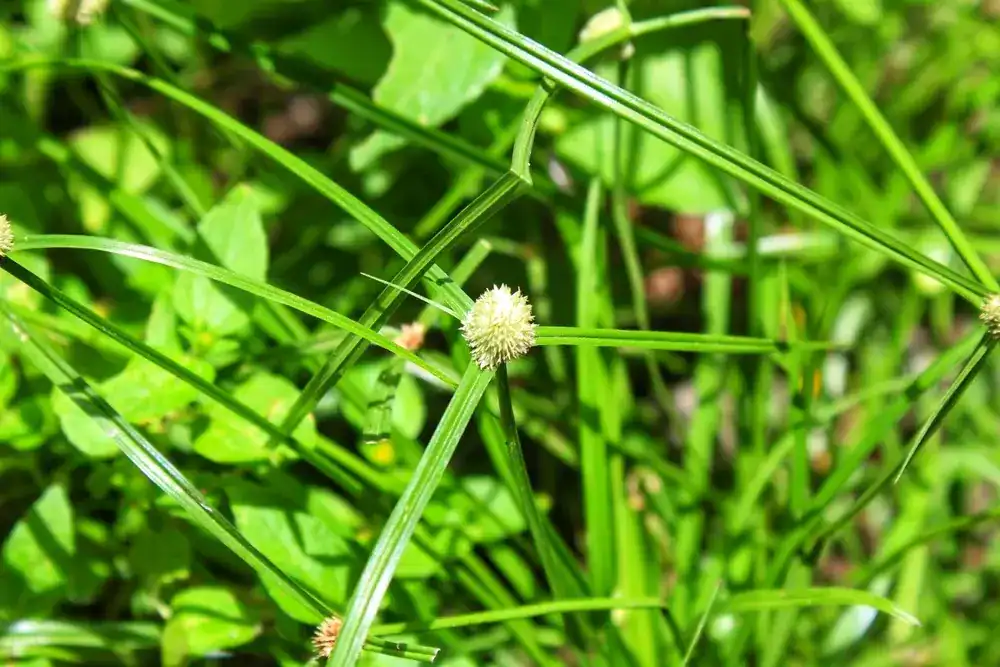
They’re related but not the same plant, and yes it matters for treatment. Both are sedges in the family Cyperaceae, and both are common in Suffolk County lawns. But green kyllinga and false green kyllinga grow lower to the ground than yellow nutsedge, form denser mats, and have a distinctly different seed head structure. They can look similar enough at a glance that misidentification is genuinely common, even among lawn care providers who don’t specialize in sedge control.
The reason identification matters is that treatment protocols can differ, and applying a program calibrated for nutsedge to a kyllinga infestation or vice versa produces incomplete results. You might see partial dieback and assume the program is working, while the actual infestation continues to spread via rhizomes underground. Correct identification before any product is applied is the foundation of an effective sedge control program, and it’s something that should happen on the first visit, not after two failed treatments.
Overwatering doesn’t cause kyllinga in the sense that it creates the weed from nothing but it absolutely creates the conditions kyllinga exploits better than almost any other weed. Kyllinga thrives in consistently moist soil. It establishes fastest in low spots where water pools, along irrigation zones that run too long, and in lawns that are being watered more frequently than the turf actually needs.
This is a particularly relevant issue in Medford because of the soil type. The sandy, glacial outwash soils underlying central Suffolk County drain quickly, which leads many homeowners to run their irrigation systems more aggressively to keep the lawn from drying out in summer heat. That’s a reasonable instinct but when irrigation schedules aren’t carefully managed, they create localized moist conditions that give kyllinga a competitive edge over desirable cool-season grasses like tall fescue and Kentucky bluegrass. Treating kyllinga without adjusting the irrigation schedule that helped it establish is one of the most common reasons infestations return after treatment. Addressing both together is what produces a lasting result.
The effective treatment window for kyllinga in Medford runs from late May through late August. That’s when the plant is actively growing and metabolically vulnerable to the herbicide chemistry we use to control it. Applications made outside this window particularly in early spring before soil temperatures have warmed enough for active growth, or in fall when the plant is beginning to go dormant are significantly less effective because the plant isn’t moving herbicide through its system the way it does during peak growth.
Timing also matters within the season. Treatments applied during periods of drought stress or immediately after heavy rain can reduce efficacy. The goal is to treat when kyllinga is growing actively and conditions allow the herbicide to be absorbed and translocated through the plant. In a typical Long Island summer, that usually means July and August are the most productive treatment months, with a first application in late May or June to begin the program. Getting the timing right is one of the main reasons our professional programs outperform DIY attempts.
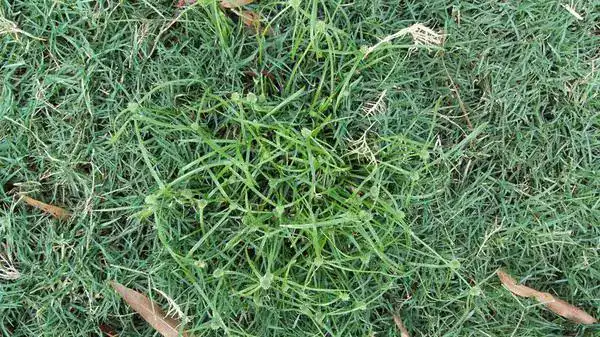
Yes and it happens more commonly than most homeowners realize. Kyllinga spreads through two mechanisms: underground rhizomes that extend outward from an established plant, and seeds. A single kyllinga plant can produce up to 5,000 seeds per season, and those seeds move easily via foot traffic, mowing equipment, water runoff, and wind. In Medford’s residential neighborhoods, where lots are relatively close together and lawns share edges along property lines, an untreated infestation on one property can seed into adjacent yards within a season or two.
The rhizome spread is slower but more persistent it’s the mechanism that allows kyllinga to re-establish even after partial treatment. Once rhizomes cross a property line into a neighboring lawn, that lawn now has its own infestation to manage. This is one of the reasons acting on a moderate infestation before it becomes severe is genuinely more cost-effective not just for your own lawn, but for the surrounding properties. Kyllinga has been documented expanding northward into Long Island’s central Pine Barrens region in recent years, and Medford’s irrigated residential lawns are exactly the environment it moves into most aggressively.
Useful Links
Other Services we provide in Medford