
Hear from Our Customers
If your Miller Place lawn has been fertilized season after season without much to show for it, compaction is usually the reason. Nutrients can’t reach the root zone when the soil is too dense to let them through. Core aeration opens that pathway back up and once it does, the fertilization you’ve already been paying for actually starts working. Studies show aeration can increase fertilizer uptake efficiency by 30 to 40%, which means the investment you’ve already made starts delivering returns it never could before.
For Miller Place homeowners near the Sound, there’s another layer to this. Sandy coastal soils develop a thatch barrier at the surface that repels water even when the ground below would drain just fine. You can water regularly and still watch your lawn dry out, because moisture can’t get through that compacted surface layer. Aeration breaks through it physically no product, no workaround, just mechanical relief that lets water and air reach where they need to go.
Properties closer to the North Shore bluffs deal with a different version of the same problem. Shallow topsoil over rocky glacial deposits compresses easily under foot traffic and mowing equipment. Add salt spray from Long Island Sound on top of that, and you’ve got stressed, shallow-rooted turf that compounds every compaction issue. Deeper aeration gives roots room to grow down, not just sideways and that depth is what makes turf resilient enough to handle what North Shore conditions throw at it year after year.
We’re a Suffolk County-based lawn care company that has been working with Long Island soil conditions long enough to know that what works inland doesn’t always translate to the North Shore. The sandy coastal profiles near Long Island Sound, the rocky glacial terrain along the Miller Place bluffs, the salt spray factor that inland operators never have to think about these aren’t abstract details to us. They’re the conditions we’re working with on every property we service in Miller Place and the surrounding communities.
Every applicator on our team holds a New York State DEC pesticide applicator license. That’s a legal requirement for commercial lawn care in New York, but it’s also a baseline for accountability that a lot of smaller operators in the area quietly skip. We comply with New York’s fertilizer laws, including phosphorus restrictions near waterways which matters for Miller Place homeowners whose properties sit close to Long Island Sound.
We serve Miller Place, Mount Sinai, Port Jefferson, Stony Brook, Smithtown, and the surrounding North Shore communities as a direct operation not a franchise, not a subcontractor network. When you book with us, the same licensed, experienced crew shows up with the same commercial-grade equipment every time. For yards past saving, we also offer Miller Place new lawn installation.
When we arrive at your Miller Place property, we’re not running the same pass pattern on every lawn regardless of conditions. We assess what we’re working with soil type, thatch depth, compaction level, and any terrain-specific factors like proximity to the bluff or evidence of salt spray stress near the Sound. That assessment shapes how we approach the job.
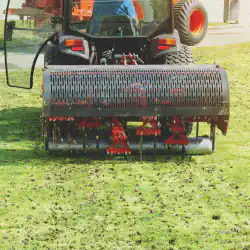
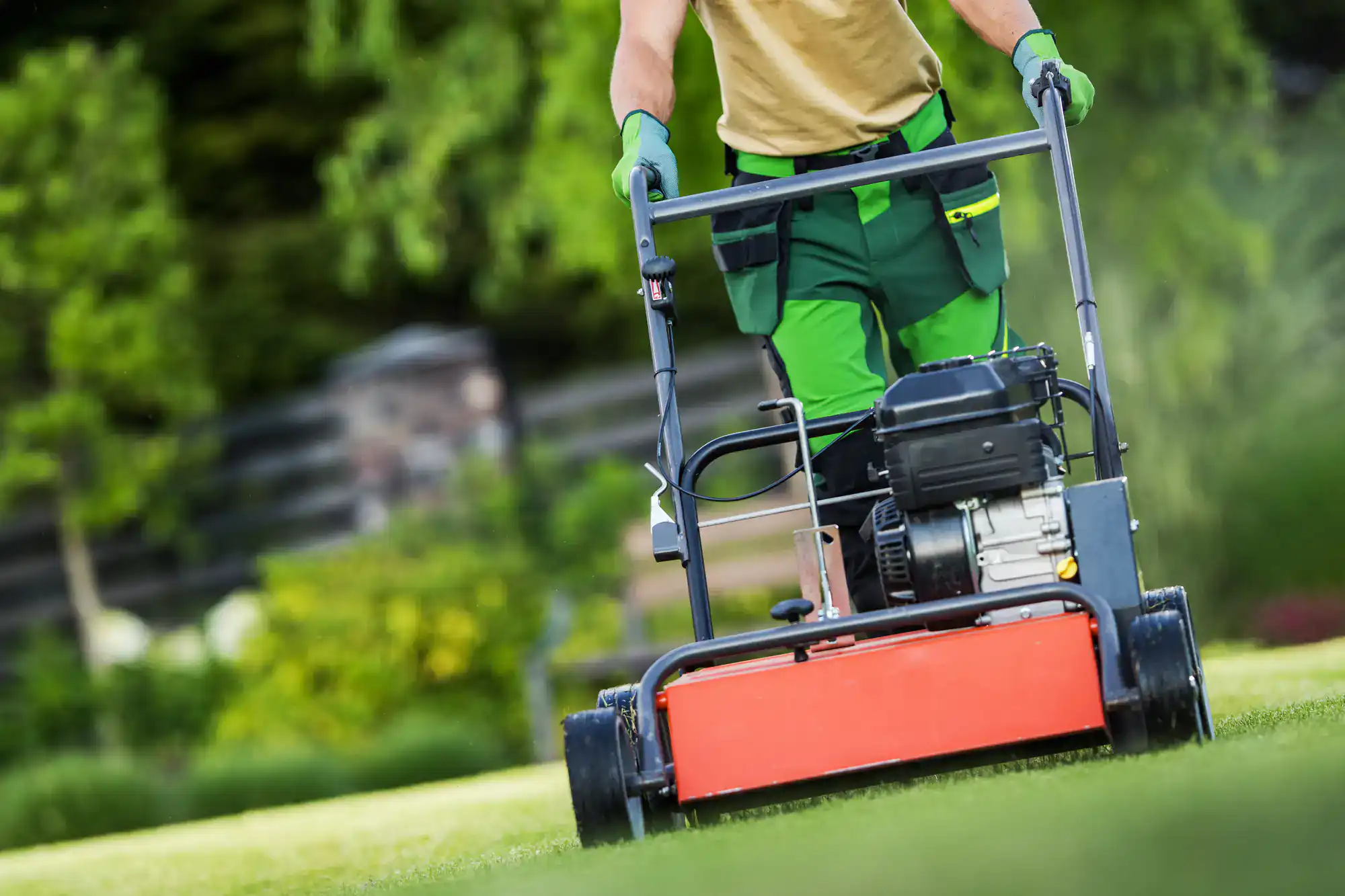
Then we run the hydraulic aerator. This is not the drum-style machine you’d rent from a home improvement store. Our hydraulic unit drives tines 3 to 4 inches into the ground with adjustable pressure, which means it can reach the actual compaction layer even on the rocky, shallow-topsoil terrain common near the Miller Place bluffs. A standard rental aerator typically penetrates 1.5 to 2 inches often less when it hits resistance. That’s surface treatment, not compaction relief.
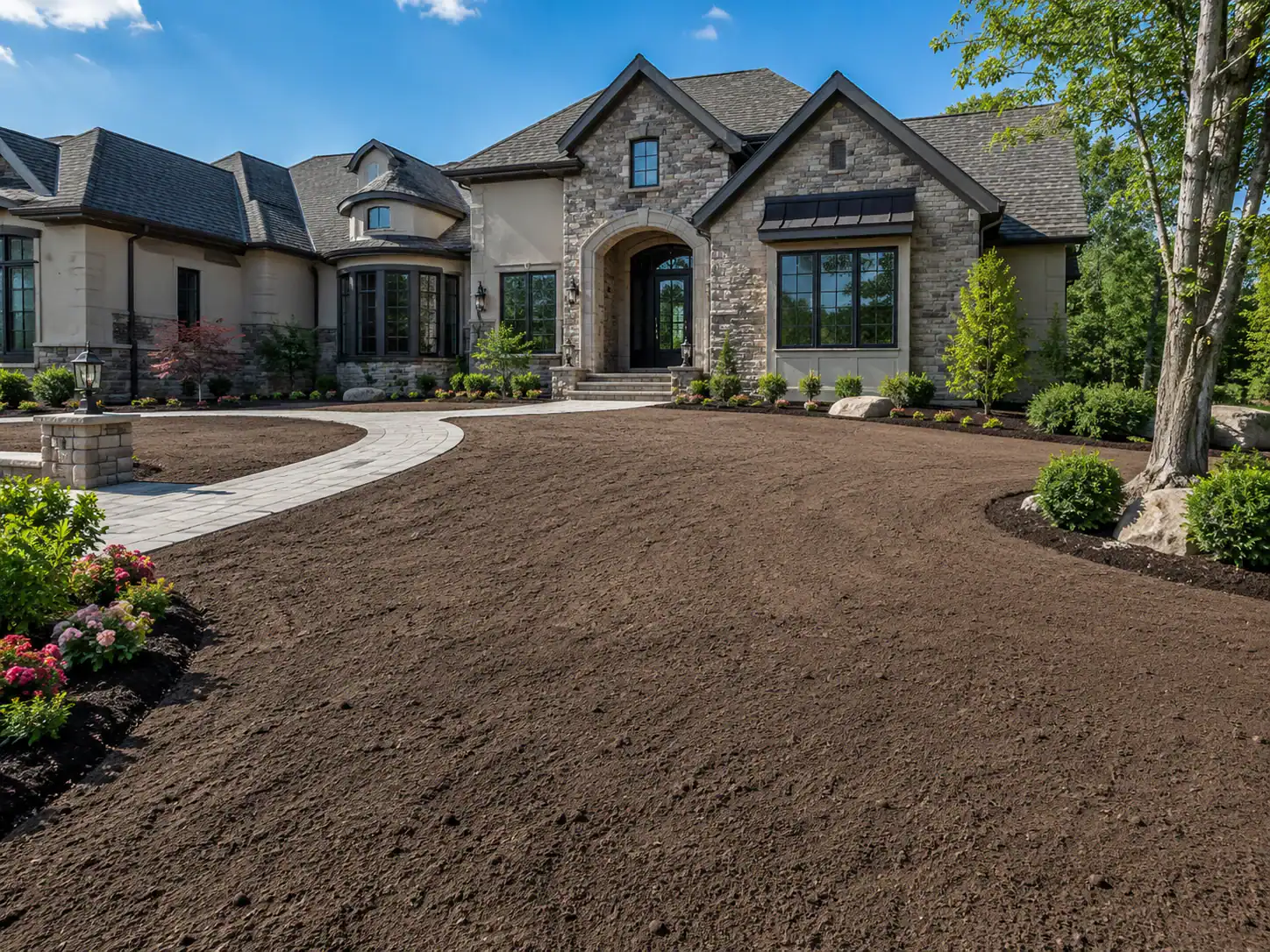
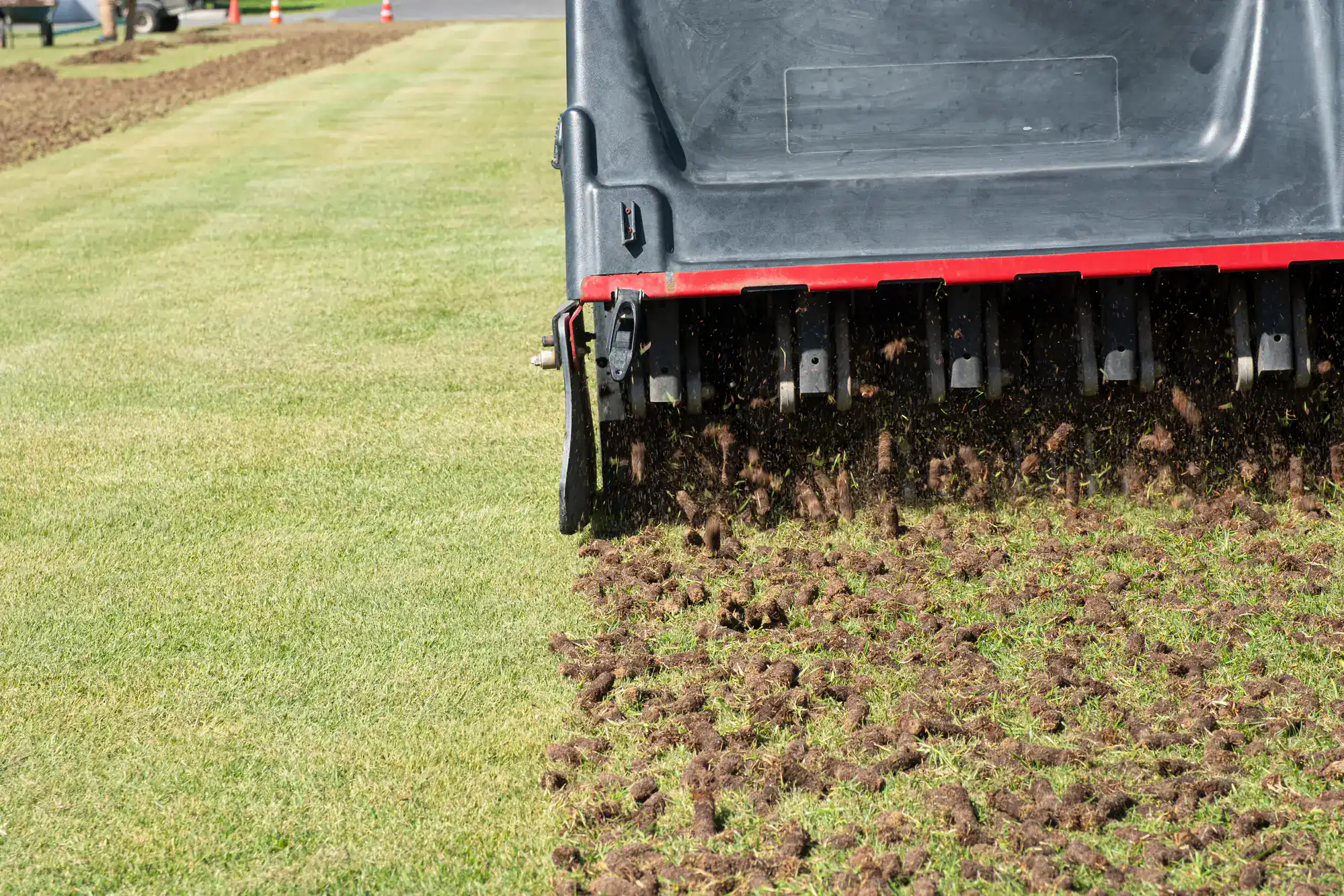
After aeration, you’ll see soil cores scattered across your lawn. Leave them there. Those plugs contain soil microbes and organic matter that break down within 2 to 4 weeks under normal conditions, feeding the surface and helping to reduce thatch over time. Your lawn will look temporarily disrupted that’s normal and expected. Within a few weeks, you’ll see the holes close, the turf fill in, and the results of improved water and nutrient penetration start showing up in the density and color of your grass. If you’re pairing aeration with overseeding, which we strongly recommend for the fall window, germination rates run 30 to 50% higher on aerated ground than on un-aerated soil.
Ready to get started?
Core aeration is the foundation, but it works best when it’s part of a complete program. For Miller Place lawns predominantly tall fescue, Kentucky bluegrass, and perennial ryegrass the fall window from late August through October is the optimal time to aerate, overseed, and fertilize in sequence. Long Island Sound’s moderating effect on North Shore temperatures gives this window a slight edge over inland towns, but it still closes. Once soil temperatures drop too low for germination, you’re waiting until next year.
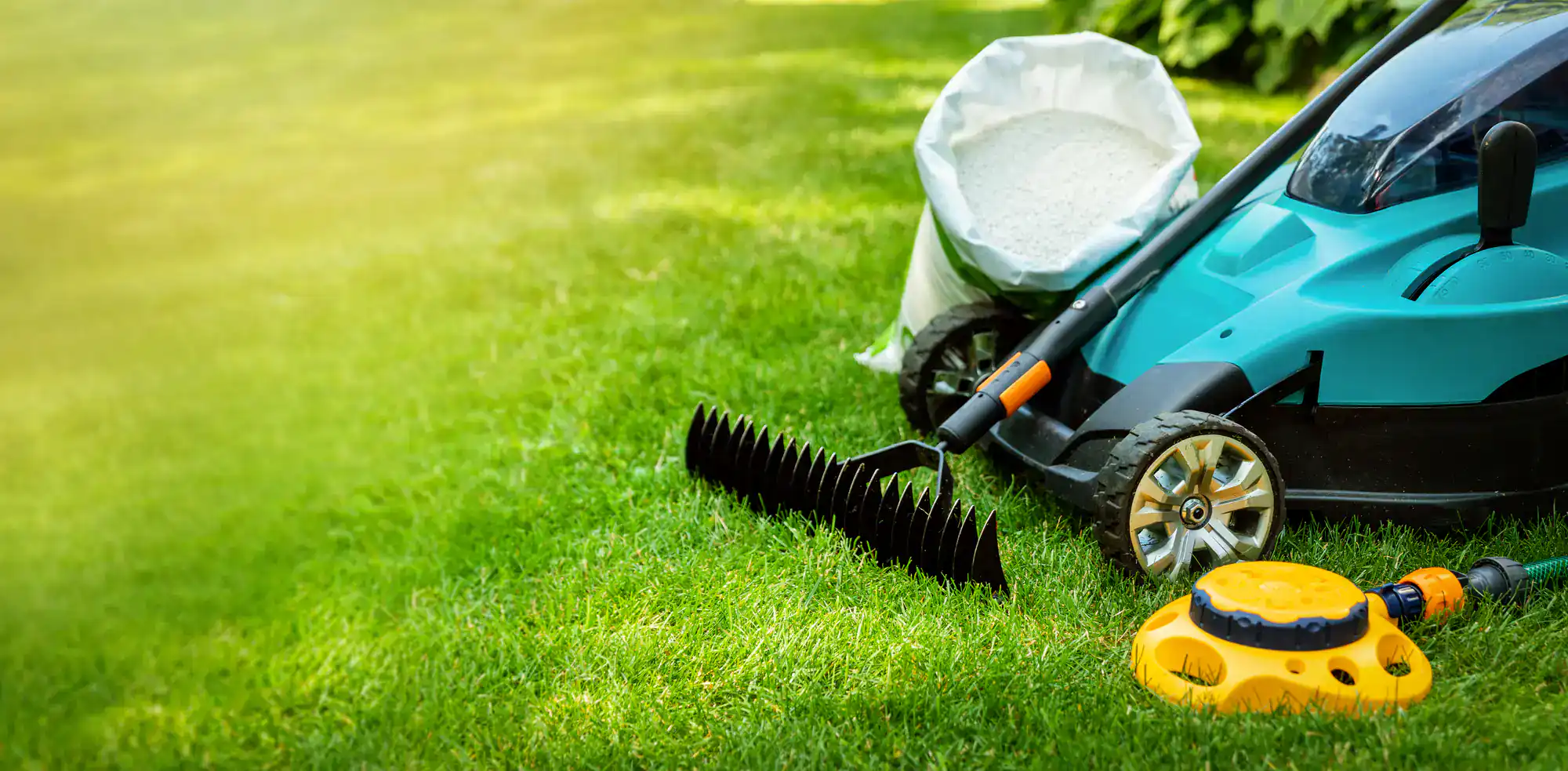
Our aeration service pairs naturally with overseeding and our fertilization programs because the timing and sequencing matter agronomically. Aerating first creates direct soil contact for seed which is why germination rates are dramatically higher on aerated ground. Fertilizing after aeration means nutrients travel straight to the root zone instead of sitting on a compacted surface. The three services together aren’t an upsell. They’re the correct order of operations for Long Island’s cool-season turf.
For properties near Long Island Sound, we also factor in New York State’s fertilizer regulations, which include phosphorus restrictions near waterways. Our NYS-licensed applicators know these rules and apply them on every job so you’re not just getting a better-looking lawn, you’re getting one maintained in compliance with state environmental standards. That’s not a minor detail in a coastal hamlet like Miller Place, where runoff into the Sound is a real consideration.
For Miller Place lawns, the fall window late August through October is the right time. The cool-season grasses that dominate North Shore lawns, including tall fescue, Kentucky bluegrass, and perennial ryegrass, respond best to aeration when soil is still warm enough to support root activity but air temperatures have cooled enough to reduce heat stress on new growth. That combination is exactly what you get in early fall on Long Island.
Miller Place’s position on the North Shore gives it a slight microclimatic advantage here. Long Island Sound moderates temperatures along the bluff corridor, which can extend the viable seeding window a bit compared to inland Suffolk County towns. That said, the window still closes and homeowners who wait until late October or November frequently miss the optimal germination period entirely. If you’re planning to pair aeration with overseeding, earlier in that fall window is always better than later.
Yes and in some ways it matters more on sandy soil than on heavier clay. Sandy soils near Long Island Sound don’t compact the same way inland clay soils do, but they develop a surface thatch layer that becomes hydrophobic over time. That thatch repels water even when the sandy substrate below would drain freely. The result is a lawn that dries out faster than it should, even with regular watering, because moisture can’t penetrate the surface barrier.
Core aeration physically disrupts that barrier. It punches through the thatch layer and creates direct channels to the soil below, restoring water infiltration and giving fertilizer a direct path to the root zone. For properties in the lower-lying areas near the Sound, where soil moisture can vary significantly with the seasons, this kind of mechanical relief is what actually changes how the lawn performs not more water, not more fertilizer, but an open pathway for both to work correctly.
Core aeration removes a plug of soil from the ground. Spike aeration pushes soil aside to create a hole. That distinction sounds minor, but it isn’t. When you push soil aside rather than removing it, the soil around each hole becomes more compacted which is the opposite of what you’re trying to accomplish. On Miller Place’s sandy bluff soils, where surface compaction is already the primary barrier to healthy turf, spike aeration doesn’t solve the problem. It can quietly make it worse.
Core aeration, done with the right equipment, creates genuine decompression. The holes allow air, water, and nutrients to reach the root zone directly. The removed cores break down on the surface and return organic matter to the lawn. It’s a complete mechanical process, not just poking holes. Any operator recommending spike aeration as an equivalent alternative to core aeration either doesn’t have the right equipment or doesn’t understand what compaction actually requires to fix.
Depth matters more than most homeowners realize especially on the North Shore. The compaction layer in most Miller Place lawns sits 2 to 4 inches below the surface. A standard drum-style aerator, the kind available at equipment rental counters, typically penetrates 1.5 to 2 inches under ideal conditions. On rocky glacial terrain near the Miller Place bluffs, where shallow topsoil sits over dense subsoil, that same machine may only scratch an inch before it meets resistance and bounces off.
Our hydraulic aerator drives tines 3 to 4 inches deep with adjustable pressure that adapts to soil resistance rather than just bouncing off it. That means it reaches the actual compaction layer on the terrain types common in Miller Place not just the surface thatch. The difference in outcome is real: a machine that goes 1.5 inches gives you cosmetic disruption. A machine that goes 3 to 4 inches gives you actual compaction relief. That’s why equipment type isn’t a minor footnote it’s the whole argument.
Right after aeration, your lawn will have soil cores scattered across the surface and visible holes throughout the turf. This is exactly what’s supposed to happen, and it’s not a sign that anything went wrong. The cores contain soil microbes and organic matter that break down naturally over 2 to 4 weeks under normal conditions, feeding the surface layer and contributing to thatch reduction over time. Removing them would eliminate one of the key biological benefits of the service.
The holes themselves close within a few weeks as the surrounding turf fills in and root activity increases. Most Miller Place homeowners start seeing noticeable improvement in turf density and color within three to four weeks of treatment sooner if aeration was paired with overseeding and fertilization. The temporary disruption is the trade-off for a lawn that actually absorbs water, holds nutrients, and grows the way it should. If you’ve been living with a lawn that looks fine on the surface but never quite performs, those few weeks of recovery are worth it.
Overseeding without aerating first is one of the most common reasons homeowners in Miller Place don’t get the germination results they’re expecting. Seed dropped onto compacted, thatch-covered soil whether that’s sandy coastal soil near the Sound or heavier bluff terrain has almost no chance of making contact with actual soil. Without soil contact, germination rates drop significantly. You spend money on quality seed and end up with patchy results because the seed never had a fair shot.
Aeration before overseeding creates hundreds of direct pathways to soil across the entire lawn. Seed falls into those channels, makes contact, and germinates at rates 30 to 50% higher than on un-aerated ground. For Miller Place lawns with bare patches in high-traffic areas backyard play zones, paths worn down by kids and pets, areas along the perimeter of the property the aeration-first approach is the difference between thin, uneven fill and a genuinely dense, recovered lawn heading into the next growing season. The two services are sequenced this way for a reason, and doing one without the other leaves real results on the table.
Useful Links
Other Services we provide in Miller Place