
Hear from Our Customers
There’s a specific kind of stress that comes from finding a tick on your kid after they’ve been playing in the backyard for twenty minutes. You’re not being paranoid Suffolk County reported over 19,000 Lyme disease cases in 2023, and more than half of Long Island ticks carry the bacteria that causes it. That’s not a statistic from somewhere else. That’s here in Centereach.
Centereach’s housing stock plays a real role in this. The post-war ranch and split-level homes that make up most of the neighborhood sit on lots with mature trees, established shrub beds, and wooded edges exactly the kind of shaded, leaf-litter-rich borders where ticks concentrate. If your property backs up toward any green corridor between Centereach and Selden or Coram, deer are moving through it regularly, and they’re not coming alone.
A properly treated yard changes the math entirely. You stop doing tick checks after every trip outside. Your dog comes in clean. Your kids use the yard the way it was meant to be used. That’s the outcome not a spray schedule, not a product name. Just the ability to be in your own backyard without thinking about it.
We’ve been operating in Suffolk County since 1987. That’s not a tagline it means the team treating your Centereach property has been working this exact region through every tick season, every product evolution, and every shift in how Long Island’s pest pressure has changed over the decades.
Every technician who shows up to your property is a NYSDEC-licensed pesticide professional. New York State requires that certification to apply pesticides commercially it’s not optional, and not every company you’ll find online actually meets that standard. At Lawn Master, it’s non-negotiable.
What also separates us is the integrated approach. We’re not a pest-only company. We manage the full health of your lawn fertilization, aeration, restoration because a well-maintained lawn is genuinely less hospitable to fleas and ticks than a neglected one. No standalone tick control company in the Centereach market can offer that.
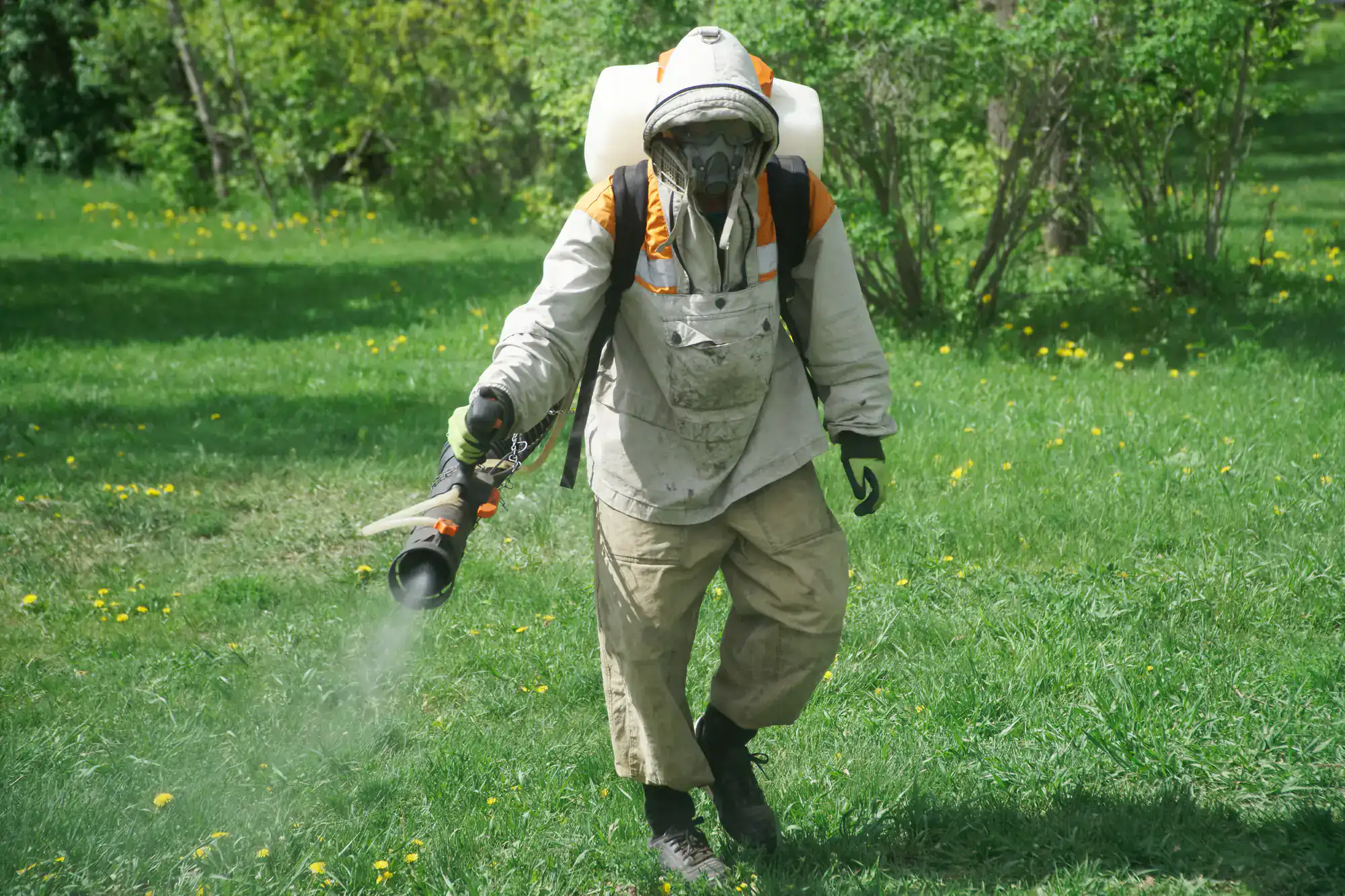
It starts with an assessment of your specific property not a generic walk-around, but a real look at where tick harborage zones exist on your lot. In Centereach, that usually means the shrub beds along the foundation, the fence line where your yard meets a neighbor’s or a wooded edge, under the deck, and anywhere leaf litter accumulates. Those are the zones that get treated, not just the perimeter.
From there, your seasonal program runs from April through October timed around Long Island’s actual tick calendar. The spring kickoff application goes down in early April, before nymphal tick populations peak in May and June. Nymphal deer ticks are the size of a poppy seed and nearly impossible to spot before they bite that spring window is the most critical of the year. Maintenance applications follow every 30 days through summer, with a fall treatment in September and October to knock down adult tick populations before they overwinter.
Each application provides roughly four to six weeks of residual protection, which is why the spacing matters. Skipping a treatment or starting late leaves a gap that ticks will find. The program is designed so you don’t have to think about any of that you’ll get a seasonal reminder, and we show up when we’re scheduled to.
Ready to get started?
Our flea and tick control programs cover the full property harborage zones, ornamental beds, wooded borders, and transitional areas not just a quick spray along the lawn’s edge. For Centereach properties near Blydenburgh Road or backing up to green corridors that connect to the surrounding wooded areas toward Coram and Selden, that comprehensive coverage is what actually moves the needle. A perimeter-only treatment on a property with real deer pressure and mature shrub beds is going to underperform.
Three tick species are active in Suffolk County deer ticks, American dog ticks, and lone star ticks and the program is designed to address all three across their respective active seasons. Beyond Lyme disease, Suffolk County ticks carry babesiosis and anaplasmosis, both of which are documented in this county at rates that exceed most of the rest of New York State. The treatment approach accounts for that full risk picture, not just the most commonly discussed disease.
Re-entry after treatment is typically safe within 30 to 60 minutes of the product drying a common concern for families with kids and pets, and one worth asking about directly. Applications are targeted, not broadcast-sprayed across the entire yard. The goal is effective coverage of the areas that matter, applied by someone who is legally certified and trained to do exactly that.
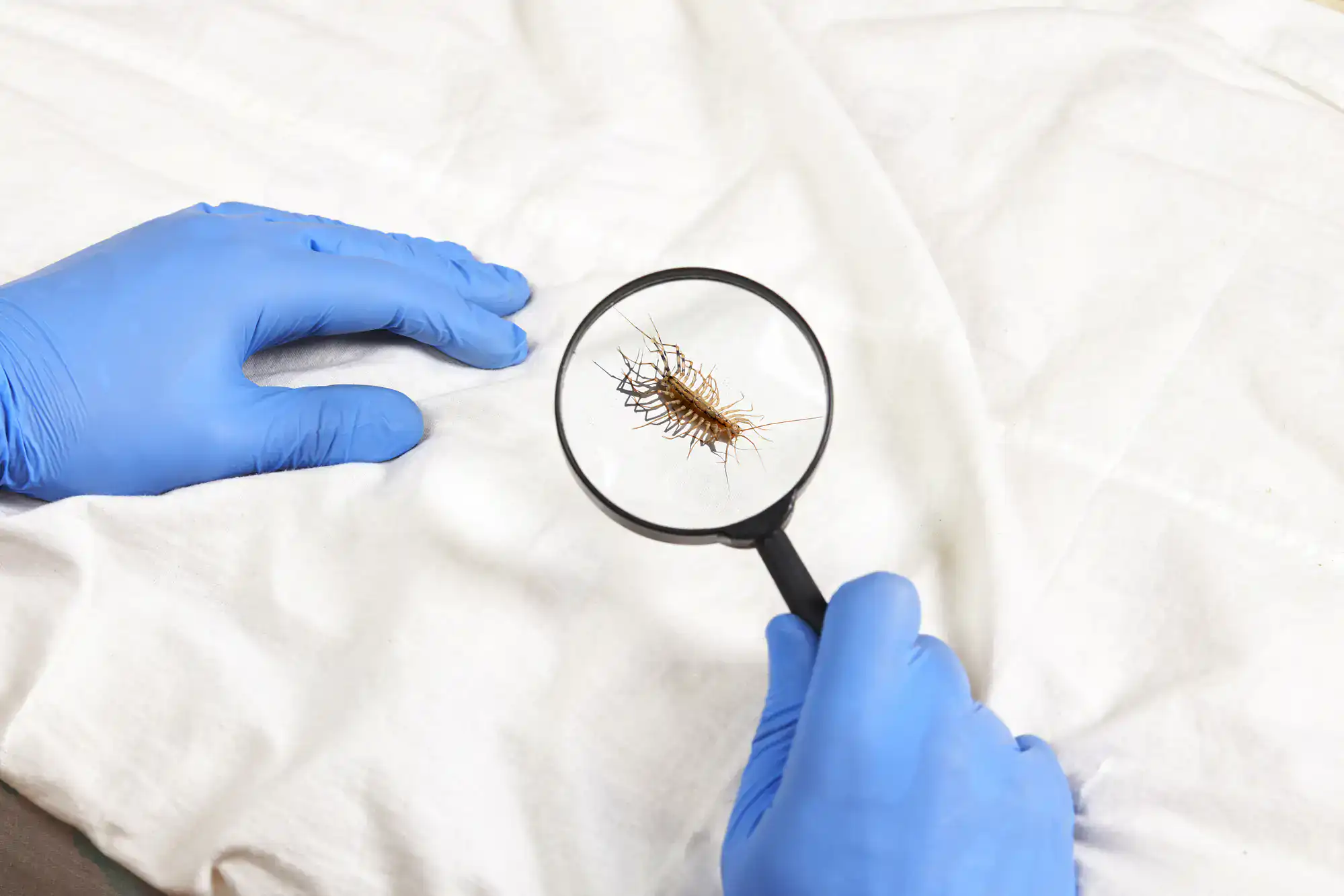
The short answer is April and if you wait until you find a tick, you’ve already missed the most important window. Nymphal deer ticks on Long Island peak in May and June. They’re the primary vector for Lyme disease transmission, and at the size of a poppy seed, they’re nearly impossible to spot before they’ve already been attached long enough to transmit infection.
A spring kickoff application in early April puts protection in place before that nymphal peak hits. Centereach’s climate means tick activity can begin as early as late March when temperatures hold consistently above 50°F which happens earlier here than many homeowners expect. Starting on time and staying on a 30-day schedule through October is the only approach that provides consistent, season-wide coverage. Starting late or skipping treatments creates gaps that ticks will exploit.
Yes when it’s applied by a licensed professional who knows what they’re doing. The concern is legitimate, and it deserves a direct answer rather than reassurance that glosses over the details. NYSDEC-licensed applicators are trained in targeted application, meaning the product goes on tick harborage zones shrub beds, wooded borders, fence lines not broadcast across the entire yard indiscriminately.
Re-entry is typically safe within 30 to 60 minutes of the product drying completely. The risk calculus here is straightforward: Suffolk County ticks carry Lyme disease, babesiosis, and anaplasmosis, and infection rates in this county are among the highest in New York State. A properly applied professional treatment, delivered by a certified applicator, carries far less risk than leaving a Centereach yard untreated through a full tick season with children and pets using the space regularly.
A single application gives you roughly four to six weeks of residual protection which means one treatment does not cover a season. At minimum, three applications spaced across the season will provide meaningful control. Six applications, running April through October on a 30-day schedule, deliver the most complete protection and are what most families with children or pets in the yard should be running.
The reason spacing matters is that gaps in coverage are exactly when ticks reestablish in treated areas particularly in Centereach yards with active deer movement or properties near wooded corridors. Missing the spring application means your yard is unprotected during the nymphal tick peak in May and June, which is statistically the highest-risk period of the year for Lyme disease exposure on Long Island. Consistency across the full season is what makes the program actually work.
A few things come together in Centereach specifically. The post-war ranch and split-level homes that dominate the neighborhood were built on lots carved from formerly wooded Long Island terrain. Decades of mature tree growth and established ornamental landscaping have created the shaded, moist, leaf-litter-rich microhabitats that ticks prefer and most Centereach properties have these conditions right along the foundation, under the deck, and at the back fence line.
The proximity to Blydenburgh County Park and the green corridors connecting Centereach to the wooded areas toward Coram and Middle Island mean white-tailed deer move through residential neighborhoods regularly. Adult deer ticks use deer as their primary host, and wherever deer travel, ticks get deposited. Centereach’s relatively high population density also means ticks that establish in one yard can migrate to adjacent properties through shared borders and the wildlife raccoons, opossums, squirrels that move freely through the neighborhood.
It’s a meaningful difference, and it goes beyond just having more services on the menu. Ticks thrive in specific lawn conditions heavy thatch, poor drainage, overgrown transition zones between maintained turf and shrub beds. A pest-only company can spray those areas, but they can’t fix the underlying lawn health issues that make those conditions persist year after year.
We address both sides of the problem. Proper aeration reduces thatch buildup. Correct fertilization promotes the dense, healthy turf that’s less hospitable to flea and tick harborage. Trimming and managing overgrown borders removes the microhabitats ticks depend on. For Centereach homeowners who are already investing in their property and with median home values around $514,800, most are consolidating lawn health and pest management with a single provider who understands how the two interact is a more effective long-term approach than treating them as separate problems.
New York State requires a NYSDEC Commercial Pesticide Applicator certification for any company applying pesticides commercially on lawns and ornamental turf. It’s a legal requirement, not an optional credential and it involves passing a state exam, completing required training hours, and renewing the license every three years. The problem is that not every company operating in the Centereach market actually meets this standard. Some send uncertified workers to apply pesticides, which is both a legal violation and a real quality issue.
You can verify a company’s NYSDEC certification directly through the New York State Department of Environmental Conservation’s online license lookup. Before you hire anyone local specialist, national franchise, or otherwise it’s worth taking two minutes to confirm they’re actually licensed to do what they’re being paid to do. At Lawn Master, every technician on every job is a certified professional. That’s not a selling point we invented it’s the legal baseline we hold ourselves to, and it’s one that not every competitor in Suffolk County can honestly claim.
Useful Links
Other Services we provide in Centereach