
Hear from Our Customers
When kyllinga is properly identified and treated on the right schedule, the difference shows up fast. The dark green patches that stayed lush while the rest of your lawn struggled through July heat gone. What fills back in is the turf you actually want, not a weed that was quietly spreading underground the whole time.
A lot of Centereach lawns are working against themselves without the homeowner knowing it. The older ranch and cape homes in neighborhoods like Dawn Estates and Eastwood Village were built in the early 1950s, and those lawns have decades of compaction built up. Compacted soil drains slowly, stays wet longer, and creates exactly the kind of moist, low-oxygen conditions that kyllinga thrives in. If you’ve also got an irrigation system that runs on a fixed schedule regardless of rainfall, you may be feeding the problem every time it kicks on.
The outcome of a properly structured kyllinga program isn’t just a weed-free lawn it’s a lawn that’s been set up to stay that way. That means the bare spots left behind after treatment get addressed too. Without overseeding and some soil work after the kyllinga is gone, those open areas become the next entry point. The goal is a dense, healthy stand of turf that doesn’t give kyllinga anywhere to come back to.
We’re based out of Port Jefferson Station about 8 to 10 miles north of Centereach on Nicolls Road. This isn’t a national brand routing calls through a regional office. We’re a Suffolk County business that knows the specific conditions in Centereach: the sandy soils over Long Island’s sole-source aquifer, the older subdivisions with compacted turf, and the moist low-lying pockets in central Centereach where kyllinga gets its foothold.
Every applicator on our team holds a New York State DEC Commercial Pesticide Applicator License (Category 3a, Ornamental and Turf). That’s the credential required to legally purchase and apply the professional-grade herbicides that actually work on sedges. We’re also fully up to speed on Suffolk County Local Law 41-2007 the pesticide buffer zone requirements around drinking water supply wells that apply throughout Centereach and the rest of central Long Island.
When you call us, you’re getting someone who can correctly identify what’s growing in your lawn, explain why it’s there, and build a program around your specific property not a template answer from a call center.
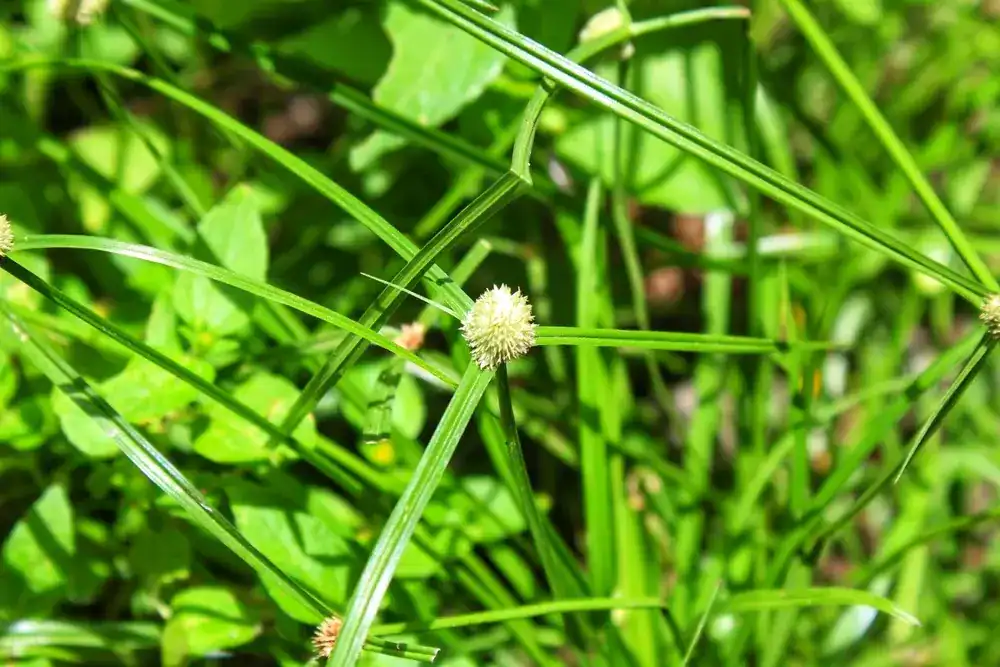
It starts with a correct ID. Kyllinga and nutsedge are both sedges, but they’re not the same plant, and treating them interchangeably is one of the most common reasons kyllinga programs fail. Kyllinga grows lower to the ground, spreads aggressively through underground rhizomes, and has a distinctive round or oval seed head. Before anything gets applied, we confirm exactly what we’re dealing with because the treatment protocol depends on it.
Once the species is confirmed, the first application goes down during the active growing window. In Centereach’s climate, that window opens in late May and runs through late August. The herbicides we use halosulfuron-methyl (Sedgehammer) and sulfentrazone (Dismiss) are professional-grade formulations that require a licensed applicator to purchase and apply. They are not available at the Home Depot on Middle Country Road, and the retail alternatives don’t work the same way on established sedge infestations.
One application is never enough for a mature infestation. Kyllinga’s rhizome network can push up new growth from surviving root structures even after the visible plant is dead. A complete program runs two to three applications spaced four to six weeks apart through the end of the growing season. Before any application, we check SCDHS buffer zone maps for your property address a compliance step that matters specifically in Centereach given the aquifer sensitivity of central Long Island’s sandy soils.
Ready to get started?
Every kyllinga control program for a Centereach property starts with a hands-on lawn assessment not a photo review, not a satellite estimate. We look at the infestation size, the surrounding turf conditions, soil drainage characteristics, and whether irrigation patterns are contributing to the problem. For the older lots in central Centereach, that context matters. A half-acre lawn in Eastwood Village with a 20-year-old irrigation system and clay-heavy low spots is a different situation than a newer property on the east side of the hamlet.
The treatment program itself is built around the biology of the plant, not the convenience of a single visit. You’ll receive two to three targeted applications of licensed professional-grade herbicide during the active growing season, with each visit timed to the plant’s growth cycle. We provide the required pesticide application notice signs before every treatment in both English and Spanish, as required under Suffolk County Local Law 40-2022 and we document buffer zone compliance for every property we treat in Centereach.
After the kyllinga is eliminated, we don’t just leave bare spots behind. Post-treatment recommendations include overseeding the affected areas and, where needed, core aeration to break up the compacted soil that created favorable conditions in the first place. The goal isn’t just to kill the weed it’s to close the door on it coming back.
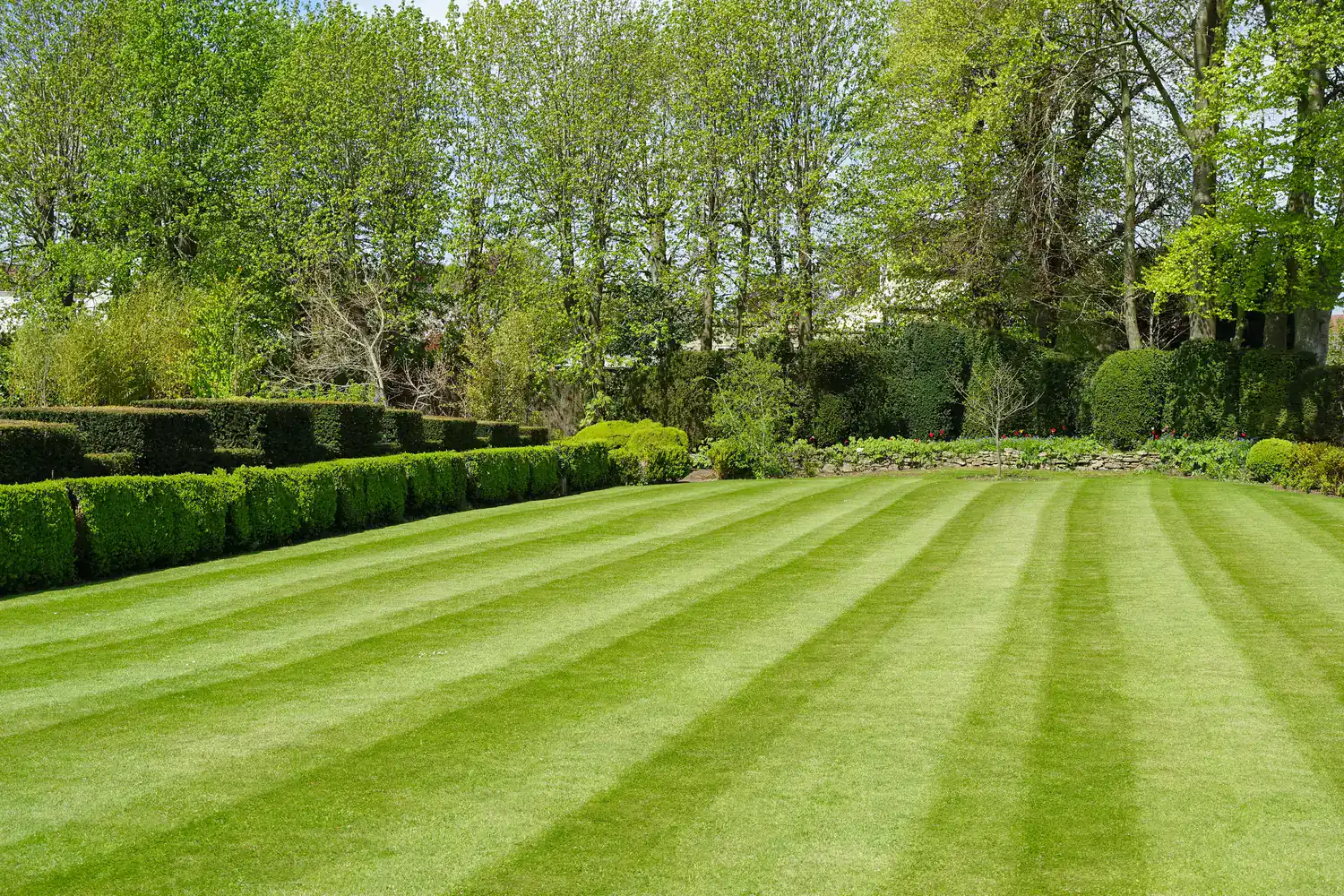
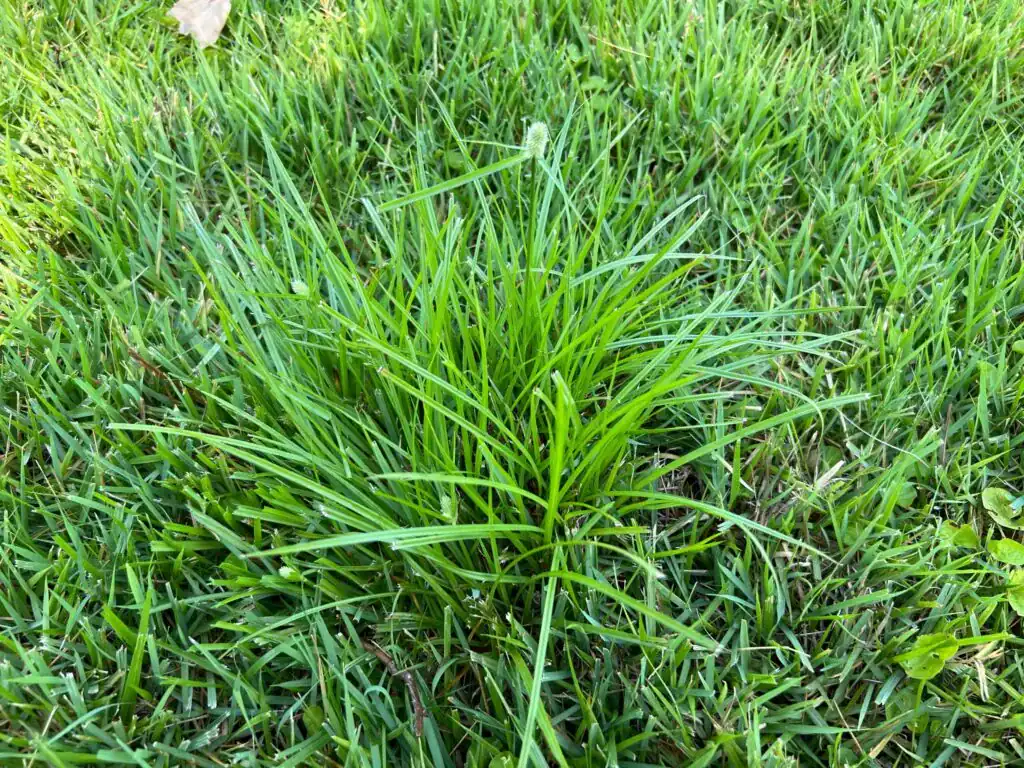
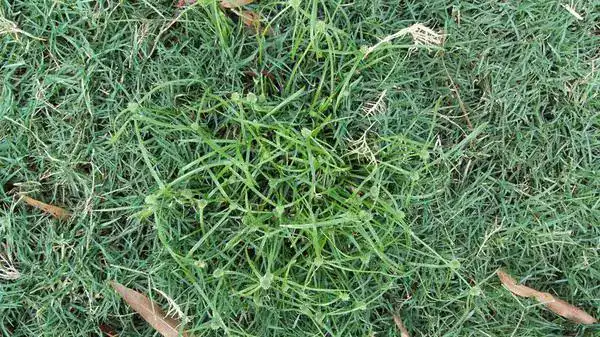
Kyllinga tends to grow in dense, low mats that stay noticeably darker green than the surrounding turf especially during mid-summer when cool-season grasses slow down in the heat. That contrast is usually what gets a homeowner’s attention in July or August. The seed head is the clearest ID marker: kyllinga produces a small, round or oval cluster, while nutsedge has a more elongated, branching spikelet structure.
The reason this distinction matters is that while both are sedges, they’re different plants with different growth habits. Kyllinga spreads more aggressively through rhizomes and tends to form a tighter, carpet-like patch. In Centereach’s older subdivisions where compacted, moisture-retaining soil gives it ideal conditions a kyllinga infestation can expand significantly within a single growing season. Getting the ID right before treatment is the step most providers skip, and it’s the step that determines whether the program actually works.
Kyllinga is a sedge it belongs to the family Cyperaceae, not the grass or broadleaf plant families. Most over-the-counter weed killers are formulated for broadleaf weeds like dandelions or clover, and even products marketed for crabgrass won’t touch a sedge. Applying them to a kyllinga patch is like using the wrong key nothing happens, and the weed keeps spreading.
The herbicides that actually work on kyllinga halosulfuron-methyl (Sedgehammer) and sulfentrazone (Dismiss) are professional-grade formulations that require a New York State DEC Commercial Pesticide Applicator License to purchase. They are not on the shelf at the Home Depot on Middle Country Road in Centereach. This isn’t a marketing angle it’s a regulatory fact. The only way to access the chemistry that reliably eliminates kyllinga from a Suffolk County lawn is through a licensed professional applicator.
For an established infestation, plan on a minimum of two to three applications spaced four to six weeks apart during the active growing season. A single application even the right product applied correctly is not enough to eliminate a mature kyllinga infestation. The herbicide kills the visible plant tissue above ground, but the underground rhizome network can regenerate new growth from surviving root structures. One treatment gets you partial suppression. A complete program gets you elimination.
In Centereach specifically, the timing window runs from late May through late August. Homeowners who discover the problem in July which is the most common scenario, when kyllinga stands out as a dark green patch against heat-stressed turf can start treatment immediately. The first application goes down right away, with follow-up applications completing the program through late August. Full results are typically visible by the following spring, once the cool-season turf has had a chance to fill back in.
This is a legitimate concern in Centereach, and it deserves a real answer. Suffolk County draws its drinking water entirely from the Long Island aquifer there is no backup municipal supply. The sandy, porous soils throughout central Long Island that make the aquifer rechargeable also mean that improperly applied pesticides can move through the soil column more readily than in areas with heavier clay soils. Suffolk County Local Law 41-2007 establishes pesticide-free buffer zones around public drinking water supply wells, and licensed commercial applicators are required to verify buffer zone status for every property before any application.
Every kyllinga treatment we perform in Centereach is preceded by a buffer zone check against the SCDHS maps. We apply only when and where it’s compliant to do so. Re-entry intervals the period after application when the treated area should be avoided are communicated clearly before every visit. With 43% of Centereach households having children under 18, we take this part of the process seriously, not as a checkbox.
Kyllinga doesn’t appear randomly it shows up where conditions favor it. The three biggest contributors are consistently moist soil, compaction, and thinned-out turf. In Centereach, all three tend to show up together in the same lawns. The flat, low-lying sections of older subdivisions like Dawn Estates hold water after rain events. Decades of foot traffic and mowing have compacted the soil in many of these lawns, slowing drainage further. And irrigation systems that run on fixed schedules common in homes that added in-ground systems over the years maintain the wet-soil conditions kyllinga needs to get established.
Kyllinga also spreads externally. A contaminated mower blade, bird-distributed seed, or rhizome fragment in delivered topsoil or sod can introduce it to a previously clean lawn. Once it’s in, it can produce up to 5,000 seeds per plant per season and spreads simultaneously through underground rhizomes. A patch that covers a few square feet in spring can colonize a significantly larger area by fall if nothing is done.
No and this is one of the most costly assumptions homeowners make. Kyllinga is a warm-season perennial sedge. It goes dormant in fall and the visible top growth dies back, which can make it look like the problem resolved itself. But the rhizome network underground survives the winter completely intact. When soil temperatures rise again in late spring, the plant regrows from the same root system often spreading into a larger area than it occupied the previous season.
Waiting through one winter doesn’t reset the problem. It gives the plant another year to extend its rhizome network into new areas of your lawn. In Centereach’s older subdivisions, where compacted, moisture-retaining soil already gives kyllinga a structural advantage, a one-season delay can mean the difference between treating a manageable patch and remediating a lawn that’s been substantially overtaken. The most cost-effective time to start a kyllinga control program is as early in the active growing season as possible not after another dormancy cycle.
Useful Links
Other Services we provide in Centereach