
Hear from Our Customers
Centereach’s sandy loam soil drains fast. Nutrients leach out before generic fertilizers even get a chance to work, which is why a lot of homeowners here spend money on lawn care and still end up with thin, weedy turf by July. When your program is built around what this soil actually needs and timed around Suffolk County’s seasonal windows you stop chasing problems and start seeing real, consistent improvement.
The older homes in Dawn Estates and Eastwood Village carry decades of compacted soil underneath them. Foot traffic, mowing, and years of inadequate care have turned what should be a healthy root zone into something closer to packed clay. A proper aeration and overseeding program done with the right equipment at the right time breaks that cycle. You get thicker turf, fewer bare spots, and a lawn that holds up through the summer stress season instead of browning out by August.
And then there’s the fall. For cool-season grass in Centereach, September and October are the most important weeks of the entire year. The work done during that window directly determines what your lawn looks like the following spring. When that timing is executed correctly, the difference is visible from the street.
We’ve been operating in Centereach and central Suffolk County since 1987 long before most of the competition in this market existed. That’s not a number we throw around casually. It means the people treating your lawn have seen what Centereach soil does across every type of season, and we’ve built a program around what actually works here.
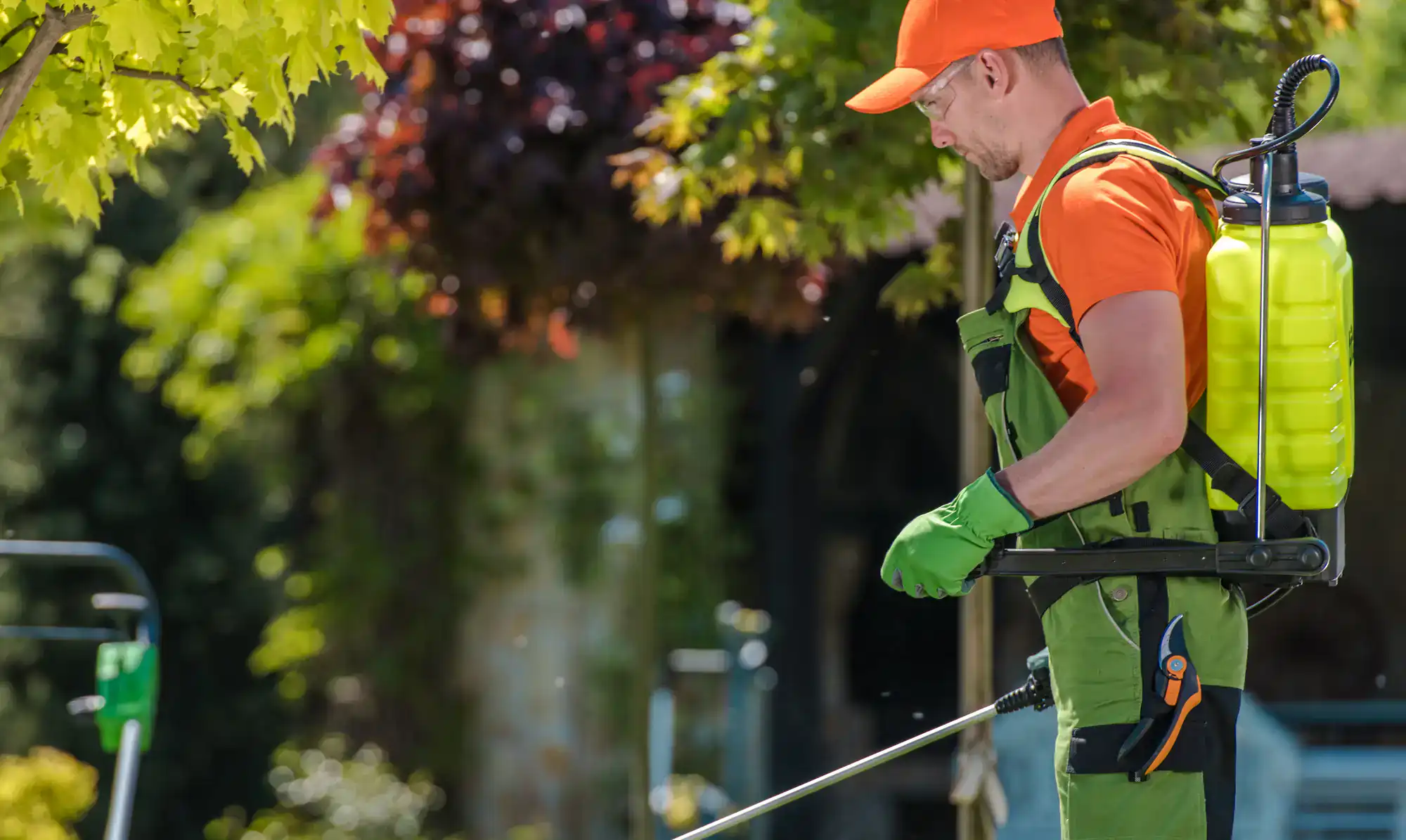
Every technician on our team is a NYS DEC-licensed pesticide applicator. That’s a legal requirement in New York, and it’s one that a surprising number of operators quietly skip. When one of our five fully wrapped, professional vehicles pulls up on your street in Centereach, you know exactly who’s there and what they’re qualified to do.
The custom-blended fertilizer we use was formulated specifically for Long Island’s soil chemistry. It’s not something you can buy at a hardware store, and it’s not what the national chains are using. We built it for this soil, in this county, for lawns exactly like yours.
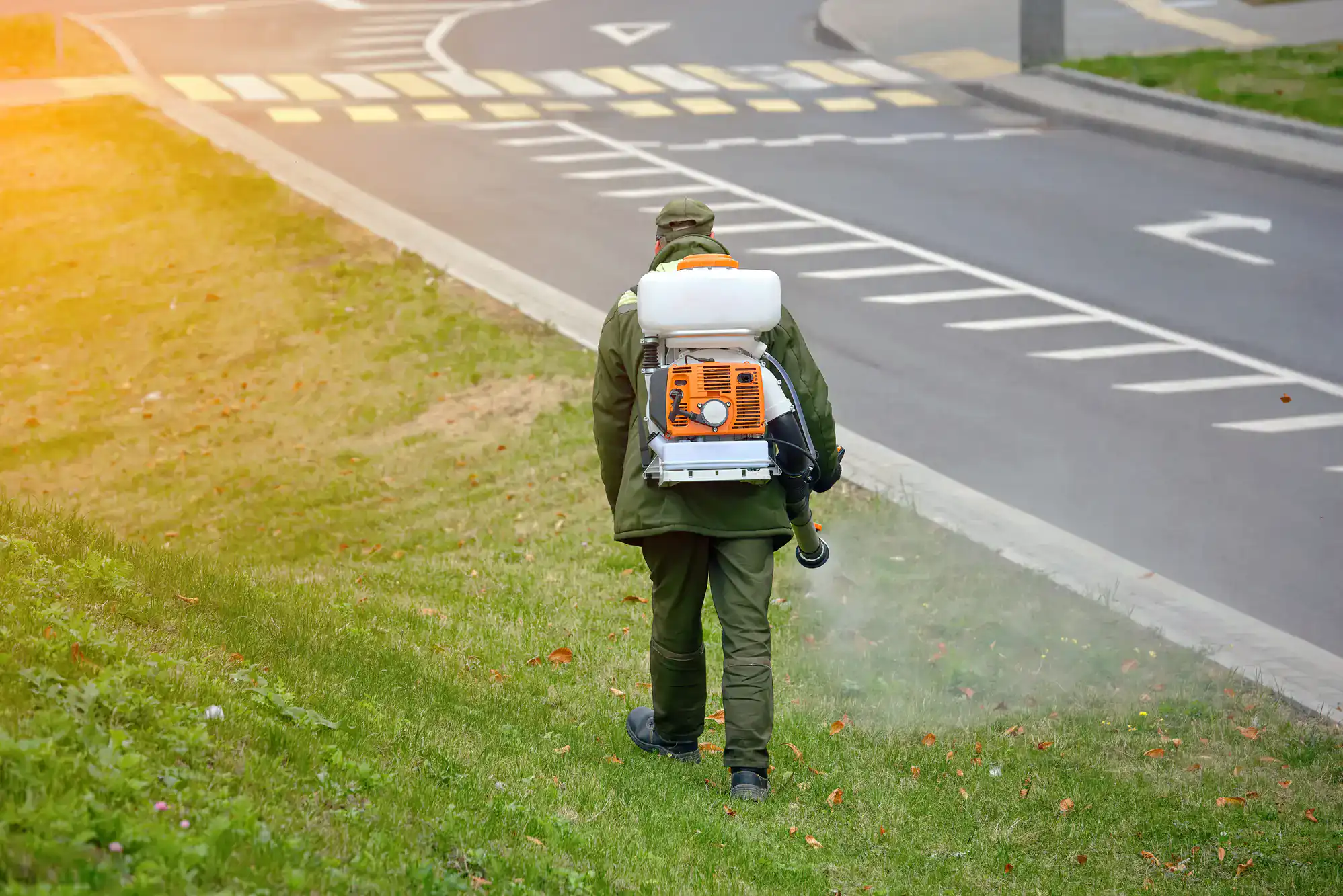
It starts with an honest look at what your lawn is actually dealing with. Grass type, soil condition, sun and shade exposure, weed pressure, and any history of past treatments all of it gets factored in before a single product goes down. Centereach lawns aren’t all the same. A newer colonial off Middle Country Road with builder-grade turf needs a completely different approach than a 1950s ranch in Eastwood Village with compacted soil and decades of wear.
From there, we build your program around Suffolk County’s treatment calendar. The county’s fertilizer blackout runs from November 1 through April 1 no applications during that window, full stop. That means early April timing matters, fall applications need to hit the right soil temperature windows, and every step of the season has a specific purpose. Nothing is applied on a generic schedule. Everything is timed to when your lawn can actually use it.
If your lawn needs more than maintenance bare patches, thin stands of grass, or turf that’s never fully recovered from grub damage we handle restoration and new lawn installation from seed. You don’t have to find a separate company for that. The same licensed professionals who manage your treatment program handle the full job.
Ready to get started?
Every program we build for a Centereach property is custom not a tiered package selected from a dropdown menu. The assessment covers your grass type, soil condition, and what problems you’re already dealing with. From that starting point, we design the program to address what your lawn actually needs, whether that’s a full fertilization schedule, targeted weed control, grub prevention, or a combination of all of it.
Grub control is a serious consideration in central Suffolk County. Japanese beetle larvae feed on grass roots through late summer and into fall, and the damage they cause is often mistaken for drought stress until you try to pull up the turf and it lifts right off the soil. We get ahead of that with properly timed preventive treatment standard in a well-run Centereach program, not an optional add-on.
Nutsedge is another problem that catches a lot of Centereach homeowners off guard. It grows faster than the surrounding turf, looks different, and is completely unaffected by standard broadleaf weed control. We treat it directly. Suffolk County’s phosphorus restrictions also mean that any responsible program here uses phosphorus-free fertilizer on established lawns unless a soil test says otherwise which is exactly how we operate. Licensed, compliant, and built around the specific conditions of Centereach and this county.
The fertilizer blackout in Suffolk County runs from November 1 through April 1, so the season effectively opens in early April. For cool-season grasses which is what most Centereach lawns are running, primarily tall fescue, Kentucky bluegrass, and perennial ryegrass the spring window is important, but fall is actually where the biggest gains happen. September and October are when soil temperatures are ideal for root development and seed germination, and a well-timed fall fertilization program sets the foundation for how your lawn performs the following spring.
The mistake most Centereach homeowners make is treating spring like the main event. Spring fertilization matters, but if your fall program is weak or skipped entirely, you’re starting every new season already behind. A properly structured program accounts for both windows and works within the county’s regulatory calendar not around it.
It’s an easy mistake to make, especially during August in central Suffolk County when heat and dry stretches are common. Both grub damage and drought stress can cause brown, thinning patches in similar patterns. The difference shows up when you try to pull up the affected turf. Grass that’s drought-stressed will resist the roots are still intact. Grass damaged by grubs will lift away from the soil almost like a loose carpet, because the larvae have eaten through the root system underneath.
Japanese beetle grubs are a documented problem throughout Centereach and this part of Suffolk County. The adults lay eggs in turf during summer, and the larvae feed on roots through late summer and into fall. By the time the visible damage appears, the feeding has often already been going on for weeks. The most effective approach is preventive applying grub control at the right time in early-to-mid summer, before the larvae go deep into the root zone where they’re harder to reach.
Turf-type tall fescue is the most commonly recommended cool-season grass for this part of Long Island, and for good reason. It handles the sandy loam soil that’s typical in central Suffolk County better than most alternatives, it tolerates the summer heat stress that hits Centereach lawns every July and August, and it stays relatively dense with the right maintenance program. Kentucky bluegrass and perennial ryegrass are also present in many older Centereach lawns, often as part of a blend.
What matters as much as grass type is how the seed is established and maintained. A lot of the newer homes in Centereach were built with builder-grade seed on minimal topsoil over construction fill which means the turf was set up to underperform from day one. If your lawn has never looked quite right despite regular care, the issue may not be your maintenance routine. It may be that the foundation was never properly established, and what it actually needs is a renovation with the right seed mix and soil preparation.
TruGreen operates across Suffolk County, and some homeowners have had fine experiences with them. But a consistent pattern shows up in the feedback from Centereach residents who’ve switched away: missed visits, technicians who change frequently, and a customer service structure built around a call center rather than a local point of contact. When something goes wrong a burned patch, an incorrect application, a skipped treatment getting it resolved through a national chain can be a frustrating process.
The practical difference with us comes down to accountability. The same licensed professionals handle your Centereach property consistently, the program is built around what your specific lawn needs rather than a regional template, and if there’s ever a problem, you’re talking to someone who actually knows your address. For Centereach homeowners who’ve already tried the national chain route and want a different experience, that accountability is usually the deciding factor.
Suffolk County passed a local fertilizer law specifically to protect Long Island’s sole-source aquifer the groundwater system that supplies drinking water to the entire island. Centereach sits directly over this aquifer, which makes compliance here more than just a regulatory technicality. The law prohibits fertilizer applications between November 1 and April 1, restricts phosphorus use on established lawns unless a soil test confirms a deficiency, and requires that lawn care professionals complete an educational course before applying any products.
What this means practically is that any company treating your lawn in Centereach needs to be operating within that calendar and using phosphorus-free fertilizer as the default. Our entire program is built around these requirements they’re not limitations, they’re the baseline for doing this work correctly. If you’re hiring someone who isn’t aware of or isn’t following these rules, you’re taking on risk that goes beyond a poorly treated lawn.
In most cases, yes and Centereach has no shortage of lawns that fall into this category. The older subdivisions like Dawn Estates and Eastwood Village have homes that are 70-plus years old, and some of those lawns have never had a proper renovation. Decades of compaction, aging seed mixes, and inconsistent care leave turf thin, weedy, and struggling to compete. That’s not a maintenance problem. That’s a restoration problem, and it needs a different approach.
We handle full lawn restoration and new lawn installation from seed not just ongoing treatment programs. That means if your lawn is too far gone for a standard fertilization schedule to fix, there’s a real path forward that doesn’t involve replacing it with sod or living with it as-is. We use hydraulic aerators and seeders for this work professional-grade equipment that produces better seed-to-soil contact and more consistent results than the consumer equipment most operators use. If you’ve been told your lawn can’t be saved, it’s worth getting a second opinion from someone who’s been doing this kind of work in Centereach and Suffolk County for nearly four decades.
Useful Links
Other Services we provide in Centereach