
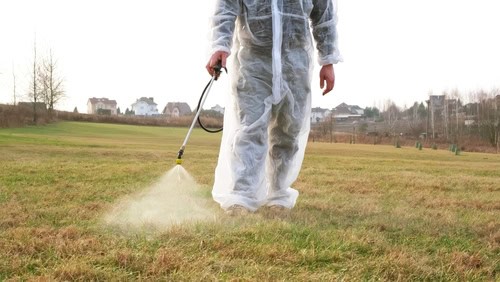
Hear from Our Customers
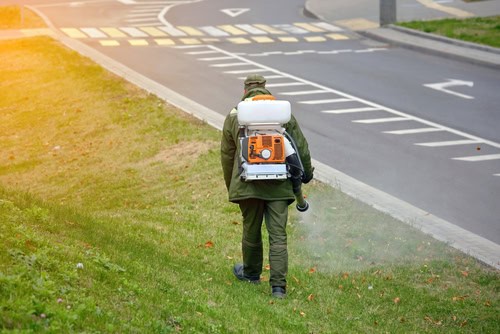
If brown patches show up on your Blue Point lawn every July like clockwork, it’s not bad luck. Blue Point sits right on the Great South Bay, and that bay generates the kind of overnight humidity that fungal pathogens thrive in. By the time you can see the damage, the disease has already been spreading for days sometimes across your entire lawn within 48 hours under peak summer conditions.
The other thing working against Blue Point properties is your soil. The South Shore of Long Island sits on sandy, fast-draining glacial soil that loses moisture quickly. Even if you’re watering regularly, your turf can be drought-stressed at the root zone by mid-afternoon. That stress is exactly what dollar spot feeds on and it’s why those silver-dollar-sized straw patches keep coming back no matter how much you water.
What changes with the right fungicide program is simple: the disease stops recurring. You stop reseeding the same dead spots every fall. Your lawn stays green through August instead of turning patchy by the Fourth of July. That’s not a dramatic promise it’s just what happens when the right treatment gets applied at the right time to the right disease.
Lawn Master of Suffolk is a New York State DEC licensed commercial pesticide applicator serving Blue Point and the surrounding South Shore communities. That license isn’t a marketing credential it’s a legal requirement. Under New York State law, no business can apply pesticides for hire without it. Earning it means passing state-administered exams, meeting experience standards, and renewing every three years with continuing education. A lot of operators working in the Blue Point area skip this step entirely.
What the license also means is access to restricted-use fungicides professional-grade formulations that simply aren’t sold at retail stores throughout Blue Point or anywhere else on Long Island. These are the same products used on golf courses and professional athletic turf. When you hire us, the chemistry being applied to your lawn is categorically different from anything available over the counter.
Every application we perform comes with written documentation of what was used, at what rate, and when a legal requirement we take seriously, and one that matters especially for homeowners living this close to the Great South Bay.
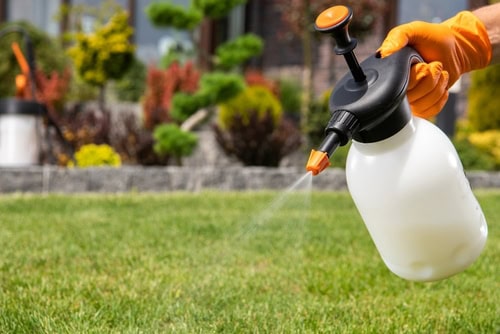
The first thing that happens isn’t spraying. It’s identification. Brown patch, dollar spot, and red thread are three of the most common fungal diseases on Long Island’s South Shore, and they each require different fungicide chemistry applied at different times. Applying the wrong product to the wrong disease doesn’t just waste money it lets the actual disease keep spreading while you think it’s being handled.
Once the disease is identified, treatment is timed to the specific window when it’s most vulnerable. Brown patch in Blue Point typically peaks from late June through August, when overnight temperatures climb above 70°F and the bay’s humidity builds. Red thread is a spring and fall disease it activates in that 60–75°F range that Blue Point experiences in April, May, and again in September. Dollar spot runs nearly the full season in sandy, nitrogen-deficient soil like what’s common throughout this part of Brookhaven Town. Treating on a calendar schedule without accounting for these windows is how a lot of programs fail.
After treatment, you get written documentation of exactly what we applied product name, active ingredient, rate, and date. New York State requires this of licensed commercial applicators, and it’s something no unlicensed operator will hand you. If your lawn needs a follow-up application, the next visit is timed to the specific disease cycle, not a generic schedule.
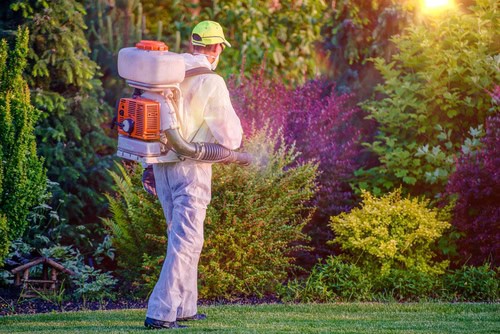
Ready to get started?
Brown patch is the most destructive summer fungal disease on Long Island lawns, and Blue Point’s bay-adjacent location puts your turf at higher risk than most inland Suffolk County communities. When nighttime temperatures stay above 70°F and the Great South Bay’s humidity settles in, Rhizoctonia solani can spread visibly across a lawn within 24 hours. The fungicide chemistry we use for brown patch typically strobilurin-class or DMI-class products is applied preventatively before the damage appears, not after. Waiting until you can see it means you’re already behind.
Dollar spot treatment in Blue Point specifically accounts for the soil conditions here. Sandy, fast-draining South Shore soils create the nitrogen deficiency and drought stress that make turf vulnerable to this disease. We address both the active pathogen and the underlying conditions that keep inviting it back. Red thread is a cool-season disease that most homeowners first notice in spring the pink, thread-like mycelium is hard to miss and it spreads by spore dispersal up to eight feet from a single infected patch. Catching it early in the season is far less costly than treating a lawn that’s already half-covered.
One thing that separates our fungicide program from a spray-and-hope approach is chemistry rotation. Applying the same product repeatedly builds resistant fungal strains that stop responding to treatment. We rotate between different fungicide modes of action across the season to prevent resistance from developing something most homeowners never think about and many lawn companies don’t bother doing.
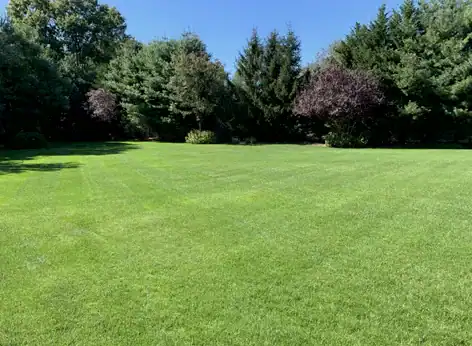
The Great South Bay creates a microclimate along Blue Point’s South Shore that inland Suffolk County towns simply don’t experience. Overnight humidity from the bay keeps grass blades wet for extended periods, and when nighttime temperatures climb above 70°F in late June and July, those conditions activate brown patch a fungal disease caused by Rhizoctonia solani that can spread across a lawn within 24 to 48 hours under peak summer conditions.
The frustrating part is that the disease is often already spreading before you can see it. By the time you notice brown, irregular patches on your Blue Point lawn, the pathogen has been active for days. That’s why preventative fungicide application timed to Blue Point’s specific disease window, before the damage appears is far more effective than waiting until the patches show up and then trying to treat reactively. If your lawn goes brown every July in the same spots, you’re dealing with a recurring pathogen that won’t resolve on its own.
Consumer fungicide products sold at retail stores throughout Blue Point can suppress minor, surface-level fungal issues when caught very early. But they have real limitations that most homeowners don’t find out about until after they’ve already spent money on them.
The active ingredient concentrations in retail products are significantly lower than what’s available to licensed commercial applicators. More importantly, most consumer products cover only a fraction of the fungal disease spectrum, and the label directions rarely account for the specific timing windows, soil conditions, or disease cycles that affect South Shore Long Island lawns. If you’re dealing with an established brown patch outbreak in July, or recurring dollar spot in sandy soil that keeps coming back, an over-the-counter product applied at the wrong time is unlikely to solve the problem. We have access to restricted-use fungicides professional formulations not sold at retail and the training to apply them at the right rate, to the right disease, at the right time.
Each of these diseases has a distinct appearance, but they’re easy to confuse if you haven’t seen them before. Brown patch shows up as large, roughly circular areas of tan or brown turf often with a darker, water-soaked border around the edge of the patch when conditions are actively humid. It spreads fast and tends to affect larger sections of the lawn at once.
Dollar spot creates much smaller, individual straw-colored spots about the size of a silver dollar. You’ll often see many of them scattered across the lawn rather than one large area. Red thread is the easiest to identify visually look for a pinkish-red, thread-like fungal growth on the grass blades themselves, usually visible in the early morning. It tends to appear in irregular patches and is most common in Blue Point during cool, moist spring weather when the bay keeps overnight temperatures mild. If you’re not sure which disease you’re dealing with, that’s exactly why diagnosis before treatment matters the wrong chemistry applied to the wrong disease accomplishes nothing.
It depends on what diseases are present, how severe the infection is, and what your lawn’s specific conditions look like but most Blue Point properties with active fungal disease benefit from at least two targeted applications per season, sometimes three.
A typical program starts with a preventative application in late spring, timed to the red thread window before Blue Point’s cool, moist April and May weather activates the disease. A second application targets brown patch before the Great South Bay’s summer humidity peaks in late June and July. If dollar spot is an ongoing issue which it often is in the sandy, fast-draining soils common throughout this part of Brookhaven Town a third application in late summer or early fall may be warranted. The goal isn’t to spray on a fixed calendar schedule regardless of conditions. It’s to apply the right chemistry at the right time based on what’s actually happening in your lawn. That’s what makes the difference between a program that works and one that just runs up a bill.
This is a fair question for any Blue Point homeowner to ask, given how close this community sits to the bay. The short answer is yes when applied by a licensed professional at the correct rate, using products approved for residential use, fungicide application near coastal properties is safe and environmentally responsible.
The key word is licensed. New York State DEC commercial pesticide applicators are legally required to follow label directions precisely, calibrate application rates to the specific area being treated, and comply with all buffer and runoff requirements. Over-application by unlicensed operators who have no training, no accountability, and no documentation requirements is the actual risk near waterways like the Great South Bay. Suffolk County has active environmental concerns about pesticide and nitrogen runoff into coastal estuaries, and a licensed applicator’s legally mandated precision is directly aligned with those concerns. Every application we perform is documented, rate-calibrated, and compliant with all NYS regulations which is exactly what responsible treatment near the bay looks like.
Recurring fungal disease in the same areas usually comes down to one of two things: either the underlying conditions that made those spots vulnerable haven’t changed, or the pathogen was never fully eliminated and remains dormant in the soil between active seasons.
In Blue Point, both scenarios are common. Sandy South Shore soils that drain quickly create persistent drought stress and nitrogen deficiency in the same areas of a lawn year after year and that stress keeps inviting dollar spot back to the same patches every season. Meanwhile, fungal pathogens like Rhizoctonia solani can survive in thatch and soil through the winter and reactivate the following summer when conditions are right. If you’ve been reseeding the same dead spots every fall and watching them die again the following July, active disease in the soil is almost certainly the reason the new seed isn’t establishing. Treating the pathogen first and addressing the soil conditions that keep creating vulnerability is the only way to break that cycle.
Useful Links
Other Services we provide in Blue Point