
Hear from Our Customers
Most Blue Point homeowners who call us have already tried something. A bag of seed from the hardware store. A fertilization program that looked promising in May and fell apart by August. Maybe a basic overseeding that germinated fine and then thinned out by the following summer. The problem isn’t bad luck it’s that none of those approaches dealt with what’s actually underneath your lawn.
Blue Point sits on flat, sandy soil with a water table that shifts with the bay. That soil drains fast, leaches nutrients quickly, and doesn’t hold root structure the way heavier inland soils do. When you add salt air off the Great South Bay and the kind of summer heat that hits Long Island’s South Shore every July, you’ve got conditions that expose every weakness in a lawn that wasn’t built right. A renovation that doesn’t start with the soil is just buying time.
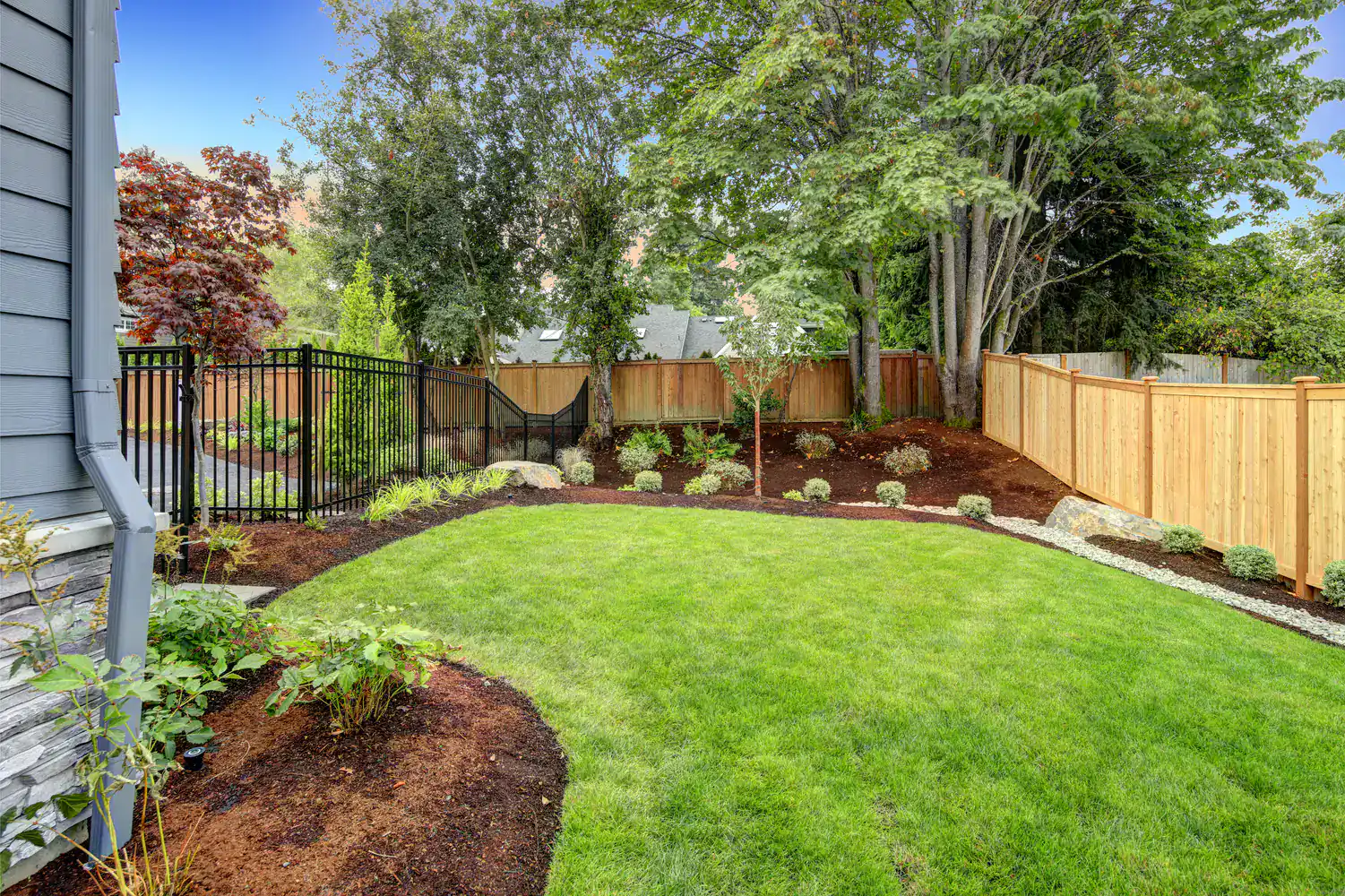
When the process is done correctly soil assessed, pH corrected, organic matter addressed, right grass varieties selected for coastal conditions what you end up with is a lawn that doesn’t fall apart when it gets hot. It stays dense through summer. It greens up earlier in spring. It doesn’t thin out along the bay-facing side of the property the way it used to. That’s what a complete lawn renovation in Blue Point actually looks like when it’s done right.
We’ve been doing this work since 1994. That’s over three decades of renovating lawns across Suffolk County including the sandy, low-lying South Shore communities like Blue Point where coastal conditions make the job harder and the margin for error smaller. This isn’t a franchise territory or a company that learned Long Island from a training manual. We’re a Brookhaven Town operation that has worked in these soils, through these summers, with these specific pest pressures, for thirty-plus years.
When you call us, you’re talking to someone who can tell the difference between drought stress and grub damage by looking at your lawn not someone reading from a checklist. That kind of experience matters when your property sits a few blocks from Corey Beach and your lawn has been fighting salt air and sandy soil since the day you moved in.
Our work is backed by full NYSDEC licensing, which is required by New York State law for any company applying herbicides or pesticides commercially. In Suffolk County, where Local Law 41-2007 governs pesticide use near drinking water wells, that compliance isn’t optional and it’s something a lot of crews operating in this area quietly skip.
It starts with a real assessment not a quick walk-around and a handshake. Before anything gets applied or seeded, we evaluate your lawn for what’s actually driving the failure. In Blue Point, that usually means looking at soil composition and drainage, checking for grub damage (which is easy to misread as drought stress in sandy South Shore soil), assessing salt stress patterns near the bayfront, and identifying any invasive species like nutsedge or bentgrass that a standard overseeding won’t touch.
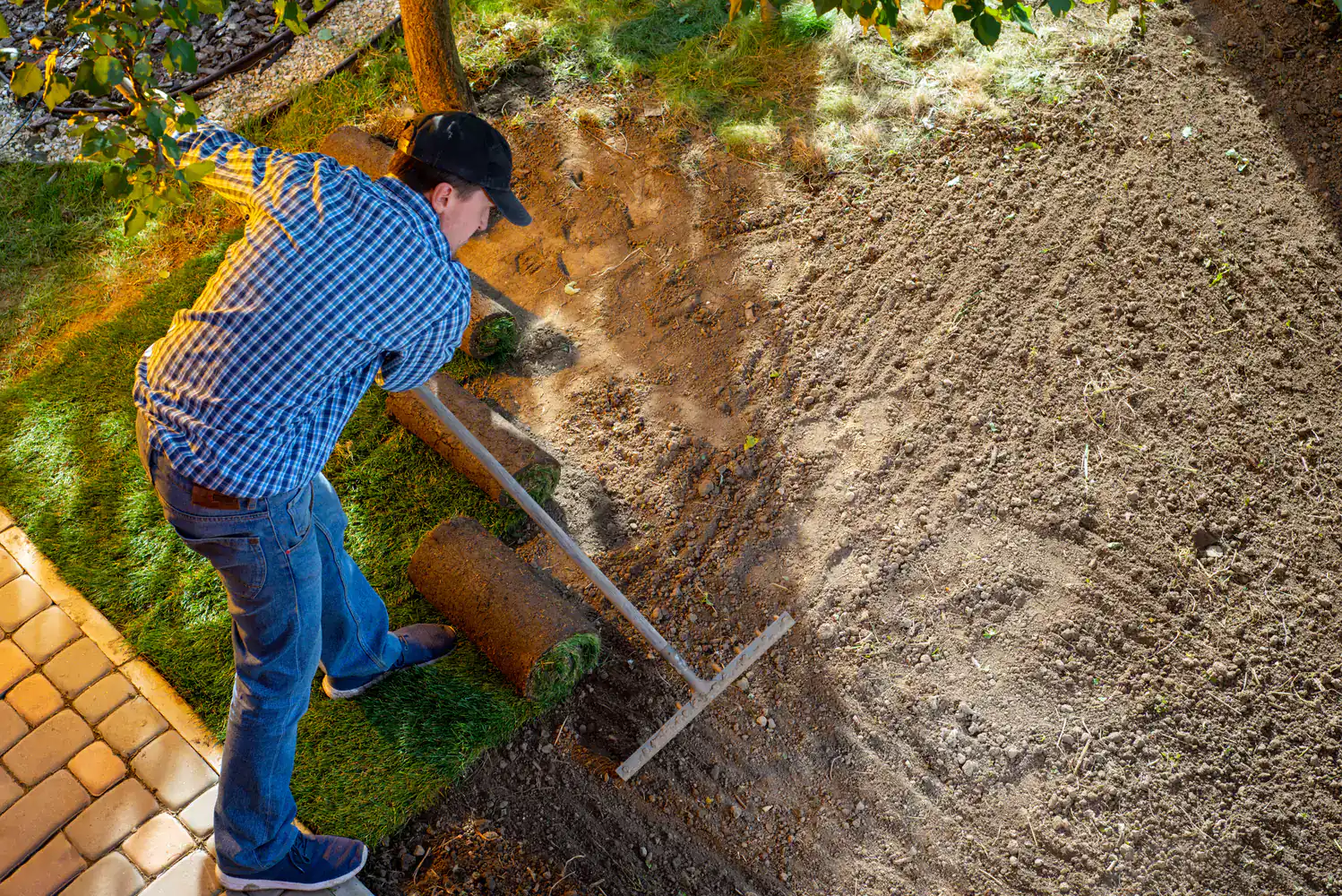
From there, soil preparation comes first. That might mean pH correction, organic matter amendment, or addressing drainage in low-lying areas whatever the soil actually needs to support new turf. Then comes core aeration to break up compaction, followed by power seeding with grass varieties selected specifically for South Shore conditions: salt-tolerant, drought-resilient, and suited to the cool-season climate on Long Island’s coast. Starter fertilizer goes down with the seed to support early root development.
Fall is the right window for this work in Blue Point. Soil temperatures from late August through October sit in the ideal range for cool-season grass germination, weed pressure drops significantly compared to spring, and natural rainfall does a lot of the establishment work for you. That timing matters a lawn renovated in the right window with the right preparation will come out of dormancy the following spring looking completely different than what you started with.

Ready to get started?
Our renovation work covers the full scope from the initial diagnosis through seed establishment and follow-up care. That includes soil testing and amendment, weed elimination before seeding, core aeration, power seeding with coastal-appropriate grass varieties, and starter fertilization. For Blue Point properties dealing with nutsedge or bentgrass invasion both of which thrive in the moist, sandy conditions near the Great South Bay targeted control is available as part of the renovation scope. These aren’t services most lawn companies offer, because most lawn companies don’t have the licensing or the products to handle them properly.
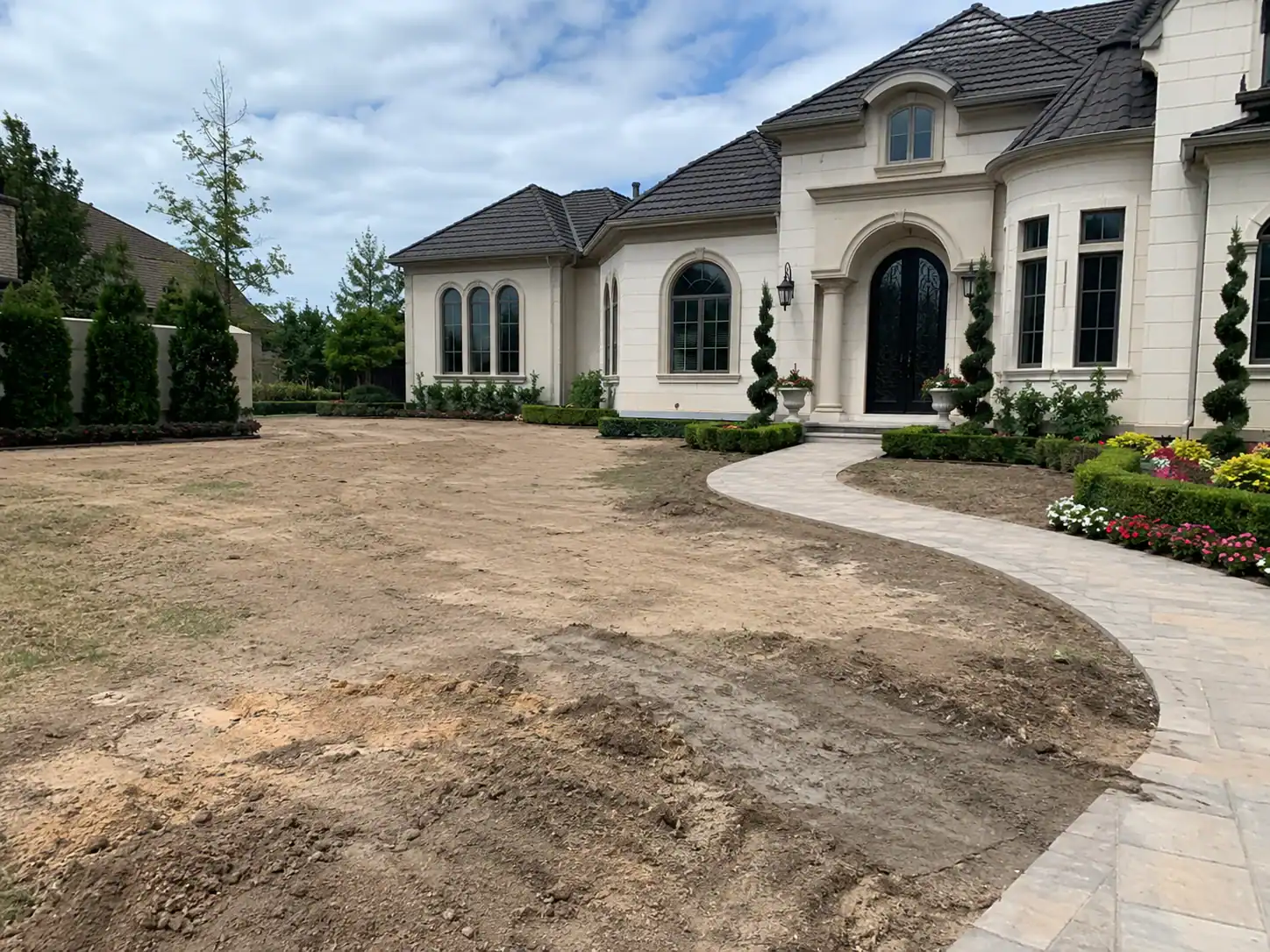
For lawns that are too far gone for renovation where grub pressure, drainage failure, or years of decline have left nothing worth saving we also offer full new lawn installation. That capability matters because it means no project is outside what we can handle. Whether your lawn needs a complete rebuild from bare ground or a targeted renovation of the sections that have failed, the process starts in the same place: an honest assessment of what’s actually wrong.
Pricing for a typical Blue Point renovation most properties in the hamlet sit on lots between roughly a fifth and a third of an acre generally runs in the range of $6,500 to $18,000 depending on lot size, soil condition, and scope. That range reflects the full process, not a stripped-down overseeding. For a property worth $700,000 or more, it’s an investment that makes sense.
This is one of the most common things we hear from South Shore homeowners, and the answer almost always comes back to soil. Blue Point sits on sandy loam with a naturally fast drainage rate water moves through it quickly, which means grass roots don’t get the sustained moisture they need during July and August heat. When you water more to compensate, you’re often just pushing water past the root zone without solving the underlying problem.
The real fix isn’t more water it’s a lawn that has deeper roots to begin with. That comes from soil preparation: correcting pH, adding organic matter to improve water retention, and seeding with grass varieties that are actually suited to the coastal South Shore environment. A lawn renovated with those steps holds up through summer in a way that a lawn seeded on depleted sandy soil never will, no matter how much you water it.
Overseeding puts new seed on top of existing turf. It can fill in thin areas and add density when the underlying lawn is fundamentally healthy. Lawn renovation addresses the reasons the lawn failed in the first place soil condition, compaction, pH imbalance, drainage, pest damage, or invasive species and then rebuilds from there. The distinction matters because overseeding a lawn with depleted soil, a grub problem, or a nutsedge invasion is a short-term fix at best. The new seed germinates, looks decent for a season, and then fails for the same reasons the original turf failed.
A complete lawn renovation in Blue Point typically involves weed elimination, soil assessment and amendment, core aeration, and power seeding with a grass mix appropriate for South Shore conditions. It takes more time and costs more upfront than a basic overseeding but it produces results that actually hold rather than cycling through the same failure pattern every two or three years.
For cool-season grasses which is what you want on Long Island fall is definitively the right window. Soil temperatures from late August through October stay in the range that cool-season grass seed needs to germinate well, typically between 50 and 65 degrees Fahrenheit. Weed competition drops significantly compared to spring, which means new seedlings aren’t fighting crabgrass and other warm-season weeds for space and resources. And natural rainfall patterns through September and October on the South Shore support establishment without the heavy irrigation demands of summer seeding.
Spring renovation is possible, but it comes with real tradeoffs in the Blue Point area. You’re working against warm-season weed pressure from the start, and new seedlings that haven’t fully established by June face the same sandy-soil drought stress that kills mature turf. Fall renovation gives new grass the entire cool season to develop a strong root system before its first summer which is exactly what it needs to survive the heat and salt stress that define South Shore summers.
The two look similar on the surface brown, patchy turf that doesn’t respond to watering. The key difference is what happens when you pull on the grass. Drought-stressed turf is still rooted; it resists when you tug it. Grub-damaged turf pulls back like a loose carpet because the roots have been eaten through. If sections of your lawn peel back easily in late summer or early fall, grubs are almost certainly involved.
This matters a lot in Blue Point because sandy South Shore soil makes it easy for Japanese beetle grubs to move freely through the root zone, and the damage often shows up in August and September right when homeowners assume the lawn is just stressed from summer heat. Treating it like drought stress and watering more doesn’t help and can actually make conditions more favorable for grubs. Any renovation on a Blue Point property should include a grub assessment before seeding otherwise you’re laying new grass on top of an active problem that will kill it again by the following fall.
Yes, and it’s more gradual than most homeowners realize. Salt-laden air off the Great South Bay deposits sodium in the soil over time, slowly raising soil salinity in a way that stresses cool-season grasses without producing a single dramatic event. You don’t wake up one day to a salt-killed lawn you just notice it getting thinner along the bay-facing side of the property, struggling more each summer, and recovering less each fall. By the time it’s visibly failing, the soil has often been accumulating salt stress for years.
The fix has two parts. First, selecting grass varieties with appropriate salt tolerance for the South Shore coastal environment not the generic seed mix that works fine for an inland property in Holbrook or Hauppauge but struggles near the water. Second, soil preparation that addresses what years of salt accumulation have done to the root zone. A renovation that accounts for both of those factors produces a lawn that handles coastal exposure the way it should, rather than slowly losing ground to it every season.
Most properties in Blue Point sit on lots between roughly a fifth and a third of an acre. At industry-standard renovation pricing which typically runs between $0.75 and $4.00 per square foot depending on the scope of work a complete lawn renovation for a typical Blue Point property generally falls in the range of $6,500 to $18,000. Where your project lands in that range depends on lot size, current soil condition, whether grub treatment or invasive species control is needed, and how much of the lawn requires full rebuild versus targeted renovation.
That number is worth putting in context. Blue Point home values sit around $730,000 at the median, with waterfront and near-water properties going considerably higher. The property taxes alone run over $10,000 a year for most mortgaged homes in the hamlet. A lawn renovation at that investment level is proportionate to what the property is worth and it’s a one-time cost for a result that, with a proper annual maintenance program, holds for years. The alternative is paying for repeated overseedings and fertilization programs that don’t address the underlying problems, which adds up fast and never actually solves anything.
Useful Links
Other Services we provide in Blue Point