
Hear from Our Customers
Most Port Jefferson Station homeowners who call us have already tried something. They’ve reseeded in the fall, bought a product from the garden center, or just waited it out and the same brown patches came back the following July. That cycle doesn’t end until the actual disease is identified and treated correctly. Once it is, your lawn can recover and stay healthy instead of just limping through summer.
Living a mile or two from Port Jefferson Harbor means your lawn deals with sustained humidity levels that inland Suffolk County communities simply don’t face. That moisture in the air especially overnight is exactly what brown patch and dollar spot need to spread. Treating without understanding that dynamic is how homeowners waste money on the wrong product at the wrong time.
When fungal disease is properly controlled, your lawn holds its color through the hottest, most humid stretches of the season. The spots stop spreading. The grass you’ve invested in actually survives. And the reseeding you do in fall has a real chance of establishing because you’re not seeding into active disease anymore.
Lawn Master is headquartered in Port Jefferson Station, NY 11776. Not a franchise. Not a regional territory managed out of Nassau County. This is where we operate from every day, and the lawns we treat are in the same neighborhoods we work out of off Old Town Road, along the Norwood Avenue corridor, and throughout the residential streets that make up the Comsewogue School District area.
That matters because North Shore conditions are specific. The Long Island Sound’s influence on humidity, the sandy loam soils common throughout Port Jefferson Station, the way brown patch pressure builds every July these aren’t things we read about. They’re things we see on lawns here, season after season.
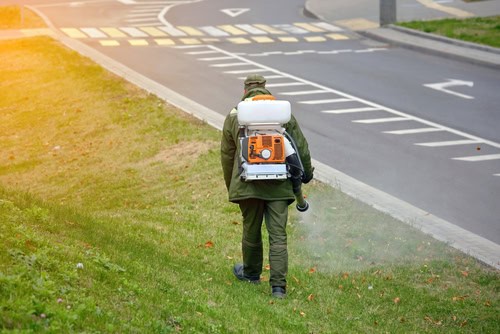
We hold a New York State DEC commercial pesticide applicator license. That’s a legal requirement for any business applying pesticides for hire in New York, and it’s not a one-time credential it requires ongoing continuing education to maintain. It also means we’re the only type of operator legally permitted to use restricted-use fungicide formulations that aren’t available at any retail store.
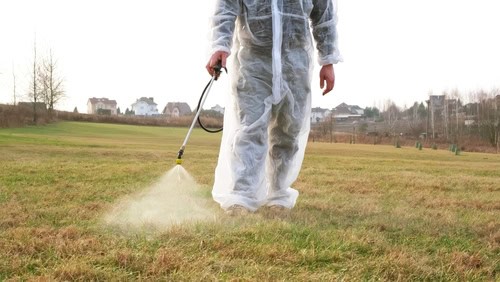
The first thing we do is look at your lawn and identify what’s actually going on. Brown patch, dollar spot, and red thread are three distinct diseases with different environmental triggers and different chemistry requirements. Spraying a dollar spot product on a brown patch infection doesn’t work and vice versa. Skipping the diagnosis step is how generic programs fail, and it’s the most common reason homeowners end up calling us after a competitor’s treatment didn’t hold.
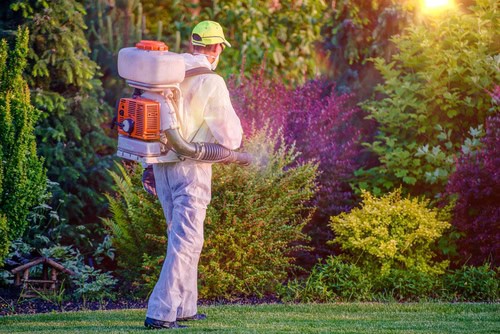
Once we’ve identified the disease, we select the right fungicide chemistry for that specific pathogen and apply it at the right time. On Port Jefferson Station lawns, timing matters more than most people realize. Brown patch peaks when nighttime temperatures stay above 70°F and humidity is elevated conditions the North Shore delivers reliably from late June through August, amplified by the proximity to the Sound. Red thread tends to show up earlier in spring and linger later into fall here than it does on inland Long Island lawns, because the coastal influence extends the cool, moist windows that disease thrives in.
After treatment, we rotate chemistries across applications to prevent resistance from building up something most DIY programs and generic spray schedules never address. You’ll receive written documentation of every application: what was used, at what rate, and what to expect next. As NYS-licensed applicators, that documentation is required and it’s the kind of accountability that unlicensed operators simply can’t provide.
Ready to get started?
We cover the three diseases most common on North Shore Long Island lawns: brown patch, dollar spot, and red thread. Each one gets treated based on what’s actually present, not what’s on a seasonal spray calendar. Brown patch fungicide applications are timed to the humidity-driven windows that hit Port Jefferson Station hardest in July and August. Dollar spot treatment addresses the combination of drought stress and surface moisture that sandy loam soils in this community create fast-draining underneath, moisture-retaining at the thatch layer. Red thread fungicide in Port Jefferson Station is most relevant in spring and fall, when the Sound’s temperature-moderating effect keeps conditions in that 60–75°F sweet spot longer than areas further inland.
As NYS DEC-licensed applicators, we have access to restricted-use professional fungicide formulations the same class of products used on golf courses and professional athletic turf across Long Island. These are not available at Home Depot, a garden center, or to any unlicensed operator. If a consumer-grade product hasn’t worked for your lawn, this is almost always the reason: the active ingredient concentration simply wasn’t sufficient for an established infection.
Every application is documented and compliant with New York State neighbor notification requirements and Suffolk County’s sole-source aquifer protection standards. For homeowners near Port Jefferson Harbor or anywhere in the 11776 ZIP code, that legal compliance isn’t a formality it’s responsible stewardship of the environment your property sits in.
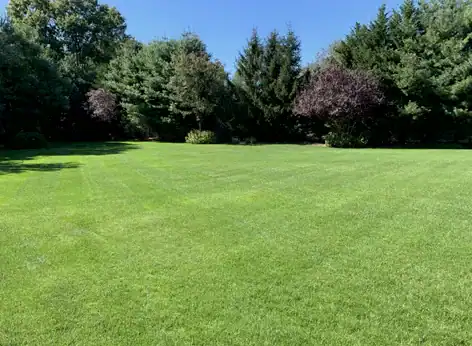
The most likely answer is brown patch a fungal disease caused by Rhizoctonia solani that thrives when nighttime temperatures stay above 70°F and humidity is elevated. Port Jefferson Station’s proximity to Port Jefferson Harbor and Long Island Sound means the air here holds more moisture overnight than inland Suffolk County communities, and that sustained humidity is exactly the condition brown patch needs to spread fast. A lawn that looks fine on Monday can have visible circular patches by Thursday under peak summer conditions.
The other piece most homeowners miss is that brown patch doesn’t go away on its own once it’s established. Waiting it out typically means a larger affected area and a more expensive recovery. If the same spots come back every year despite reseeding, the disease is still active in the soil and no amount of new seed will fix that until the pathogen is addressed directly with the right fungicide chemistry.
Dollar spot shows up as small, roughly circular tan or straw-colored patches typically about the size of a silver dollar, though they can merge into larger irregular areas as the disease progresses. It’s most active in temperatures between 60°F and 85°F, which covers a wide stretch of the Port Jefferson Station growing season. If your lawn is drought-stressed or hasn’t had consistent nitrogen, it’s significantly more vulnerable and the sandy soils common throughout this area dry out quickly, making stress conditions easier to reach than homeowners expect.
One giveaway is the appearance of the individual grass blades: dollar spot lesions have a distinctive hourglass shape with tan centers and reddish-brown borders. If you’re seeing that pattern on the blades inside the patches, that’s a strong indicator of dollar spot rather than drought or grub damage. Confirming the disease before treating is important because dollar spot and brown patch require different fungicide chemistries applying the wrong one wastes time and money.
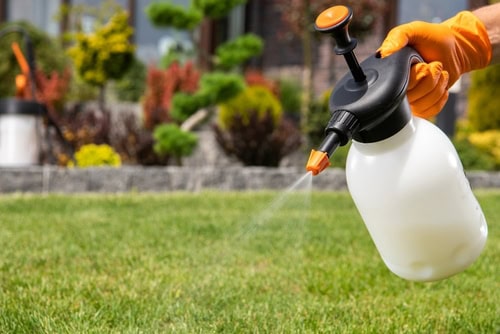
You can legally apply general-use fungicide products yourself in New York State the products sold at garden centers and home improvement stores are available to homeowners without a license. The real limitation is what those products can actually do. Consumer-grade fungicides contain lower concentrations of active ingredients and are restricted to general-use formulations. They can be effective for mild, early-stage infections, but for an established disease on a lawn with a recurring history, they often fall short.
What a NYS-licensed commercial pesticide applicator like us can do that you legally cannot is purchase, possess, and apply restricted-use fungicide formulations professional-grade triazoles and strobilurins that aren’t sold at any retail outlet. These are the same active ingredients used to protect golf course turf and professional athletic fields across Long Island. If you’ve applied a store-bought product and seen little or no improvement, the gap between what you used and what a licensed professional can use is almost certainly part of the reason.
Red thread is one of the easier fungal diseases to identify once you know what to look for. The most distinctive sign is the presence of pink or red thread-like strands extending from the tips of infected grass blades that’s the fungal mycelium, and it’s visible to the naked eye. Affected areas tend to look tan or bleached from a distance, but up close you’ll see the red or pink coloring that gives the disease its name. It typically appears in irregular patches and is most common in cool, moist conditions between 60°F and 75°F.
On North Shore Long Island lawns in Port Jefferson Station, red thread tends to show up earlier in spring and stick around later into fall than it does further inland, because the Long Island Sound moderates temperatures and keeps that cool-moist window open longer. It’s rarely fatal to a lawn on its own, but it spreads quickly and can cover large areas before homeowners realize it’s a disease rather than a nutrient issue. A targeted red thread fungicide application stops the spread; pairing it with a nitrogen application afterward helps the lawn recover faster.
It depends on the severity of the disease and whether you’re treating an active infection or trying to prevent one from starting. A single curative application can address a mild or early-stage infection, but lawns with a history of recurring disease especially brown patch on North Shore Long Island typically benefit from a preventative program that starts ahead of peak disease pressure in late spring and continues through the high-humidity summer months.
For Port Jefferson Station lawns that have had visible disease in multiple seasons, a two-to-three application program timed to the specific disease windows here is usually the most effective approach. We also rotate fungicide chemistries between applications to prevent resistance from developing something that’s especially important on lawns that have been treated with the same product for multiple years. The goal is to get ahead of the disease pressure rather than respond to it after the damage is already visible.
This is a reasonable concern for any homeowner in the 11776 area, and it’s one that licensed applicators are specifically trained and legally required to address. As NYS DEC-certified commercial pesticide applicators, we apply all fungicide treatments in compliance with New York State application rate requirements, buffer zone regulations near water bodies, and Suffolk County’s sole-source aquifer protection standards. These aren’t optional guidelines they’re legal compliance requirements that come with maintaining a commercial pesticide applicator license in New York.
Unlicensed operators applying pesticides in this area aren’t just operating illegally they’re doing so without the training to understand how proximity to the harbor, the Sound, or the aquifer affects what can be applied, at what rate, and with what precautions. When you hire a licensed professional, you get documentation of every application and the assurance that it was made within the legal and environmental framework that protects this community. For Port Jefferson Station homeowners who care about what goes into their soil and where it ends up, that accountability is the baseline not a bonus.
Useful Links
Other Services we provide in Port Jefferson Station