
Hear from Our Customers
Most Port Jefferson Station lawns were built on soil that was stripped, graded, and compacted during construction whether that was 1958 or last year. Decades of mowing, foot traffic, and wet-dry cycles on top of that compacted base create a layer underground that blocks everything: water, fertilizer, oxygen, new root growth. You can spend hundreds on a fertilization program and get almost none of it back if that layer is still there.
Once that compaction is broken up properly, the difference shows up fast. Fertilizer reaches the root zone instead of sitting on the surface and washing off. Water moves down into the soil instead of pooling on your lawn or running down the driveway. Grass fills in thicker because roots finally have somewhere to go.
Port Jefferson Station’s North Shore soils carry a meaningful clay and loam component from glacial deposits heavier and more compaction-prone than the sandy soils you’d find in communities farther south on the island. That soil profile is exactly why standard rental aerators often leave homeowners here underwhelmed. They don’t go deep enough to matter on this kind of ground.
We’re a Suffolk County-based lawn care company with NYS DEC-licensed applicators and commercial-grade equipment built for Long Island’s specific soil conditions. This isn’t a national franchise routing your job to a subcontractor. When you call us, you’re talking to people who know the difference between the clay-heavy soils along the North Shore where Port Jefferson Station sits and the sandy ground you’d find down near the South Shore. We bring the right equipment for each.
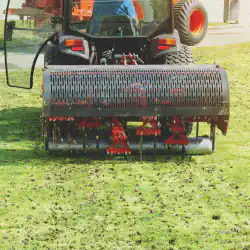
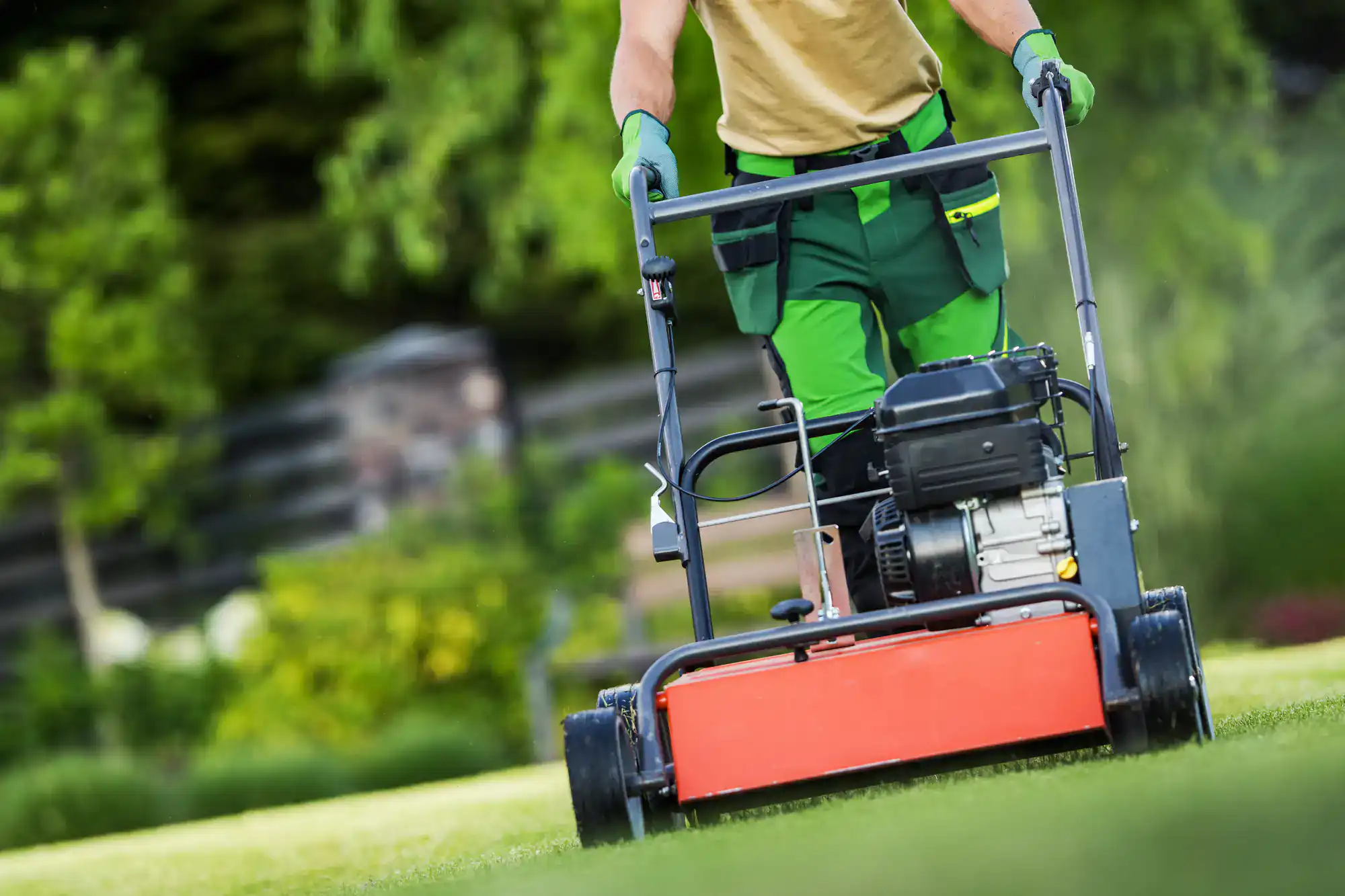
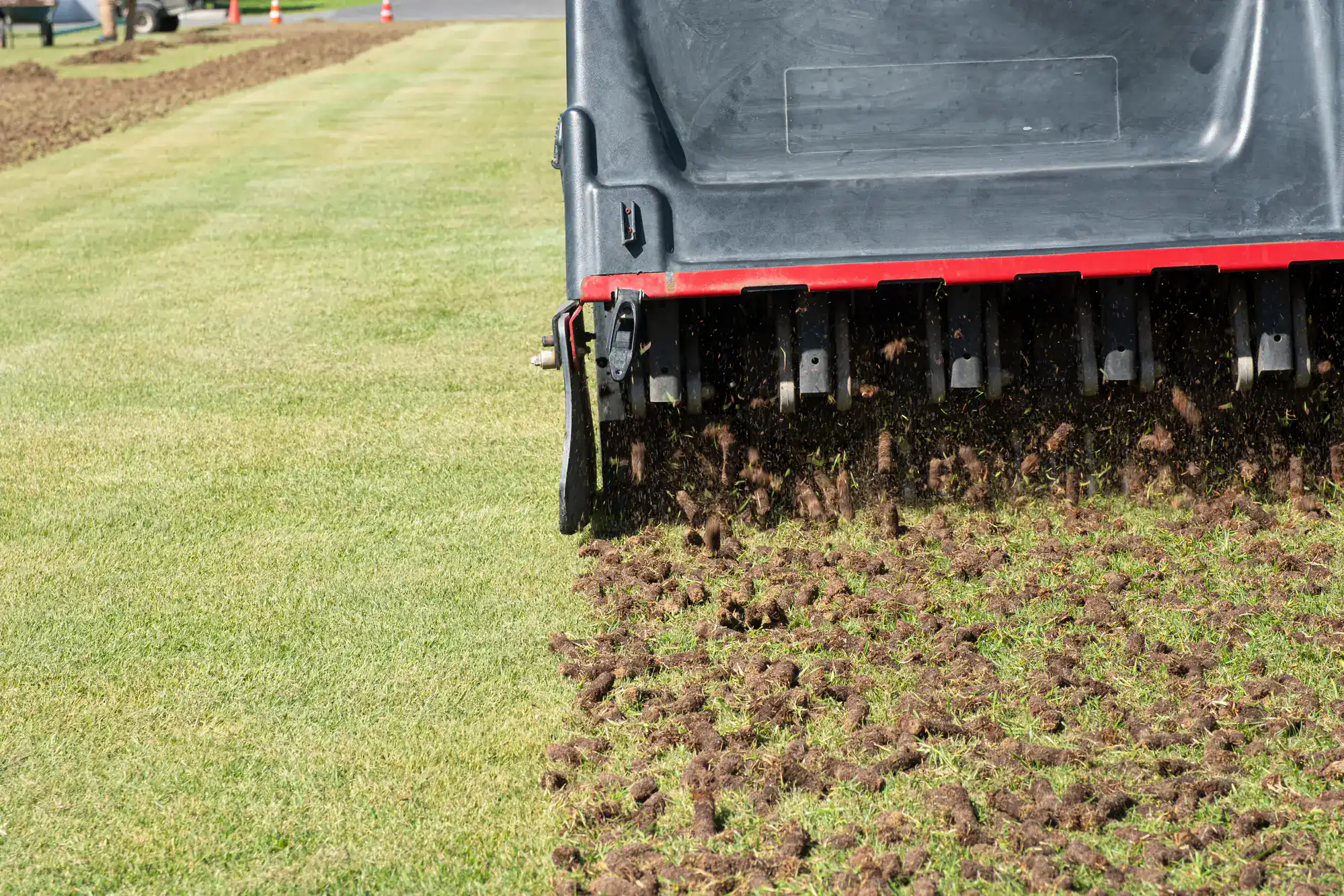
The hydraulic aerator we use is a different machine than what most competitors run and what you’d pull from a rental counter. It adjusts tine pressure dynamically to drive cores 3 to 4 inches deep deep enough to actually reach the compaction layer in Port Jefferson Station lawns, including the older post-war capes and ranches that make up most of the housing stock in the Comsewogue area.
NYS licensing also means our applicators are trained on New York’s fertilizer regulations, including phosphorus use restrictions near waterways relevant for any homeowner in Port Jefferson Station who cares about what ends up in the Long Island Sound watershed.
It starts with a quick estimate no pressure, no long consultation process. We’ll assess your lawn’s size, grass type, and visible compaction signs before scheduling your service during the right window. For Port Jefferson Station, that window is late August through October. The North Shore’s maritime climate keeps soil temperatures warm enough for cool-season grass germination a little longer than inland communities, which means the fall aeration and overseeding window here runs slightly later than you might expect sometimes into early November in a mild year.
On service day, the hydraulic aerator moves across your lawn in overlapping passes, pulling soil cores roughly every few inches. Those plugs get left on the surface that’s intentional. Each one contains soil microbes and organic material that break down over the following two to four weeks, helping decompose the thatch layer while the aeration holes fill in with new growth. Your lawn will look temporarily disrupted. That’s normal and temporary.
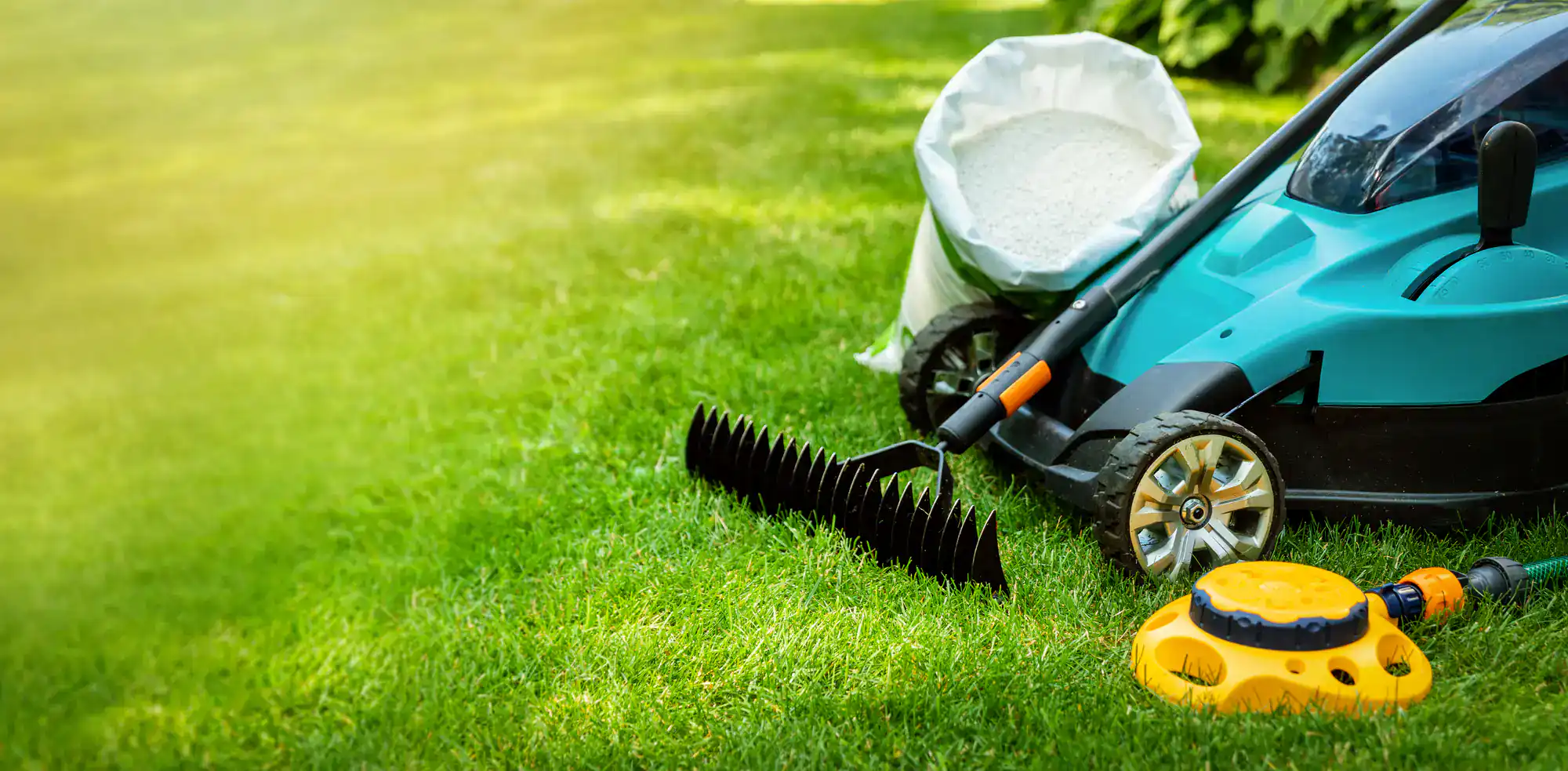
If you’re pairing aeration with overseeding which we recommend for any lawn with thin or bare patches the seed goes down immediately after aeration while those channels are still open. Seed dropped directly into freshly aerated ground has dramatically better germination rates than seed scattered over compacted, thatch-covered soil. The combination of aeration and overseeding in a single fall visit is the most efficient way to see real improvement by the following spring.
Ready to get started?
Core aeration from us isn’t a standalone punch on a checklist it’s the foundation that makes the rest of your lawn care program work. If you’ve been running a fertilization program through us or on your own, aeration is what unlocks it. Research consistently shows fertilizer uptake efficiency increases significantly after proper aeration because nutrients can finally reach the root zone. For Port Jefferson Station homeowners who have been investing in their lawn without seeing proportionate results, that’s not a small thing.
The service pairs naturally with overseeding using cool-season grass varieties suited to North Shore conditions tall fescue, Kentucky bluegrass, and perennial ryegrass are the dominant types in this area, and all three respond well to fall aeration and seeding. We can also fold aeration into a broader fertilization and weed control program if your lawn needs more than one correction this season.
No permits are required for residential core aeration in the Town of Brookhaven, and the service itself is mechanical no chemicals, no applications. When aeration is paired with fertilization or overseeding, our NYS DEC-licensed applicators handle everything in compliance with New York State’s fertilizer laws, including phosphorus restrictions that apply near the waterways running through this part of Suffolk County.
The best window for core aeration in Port Jefferson Station is late August through October. This is when soil temperatures are still warm enough to support germination if you’re overseeding, but air temperatures have cooled enough to reduce stress on new cool-season grass growth. Missing this window means waiting a full year to try again and another season of compacted soil blocking every input you put into your lawn.
One thing worth knowing about Port Jefferson Station specifically: the North Shore’s proximity to the Long Island Sound moderates fall temperatures more than inland communities experience. That means your effective fall aeration window runs slightly longer here than it would in, say, Selden or Medford. In a mild year, you can push into early November and still get solid results. That said, September and early October are peak booking months, and slots fill up. Scheduling in late July or August gives you the best chance of getting the date you want.
Core aeration removes a physical plug of soil from the ground. Spike aeration pushes a solid tine into the soil without removing anything. That distinction matters a lot on Port Jefferson Station’s clay-influenced North Shore soils, because spike aeration doesn’t relieve compaction it redistributes it. The soil gets pushed sideways and downward to create the hole, which means the ground immediately surrounding each spike hole ends up more compressed than it was before.
Core aeration is the only method that creates genuine decompression. When the plug is removed, the surrounding soil has room to expand, water and nutrients have a direct channel to the root zone, and overseeded grass has actual soil contact to germinate in. If you’ve tried a spike aerator on your lawn rented one, used a tow-behind attachment and didn’t see the improvement you expected, that’s likely why. On heavier soils like the ones throughout Port Jefferson Station and the broader North Shore, spike aeration is largely a wasted effort.
This is one of the most common frustrations homeowners in Port Jefferson Station bring to us. The short answer is that fertilizer can’t do its job if it can’t reach the root zone and on compacted soil, it can’t. It sits on the surface, breaks down in the sun, or washes off with the next rain. The roots never see it.
The longer answer goes back to how most of the housing stock in Port Jefferson Station was built. When those post-war capes and ranches went up throughout the hamlet from the 1950s onward, construction equipment stripped and compacted the topsoil. Lawns were seeded or sodded over that compacted base, and they’ve been struggling ever since. Fifty or sixty years of mowing and traffic on top of an already compromised soil structure creates a compaction layer that no amount of fertilizer applied from the surface can overcome. Core aeration is the mechanical correction that addresses the actual problem not a different fertilizer formula, not more frequent applications, but physical relief of the soil structure that’s been blocking everything you’ve been putting into your lawn.
Pricing for professional core aeration on Long Island typically ranges from around $75 to $150 for smaller lawns and $150 to $350 or more for larger properties, depending on square footage and the condition of the lawn. Most standard residential lots in Port Jefferson Station fall somewhere in the middle of that range.
The more useful way to think about the cost is relative to what you’re already spending. If you’re running a fertilization program at $300 to $500 per year on a lawn with significant compaction, a meaningful portion of that investment is being blocked before it ever reaches the root zone. A single professional aeration treatment that unlocks that fertilizer absorption doesn’t just improve your lawn it makes every dollar you’ve already been spending more effective. When you factor that in, the math on professional aeration is straightforward. We can give you a specific estimate based on your property just request one and you’ll have a real number, not a range.
Yes, completely normal and those plugs are doing something important, so leave them alone. Each core pulled from the ground contains soil, organic matter, and microbes that, as the plug breaks down over the next two to four weeks, return to the surface and help decompose the thatch layer sitting above the soil. Removing them raking, bagging, blowing them off eliminates one of the biological benefits of the service.
The lawn will look like something went wrong for a few weeks. It won’t look like that for long. By the time the plugs have broken down and the aeration channels have filled in with new root growth, the lawn will visibly outperform what it looked like before the service. If you aerated and overseeded in the same visit, you’ll start seeing germination in the channels within ten to fourteen days under normal fall conditions in Port Jefferson Station. The temporary disruption is part of the process working correctly.
Yes, and we do both in the same visit it’s the most effective approach for most Port Jefferson Station lawns. The reason is timing: immediately after aeration, those channels are open, the soil surface is disturbed, and seed dropped directly into the holes has direct contact with actual soil rather than sitting on top of thatch or compacted ground. Germination rates on freshly aerated lawns are consistently higher than on un-aerated ground sometimes significantly so because the seed has everything it needs right where it lands.
For lawns in Port Jefferson Station with thin coverage, bare patches, or turf that has been slowly declining despite regular maintenance, the aeration-and-overseeding combination done in early fall is the single highest-return service available. We use cool-season grass varieties suited to North Shore conditions and can pair the visit with a fertilization application to give new seed the nutrients it needs to establish before the ground cools. If your lawn has been underperforming for a few seasons, one well-timed fall visit covers more ground than multiple individual treatments spread across the year.
Useful Links
Other Services we provide in Port Jefferson Station